
By Julie Geiser
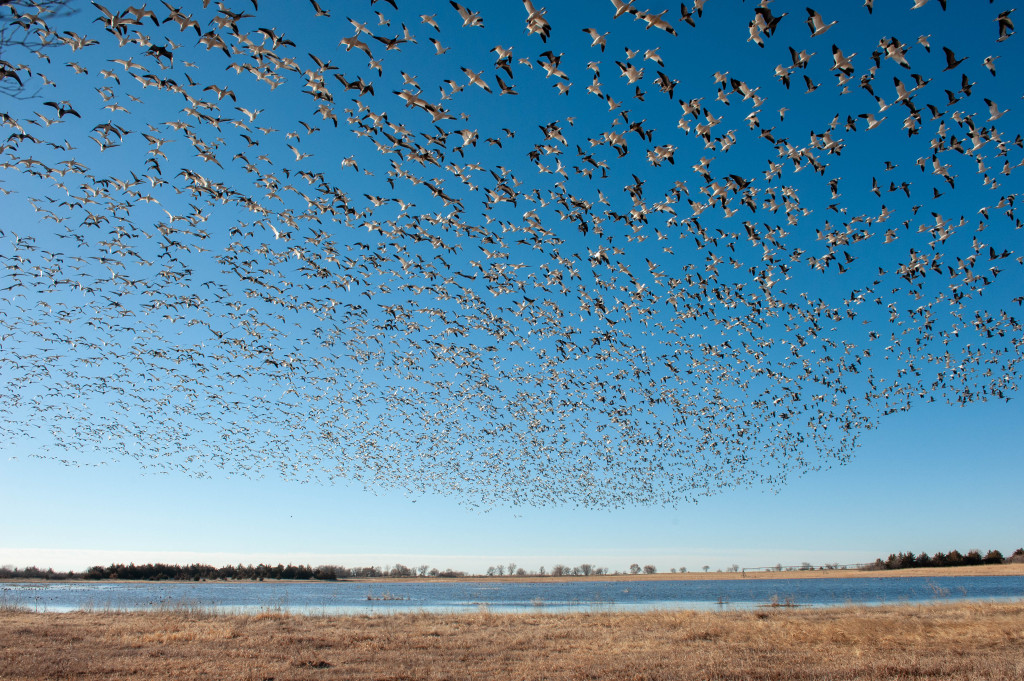
This is the year you start snow goose hunting during Nebraska’s Light Goose Conservation Order. Here’s all you need to begin.
Scouting
Once you spot large flocks of snow geese, drive back roads, watch their patterns and get permission from landowners.
The work of finding a good field and setting out decoys can result in two or three successful hunts. After that, the birds may be gone, and it’s back to scouting.
Look for cornfields and winter wheat, as these are favored foods. Avoid any water or flooded areas with high vegetation, treelines or ditches running up to them. Keep away from roads. If an open water area has quality feed around it, you’ve found a honey hole.
Decoys
Use every decoy you have — from flyers, to windsocks, to full bodies. Hunting with friends that have a few hundred decoys will help with cost and effectiveness of a spread.
Many hunters use the “V” tactic in front of their blinds by placing decoys on the upwind side with smaller groups of decoys off to each side. Some hunters use the donut shape, as it’s easy for hunters to move around the shape’s landing hole according to wind direction and where the geese prefer to land.
If geese are landing short of the spread, try moving some of your decoys into that area, forcing the birds to land elsewhere. If the geese aren’t coming all the way to your decoys, move downwind from the decoys where flocks will pass within shotgun range as they swing around the spread.
Pick Your Shot
Focus on one bird at a time; it’s easy to get distracted when hundreds of birds are swarming you. As birds flair from a spread, they’ll go up, so start with a target at the top and work your way down to bag more birds.
Stay within your 45-degree shooting zone for safety and to avoid doubling-up on birds.
Camouflage
Don’t skimp when it comes to concealment. Layout blinds are popular, but portable waterfowl blinds are nice for their easy setup and comfort. Camouflage yourself or blind to match your surroundings and keep movements to a minimum.
Calls and Guns
During the light goose conservation order, e-callers are a must. Add bluetooth speakers in different areas of a decoy spread for realistic sounds. When flocks are far away or the wind is blowing, start loud then turn the volume down as geese get close and add mouth calls as the birds near.
Once the shot is called, use the shotgun gauge that fits you best. Many hunt with 12- and 20-gauge guns, using 2-shot and BBs. If birds are in the 15- to 25-yard range, you’ll have no problem bringing them down with these gauges or even something as small as a .410.
Put these tips to use during your first snow goose spring, and visit OutdoorNebraska.gov for regulations, including zone locations and conservation order dates.