
By David L. Bristow, Nebraska State Historical Society
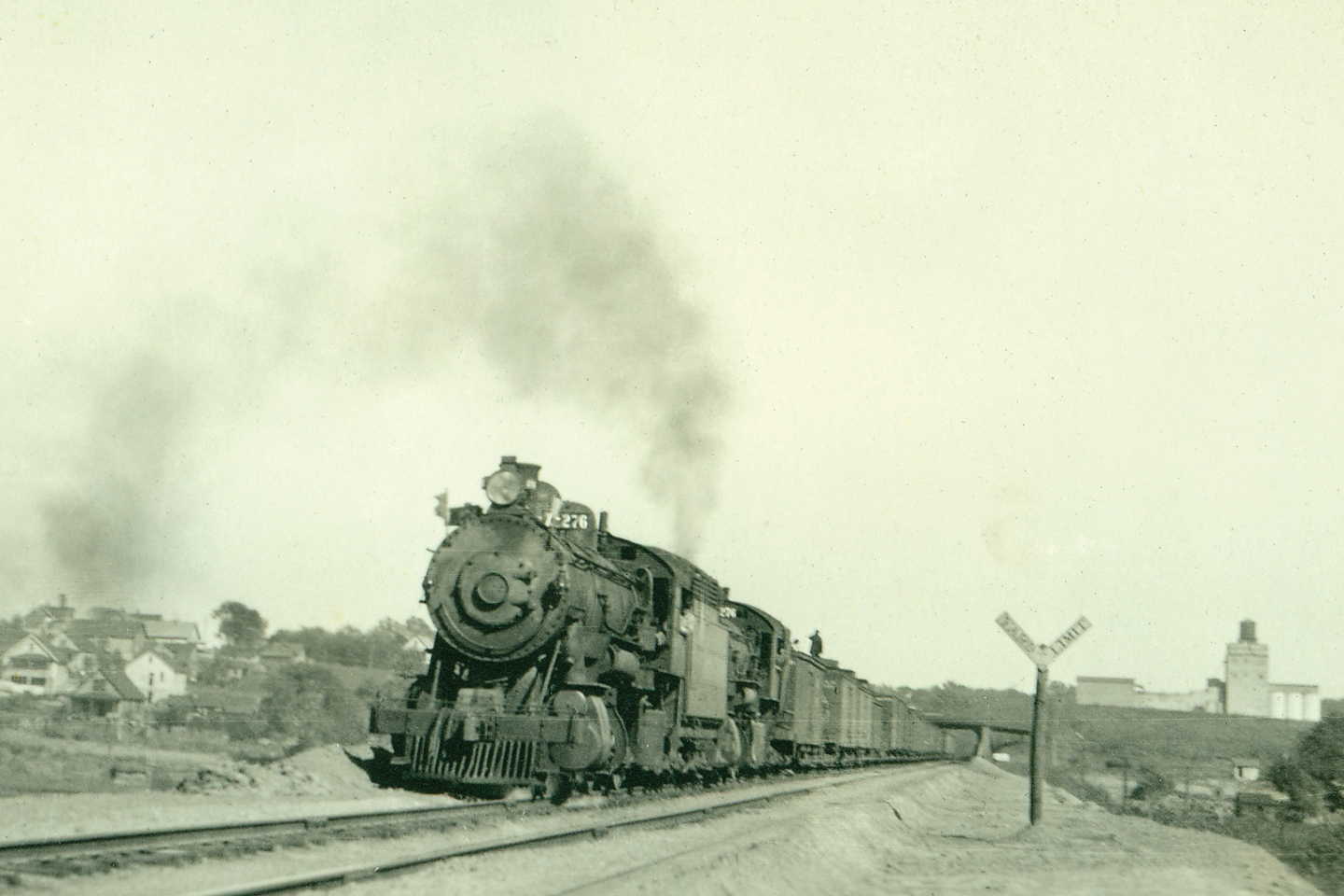
Next time you’re driving through Omaha on I-80, notice the Union Pacific tracks running parallel to the Interstate. Just east of 72nd Street, imagine you’re still west of town, rolling east aboard the Overland Limited by night, your hands on the steam engine’s levers. It is May 22, 1909.
Suddenly, two men appear over the coal tender and jump down to the engine, pistols drawn. Wearing slouch hats, long coats, and with blue polka-dot handkerchiefs covering their faces, they look like Western outlaws. Which they are.
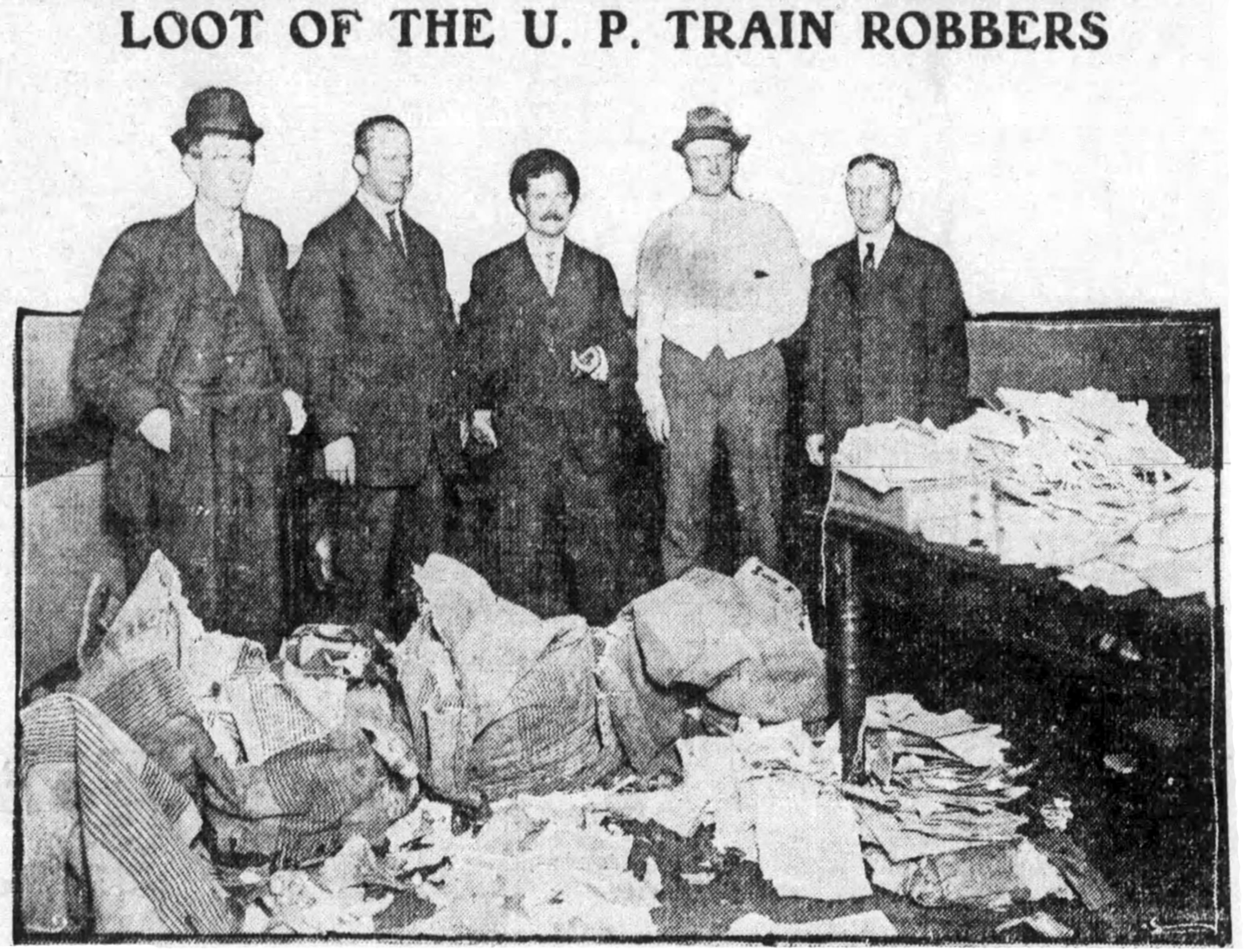
Holding a pistol to your temple, one of them looks out the cab window until he spots a signal fire. He orders you to proceed until he has you stop the train in a deep cut just west of 42nd Street. There are four or five bandits in all, and in no more than 15 minutes, they empty the postal cars of seven registered mail sacks bound for eastern banks — “a hell of a load to carry in an automobile,” one of them complains.
Though the bandits do not enter the passenger cars, they keep everyone cooperative by firing their revolvers at random. Before disappearing into the night, they order you to take the train ahead into the city. Shaken, you notify the authorities as soon as you arrive at Union Station.
That’s what you would have seen and heard had you lived through the “Mud Cut Robbery.” As soon as the morning papers arrived, it became the talk of the city. But despite the offer of thousands of dollars in reward money, days passed without any useful leads.
A group of South Omaha schoolboys broke the case open on May 27. They attended Brown Park Elementary at 19th and U streets. Playing in a wooded gully nearby, they discovered abandoned guns, hats and blue polka-dot handkerchiefs. Police staked out the area and soon arrested three men. Janitors then found the missing mail sacks — minus everything of value — in the Brown Park school attic.
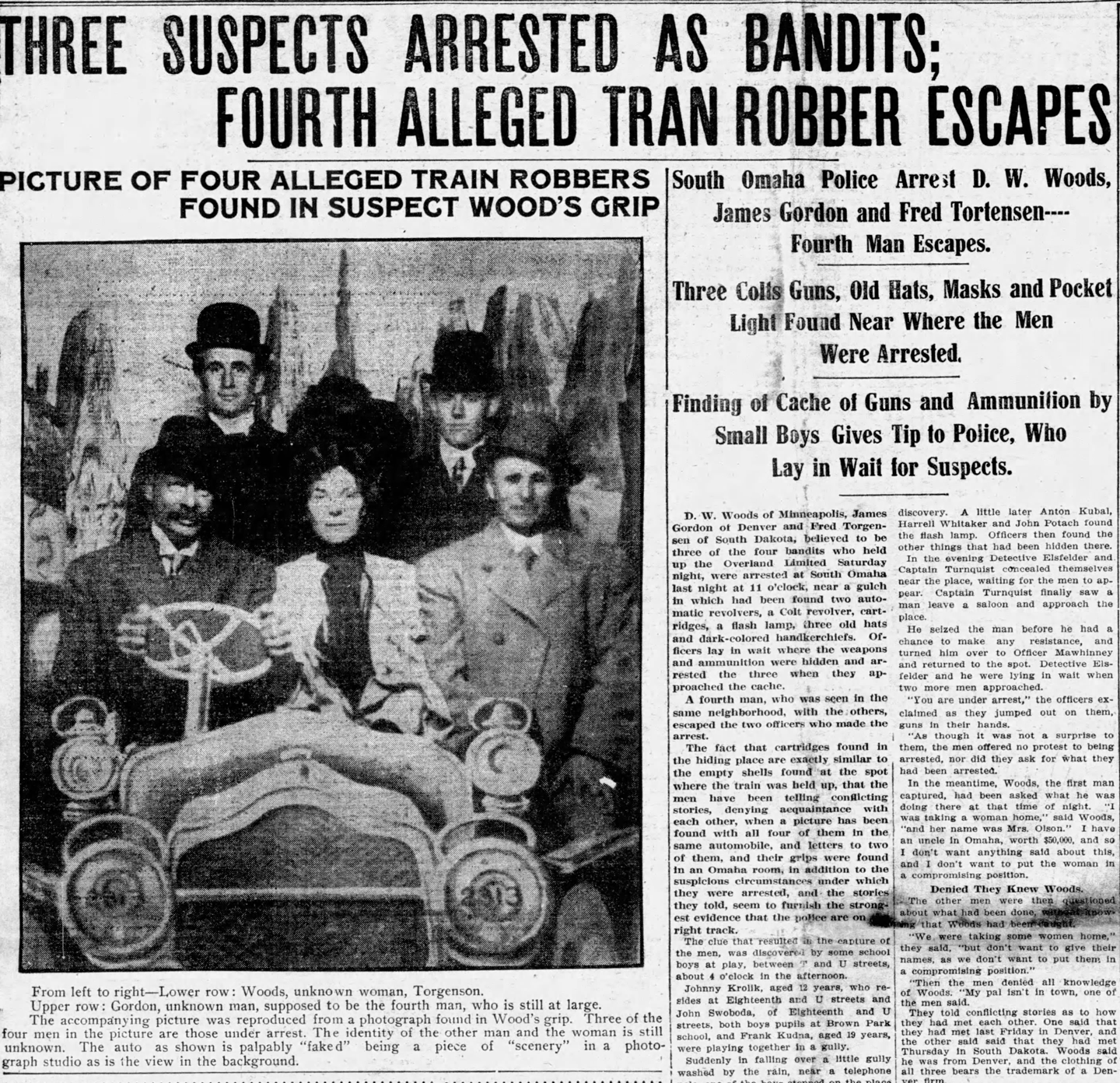
Searches of the suspects’ apartments turned up more evidence. Of special interest was a group photo showing the three men plus a fourth man and his lady friend — a Denver woman who, after being “sweated” by the police, agreed to turn state’s evidence against the others. The men were said to be a gang of “well-known Spokane crooks and safe-blowers” who apparently left the Pacific Northwest after becoming too well-known to authorities.
By the time the trial was underway in November, the defendants — apparently believing that conviction was inevitable — tried to break out of jail. They were caught with saws in their cells, and one of them had nearly finished sawing through the roof of his “solitary cage.” After the jury found the five men guilty, they were immediately hustled off to Fort Leavenworth for what was supposed to be “a life of hard labor.”
In Omaha, the schoolboys, school principal and janitors, and members of the Omaha Police Department spent the next four years squabbling over the reward money, which a judge eventually divided among them.
Most of the convicted men ended up serving between one and 17 years. One was pardoned by President Woodrow Wilson after the others swore he was innocent, and three of the others had their sentences commuted for good behavior.
But one of the five, Frank Grigware, escaped from Leavenworth with a group of convicts who “commandeered a locomotive in the prison grounds and crashed through a gate to freedom,” in the words of historian Tommy R. Thompson. Grigware lived for many years in Canada under an assumed name. By the time his identity was discovered in 1934, he was such a popular local citizen that he was never extradited.
Read more about the case by searching “Great Omaha Train Robbery” at history.nebraska.gov.