By David L. Bristow, Nebraska State Historical Society
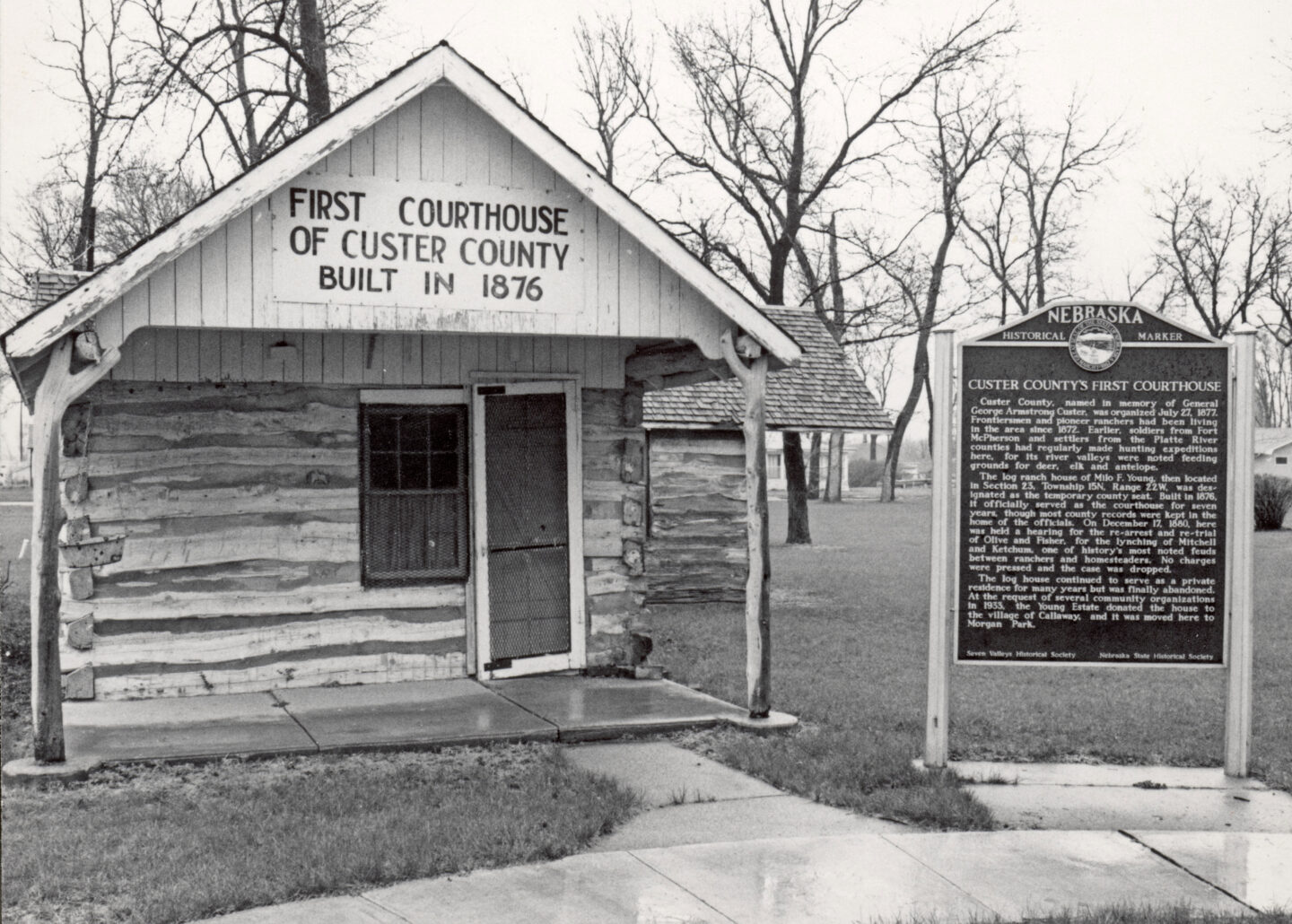
Frontier courts often met in rented rooms, and when a county’s first dedicated courthouse was built, it was usually small and cheap — like Custer County’s log cabin courthouse. But by the late 19th century, a grand courthouse became a point of pride, with Nebraskans eager to show their progress. Several Nebraska counties still have their landmark courthouses from that era.
Just as some courthouses are known for their architecture, others past and present are associated with unusual stories. Here are just a few:
Have you ever been to Orville City? It was the original seat of Hamilton County, soon challenged by upstart Aurora. In a series of legal battles in the 1870s, Aurora twice defeated Orville City in county seat elections, but the commissioners refused to move and prevailed in court.
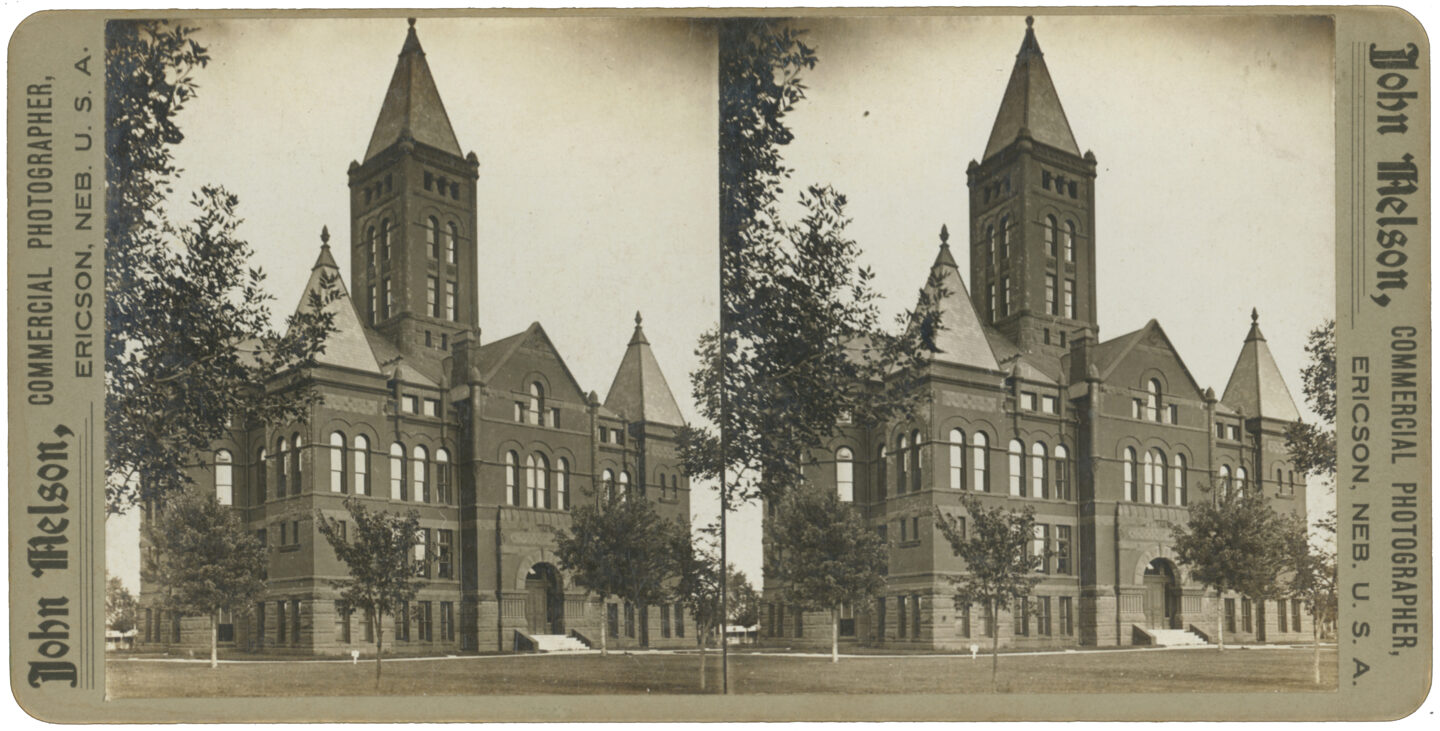
In 1874, about 150 Aurora men descended on Orville City and stole the county records, later grudgingly returning them under court order. After a few more disputed elections — rife with accusations of fraud and ballot box stuffing — Aurora finally defeated both Orville City and the town of Hamilton in early 1876.
While its rivals faded into ghost towns, Aurora spent two years building a fine courthouse — only to see it burn down within two decades. Today’s landmark Hamilton County Courthouse is an 1895 replacement, a monument to the city’s persistence.
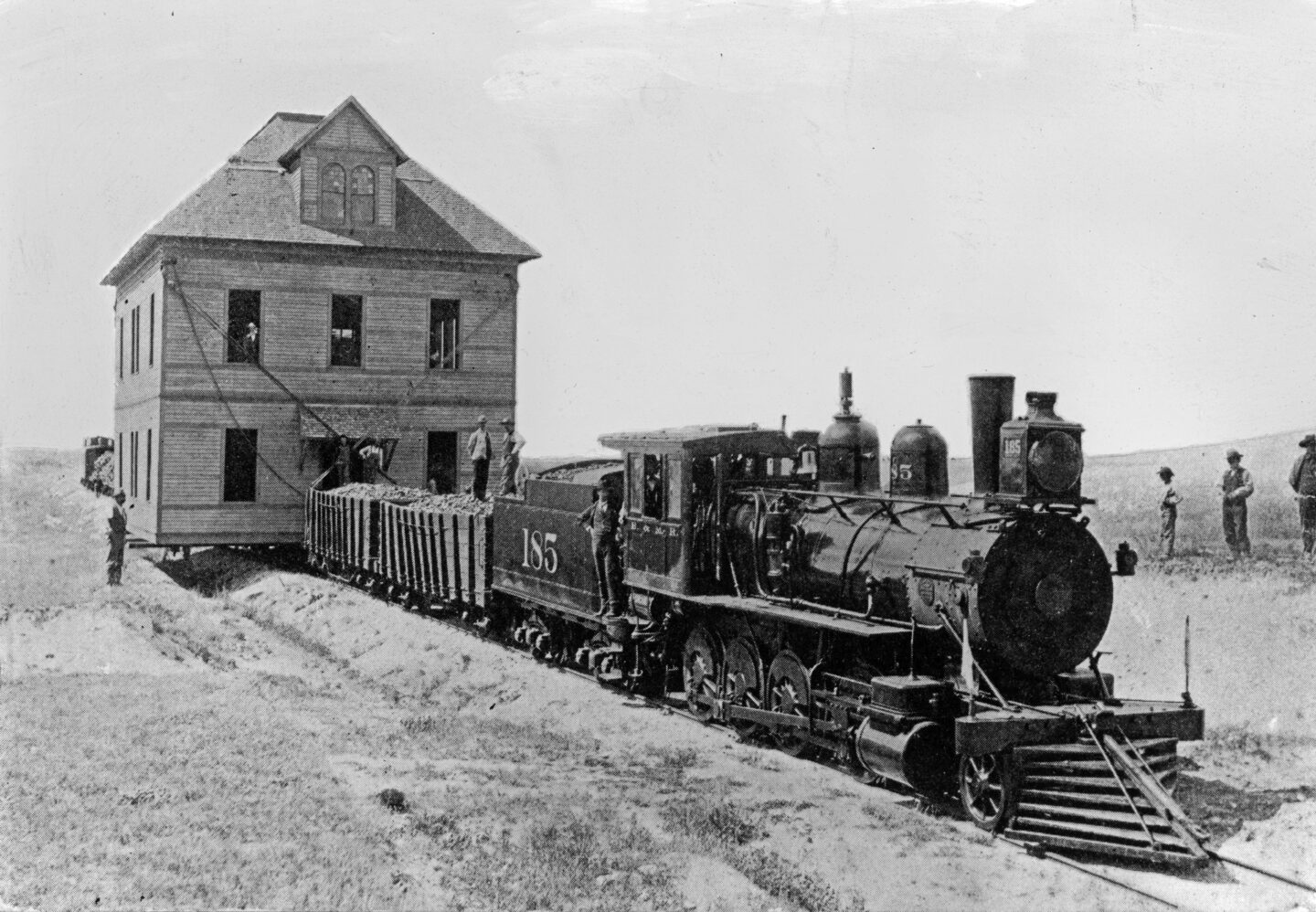
Nebraska has many stories of county seat rivalries, but none provided a better photo op than Box Butte County. After Hemingford lost a county vote in 1904, Alliance men came to remove the courthouse itself! Balancing the two-and-half-story wooden building on a Burlington Railroad flatcar, they hauled it 20 miles to Alliance.
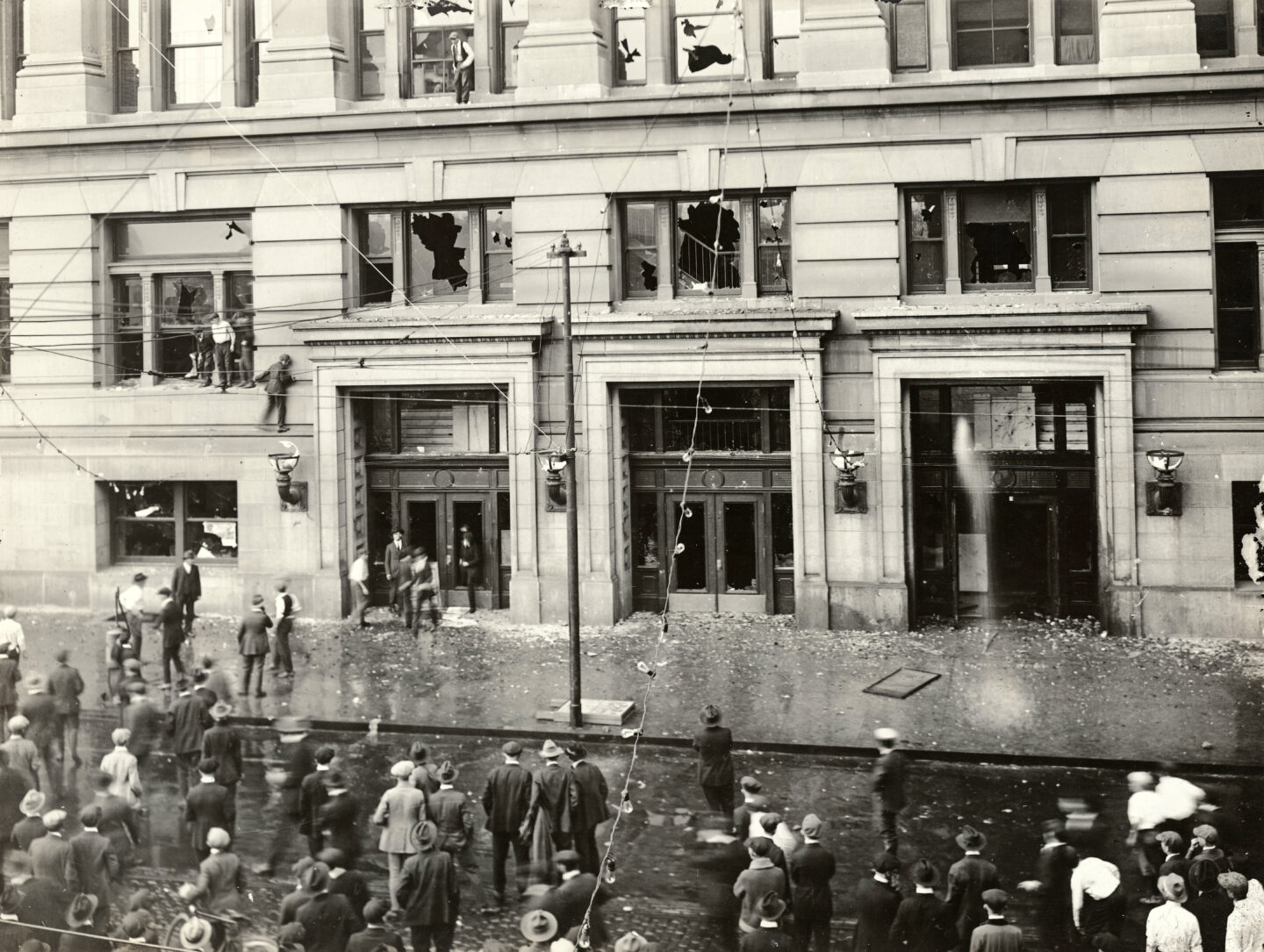
In downtown Omaha, the monumental Douglas County Courthouse is not the first grand courthouse to stand on that location. Its predecessor was smaller but more ornate — and it stood on higher ground. A circa-1900 postcard shows the old courthouse perched strangely atop an earthen pyramid. Built in 1885, the courthouse in its later years was accessible only by long stairways after a massive earth-removal project lowered the steep hills of downtown Omaha. The remaining land was cut away when the current courthouse was built in 1912. Both courthouses share a grim distinction: Each saw mob lynchings of Black men accused of rape — in 1891 and 1919.
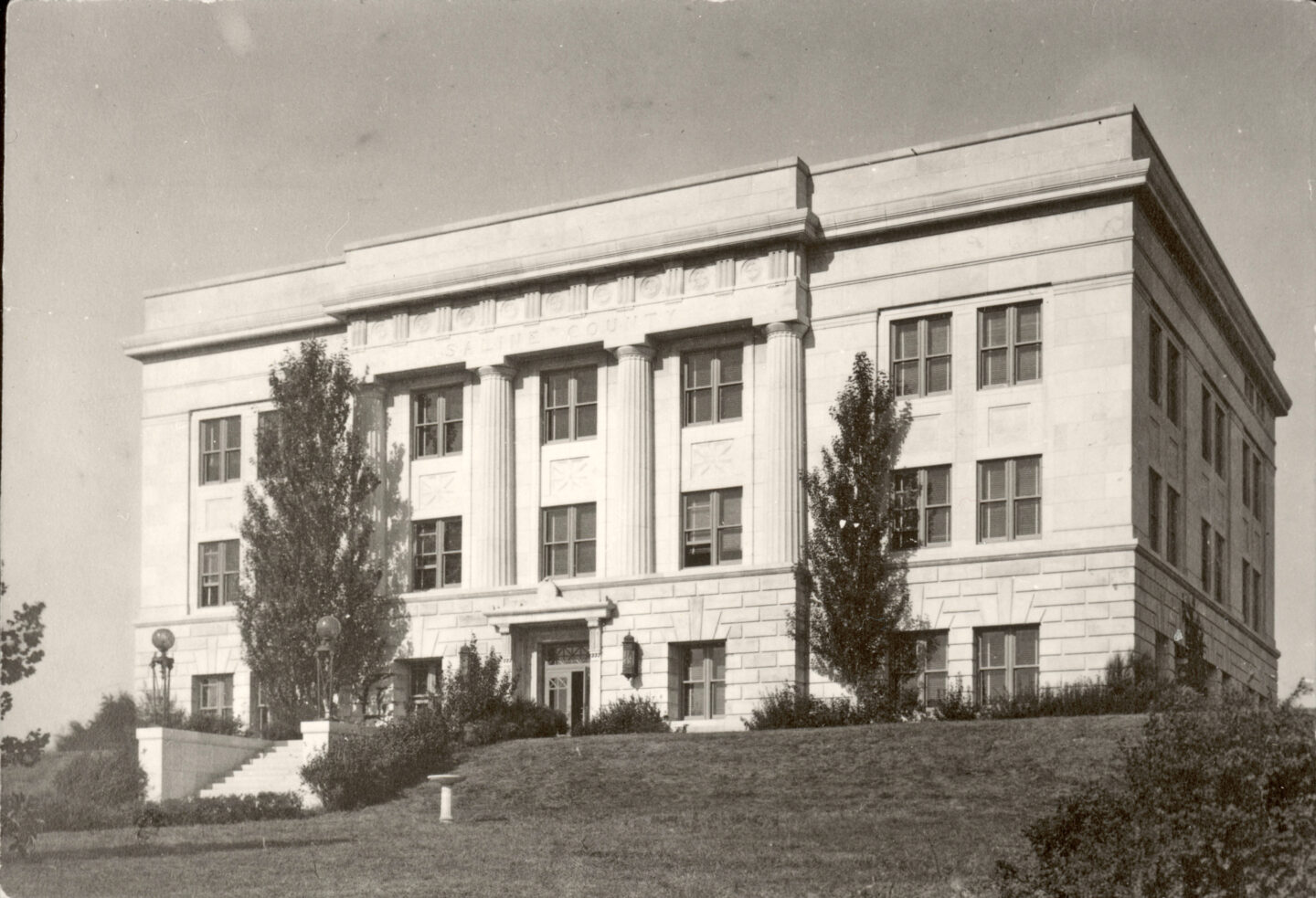
The Saline County Courthouse in Wilber saw its own version of civil unrest on March 13, 1933 — fortunately without fatalities. During the Great Depression, protestors associated with the “Farm Holiday” movement disrupted farm foreclosure auctions by intimidating anyone from making more than a token bid. They called it a “penny auction.” After the property was sold for a few dollars, the buyers would return everything to the owner.
When such a penny auction was to be held near Wilber, a crowd of farmers, including women and children, entered the courthouse and held the sheriff in his office to prevent him from stopping the planned disruption of the sale. Barricading themselves in the office, the protestors fought with deputies until they were dispersed by tear gas. The Lincoln Star told of “men and women alike jumping out of windows or doors.” The leaders were later arrested and fined.
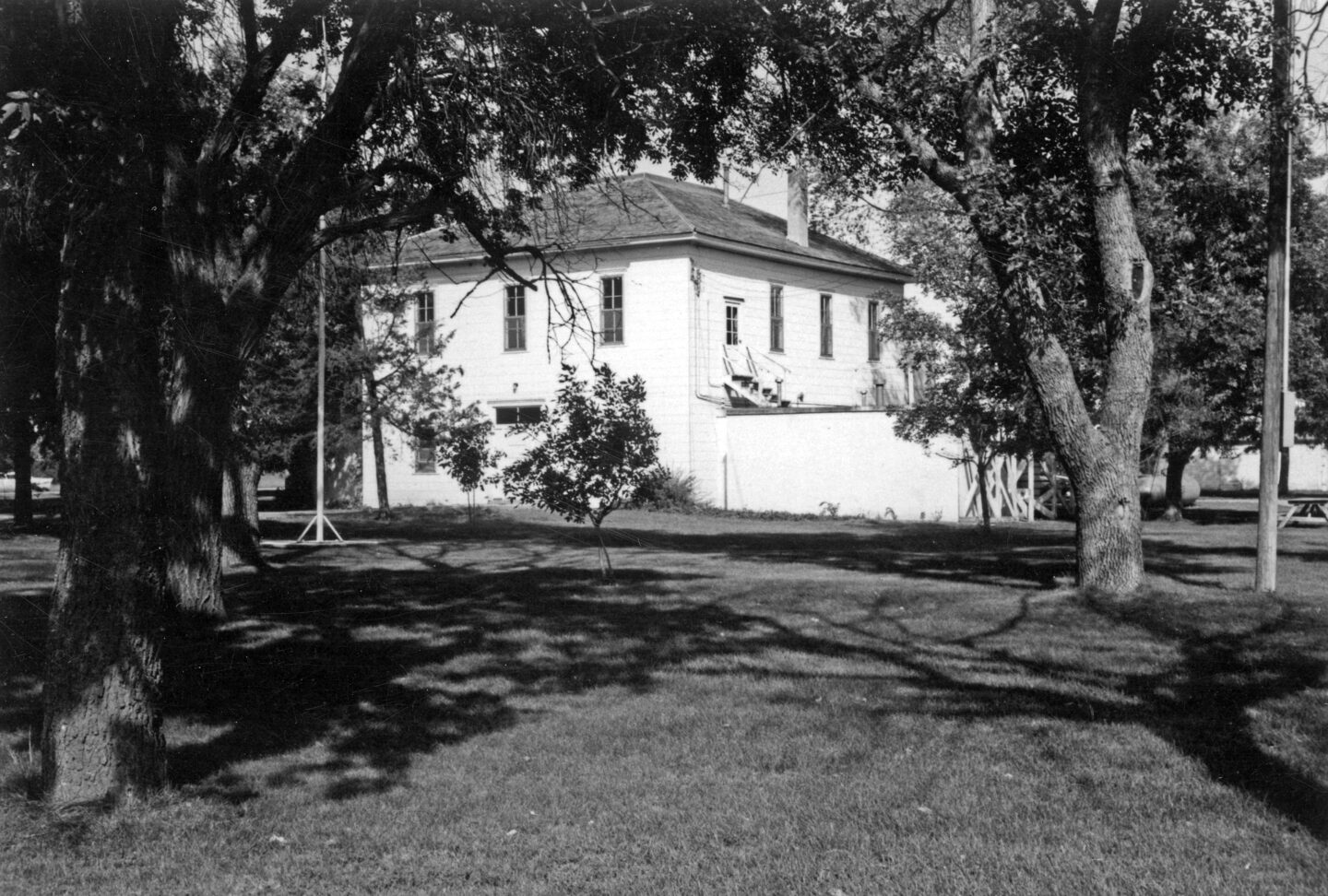
Across Nebraska, women served on juries for many years before Frontier County empaneled its first female jurors in 1966. Why so late? The problem was indoor plumbing, which the tiny courthouse lacked. Many years earlier, a local judge had issued a rule prohibiting female jurors until modern restroom facilities could be provided. (As if the county’s mostly farm-and-ranch women were too delicate to use an outhouse!) The improvement was finally made in 1962, but several more years passed before a local case came to trial.
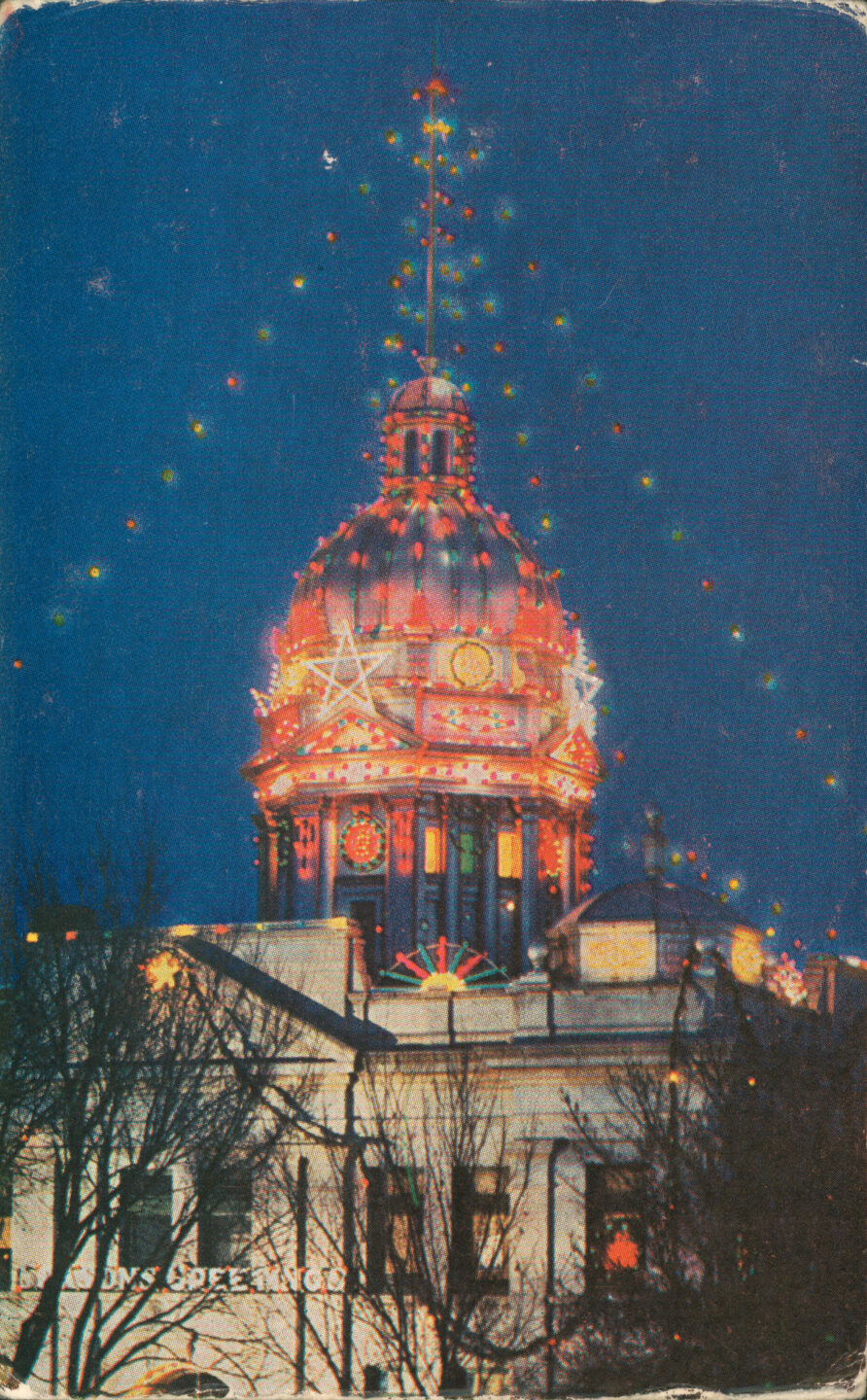
And finally, in Minden, every year the Kearney County Courthouse is strung with 12,000 Christmas lights and hosts an outdoor pageant performed by more than a hundred local volunteers. The light display began in 1915 and the pageant in 1946 — living traditions now older than many of the state’s current courthouses.