
By R.R. Foresman
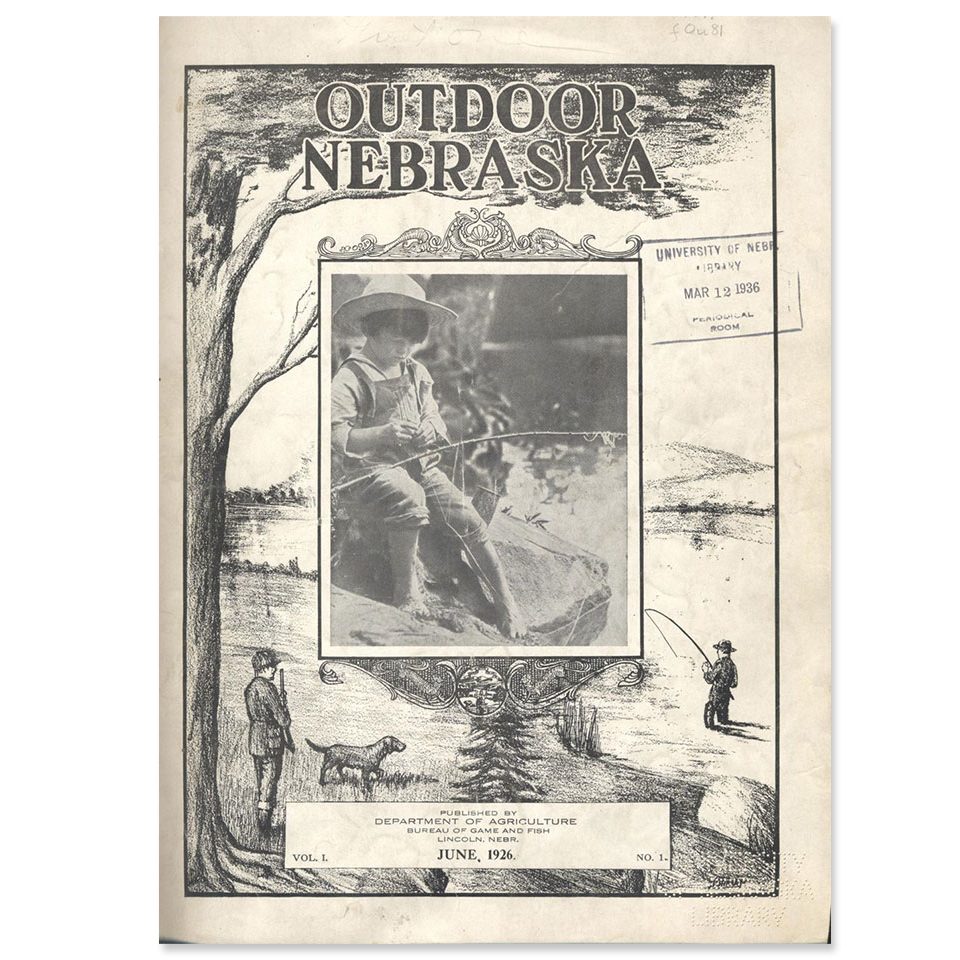
A century-old mystery surrounding the first cover of Outdoor Nebraska may finally have an answer.
The June 1926 cover shows a young boy in overalls and a straw hat, barefoot and tangled in fishing line. During Nebraskaland’s centennial year, the magazine asked readers to help identify him. A review of early issues, newspaper accounts, family photographs, contributor credits and newly examined glass-negative material now points most strongly to Curtis Marion Bunney, son of Loron Bunney.
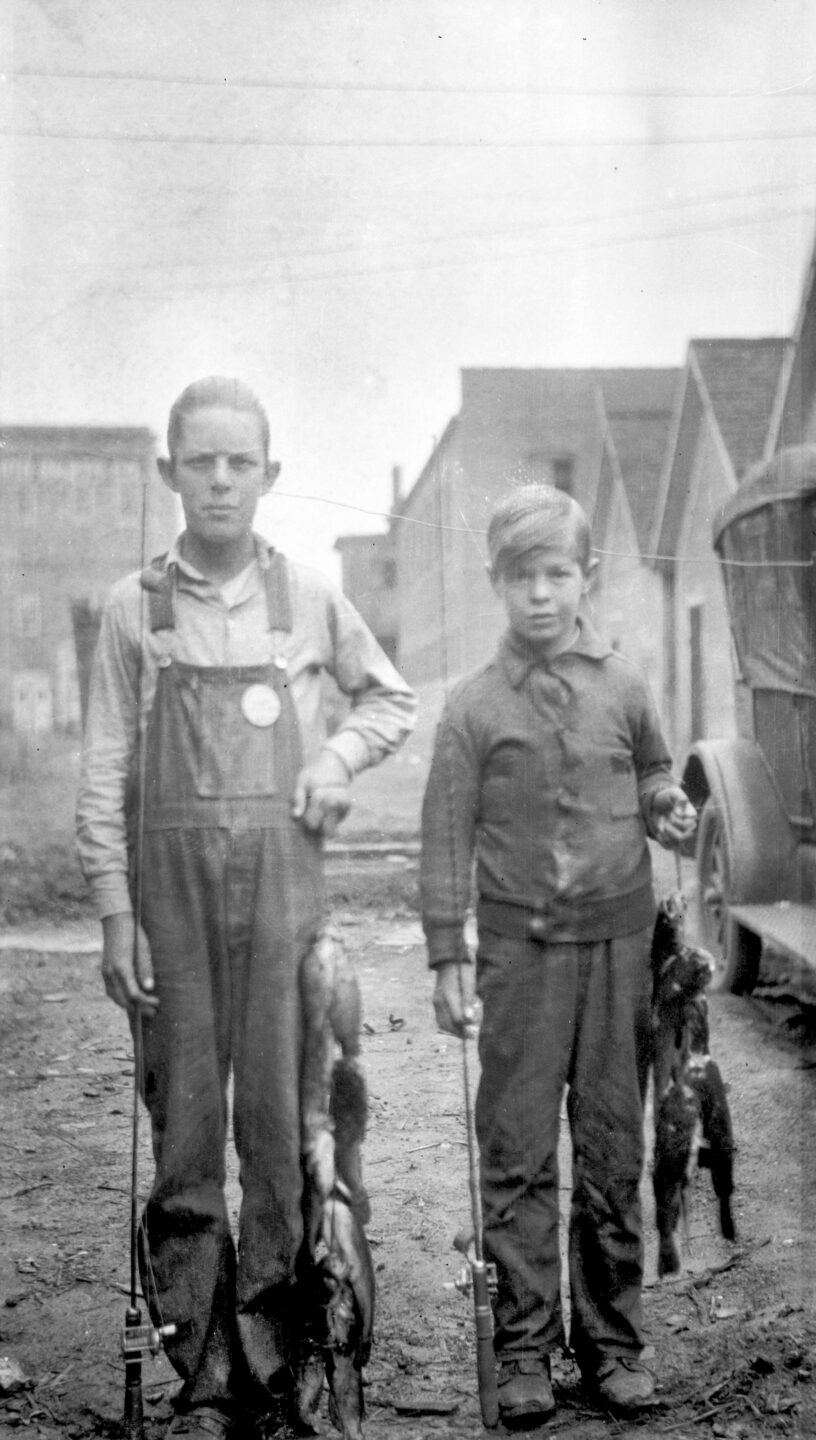
The new evidence comes from the Bunney family. Loren Bunney of Prescott Valley, Arizona, Curtis’ son, identified a family glass-negative photograph showing Leonard Bunney on the left and Curtis on the right. The image, provided to the family by Jesse Bunney of Des Moines, gives researchers the clearest known comparison with the child on the June 1926 cover. Curtis was born in July 1919 and would have been nearly seven when the first issue appeared.
That identification also leads back to Curtis’ father, Loron Bunney, whose role in early Nebraska conservation and Outdoor Nebraska appears more substantial than later recollections sometimes suggest. Bunney was a deputy game warden, field superintendent, photographer, outdoor writer and nationally recognized trapshooter. The first issue reported that the Holdrege sportsman had served several years as a deputy game warden before being promoted to field superintendent. Early issues also credited him with photographs, and an October 1926 issue noted that field superintendent Bunney was “again on the job with his camera.”
Those credits are important because they place Bunney behind a camera during the magazine’s formative months, not merely in the field as a conservation officer. They also provide a documentary reason to examine other Bunney family photographs alongside Outdoor Nebraska’s earliest covers rather than treating the June image as an isolated mystery.
Another early cover strengthens the family connection. The October 1926 cover shows an elderly fisherman holding his catch. Loren Bunney identified that man as his grandfather, Joseph Bunney. Joseph died in June 1925, a year before the cover appeared, indicating that Outdoor Nebraska sometimes used older Bunney family photographs rather than images made specifically for publication. That makes it plausible that the first-cover image of Curtis also came from an existing family photograph.
The case is not closed in the strict archival sense. No surviving caption card, original print, letter, or editorial file has yet been located that definitively names the boy on the June cover. For that reason, the evidence supports describing Curtis Marion Bunney as the best-supported identification rather than a conclusively proven one.
The search has also reopened a larger story about Loron Bunney’s place in the magazine’s early history — his camera work, conservation service, shooting career and apparent family connections to several first-year covers. Thanks to the Nebraskaland Digital Archive and surviving Bunney family materials, a photograph that stood unidentified for nearly a century is helping restore one Nebraska family’s place in the state’s outdoor history.