
By David L. Bristow, Nebraska State Historical Society
It was after midnight, and Billy McNamara and three other volunteer firemen were manning a hose inside the second-floor dining room of Omaha’s Grand Central Hotel. Billy was “a popular young man and soon to be married.” A hotel employee, he knew the building well.
When other firemen warned Billy and the others to get out of there, Billy replied (as reported in the Omaha Bee) “that he had been employed in the hotel so long that he did not feel like going back on it just then.” Nearby, John Lee — another young man, married less than a year — “proposed to stay with the fire till (sic) the last moment.”
They saw no immediate danger. They had time.
Eight years earlier, in 1870, Omaha leaders decided their growing city of 16,000 residents needed a first-class hotel. Selecting the southwest corner of 14th and Farnam streets (where the Paxton Hotel stands today), more than 120 prominent men bought shares in a joint company and eagerly anticipated the money that well-to-do travelers would spend in the city.

The project was troubled from the beginning. Funds ran out and construction halted after less than four months. Ed Creighton — the richest man in town — made a big personal loan, but two years later, the company again ran short before the hotel was finished. When Creighton tried to foreclose, the other stockholders fought him in court to prevent him from gaining sole ownership. The feud was still unresolved when the hotel finally opened in 1873.
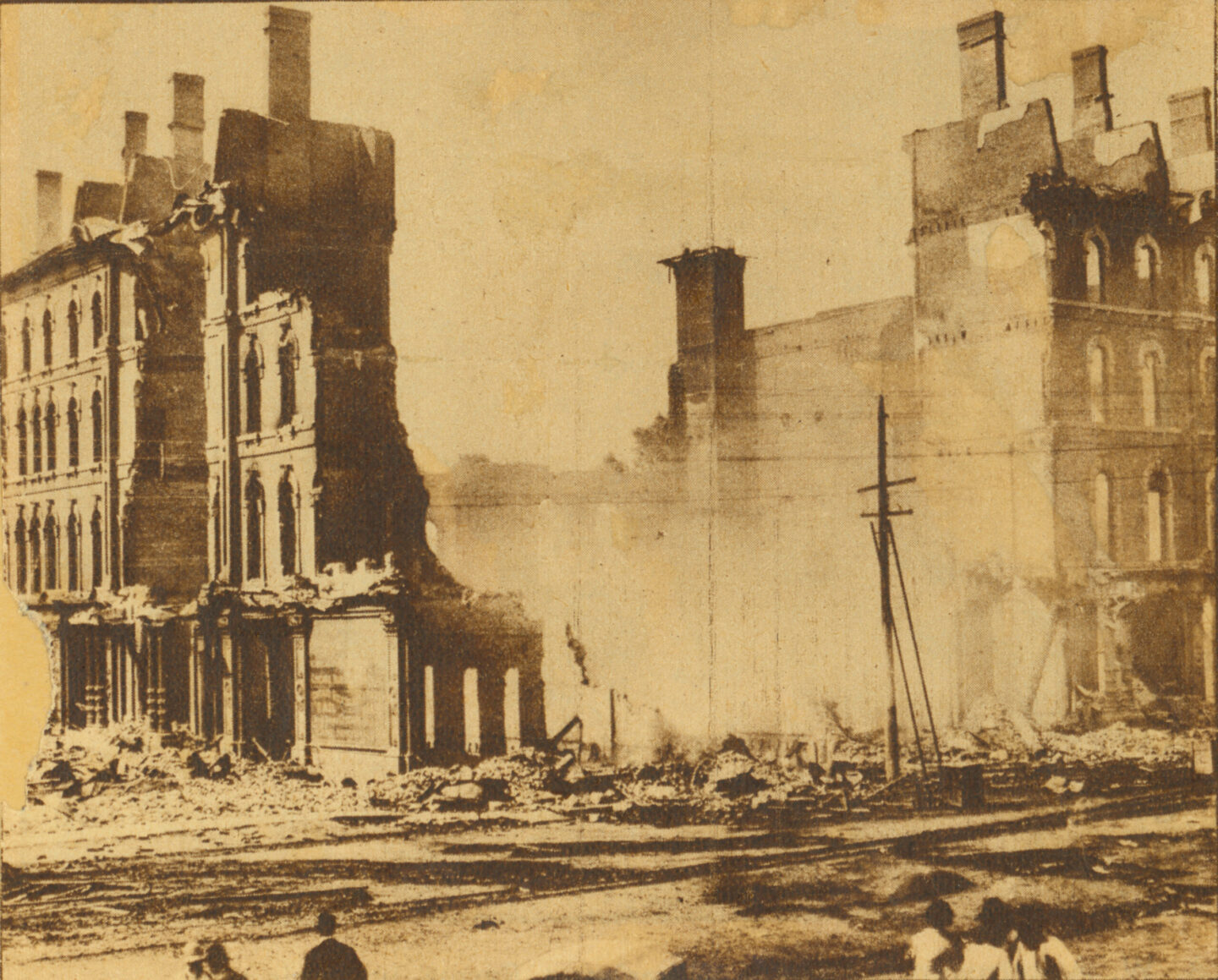
Five stories tall and billing itself as the “largest and best hotel between Chicago and San Francisco,” the Grand Central offered the latest in style and comfort. Its ground-floor exterior featured lots of iron and glass; the upper stories were brick with white stone window caps. Every room had hot and cold water, steam heat and gas lighting. The local press described each floor in detail — the chandeliers and marble-topped stands, the richly carpeted hallways, the lavish bar and billiard rooms and the Western Union telegraph office with its 34-wire switchboard.
But the hotel struggled financially and was sold at auction in 1878. Renovations were underway when, on the evening of Sept. 4, a workman accidentally kicked over a candle on the fifth floor. Omaha’s all-volunteer fire department arrived to find dense smoke rolling from the mansard roof and upper windows.
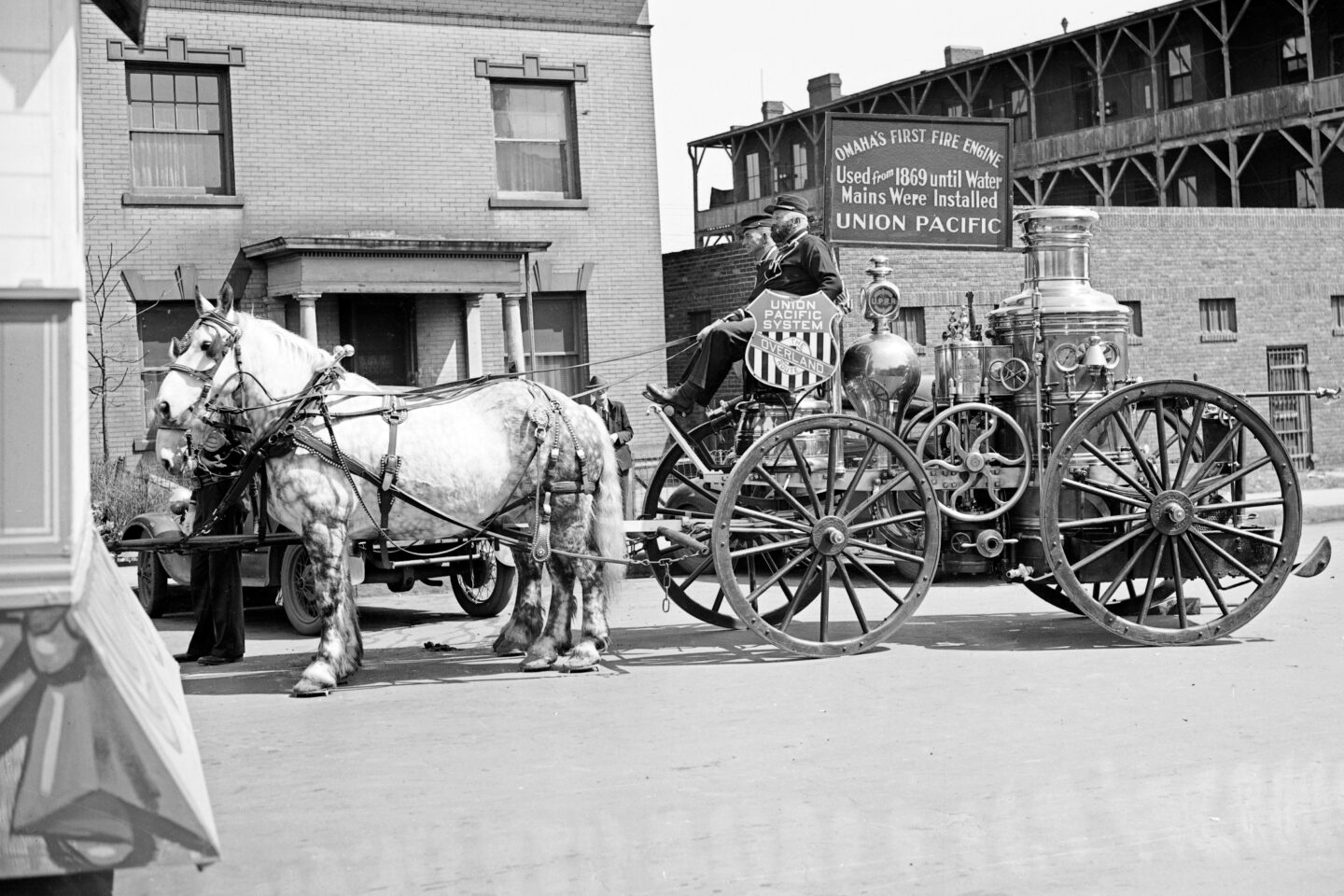
The city had supported a hook-and-ladder company since 1860, starting with a single cart pulled by the men themselves. Other equipment had been added over the years, including a steam engine and a network of cisterns from which water could be pumped — because the city had no waterworks.

The fire began about 6:45 p.m. Within an hour, the firemen ran out of water and spent the next 15 to 20 minutes running hose to more distant cisterns. Even then, they could not pump water higher than the third floor.
Onlookers filled surrounding blocks. It seemed the whole city turned out to watch. The hotel and adjacent buildings swarmed with men hauling anything movable to safety. The Omaha Herald moved their presses. An undertaker moved his coffins.
“Great excitement and confusion prevailed among the firemen during the fire,” the Bee reported, “and there seemed to be a general lack of order, management, and good judgment.” Telegrammed by Omaha’s mayor, the Council Bluffs fire department arrived between 10 and 11 p.m. By then, the fire was down to the fourth and third stories.
Part of the fifth-floor wall collapsed onto Farnam Street at 10:30 p.m. Two hours later, the ground floor was burning. But Billy McNamara and his companions were still manning a hose on the second. They had no warning when a wall collapsed on them, crashing through the floor into the billiard hall below.
For the next few hours, “walls here and there tumbled in sections” until the fire burned itself out at 5 a.m. The four firemen’s charred bodies were recovered from the ruins by the light of day. That evening, a fifth fireman died of injuries suffered in another part of the hotel.
The disaster changed Omaha. The city was both grateful and embarrassed that the arrival of the Council Bluffs fire department had saved the rest of downtown. Omaha dismissed its fire chief and replaced its volunteers with a professional fire department. (The volunteer firefighters that serve many communities today are far better trained and equipped than Omaha’s old hook-and-ladder companies.)
The Omaha Bee, meanwhile, lambasted residents who opposed the expense of a city waterworks. Omaha soon built a system of pressurized fire hydrants and reservoirs. Although the city suffered other major fires afterward, it would never again face one so unprepared.
Visit the Nebraska State Historical Society’s website at history.nebraska.gov.