
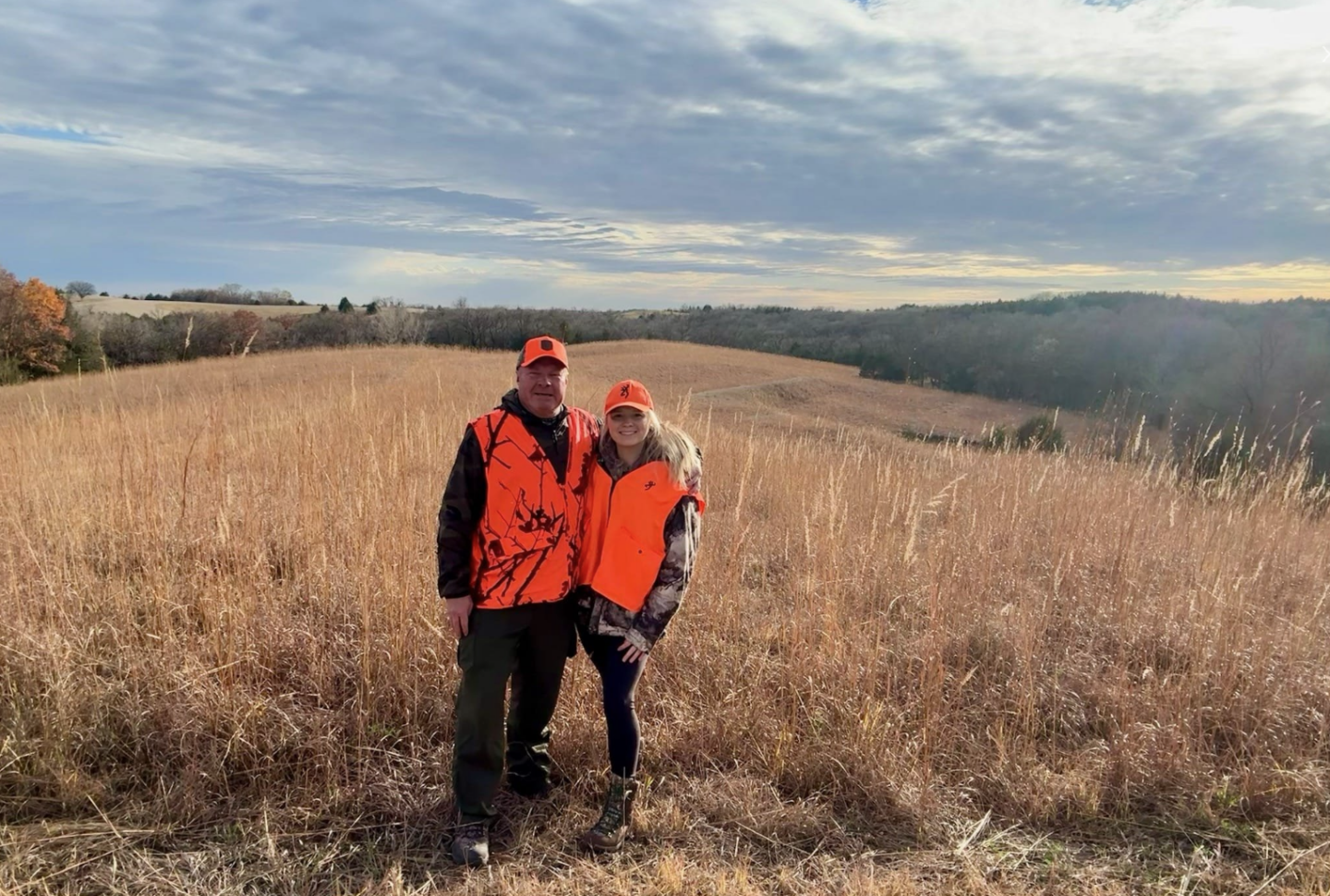
By Greg Wagner
I am a hunter. I write and speak about hunting. I take images and record videos of hunting. I interact with hunters.
Hunting is a major part of both my personal and professional lives.
With my occupation (as a communications and marketing specialist for the Nebraska Game and Parks Commission) and through my personal social media accounts, I am asked frequently about “why I hunt.”
The answer is not a simple one and it is hard to put into words. And, no, “it ain’t about the killin’ or just shootin’ guns.” Nothing, nothing could be further from the truth!
Digging deep, there are many reasons why I like to hunt.
And, I want to share them with you. Maybe you will better understand the lifestyle of hunting after reading them.
Reasons I Hunt
I hunt because I like tradition and having my soul hard-wired as a descendant of prairie pioneers who hunted for food.
I hunt because I like to have fun meeting new friends, reconnecting with old ones, staying close to family members and establishing and fostering relationships with landowners, our great Nebraska farmers and ranchers.
I hunt because I like contributing to conservation, being an active participant in science-based wildlife management, and being viscerally tied to the earth and the circle of life.
I hunt because I like celebrating the freedom of America and being part of the best model for wildlife conservation in the world — The North American Model of Conservation.
I hunt because I like, appreciate and understand what it takes to have excellent wildlife habitat — whether it is in the woods, the waters, the wetlands, the grasslands or the croplands.
I hunt because I like seeing first-hand the benefits of the U.S. Farm Bill (e.g. Conservation Reserve Program (CRP)), the single largest source of federal funding for conservation on private lands.
I hunt because I like pure adventure and that no two hunting trips are the same.
I hunt because I like to make memories that will carry me well into my senior years.
I hunt because I like the solitude and just listening to the sounds of nature.
I hunt because I like inspiring moments afield such as watching sunrises and sunsets in wild, rural places.
I hunt because I like feeling and smelling the wind.
I hunt because I like the physical benefits hunting offers to work muscles, burn calories, obtain Vitamin D and improve sleep quality.
I hunt because I like the intensely personal, wellness-like experience it provides to clear the mind, reduce stress and learn even more about myself.
I hunt because I like that it helps me hone life skills and positive attributes such as patience, resiliency, self-discipline, self-reliance and safety.
I hunt because I like escaping the concrete jungle, the technocracy and the hustle and bustle of everyday life.
I hunt because I like the challenge that hunting offers with Nebraska weather and the attempt to draw game animals and birds close enough for a shot on their home turf.
I hunt because I like getting to know all wildlife species and their interconnectedness.
I hunt because I like the quiet electricity just before the shot — that breathless moment when time slows down and adrenaline takes over.
I hunt because I like to watch a good hunting dog work.
I hunt because I like reducing my carbon footprint and directly linking with my food and eating healthy, lean, free-ranging, delicious protein — wild game — that compliments the garden vegetables I grow and serve at the table.
I hunt because it is who I am.
So, why do you hunt?
“When one is hunting… the air has another, more exquisite feel as it glides over the skin or enters the lungs, the rocks acquire a more expressive physiognomy, and the vegetation becomes loaded with meaning.
But all of this is due to the fact that the hunter, while he advances or waits crouching, feels tied through the earth to the animal he pursues, whether the animal is in view, hidden, or absent.
The reader who is not a hunter may think that these words are merely phraseology, simply a matter of speaking. But the hunter will not. They know it is literally true that when they are in the field the axis of the whole situation is that mystical union with the animal, a sensing and presentment of it that automatically leads the hunter to perceive the environment from the point of view of the prey, without abandoning his own point of view.” – Jose Ortega y Gasset, “Meditations on Hunting”,1942