

By Monica Macoubrie, Wildlife Education Specialist
A Nebraska winter can bring up questions about wildlife you normally wouldn’t think about in summer. One question I’ve thought of recently: Does the cold change how animals see?
The short answer is no. Winter changes how the world looks, and animals respond to that shift in ways that are easy to miss.
Cold Temperatures and the Eye Itself
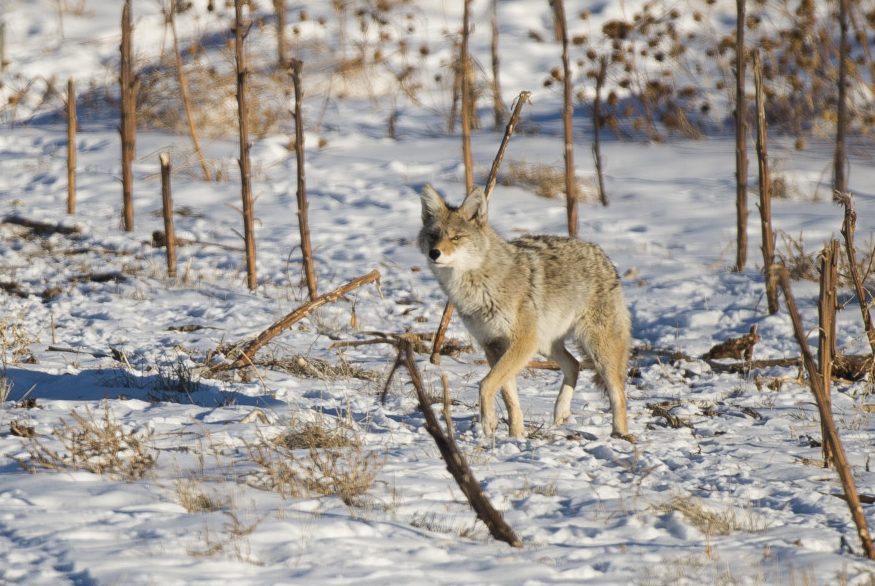
Most of Nebraska’s winter-active animals are remarkably well equipped for the cold. Mammals and birds keep their eyes warm with steady blood flow, even when the wind cuts through layers and frost builds on whiskers and feathers. If you’ve ever seen a coyote moving confidently across a frozen field at dawn, you’ve seen this firsthand — alert, scanning, completely unbothered by conditions that make humans hunch their shoulders and rush indoors.
That said, winter isn’t comfortable. Blowing snow stings. Ice forms along eyelashes and fur. Animals blink more often, angle their heads away from the wind, or tuck in tight during storms. These aren’t signs of failing vision. They’re just practical adjustments to a harsh environment. Any physical traits that help protect eyes in winter — thicker fur around the face, eye placement that reduces glare, pupils that handle low light — are the result of generations of survival on the Plains.
How Winter Changes the Visual Environment
What mainly changes in winter is the scene itself. In the sunlight, snow can increase the contrast and brightness of a landscape. A single moving shape stands out for hundreds of yards. On clear days, the glare can be intense enough that even humans wearing sunglasses feel the strain.
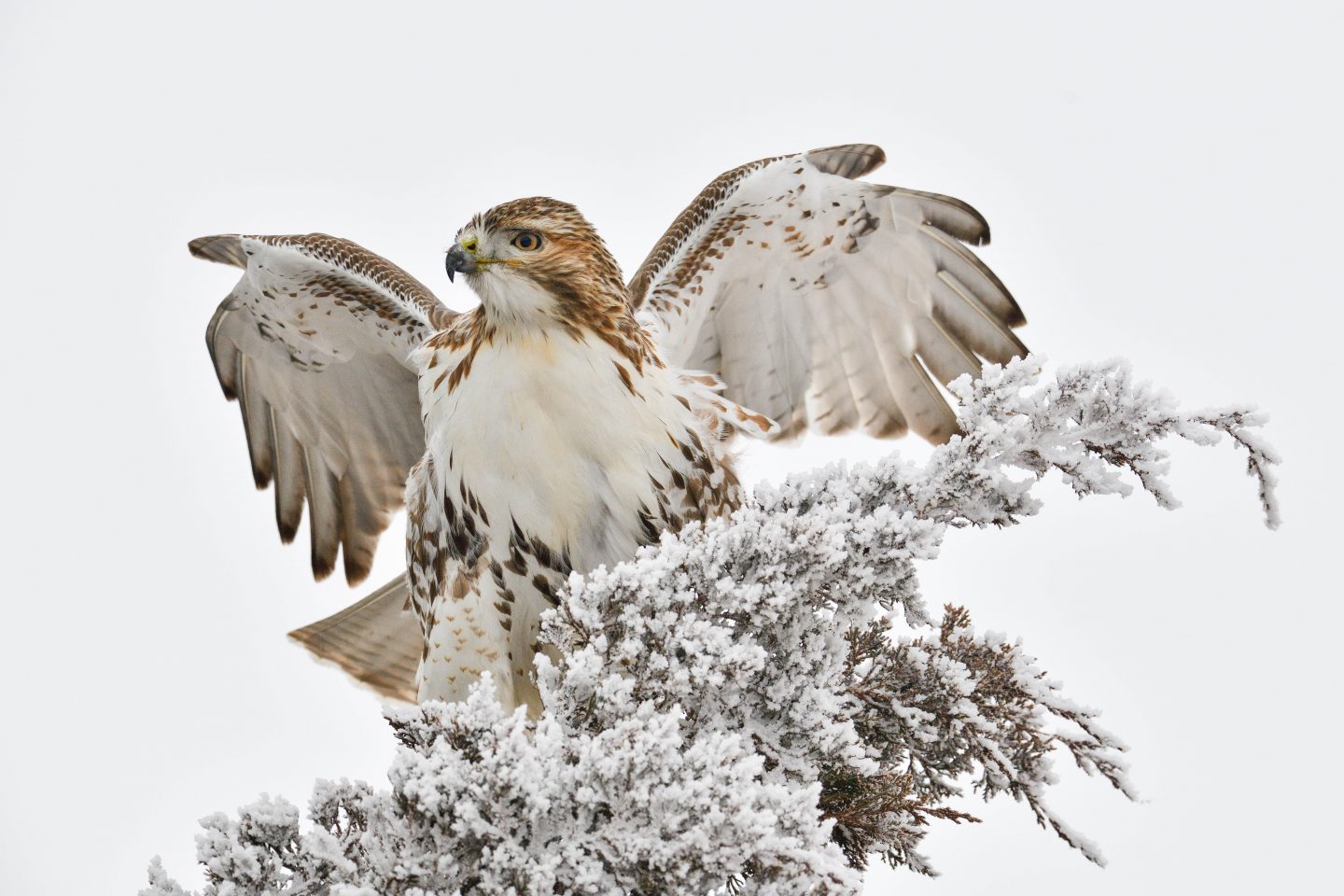
Many animals handle this better than we do. Deer, coyotes and raptors are tuned to contrast and motion, not fine detail. A flick of an ear, a dark back against the snow — that’s what matters. At the same time, winter light is limited. Days are short, the sun is weak and dusk comes early. Animals that thrive in low light, such as foxes, owls and coyotes, often seem more active and confident as the day fades.
Cold, Reaction Time, and the Brain
Not all animals can power through winter like mammals and birds. Reptiles and amphibians simply can’t. In cold temperatures, their bodies slow down, including how quickly their brains process what their eyes see. A snake might still detect movement, but reacting to it becomes harder and slower.
That’s why reptiles disappear for the season. Brumation isn’t just about avoiding the cold —it’s about waiting for a time when their bodies, senses included, can function properly again.
Seeing Less, Listening More
One thing winter makes obvious is how rarely animals rely on just one sense. In deep snow, the power of vision is limiting. For example: Coyotes hunt with their heads tilted, listening for the faint rustle of a vole beneath the snowy crust. Owls drop out of the sky with astonishing precision, guided more by sound than sight. Deer test the air constantly, trusting their noses as much as their eyes. To a human observer, it might look like animals are struggling to see. They’re simply using the tools that work best in winter, which might not always be their eyes.
Reindeer Vision in Winter
Although Nebraska doesn’t have reindeer, their adaptations to life in the snow and darkness are too fascinating not to share.
As daylight fades and snow begins to dominate the landscape, reindeer eyes change color — from golden in summer to deep blue in winter. This change isn’t cosmetic — it helps their eyes become more sensitive to low light during long, dark winters. Even more impressive, reindeer can see ultraviolet light, which humans can’t. In snowy environments where everything looks blindingly white to us, UV vision helps reindeer spot subtle contrasts, such as dark fur, predator tracks or lichen covered in snow that would otherwise seem invisible to us.
Nebraska winters don’t take away animals’ vision. They change the stage. Light, contrast, sound and movement all shift, and animals shift with them. If you pause long enough —watching tracks cross a snowy trail or a hawk ride the winter wind — you start to see it, too. Not just how animals look in winter, but how they see their world, and why they’ve managed to survive it for so long.