
By Gerry Steinauer, Botanist
In 1926, when Outdoor Nebraska was first published, conservation in Nebraska and across the United States was still in its infancy. Following the Homestead Act of 1862, settlement of the state began in earnest, and in the decades that followed, game and fish were overharvested while their habitats were degraded by the plowing of prairies, cutting of woodlands and draining of wetlands. Many people depended on deer, elk, pronghorn, waterfowl, grouse and fish for food, and for some hunting and fishing was a form of recreation. As these wild animals declined, Nebraskans took notice and pushed for protection. Outdoor Nebraska reflected both public interest and the mission of the then-called Nebraska Game, Forestation and Parks Commission, and most of its content was devoted to game and fish.
At the time, nongame creatures — including wildflowers — drew little attention, receiving only a few sentences in the magazine. As their decline continued and ecological awareness grew, people began to take notice. As Outdoor Nebraska transitioned to Nebraskaland in the mid-20th century, those brief mentions gradually grew into beautifully illustrated feature articles.
A Drought of Wildflowers
For wildflower and other nongame enthusiasts, early issues of Outdoor Nebraska would have been a dull read. It was a sportsman’s magazine, plain and simple. A 1927 issue, for instance, contained articles on new game and fish laws, pheasant stocking, muskrat farming and game fish propagation. Plants barely registered. People gave little thought to native plants, which were also in decline and in need of conservation. When plants were mentioned, it was almost always for their value as food or cover for waterfowl, deer, quail and other game.
Case in point: The 1944 article “Nebraska’s Deer” discussed deer diet in the Sandhills and referenced several wildflowers. “The palatable shrubs [in summer] are redroot, sand cherry, choke cherry, sandhill willow, buckbrush and rose. … Soapweed and prickly pear cactus are eaten during the winter months when other green feed is scarce.” In another passage, the word “wildflower” appeared for the only time that decade in the magazine. Change, however, was on the horizon.
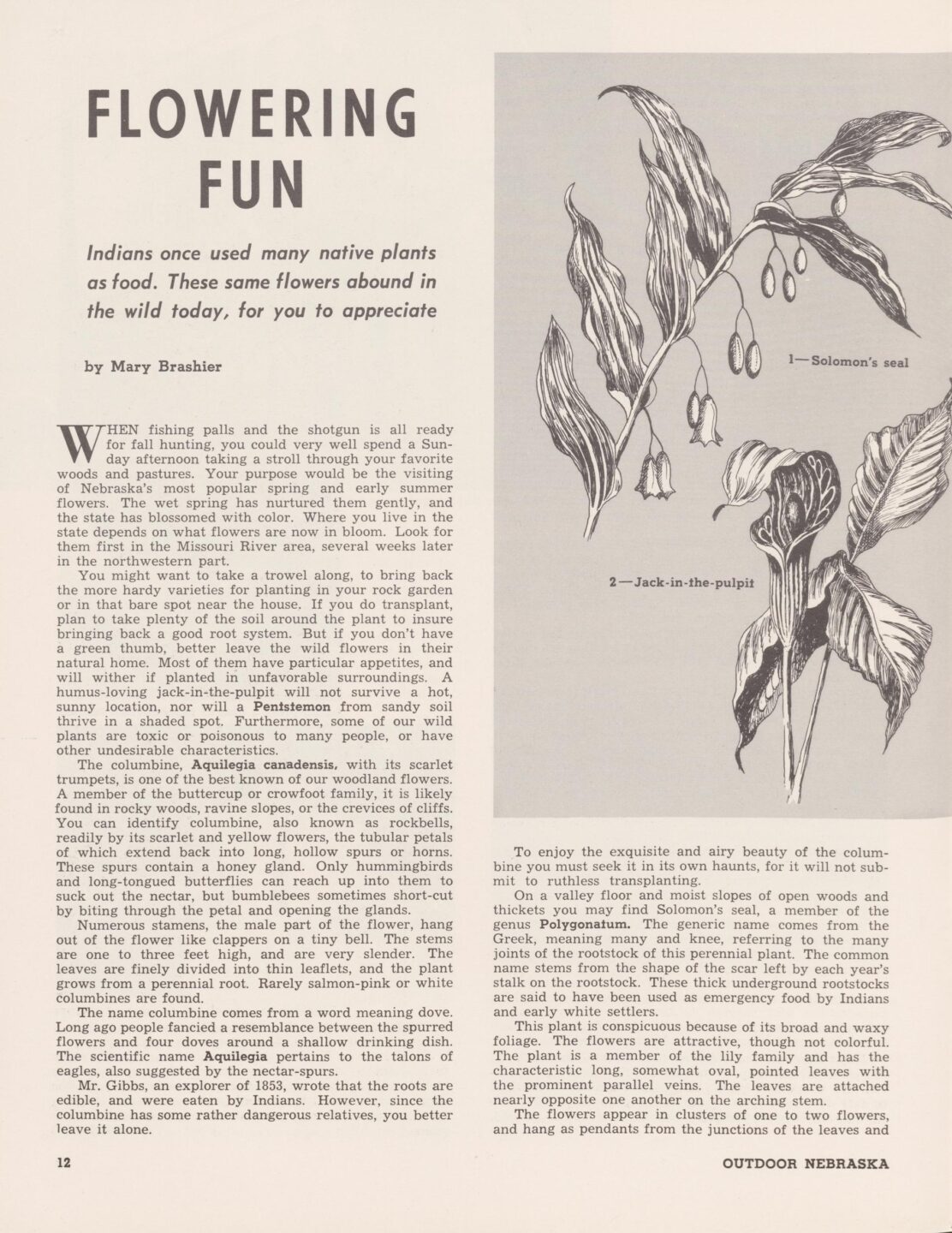
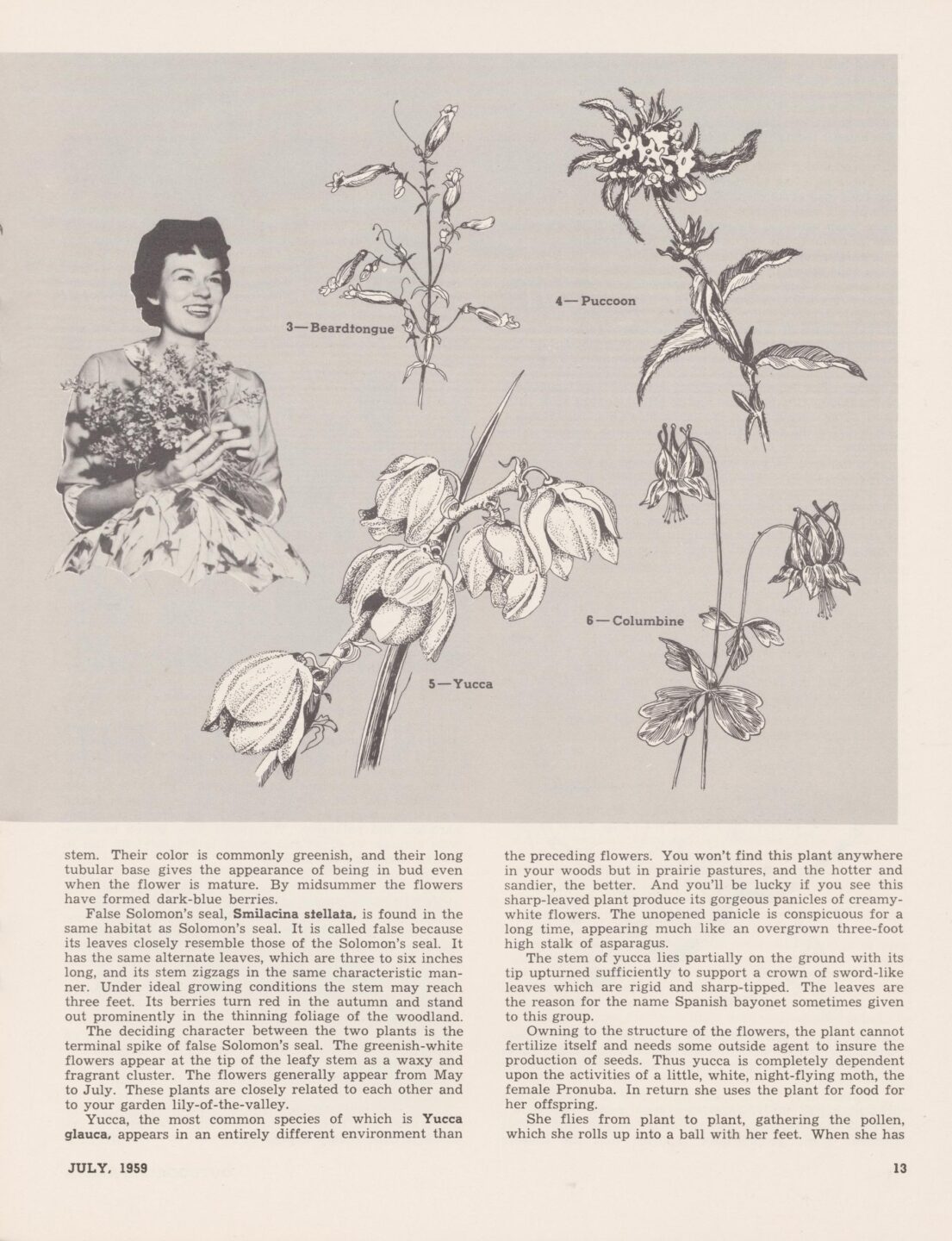
A woman’s perspective brought the first wildflower articles to Outdoor Nebraska. In 1959 and 1961, associate editor Mary Brashier wrote two short pieces: “Flowering Fun,” illustrated with line drawings, and “Prairie a Bloom,” illustrated with small black-and-white photos. The former was a natural history piece; the latter encouraged travelers to enjoy the state’s “varied” wildflowers: “The gay palette of colors along the road are as much a part of your Nebraska vacation as the first deer or strange bird sighted.”
Shortly after, Rachel Carson’s book “Silent Spring” drew attention to the dangers of pesticides, and in 1970, the first Earth Day brought national attention to environmental issues. Nebraskans were becoming more aware of the decline of nongame species, including plants and their habitats. The magazine followed suit, and by the early 1970s, after it had become Nebraskaland, wildflowers were finally taking root in its pages.
Wildflowers Bloom
From 1971 to 1989, “Notes on Nebraska Flora” appeared in the magazine, alternating with the long-running “Fauna” series. These two-page articles, written by Commission staff, covered plants ranging from trees to wildflowers. Longtime illustrator Bud Pritchard’s detailed, lifelike paintings set a new standard for Nebraskaland artwork and filled a full page of each article. After Pritchard’s retirement in 1974, renowned Nebraska artist Michele Angle Farrar’s supple, colorful paintings, based on field observation, highlighted the series.
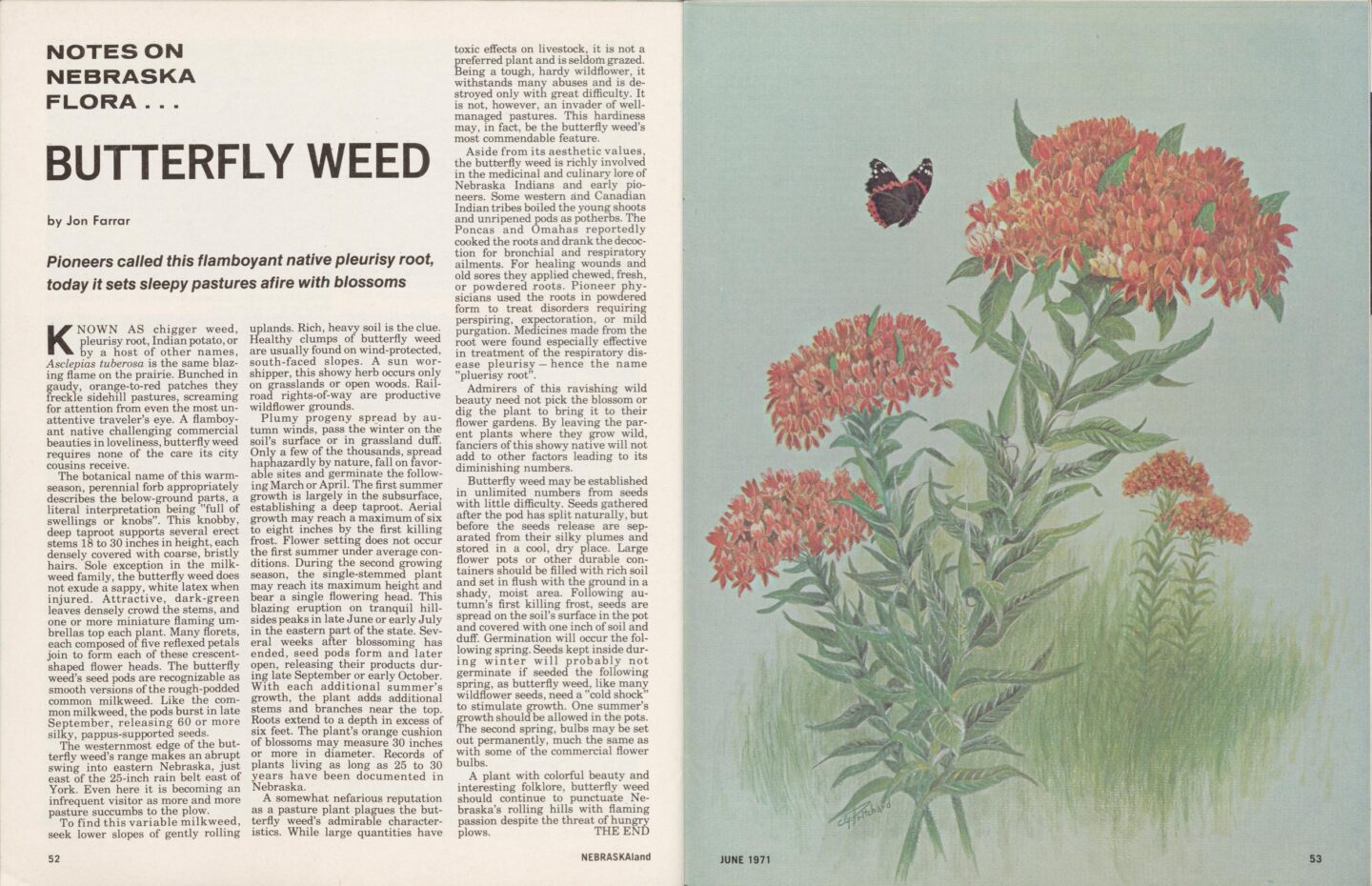
Her future husband, Jon Farrar, joined the magazine staff in 1970 and wrote for the Flora series. Trained as a wildlife biologist but with a strong passion for wildflowers, he devoured research papers and sometimes spent weeks in the field gathering photographs to accompany his precise, poetic prose.
His groundbreaking effort was the 1990, 98-page special issue “Nebraskaland Magazine — A Wildflower Year,” which he wrote and photographed. The issue took readers on a tour of Nebraska’s wildflower diversity, exploring species’ natural history and illustrating it with vibrant, naturally lit photographs. As he encouraged readers, “So pull on a pair of comfortable old walking shoes and stroll Nebraska’s four seasons: through the brown grass Before the Spring, into the Flower Fields of May, on to The Rush of Summer and The Race Against Frost — A Wildflower Year.”
In the same year, the Commission published Farrar’s “Field Guide to Wildflowers of Nebraska and the Great Plains.” His photographs — described as “works of art” by one reviewer — and detailed plant descriptions set the standard for plant field guides for years to come.
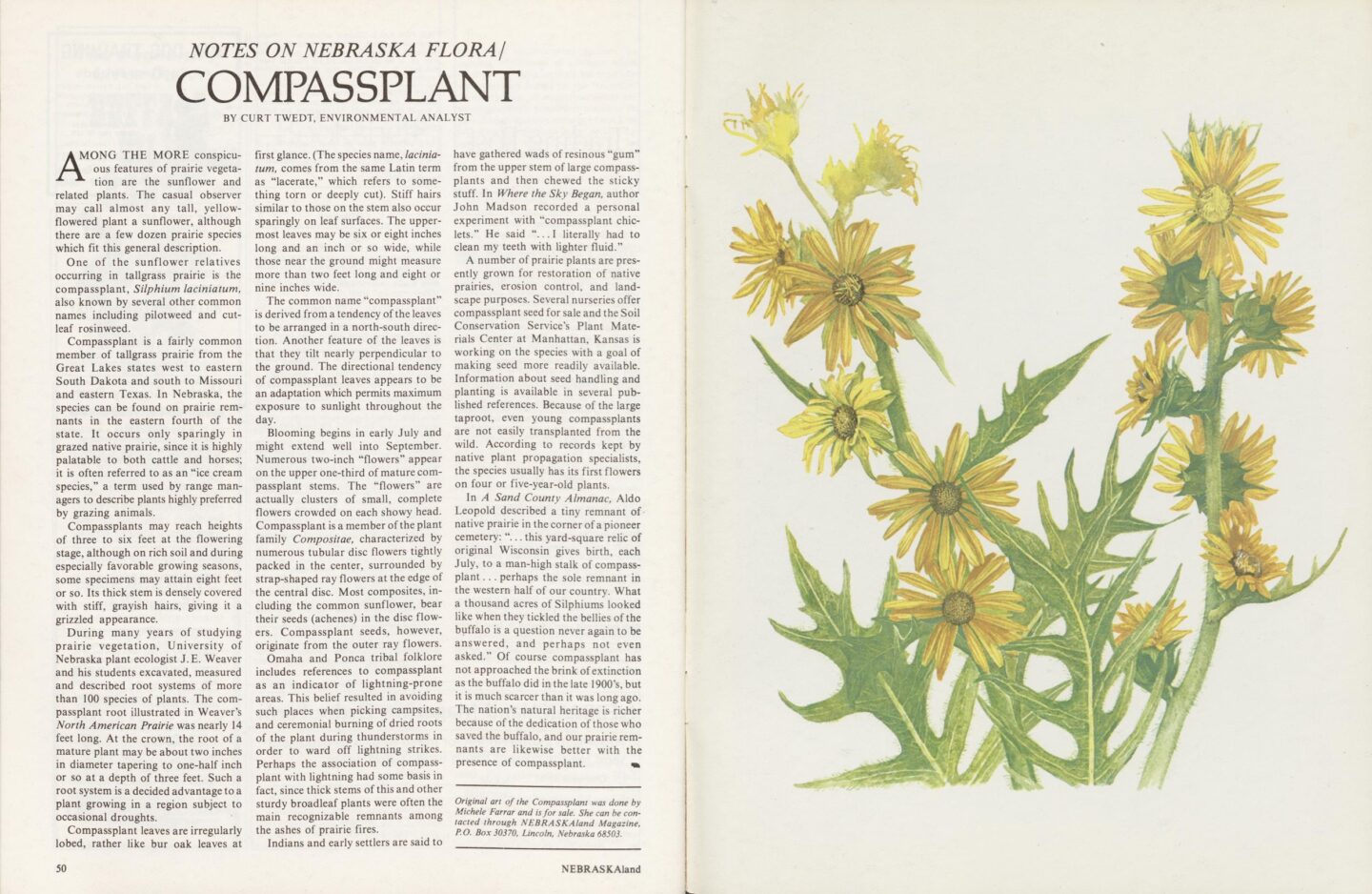
In the early 1990s, at a time when long features were more common, Nebraskaland published three unique 16-page lift-outs on rare plant communities: “Nebraska Saltmarshes: Last of the Least” (1991), “Sandhills Fens” (1992) and “Alkaline Wetlands of the North Platte River Valley” (1994). These lift-outs explored the threats to and conservation needs of native plant communities and their flora in new depth, as exemplified in “Sandhills Fens”: “Fens are among Nebraska’s unique natural features and contain some of the state’s rarest plants. … [they] were thousands of years in the making … and too valuable to lose in a century.”
Nebraskaland’s wildflower articles continue to evolve. Compared to decades past, today’s writers have greater scientific knowledge, the internet and digital cameras that capture plants in extraordinary detail.
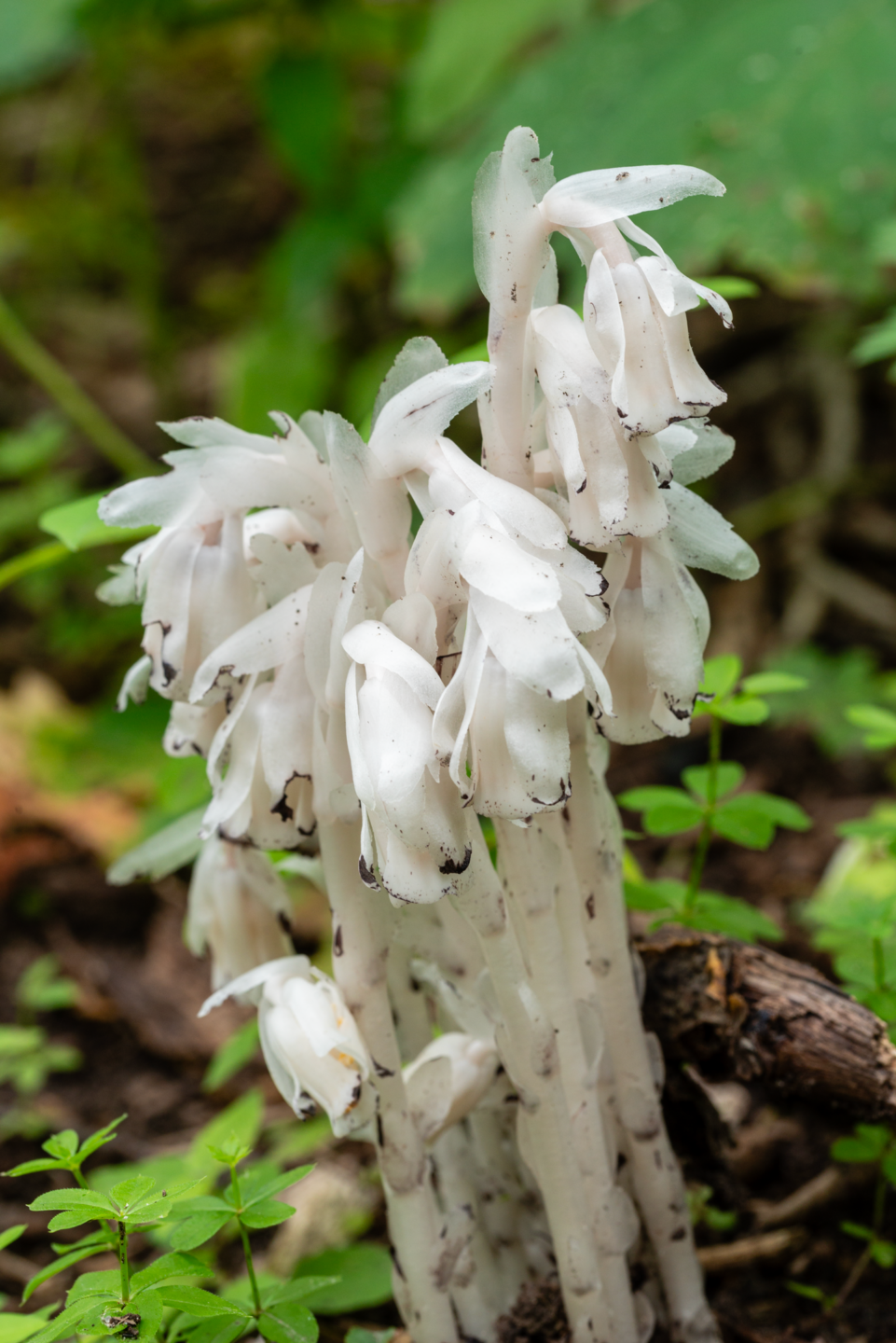
Early Outdoor Nebraska readers could not have imagined articles like my 2020 “Ghost Plant: A Thief in the Woods,” about a white, chlorophyll-free wildflower that survives by stealing nutrients from soil fungi, or Chris Helzer’s many pieces on the intricate relationships between native plants and insects.
From the short blurbs and line drawings of Outdoor Nebraska to the feature articles and vivid photographs in Nebraskaland, wildflower coverage has grown — and the story is far from finished.
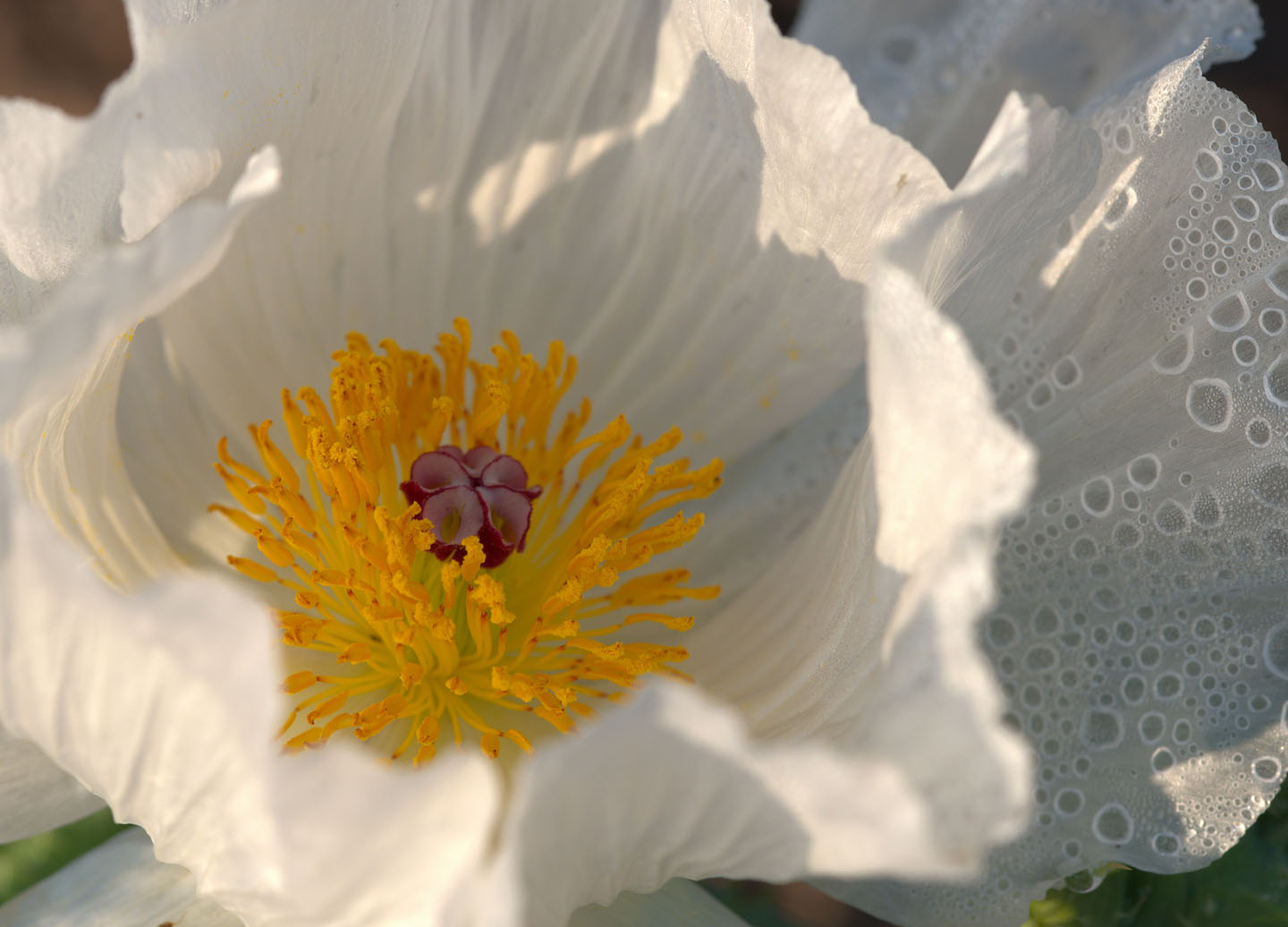
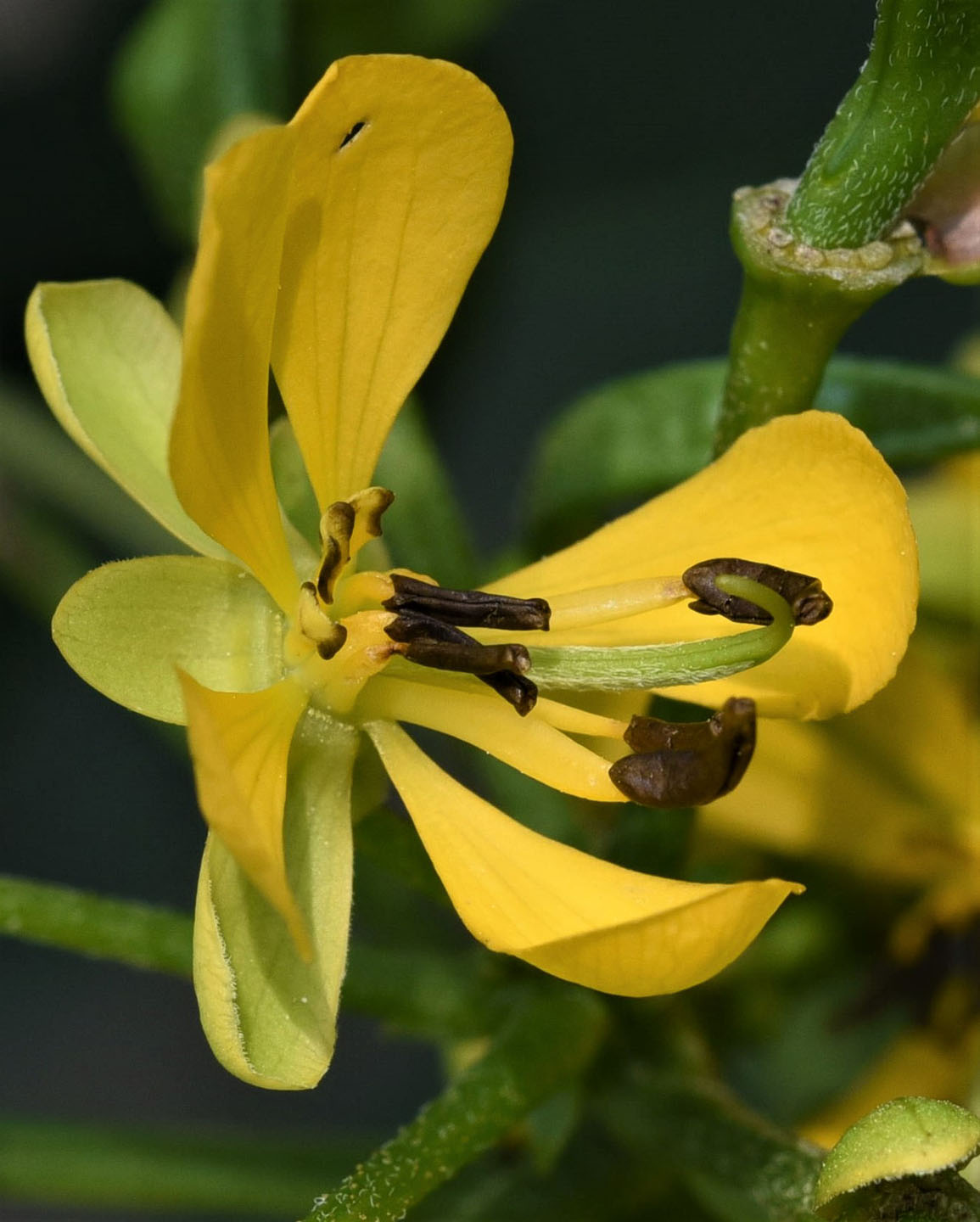
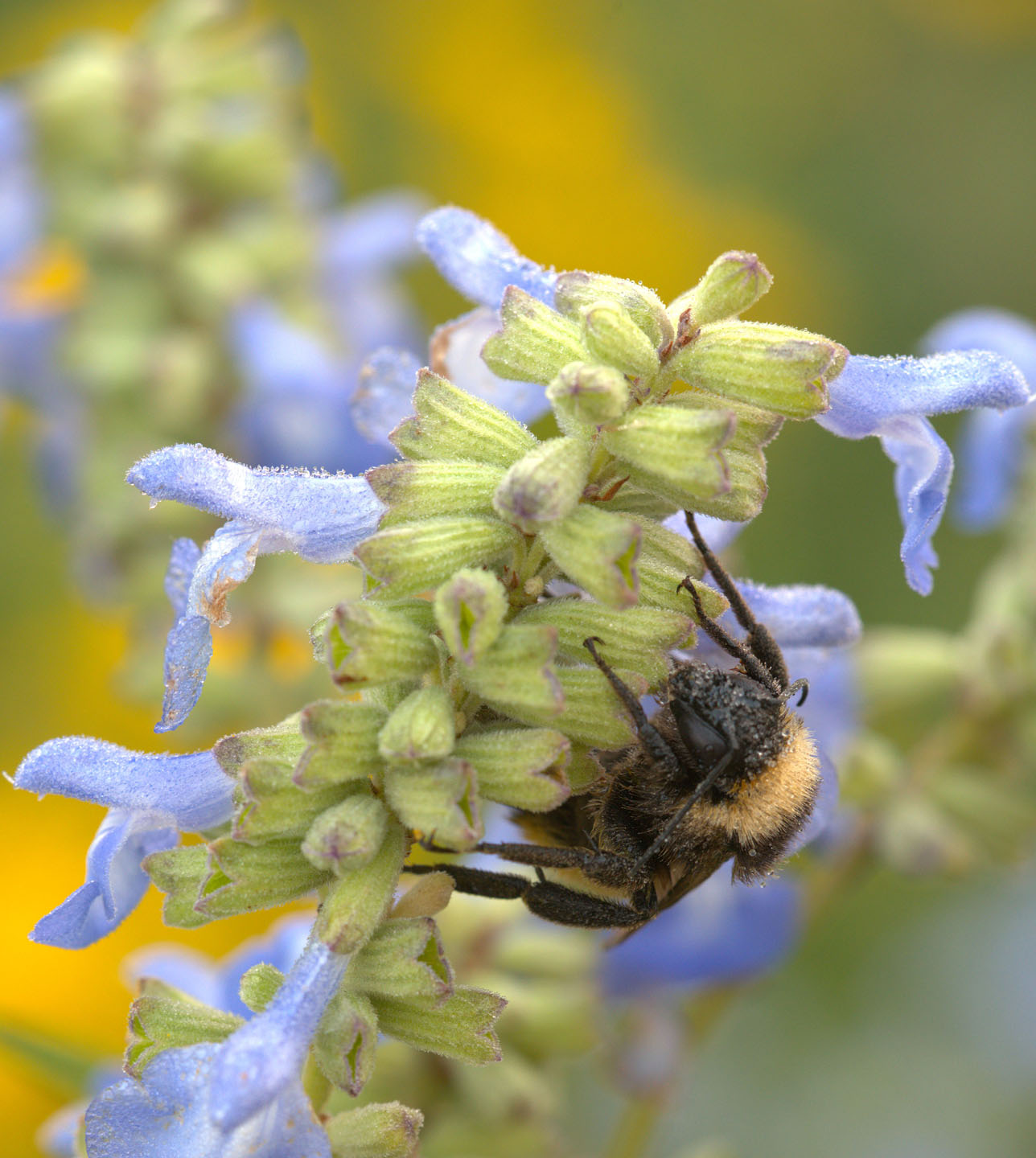
Digital cameras enable today’s photographers to capture wildflowers with extraordinary detail, such as prickly poppy (left) and wild senna (middle). Pollinators, like this bumble bee, have become a popular topic in Nebraskaland (right).
In the early 1990s, at a time when long features were more common, Nebraskaland published three unique 16-page lift-outs on rare plant communities: “Nebraska Saltmarshes: Last of the Least” (1991), “Sandhills Fens” (1992) and “Alkaline Wetlands of the North Platte River Valley” (1994). These lift-outs explored the threats to and conservation needs of native plant communities and their flora in new depth, as exemplified in “Sandhills Fens”: “Fens are among Nebraska’s unique natural features and contain some of the state’s rarest plants. … [they] were thousands of years in the making … and too valuable to lose in a century.”
Nebraskaland’s wildflower articles continue to evolve. Compared to decades past, today’s writers have greater scientific knowledge, the internet and digital cameras that capture plants in extraordinary detail.
Early Outdoor Nebraska readers could not have imagined articles like my 2020 “Ghost Plant: A Thief in the Woods,” about a white, chlorophyll-free wildflower that survives by stealing nutrients from soil fungi, or Chris Helzer’s many pieces on the intricate relationships between native plants and insects.
From the short blurbs and line drawings of Outdoor Nebraska to the feature articles and vivid photographs in Nebraskaland, wildflower coverage has grown — and the story is far from finished.