

Photos and story by Erik Johnson
For much of my life, I believed that witnessing the Northern Lights was only possible at the farthest reaches of the world, where the ground stays frozen and the winter nights are long. I grew up seeing photographs in textbooks and viewing the shimmering lights on PBS documentaries, but I never imagined it could be a Midwestern experience. It wasn’t until 2015 that I discovered, camera in hand, that on rare occasions we can witness the magical beauty of the lights right here in Nebraska.
To be fortunate enough to catch a glimpse of the aurora borealis, a few key components need to be at play. First and foremost, the right mix of solar conditions must be present. The lights are caused by charged particles released by the sun that penetrate the Earth’s magnetic field and interact with molecules in our atmosphere, causing a release of light.
In short, the lights are most common in the days following a large solar flare or storm on the surface of the sun. On some occasions, local news outlets will report an increased likelihood of seeing the lights, but many times these solar events go unreported by mainstream media. As such, I use a variety of forecasting resources found online, such as spaceweather.com and softservenews.com, which report the current and future forecasted “KP” number.
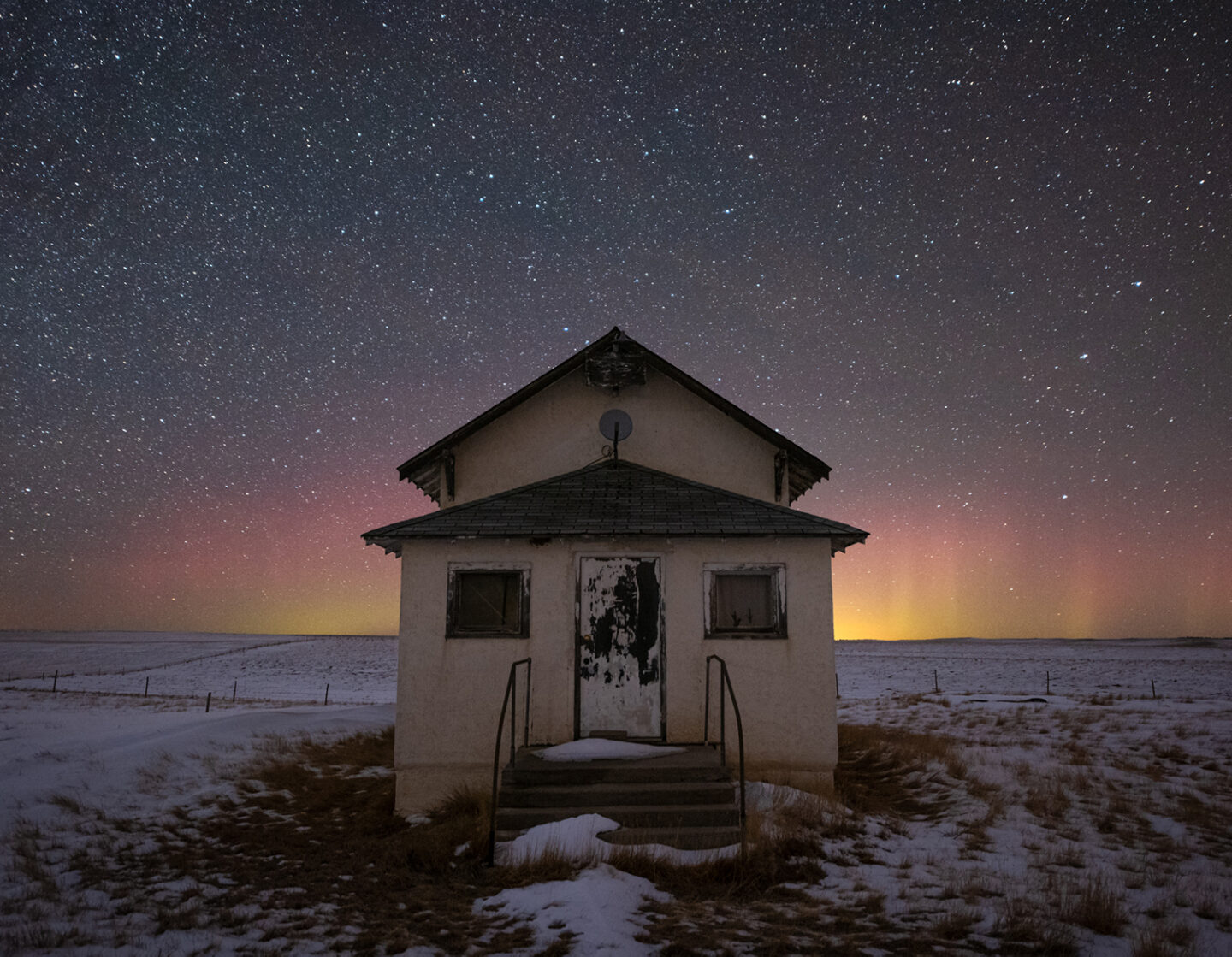
The KP is simply a numerical scale for measuring geomagnetic activity that spans from 0 to 9; 0 being no activity and 9 being a major geomagnetic storm with strong auroras likely. It’s also possible to sign up for alerts from these sources to receive an email or even text message if conditions are favorable. In my personal experience, I’ve found a KP of 6 or more is necessary to have a chance of visible auroras this far south.
The second most important data point to check is the “Bz,” or the north-south component of the interplanetary magnetic field (IMF). If the Bz is south (a negative number), the IMF is pointed southward and the orientation strongly couples with Earth’s northward magnetic field, allowing solar wind particles to stream in and fuel auroras. If the Bz is north (a positive number), it generally blocks solar wind from entering Earth’s magnetosphere, and you might have a bust regardless of the KP number.
In addition to the right atmospheric ingredients, a dark sky, free of moonlight and clouds, is crucial. This also means being far away from city light pollution that will drown out the night sky. I’ve had the best luck witnessing the lights in the Sandhills, far from any major cities. And, of course, you’ll want to look due north. The website darkskymap.com can be helpful to pinpoint locations that are untouched by city lights.
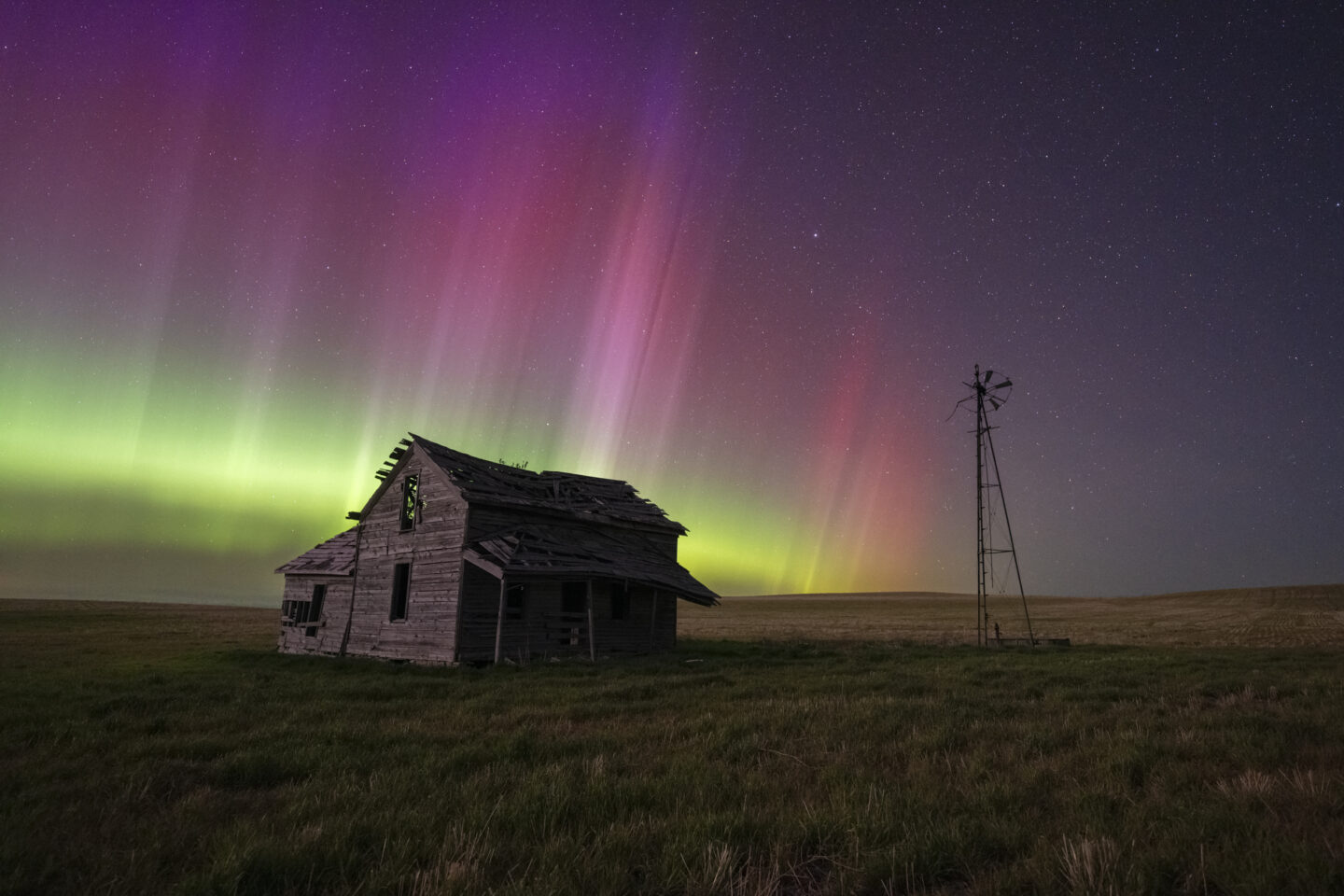
My first aurora “chase” was spawned by a news report on June 22, 2015, which indicated the increased likelihood of activity the following two nights. The next evening, I set out with my camera and drove north of Lincoln until I finally traded pavement for gravel near the town of Bee. Looking for a subject in the countryside to frame in a photograph, I eventually came upon a lone windmill in a cornfield and waited for the twilight to fade.
As stars began to emerge, I noticed what seemed to be a vehicle’s headlights cutting through dust over the horizon and heading in my direction. As the beam continued to rise vertically, I realized it wasn’t the glow of human-made lights. I was witnessing the Northern Lights for the very first time in my life.
The single beam turned into several vertical lines that moved in unison from horizon to horizon. While the lights appeared white and pale green to me, my digital camera was able to pick up much deeper colors with a long exposure. I continued to photograph the lights until the early hours of the morning when things finally began to quiet down.
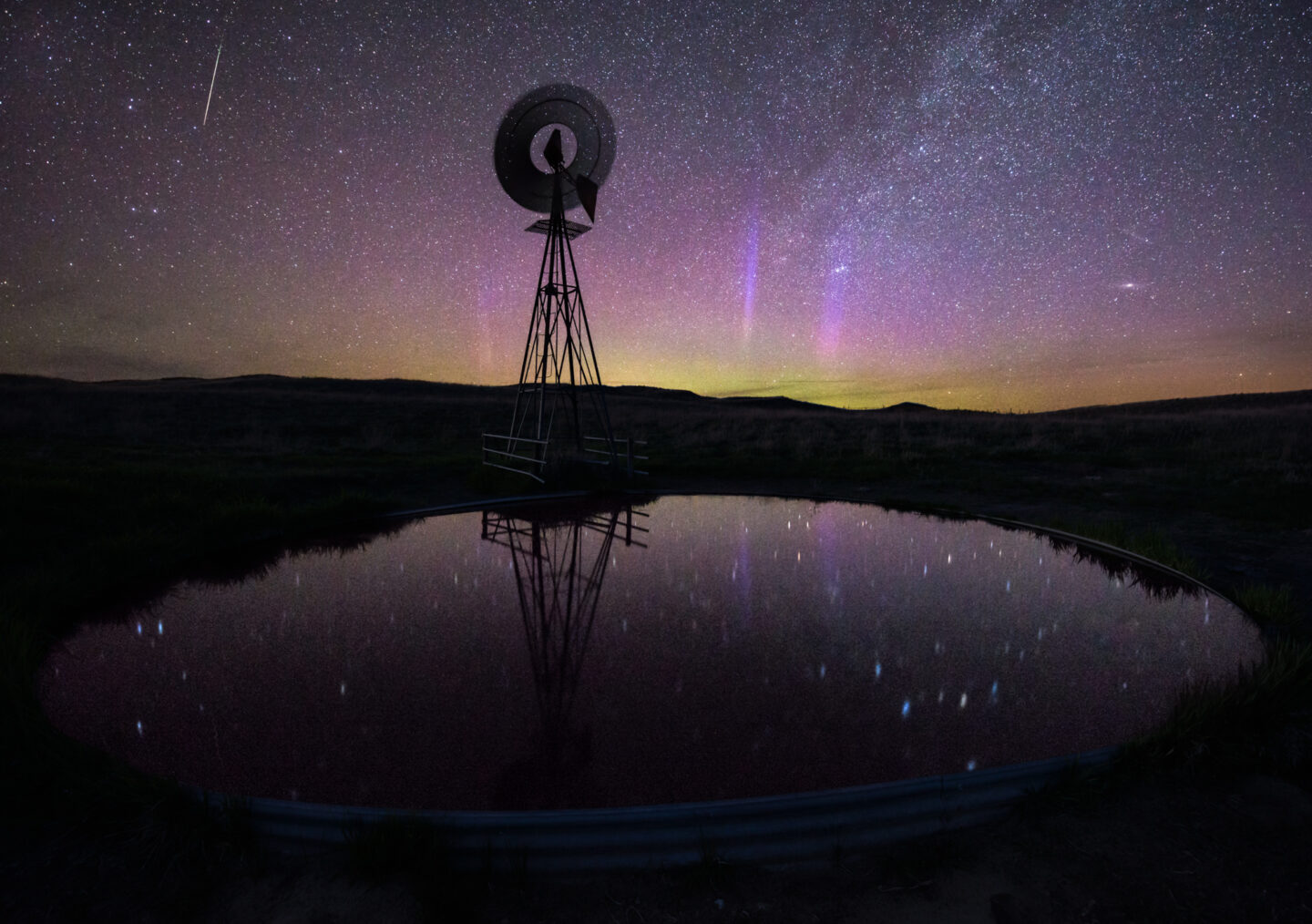
After my first encounter, the most memorable experience I’ve had viewing the Northern Lights happened during an unexpected encounter on a friend’s ranch near the town of Hyannis. As I settled in for the night in my truck’s camper topper, I looked up into the darkness and thought the sky seemed far too bright for being long past twilight. Allowing my eyes to adjust for a few brief moments, I realized the source of illuminance was moving fluidly through the sky, with picket-fence-like lines moving above the horizon from west to east. Being completely caught off guard only added to the excitement, and I could only imagine the awe that civilizations throughout history might have experienced when seeing the unexplained and unexpected anomaly.
The past few years have brought increased activity and many exciting opportunities for first-time viewers across our state. This is most likely twofold: The first, and most important, factor is that we are heading into the “solar maximum,” or an 11-year cycle of solar activity that the sun undergoes.
During the solar maximum, there are more sunspots, solar flares and coronal mass ejections, which all contribute to more opportunities for bursts of charged particles to make the journey across our solar system. I believe the second factor is wider access to improved technologies to capture these events.
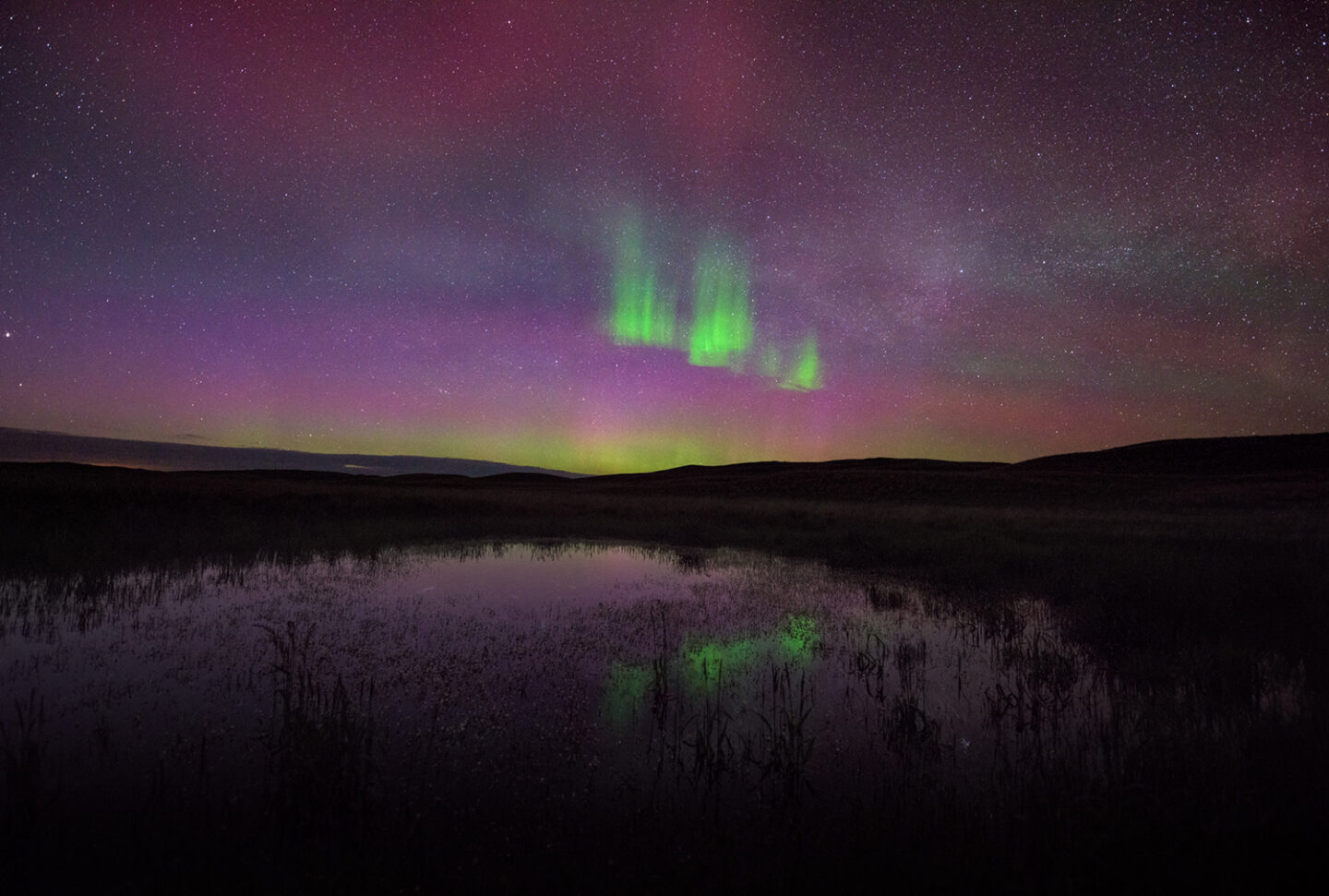
Older cellphones did not have the ability to capture long exposures at night. Many phones can now be set to take 10 or more second exposures, which allow for capturing photos in dimly-lit environments that had previously been impossible without the use of a digital camera.
This has led to a flood of stunning photos being shared on Facebook and other platforms after a night of aurora activity, and a fine time for a new photographer to introduce themselves to the Northern Lights.
Erik Johnson is a Lincoln-based photographer, often joined on adventures by his yellow Lab, Khloe. See more of his work at @erikjohnsonphoto.
Camera Tips
A long camera exposure is one of the key ingredients in capturing the northern lights with a cellphone or digital camera. A long exposure allows the camera to “soak up” more light over time, making faint objects become brighter and visible, while also revealing more color and detail.
You can set exposure time manually on most smartphones. When in the dark, try setting the exposure to 5-10 seconds and holding the phone as steady as possible. Any movement during the exposure period will cause motion blur and potentially an unusable photo. The photos shared here were all taken with a Nikon digital camera and a tripod to keep the camera still.
With my camera, I prefer to set the lens’ aperture as large as possible (the smallest f-stop number), turn the ISO up to 1,000+ (but not too high to avoid introducing too much grain into the image), and use a 5-10 second shutter speed. If the lights are moving rapidly, I might even opt for a 3-5 second exposure to help prevent the lines of color from blending into one another.
Sometimes, even if the aurora isn’t visible to your eyes, you can take a photo of the night sky, and your camera will capture color invisible to the naked eye. I’ve had my camera register red or green hues in an otherwise “black” sky. It does take some experimenting and trial and error, but with a little practice, anyone can take breathtaking photos worthy of sharing.