
By Eric Fowler
Nebraskaland Magazine has long been known for its excellent photography. Indeed, photos have been present on its pages since it began as Outdoor Nebraska in 1926, including the first issue, which had a photo on the cover and 13 more inside.
Who captured the first cover image of a child wearing a straw hat, sitting on a stream bank, baiting a hook tied to his fishing line, tied to a twig is not known: There is no photo credit for that image or any in the issue, and no negative or print exists in the Nebraska Game and Parks Commission’s extensive photo library. The identity of the child is not known, either.
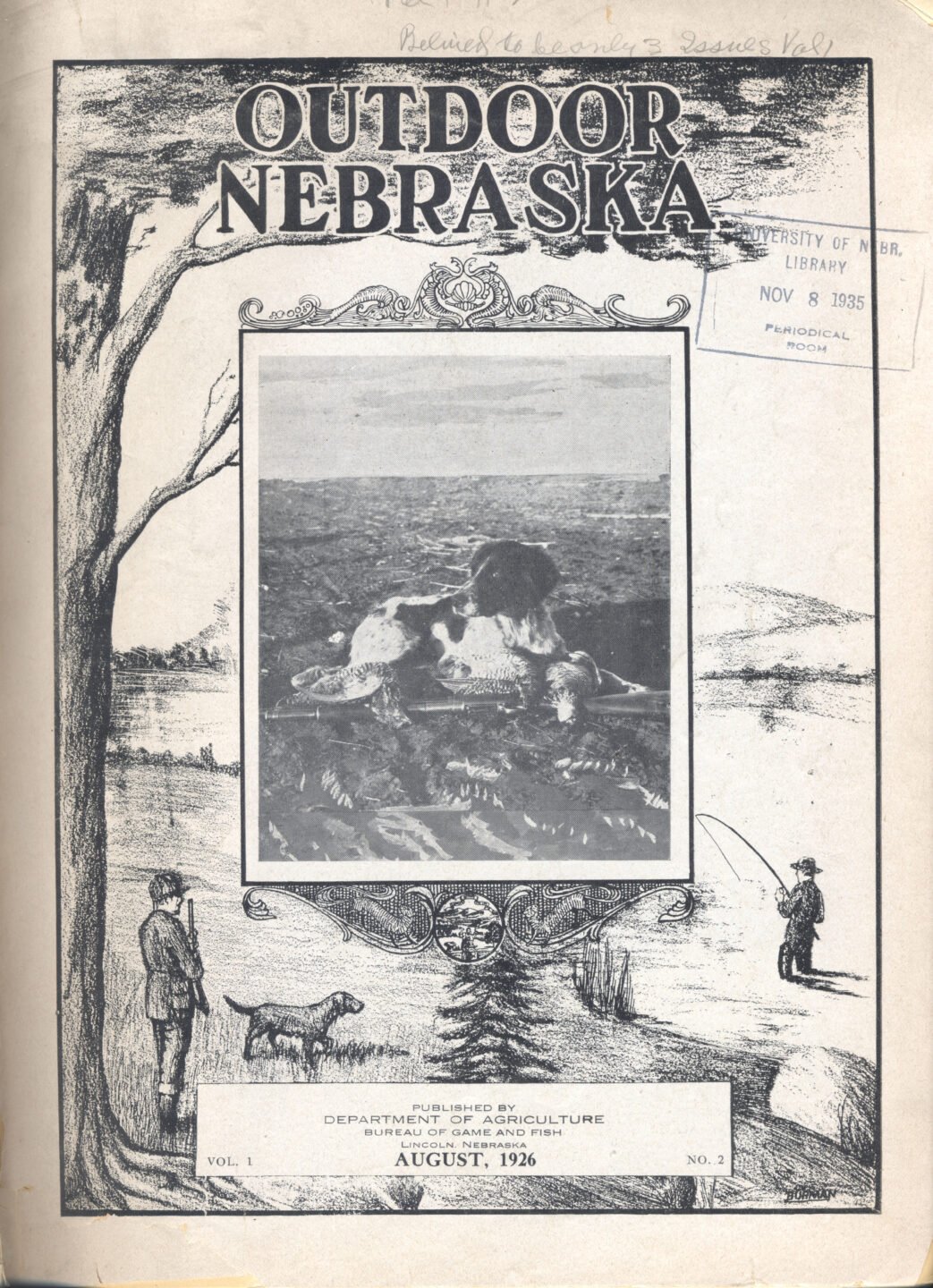
We do know who captured the photograph of a Brittany spaniel, resting on its master’s shotgun with three prairie chickens it had retrieved during a hunt featured on the second cover: Loron Bunney.
Bunney had at least three more photos in that issue, including a landscape of Scotts Bluff National Monument reflected in what is now known as Terry’s Pit, photos of the new Rock Creek Hatchery, and anglers happily displaying their catch.
At the time, Bunney was in his second year as a game warden with the Bureau of Game and Fish, a job he would hold for 40 years and do so well that an award given annually to a current officer now carries his name. Bunney was also a dedicated hunter and one of the state’s top trapshooters, and penned a few articles on that subject and others for the magazine. But he was also a photographer, and a good one. A profile of the officer in the Summer 1951 issue said: “Many of the pictures appearing in past issues of Outdoor Nebraska were taken by Bunney.”
In 1949, Bunney even captured a photo of two whooping and three sandhill cranes in flight along the North Platte River somewhere west of Lake McConaughy. At the time, there were believed to be just 35 whoopers left in North America.
The second issue of the magazine perhaps told the story of where some of the photos published in the decades to follow came from: “Pictures Wanted: The editor of Outdoor Nebraska desires good pictures of fish and game. If you have a good picture of your fishing trip, send it in. Or, if you have a picture of a Nebraska lake or stream or bit of scenery, send it in. All pictures not used will be returned.”
There have been photos in nearly every issue of the magazine. Many, especially photos of happy hunters and anglers with their bags, were likely contributed by readers. Others may have been captured by the magazine’s editor, or camera-toting Commission biologists or wardens. Some were provided by the University of Nebraska or local newspapers.
It wasn’t until 1957 that Outdoor Nebraska hired its first photographer, Fred Gibbs. His first credited photos appeared in the fall issue. Gibbs was hired in advance of the magazine’s transition from a quarterly to monthly publication in 1958.
In April 1958, he was replaced by Gene Hornbeck, who served several roles on the staff, including photographer-writer and chief of photography, until 1969, when he left to become the outdoor editor for the Omaha World-Herald, a position he held until 1990. Hornbeck mostly photographed and wrote about hunters and anglers pursuing fish and game around the state, but also photographed landscapes and wildlife.
Lou Ell was the next photographer to join the staff. His photos and stories first appeared in 1961, and he served as chief of photography before retiring in 1978. Ell excelled in all fields, including landscapes and wildlife, and with a background in studio photography, was innovative in that work. (See Old-School AI on page 59.)
Several other photographers spent time on the staff, including Dick Schaffer, Greg Beaumont, Charles Armstrong, Steve O’Hare and Jack Curran.
While photography had become the calling card of the magazine in the 1960s, it was the work of four individuals who joined the staff between 1969 and 1974 that took it to the next level: Ken Bouc, Jon Farrar, Bob Grier and Rocky Hoffmann.
Grier and Hoffmann were the first staff assigned to district offices, Grier in Alliance and Hoffmann in North Platte. Prior to that, staff often made two-week-long road trips from Lincoln to other parts of the state to gather images and words.
All four captured stunning landscapes, with perhaps Grier, who the Commission sent to a workshop taught by Ansel Adams, leading the way on that front. They photographed wildlife, with Farrar going to great lengths to capture intimate portraits of so many species, including the obscure, lesser-known ones. (Read “A Rare Bird: Remembering Jon Farrar” in the March 2022 Nebraskaland) Hoffmann often focused on people and what they did outdoors. Bouc often focused on history, fishing and fish in his work. He captured many of the photos in The Fish Book, a special issue produced in 1987, using an underwater camera, mask, snorkel and fins, or strobes and aquariums in the photo studio.
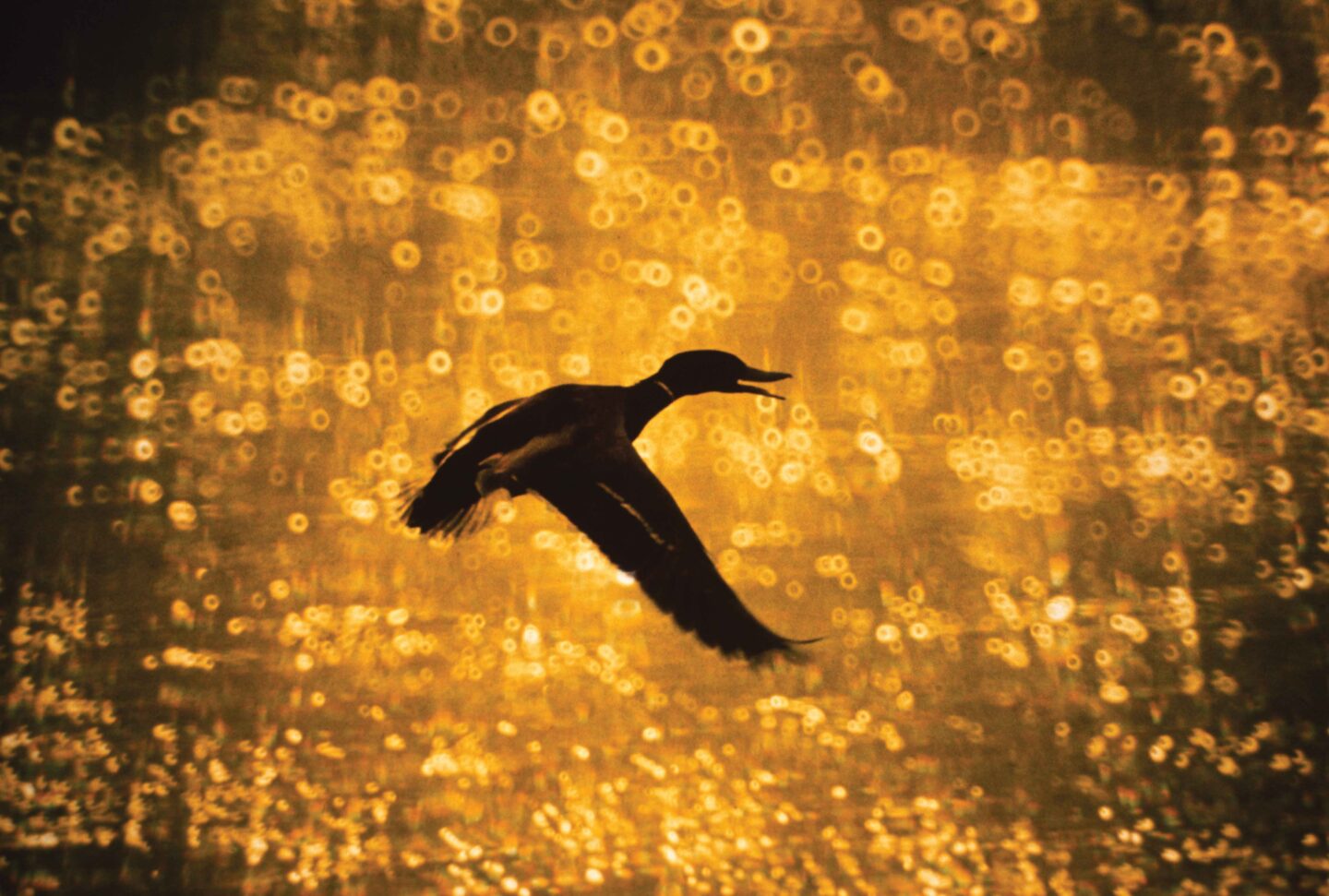
By the time the last of the quartet retired in 2012, they had a combined 155 years of experience with the magazine. Another outstanding writer and photographer who worked during that same era was Don Cunningham, who joined the staff in 1981 and was the editor before moving on in 2000.
Those five helped young Michael Forsberg, hired in 1993, get started down a path that allowed him to leave his mark in both images and stories in the magazine and become one of the top conservation photographers in the country.
“I think what sticks with me about that staff in general was across-the-board, you know, they were just consistently good,” Forsberg said. “And they knew what they were good at. And so they self-sorted, I think, the kinds of stories and the kind of photography that they knew they could pull off, and did it very well and worked really well together as a team.
“They had just enough ego to care about the pictures that they were making and the words that they were writing, but were really genuinely good people. I couldn’t have had a better mentorship opportunity than with all of those guys.”
When I came to Game and Parks in 1998, my first job was not with Nebraskaland, but I hoped it would lead to a position on the staff. I thought that opportunity would come in 10 years or so when Bouc, Farrar, Grier or Hoffmann retired. It was Forsberg leaving in 1999 to do his own thing that opened up the position I filled the following year.
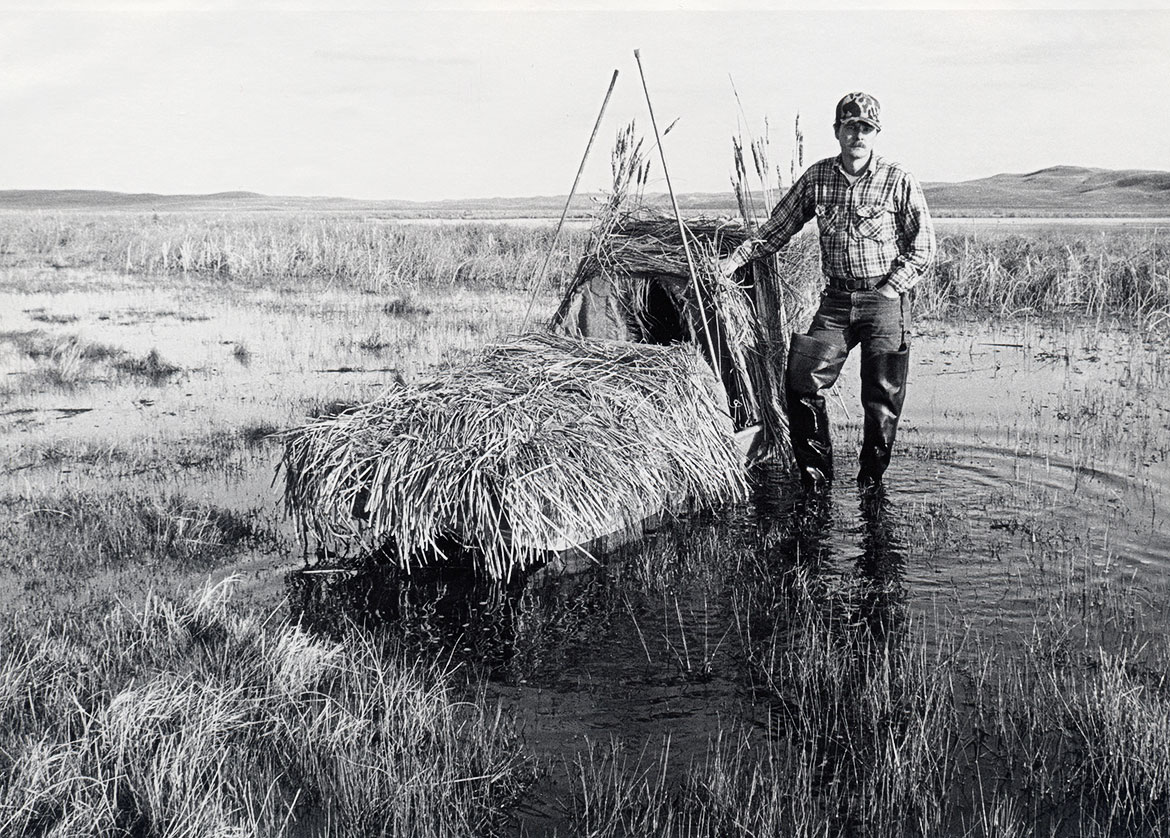
I’m now the old guy on the staff, and find it hard to believe I’ve been a part of the magazine for one-fourth of its existence. I, too, was blessed to have learned so much from the long-timers and Forsberg, the short-timer.
The goal of the current magazine staff — Jeff Kurrus, Justin Haag, Jenny Nguyen-Wheatley and Julie Geiser — and others I’ve worked with, including Doug Carroll, is simply to live up to the standard set by those who preceded us. We know that being a member of the staff is a dream job. We get paid to photograph and write about all of the great things this state has to offer: the land, fish, wildlife and the importance of conserving all three, the many outdoor recreational opportunities, and especially the people.
“It’s the Nebraska people,” Grier said of what makes Nebraskaland special. “I was never turned down for the opportunity to go on somebody’s land to photograph. Everybody made themselves available. More than that, they’d grab you and say, ‘Here, I’m going to show you this or that.’ You meet an awful lot of good people.
“I think it’s something to be proud of. It’s something you can say to people, when they say ‘What is your name?’ and I’d say Bob Grier. And they’d say, ‘Oh, you’re a photographer with Nebraskaland.’ They’ll recognize you for the rest of your life working for the magazine.”
It is a responsibility none of us, current or past, take lightly.
Photography History
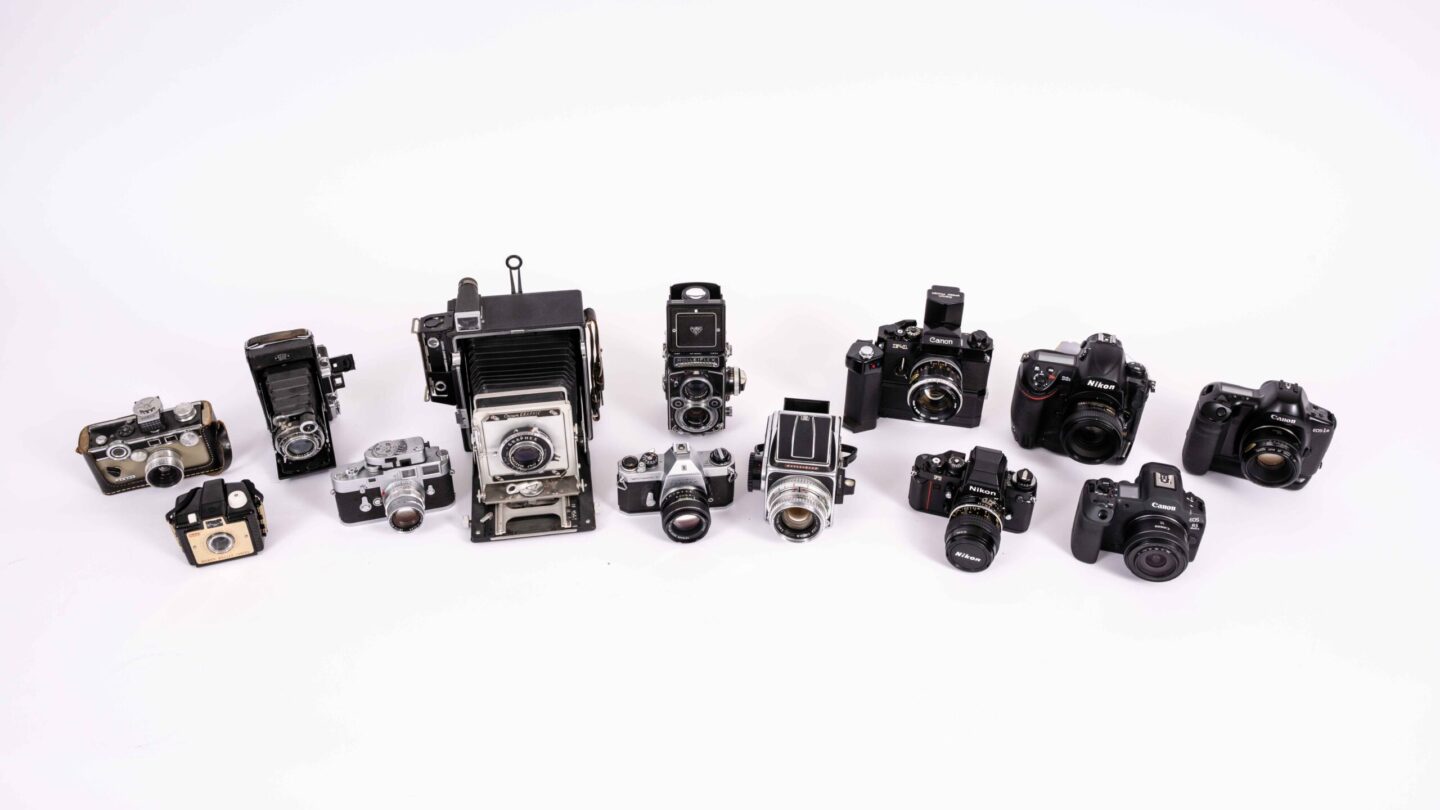
Wildlife photographers of today, imagine this: Your assignment is to capture photos of greater prairie chickens and sharp-tailed grouse in the Sandhills. Your camera is a Graflex Speed Graphic, with “speed” in the name because its top shutter speed is 1/1000th of a second.
You have a 400mm lens mounted to the front of the camera’s bellows. It is one of the larger focal lengths made for the camera, but is comparable to a 120mm lens on a 35mm camera. You focus manually, of course, likely through the rangefinder on the side of the camera, compose the shot and hope the birds don’t move before you can trip the shutter.
Your film comes in 3 1/4- x 4 1/4-inch sheets. You have a special film holder that holds a dozen sheets mounted on thin metal plates that can be shuffled front to back within a leather bag hanging off the side. You remove a dark slide before each exposure, and when you’ve exposed all 12, you pop on another film holder or you are done until you can reload in a darkroom or, possibly, in a dark bag you brought to the photo blind.
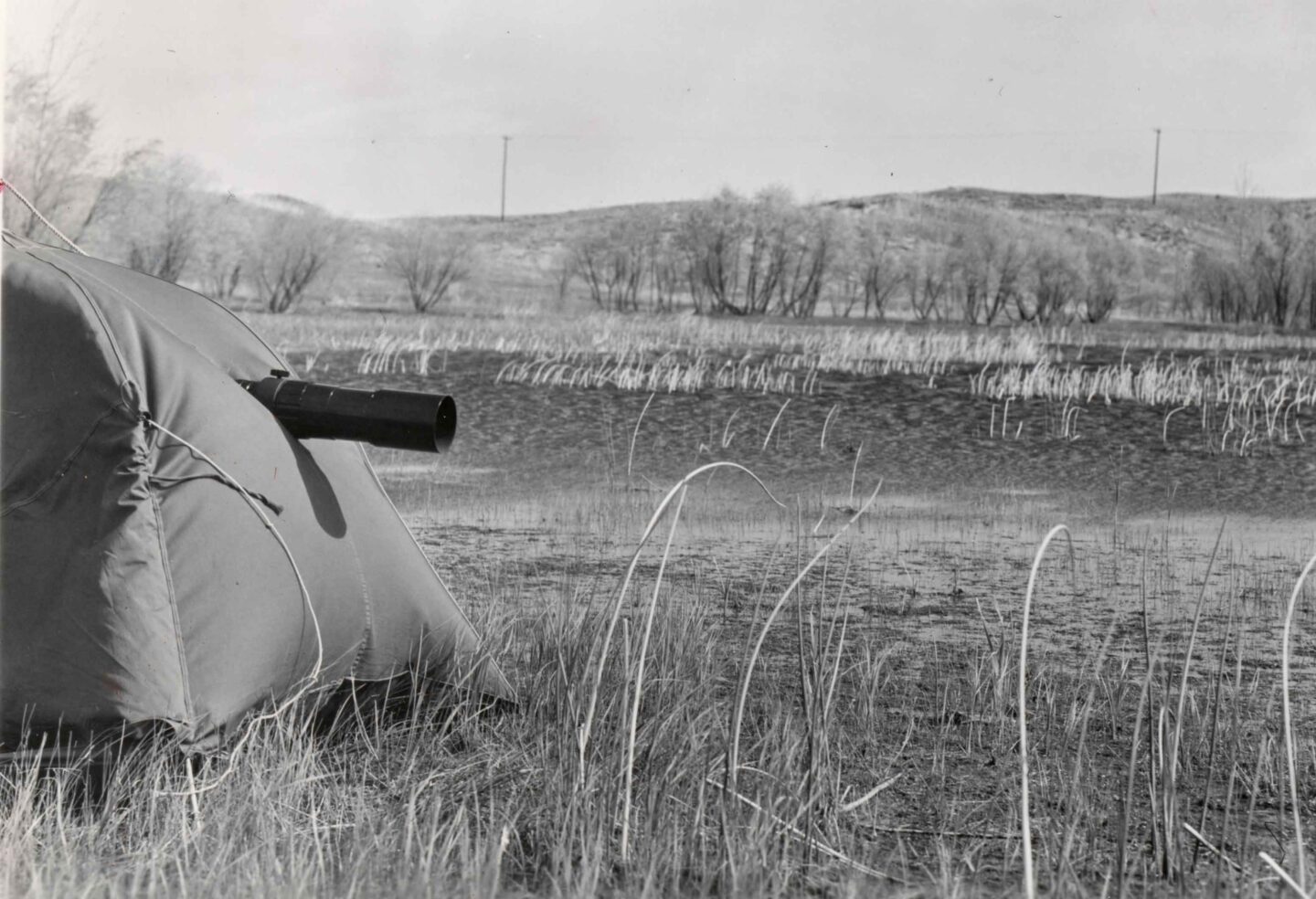
That is how Lou Ell and Gene Hornbeck photographed grouse for a feature in the May 1963 issue of Outdoor Nebraska, according to a note in a later issue from editor Dick Schaffer, who added that most grouse were 20 to 30 feet from their blinds. The film in the Nebraskaland photo library tells a somewhat different story, with both medium-format and 35mm negatives of grouse in the photo spread. Regardless, some of the images were captured with the Graflex, requiring the photographers to be extremely deliberate, a far cry from the spray-and-pray approach that is possible with today’s high-speed digital cameras.
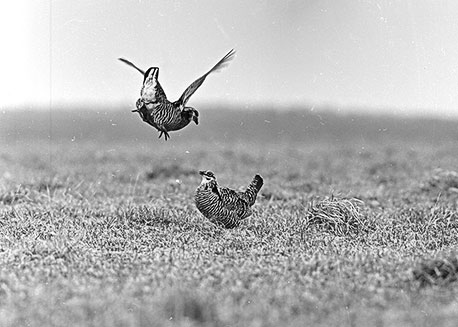
Can you imagine photographing wildlife that way? I asked Michael Forsberg, a former Nebraskaland staffer and current contributor, who replied, “No. It just blows me away to see that. I don’t think people understand the kind of talent and commitment that existed back in the day for the photographers for the magazine. We live in a luxurious existence now.”
While the Graflex was known to be one of the cameras used in the 1950s and, in Ell’s case, into the 1970s, we have no idea what others were carrying in the early years of the magazine. Were they box cameras like the Kodak Brownie, with a fixed aperture and 1/25 or 1/50 of a second shutter speed that required you to shoot in full sun or with flash with one type of film, or switch to a faster film on a cloudy day? Were they viewfinder or rangefinder cameras? There was a Leica M3 in the equipment pool at the magazine at one time. The 35mm single-lens reflex camera most of us are familiar with was introduced in the 1930s, but didn’t offer interchangeable lenses until the 1940s or ’50s. Hornbeck had begun using 35mm in 1963, possibly sooner, as he published a photo spread “Life on a Sand Hills Lake” in September of that year that included a photo of his new Nikkor lens sticking out of his blind with the caption: “Cramped blind housed 500mm telephoto lens camera for feature.” That camera may also have captured some of the grouse photos previously mentioned.
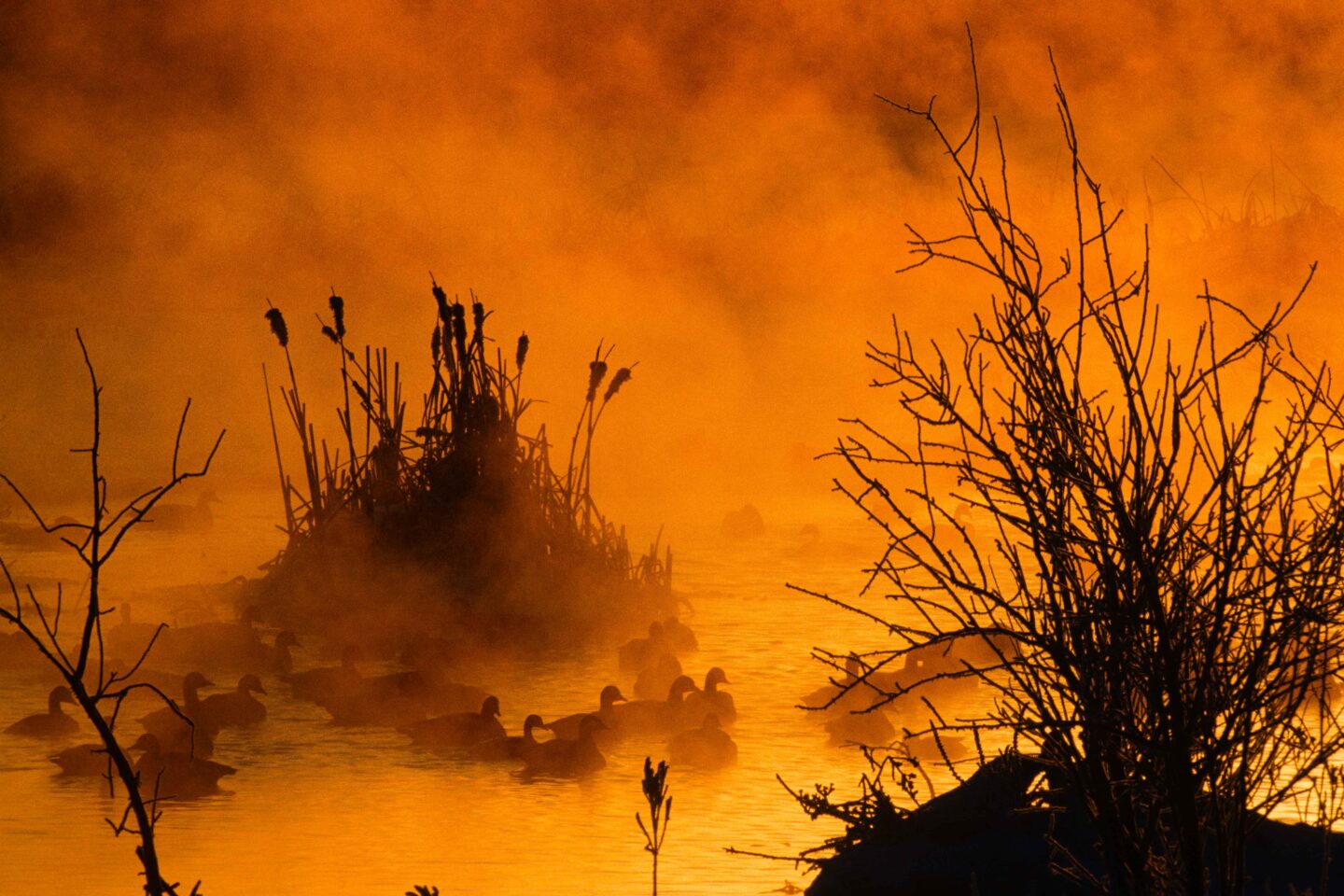
When Bob Grier joined the staff in 1970, they did have some Pentax Spotmatic 35mm SLR cameras, standard lenses up to 500mm, and even a 1000mm reflex mirror lens. But the primary camera was a Mamiya twin-lens reflex with interchangeable lenses up to 400 mm, equivalent to a 320mm in 35mm cameras. The medium-format camera produced a 6cm-by-6cm image and held 12 exposure rolls of film. The maximum speed of the leaf shutter, located in the lens, was 1/500th of a second.
Staff moved to a different medium format camera, the Hasselblad, in the late 1970s and continued using it into the late 1990s. Grier said most staff had five lenses from 40mm to 500mm, which compared to 30mm to 400mm. The tack-sharp Zeiss glass, and the comparable resolution of the large film, made them excellent cameras for landscape photography, if you forgive the weight and bulk. Like the Mamiya, however, the maximum shutter speed was 1/500th of a second, making them less than ideal for wildlife. The interchangeable film backs did allow flexibility. “You had two or three film backs,” Grier said. “You could have one preloaded with faster film for wildlife situations, but you’re still only getting 12 exposures.”
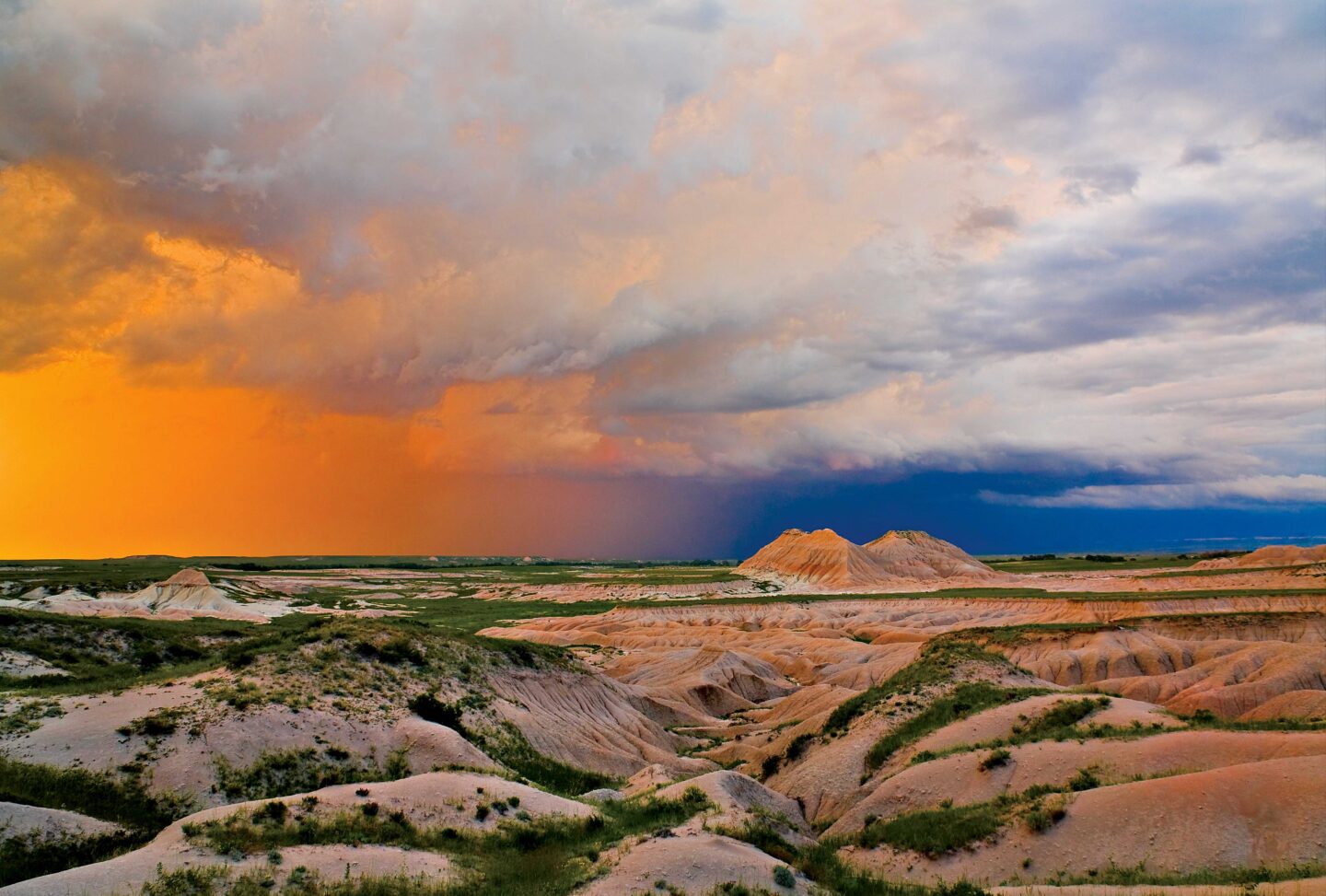
Of these early cameras, only the Pentax had a built-in light meter, so photographers carried hand-held meters to set their exposure. When rushed, they went with settings printed on film boxes, which they had memorized, and could always fall back on the “Sunny 16” rule. Grier said he continued to use hand-held meters for several years after built-in meters became standard. “I didn’t know if I could believe the meter in the camera,” he said.
The serious move to 35mm SLRs came in the early 1980s, when Nikon F3 and Canon F1 bodies were added to the bags. Some had motor drives, a first, allowing between 6- and a blazing 9-frames-per-second, a major advancement.
Autofocus technology hit the photography scene in the 1980s. The magazine staff began moving that way in 1990 with the purchase of two Canon T90s. A few years later they added Canon EOS-1, Nikon F4 and other bodies.
The early autofocus technology “sucked,” Forsberg said. All practiced zone focusing, prefocusing at a set distance and letting depth of field expand the range. And they excelled at tracking moving subjects because they practiced. “I’d go sit out in my front yard and practice, focusing on the cars driving by on the street,” Forsberg said.
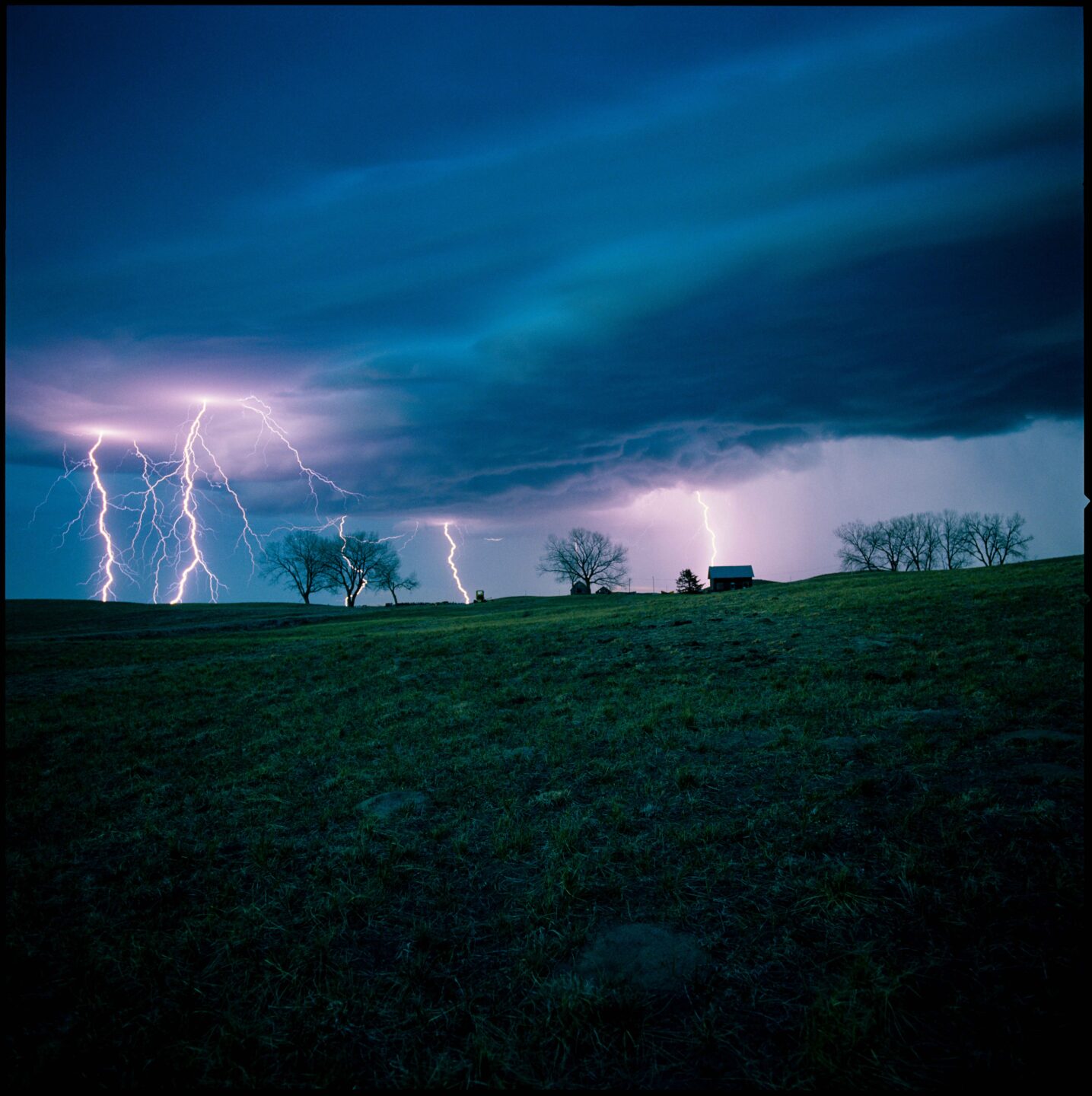
In the early years of the magazine, photographers used both black-and-white and color film, including Kodak Tri-x and Kodacolor. Film was processed in house from the 1950s into the 1980s. It didn’t have much latitude, and the cardinal rule in film photography was to keep the sun over your shoulder.
When staff began using color-slide film, Kodachrome was a favorite of some due to its color reproduction and wider latitude. Others used Ektachrome. Later, the staff switched mostly to Fuji film, including Velvia 50, with its rich colors, and Provia. If light or the situation changed, requiring a switch to a faster film, they were adept at switching, even in mid-roll, when they would mark the last frame on the film leader and reload it later to save a few bucks. They bracketed exposures, taking one image at the setting the camera’s meter recommended, one at a stop over and another a stop under, just in case the meter was fooled.
Advancements in the quality of film, cameras and lenses allowed the magazine staff to abandon their Hasselblads and move fully to 35mm SLR cameras in the 1990s, something Grier said was “extremely freeing.”
“You could carry a belt pack with a few lenses and camera around your neck and very easily go hiking,” he said.
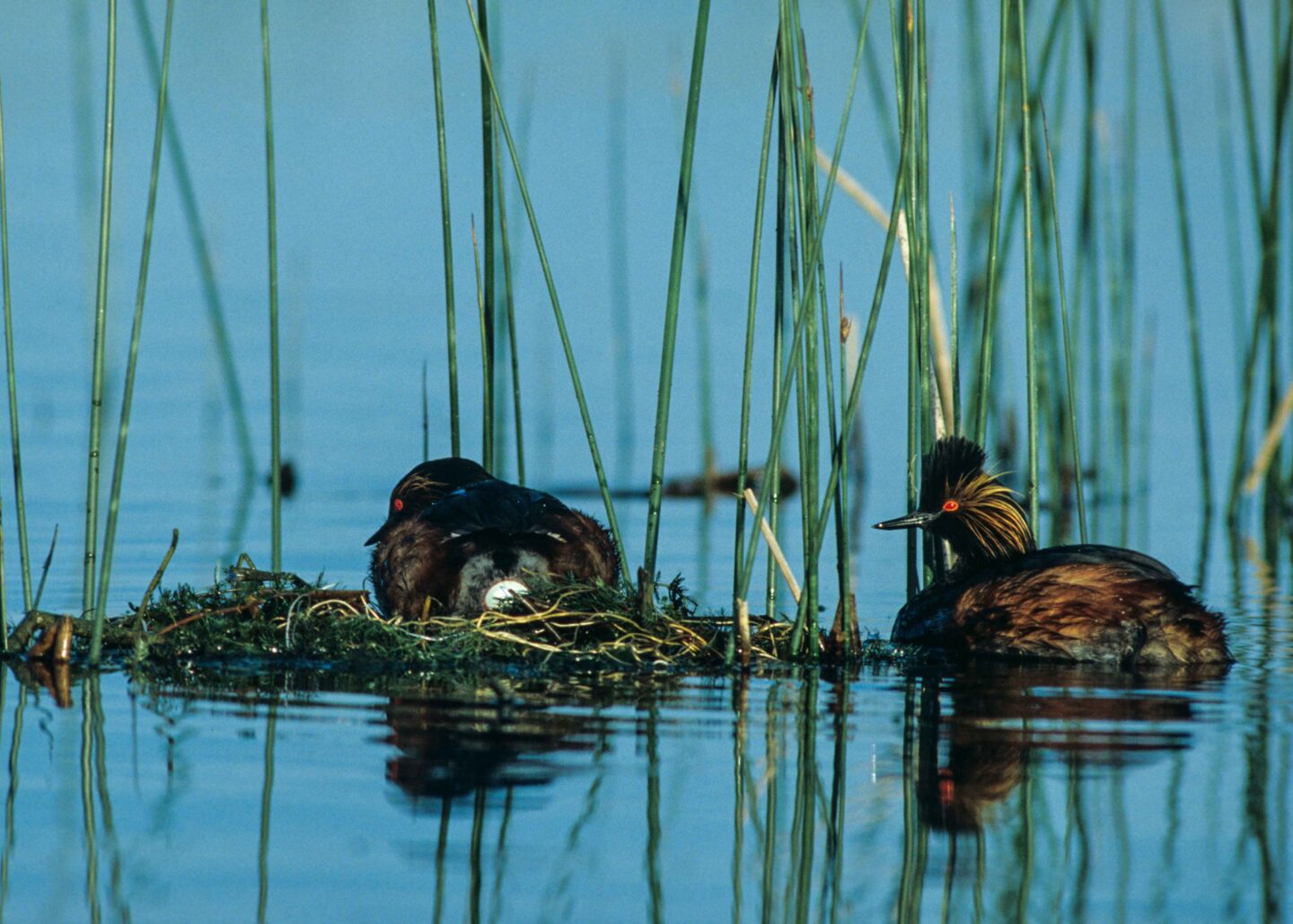
The biggest advancement in photography came with the advent of digital. Grier and I began Nebraskaland’s move to digital on our own equipment, Grier with a Canon Powershot G2 in 2002 and a D60 the following year, and myself with a Nikon D1x in 2004. Once we started shooting digital, it was hard to go back to film. Instantly, we knew if the exposure was correct and whether we captured the image we were hoping for. The entire staff switched to digital in 2005 and has upgraded several times since.
“We’re photographing wildlife on the prairies here in Nebraska that are mostly active on the edges of day, when the light is low,” Forsberg said. “There are a lot of photographs that can be made today that couldn’t be made in the old slide-film days.
“[With digital] you could look at the back of your screen and see if you’ve got what you wanted. And if it wasn’t running away or flying away, if it was a landscape or a person or something else, you could explore compositions with your camera, you could explore exposures with your camera … and so I think it allowed us to start to see things in a little bit different way.
“And we didn’t have to wait a week for the slides to come back and put them on the light table to see if we got something or not.”
The staff has always been quick to take advantage of advancements that allowed them to capture photos in ways they previously couldn’t. Capturing an up-close photo of a bird on a nest, for example, once required either sitting in a blind nearby or placing a camera even closer that could be fired remotely from a blind nearby. The first remotes were air activated, and the range was extremely limited. It increased with the advent of infrared remotes, but only slightly. Radio triggers increased the range to a mile.
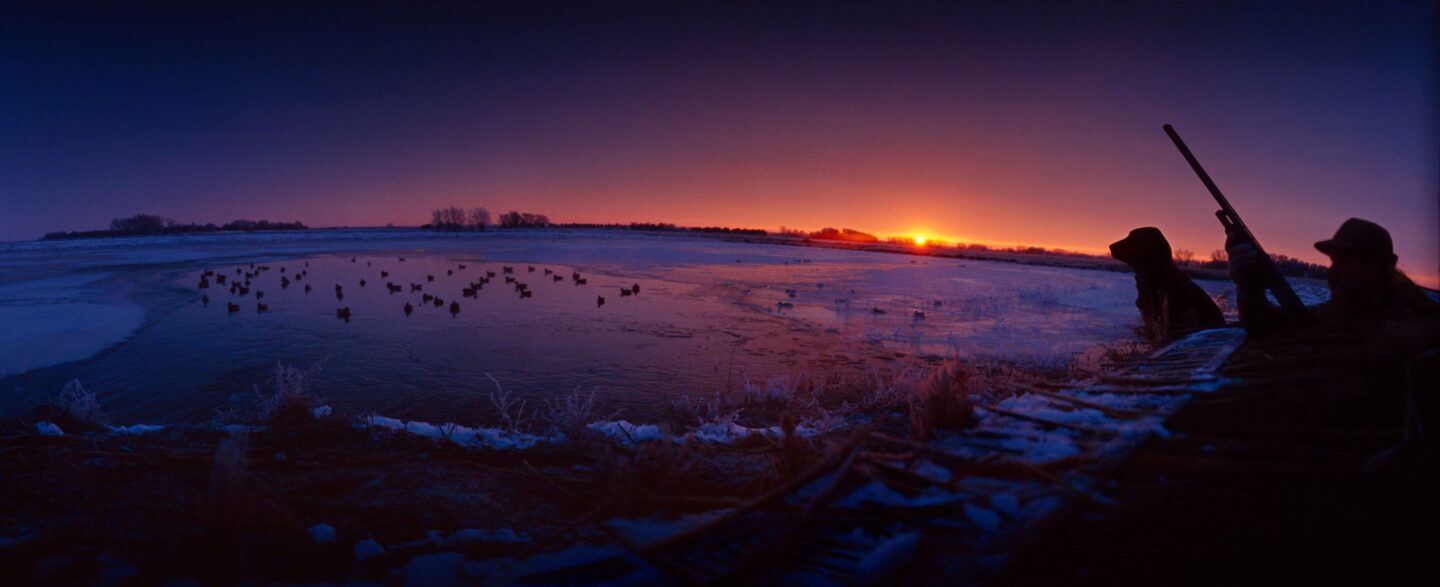
Now we can use motion-activated camera traps equipped with multiple flashes to capture intimate portraits of wildlife 24/7 while we are back in the office or sleeping at home. While they existed long ago, camera traps weren’t practical until digital expanded the number of photos you could capture from 36 exposure roll of film to thousands.
The perspective of aerial photographs is sometimes the best way to tell the story about a landscape, and aerials have been a part of Nebraskaland since the 1930s. Now, in addition to pointing the camera out of the window of a Cessna from 500 to a few thousand feet above the ground, we now have drones to capture images from lower elevations.
I got my start in photography in 1989 when my dad gave me a Pentax Spotmatic his uncle had purchased in the early 1960s. It was the camera that began the shift to 35mm at Nebraskaland. I had four lenses up to 300 mm, set my exposure and focused manually, and advanced the film with the fastest thumb in the west.
The advancements that have come since are mind boggling. We now carry mirrorless cameras with incredibly accurate autofocus that you can set to automatically detect and track a subject like a bird or person. The maximum speed of the electronic shutter is 1/32,000 second. Advanced metering makes automatic exposure settings extremely reliable.
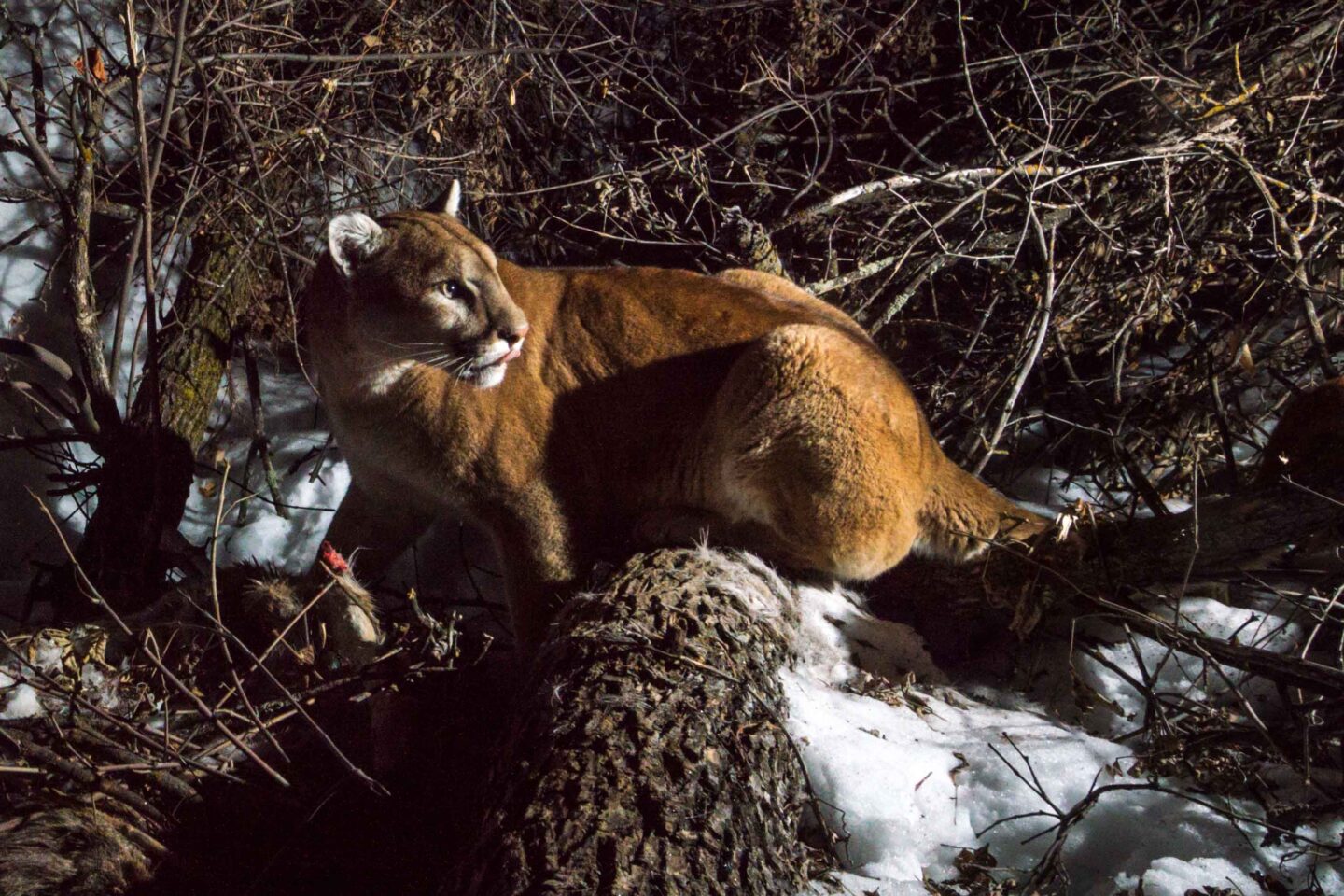
You can rattle off 120 frames per second if you really want to catch the peak action. In the film days, exposing 10 36-exposure rolls of film in an outing was a lot. We can now do that in 3 seconds. We can even back up in time, recording images up to a half second before we actually tripped the shutter. We can change ISO on the fly, or let the camera do it for us. And we can capture usable, albeit barely, images at ISOs up to an insane 102,000, nearly allowing us to shoot in the dark.
Yet while much has changed in photography, the subjects photographed by Nebraskaland staff remain the same: its striking, diverse landscapes, its wildlife and its people enjoying both.
Old-School AI
Generative artificial intelligence is changing the world we live in. It is being used to write stories and create photographs and videos so realistic it is sometimes hard to tell they are not real.
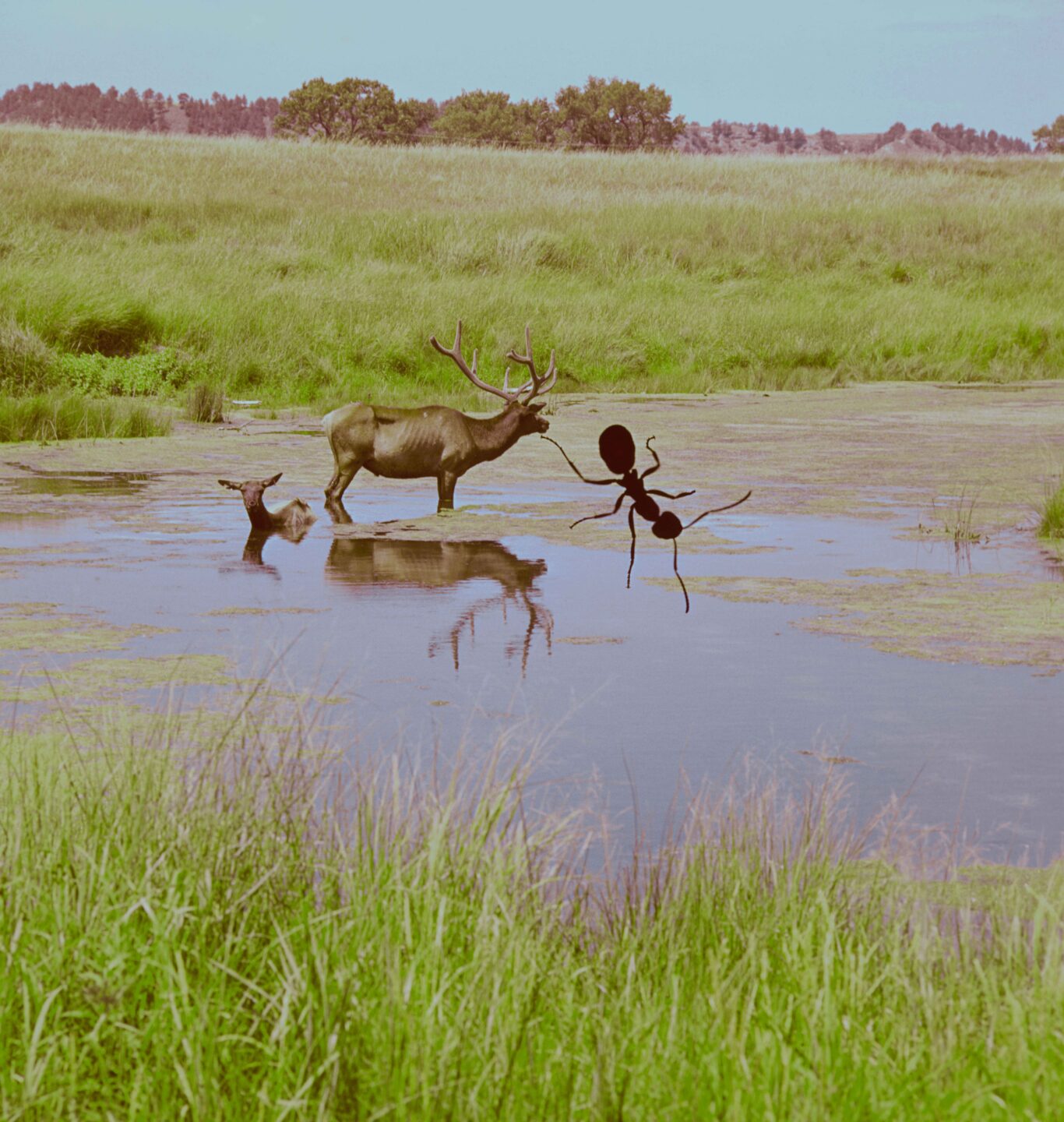
AI-generated stories and photos will not be a part of Nebraskaland Magazine’s content, as we have chosen to follow long-held journalistic standards and lean toward documentary-style content. But that doesn’t change our past. “Fake” photos have been around as long as photography, and many found their way onto the pages of Outdoor Nebraska and Nebraskaland.
While considerable effort went into making some of these photos, little went into the first, which appeared in 1931. In an illustration of two boys collecting bait to fish, the worm was drawn in the photo … and not very well.
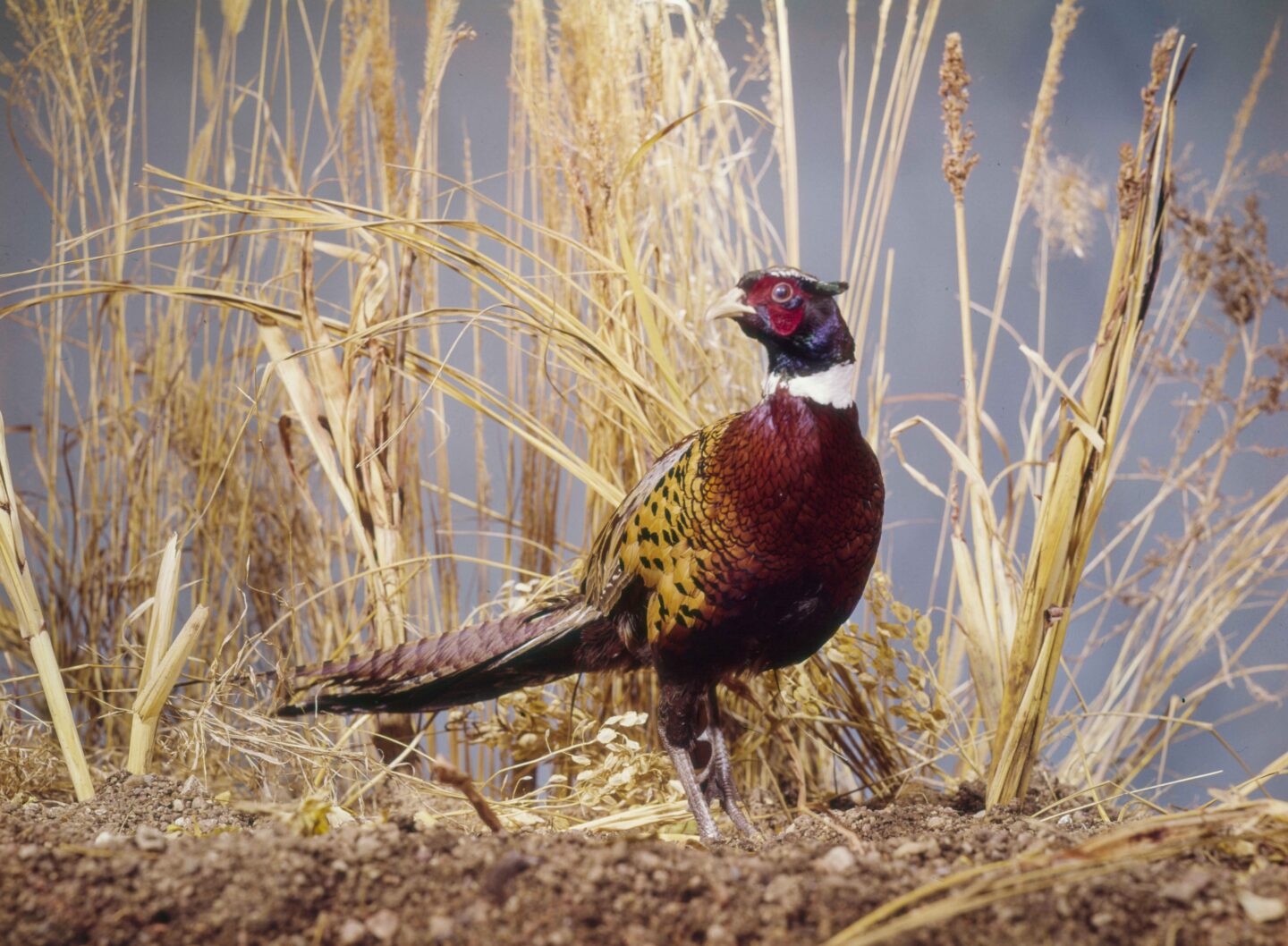
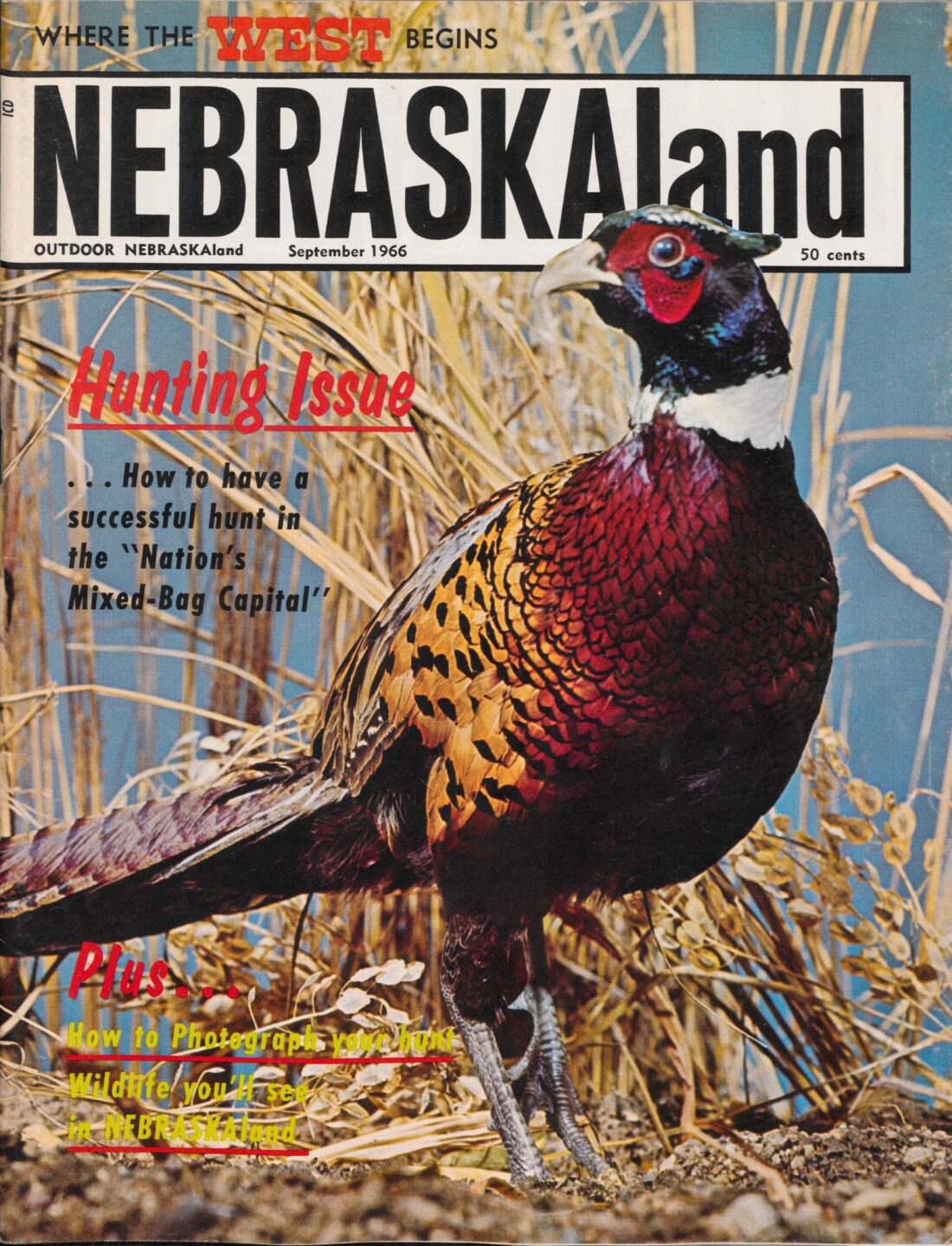
Gene Hornbeck began staging photos as soon as he joined the staff in 1958. For the October cover that year, he photographed a pheasant, likely a mount on a stick, flushing from a field with a hunter taking aim in the background. The following month it was a Canada goose, again likely a mount, standing next to a cornfield. Another mounted pheasant and turkeys followed in 1959, both of which appear to have been photographed outdoors.
Lou Ell joined the staff in 1961 and brought with him experience in studio photography. He continued the type of work Hornbeck was doing in a studio in his basement, and helped design the studio in the Commission’s new headquarters building, which opened in 1971.
In both, he built sets with dirt, mud, logs, cornstalks, grass and other plants, and photographed taxidermy mounts of birds under studio lights. Once you know this occurred, it is easy to pick out some of the studio shots he and Hornbeck created, as many included the same sky-blue background.
Long-time staffer Bob Grier was hired by Ell in 1970 and remembers assisting on some of these shoots, including one where Ell set up a trigger to fire when a live pheasant took flight. Insects were also brought into the studio.
Grier remembers another set Ell built centered around a log. “He’d set up his lights and put the cottontail into the log, and he’d stand over there with a can of flocking material that you’d use on Christmas trees, and I’d be over there and poke the other end of the log with a stick and the rabbit would come out the front of the log and he would spray this stuff up in the air above it and it just came down like snow,” Grier said. That image was on the cover of the February 1973 magazine, with Grier getting the photo credit.
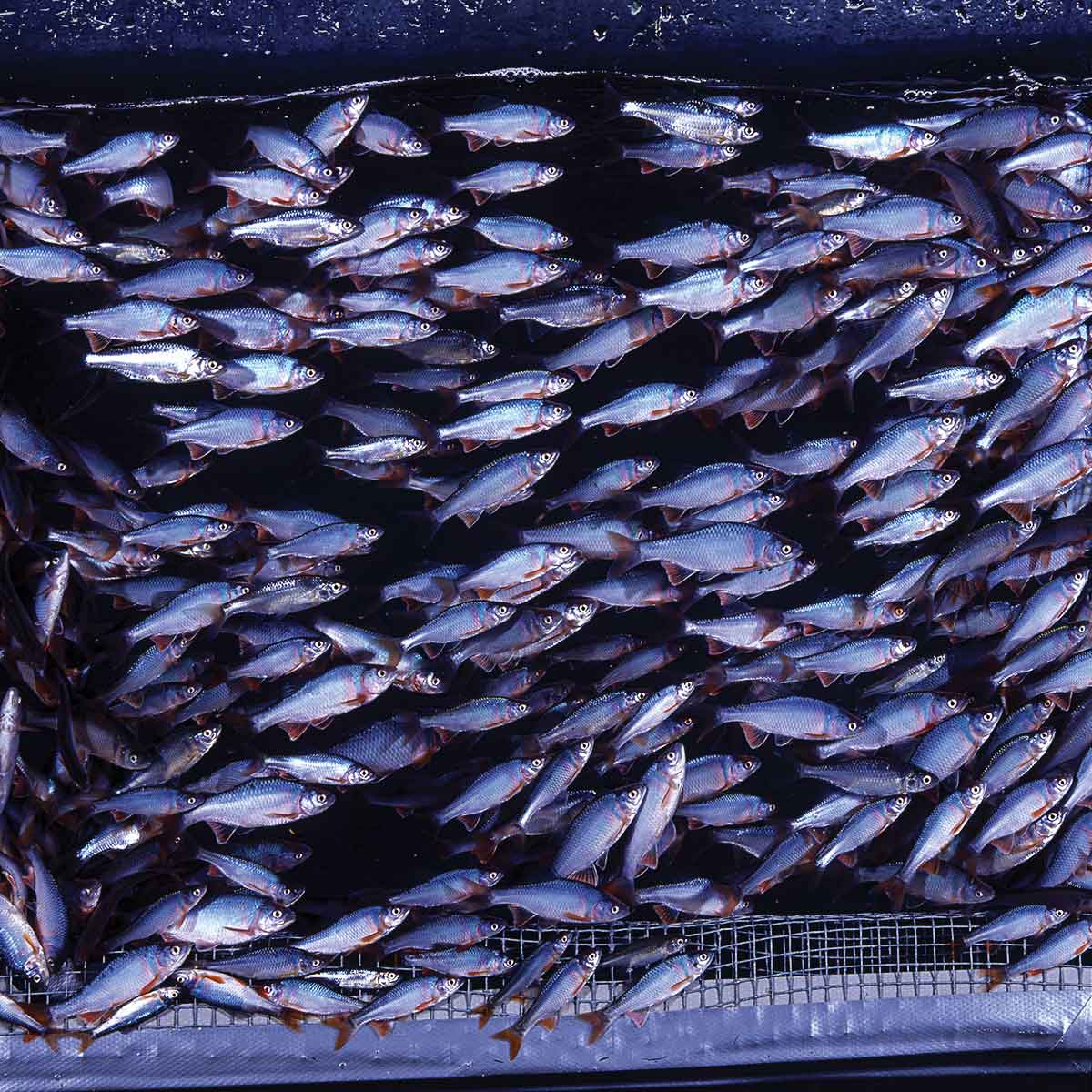
Staff members also set up a coop made of nylon netting in the studio to photograph birds in flight, including hummingbirds and gamebirds. The hummingbirds, photographed by Jack Curran, appeared in Birds of Nebraska in January 1985.
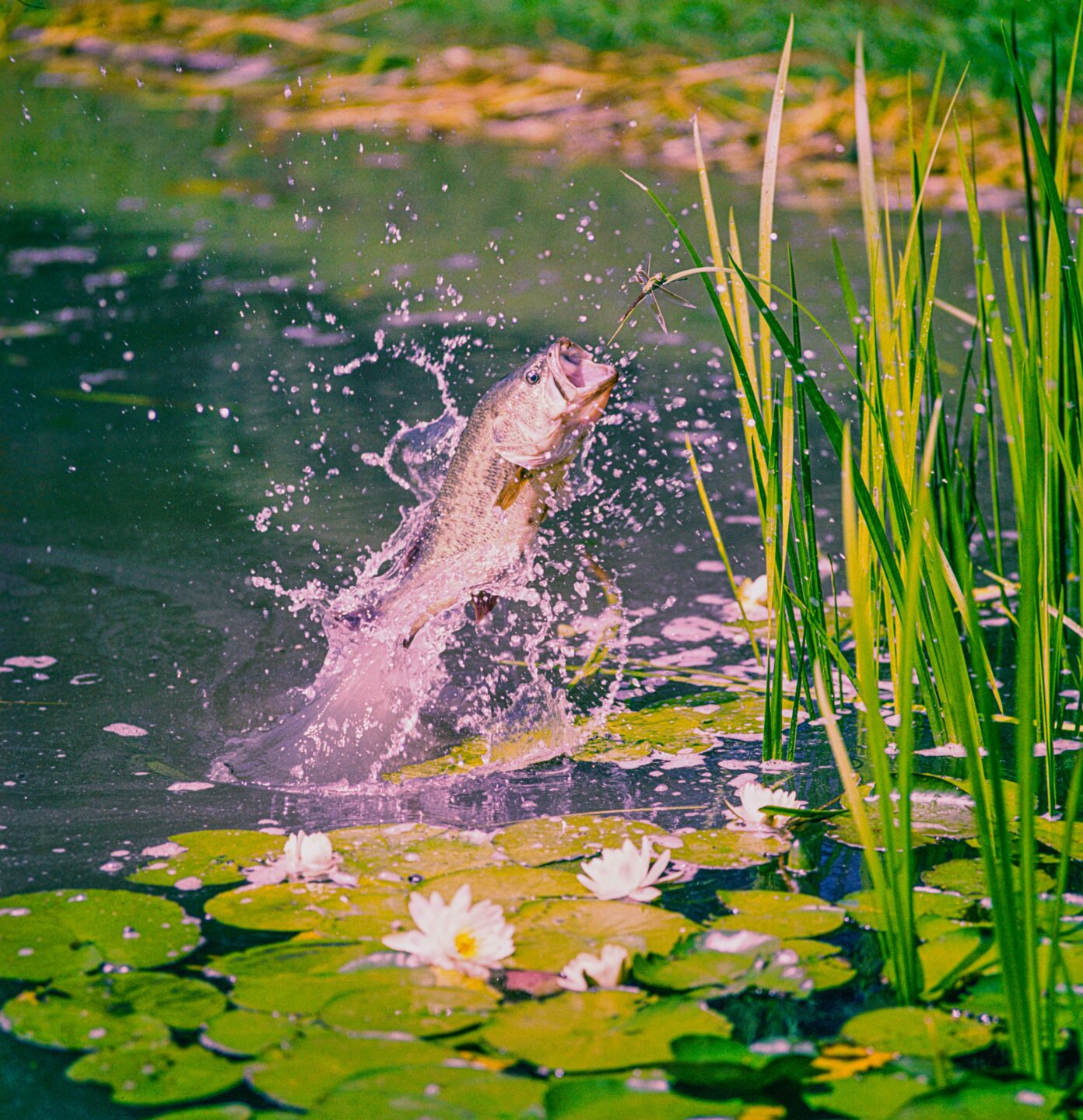
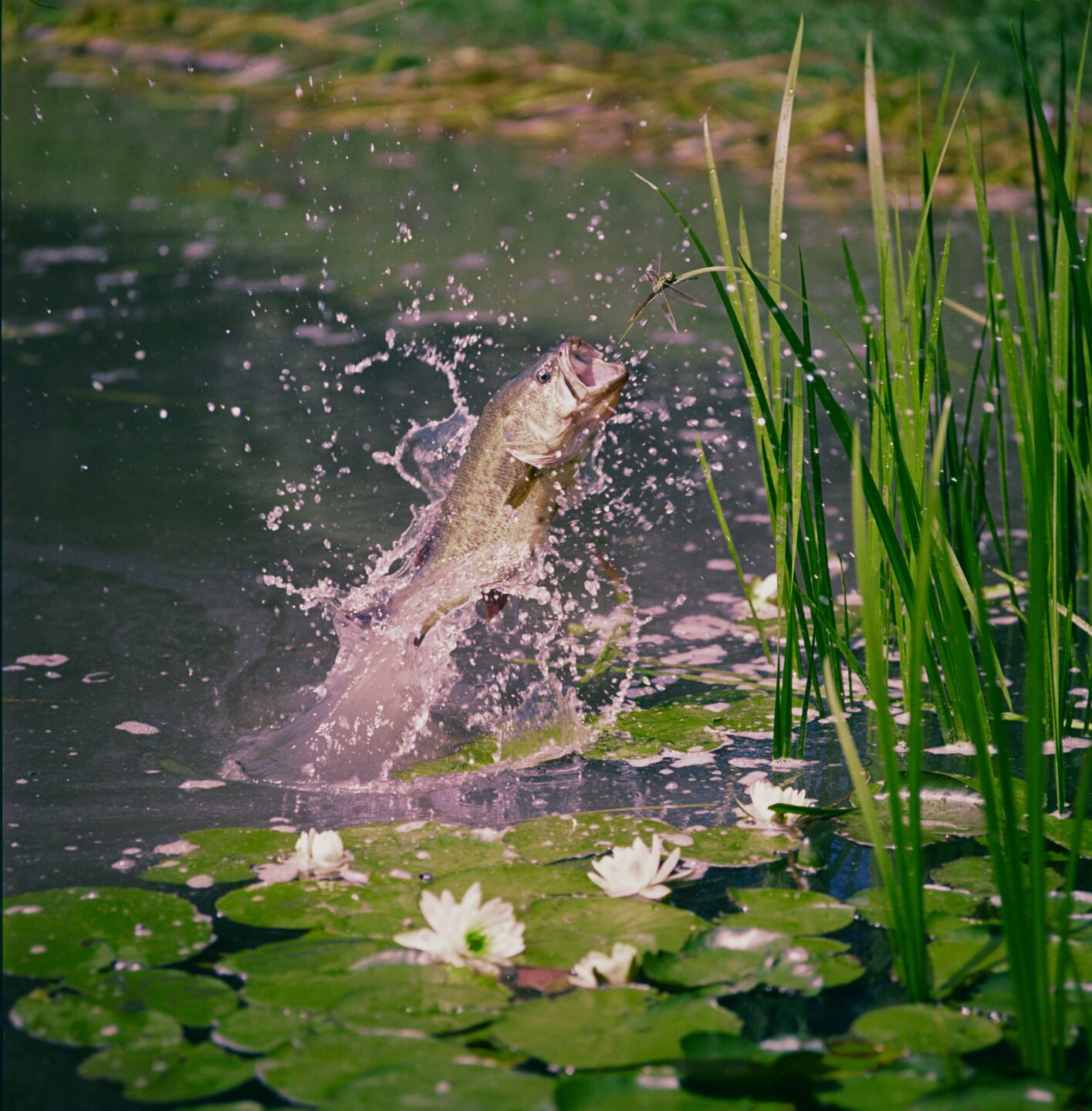
Hornbeck and Ell also got creative with fishing photos, creating images to make it appear trout, bass and pike were jumping out of the water. No one recalls exactly how they did it, if the fish were real or mounts, or if they were pulled out of the water or held above it while someone tossed something below them to make a splash, but the results were life-like enough that five made the cover. Ell added another touch when creating the April 1966 cover, having a bass leaping toward a dragonfly perched on some cattails.
Other fish were tethered with monofilament line and photographed in streams. And Hornbeck made an image look as though one was peering up through a hole in the ice at a woman angler.
Ell staged wildlife photos outside as well. The March 1962 cover photo used off-camera flash to illuminate a coyote that was likely a pet. The November cover that same year featured a turkey that was likely a captive bird or a mount with a hunter in the background aiming to shoot.
Between 1958 and 1978, there were at least 23 of these staged photos of fish, mammals and birds, real or mounted, featured on the cover, and many more inside.
Jon Farrar was another photographer who had a basement studio. He built an elaborate set for a least weasel he kept in his basement for about a year, allegedly leaving a window open during a snowstorm to give the set a different look. His daughter, Tasha, said he harvested a deer during rifle season to feed that weasel for the year or so he kept it. Farrar photographed other wildlife in the basement, as well, and Tasha was told that when she was just a baby, a rattlesnake he kept escaped into their home.
Fish were also photographed in the studio, primarily by long-time staffer Ken Bouc. Collected by fisheries biologists from waters around the state, they were set loose in a variety of fish tanks wrapped in black fabric and lit with strobes. Bases were built with sand and gravel surfaces to simulate the bottom of a lake or stream. Artificial plants, and even plants collected from area waters, were added to the tank to simulate a fish’s natural habitat.
Bouc’s underwater work wasn’t all in the studio. He also is believed to have acquired the magazine’s first underwater camera housing and went afield with a snorkel and fins to capture fish images. The Fish Book, a special issue published in 1987, is filled with these images, many of which would have been difficult, if not impossible, to capture in the wild when considering the rarity of some of these species and the poor water clarity in the state.
Some photos were created in the darkroom, including one for a story Grier did on crow hunting. “I never could get a picture of a crow flying,” he said. For his story, they sandwiched two images, one Grier took of a hunter with a shotgun taking aim and another of a flock of crows flying overhead.
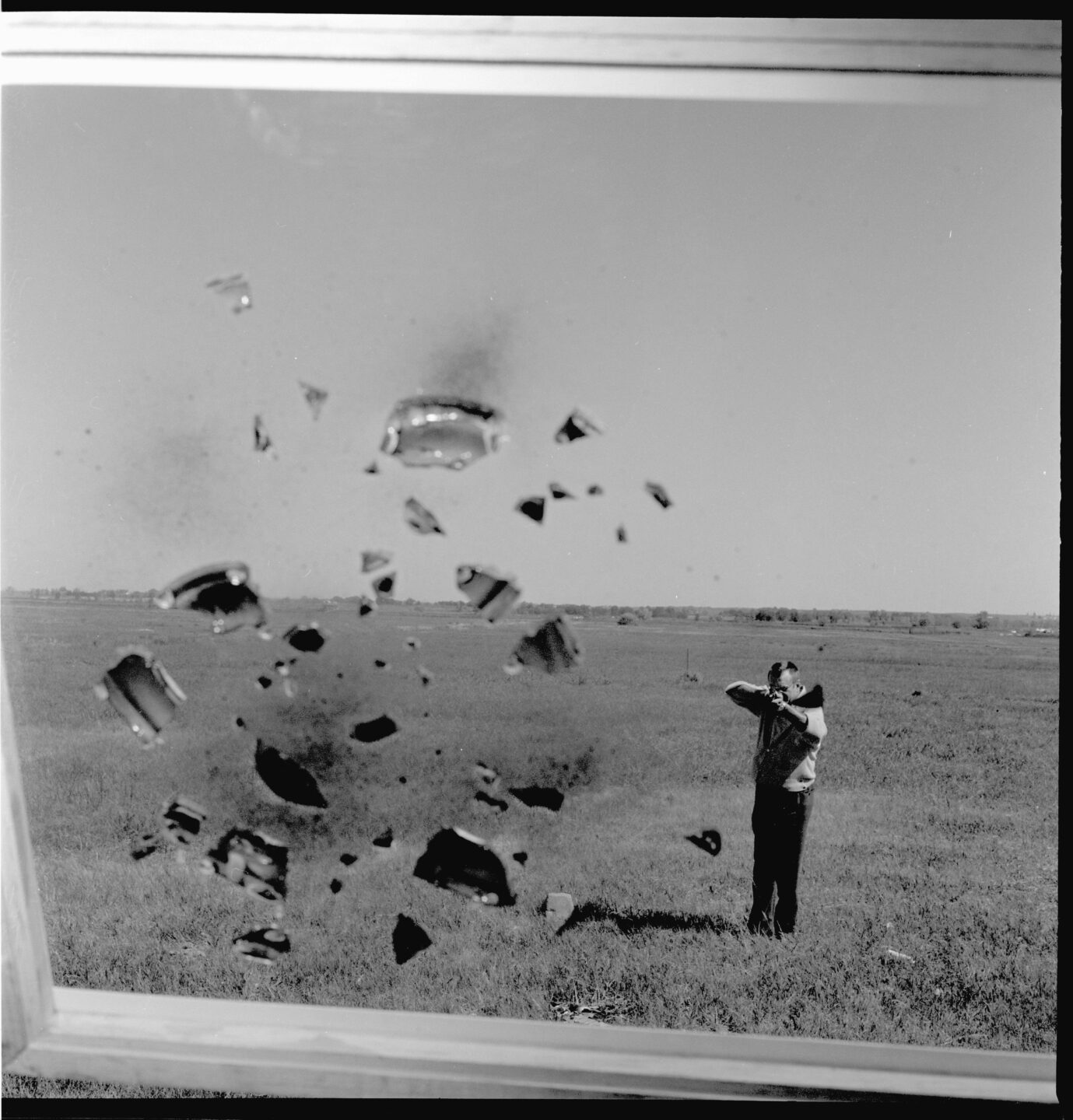
Old-school AI was also used to create photos of trapshooting. In an October 1970 story titled “Getting the Jump on Birds,” pieces of clay targets were glued to a piece of plexiglass and held in front of the camera with a shooter in the background, a position no photographer would put themselves in. Bouc recreated the idea in color for a July 1992 story on sporting clays.
Thanks to advancements in photography, including camera traps, we can capture photos today that would have been impossible in the past.
We continue to stage photos from time to time at Nebraskaland, whether it is minnows in a tank or held captive in a stretch of stream by nets, mussels in an aquarium, or snakes in an enclosure. In some cases, this is the easiest, or only, way to capture quality images.
But rest assured, the last image of a mounted pheasant taking flight from grass appeared in the pages of this magazine long ago.