
Story and photos by Chris Helzer
I spent much of 2018 staring into a small 1-by-1 meter plot of prairie in Aurora. My goal was to photograph everything I could find within a tiny area and show people how diverse and beautiful prairies can be. I was shocked by how well the idea resonated with the public, and even more surprised by how much of a passion project it became for me. I ended up writing a book, helping to design a museum exhibit, and even publishing an article in my favorite state wildlife agency magazine.
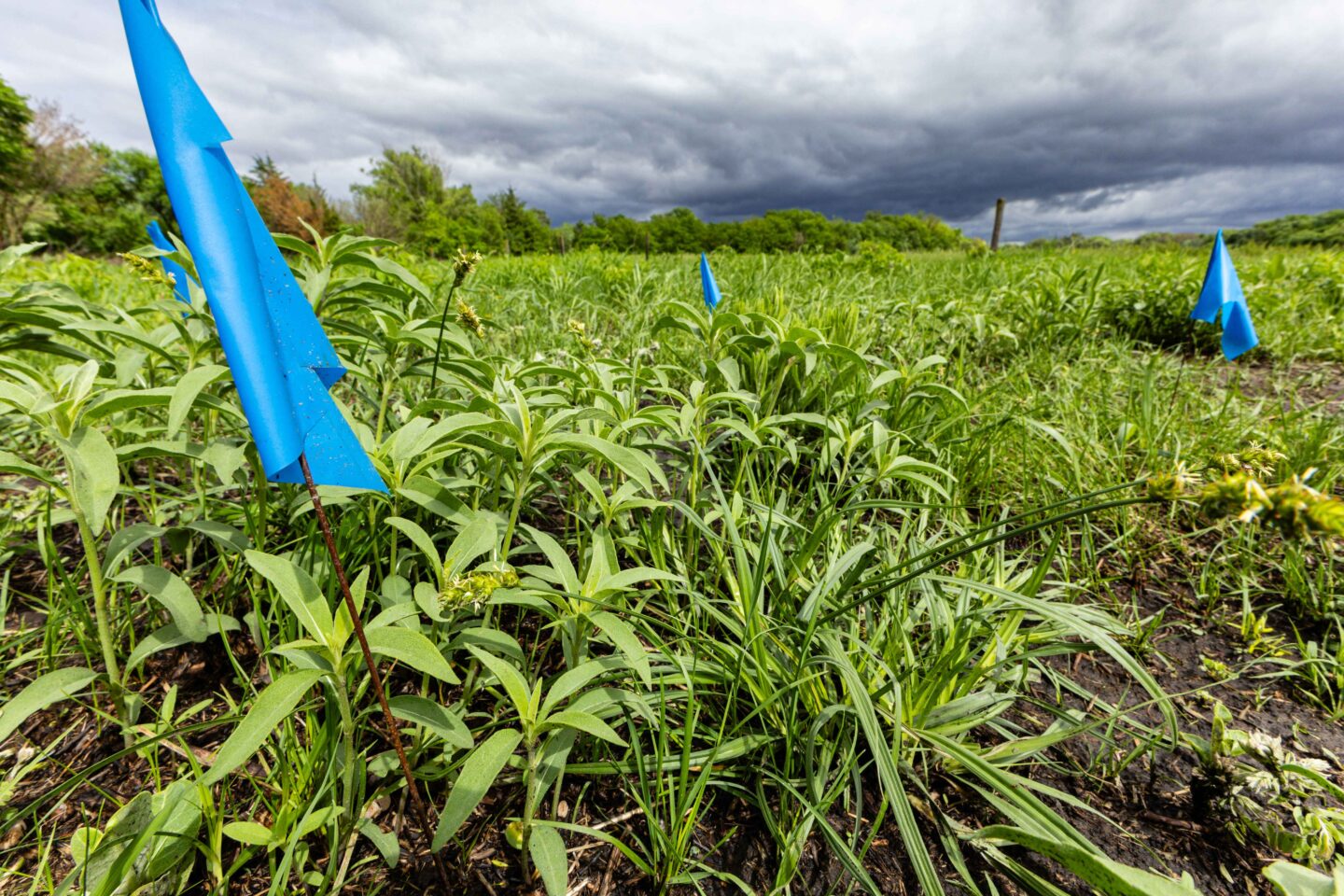
After 2018, though, I was done with that project. Whenever people asked if I was going to do it again, I was very clear that it had been a fantastic adventure, but I was looking for new ideas to explore. Then came the spring of 2024. Prairie Plains Resource Institute burned the little patch of prairie that included my square meter plot from 2018. Not long after the burn, I wandered past and decided it would be interesting to see if the remnants of my four corner flags were still there. I found them and replaced them with fresh flags, thinking maybe I’d stop by the plot a few times that year to see what had changed since 2018.
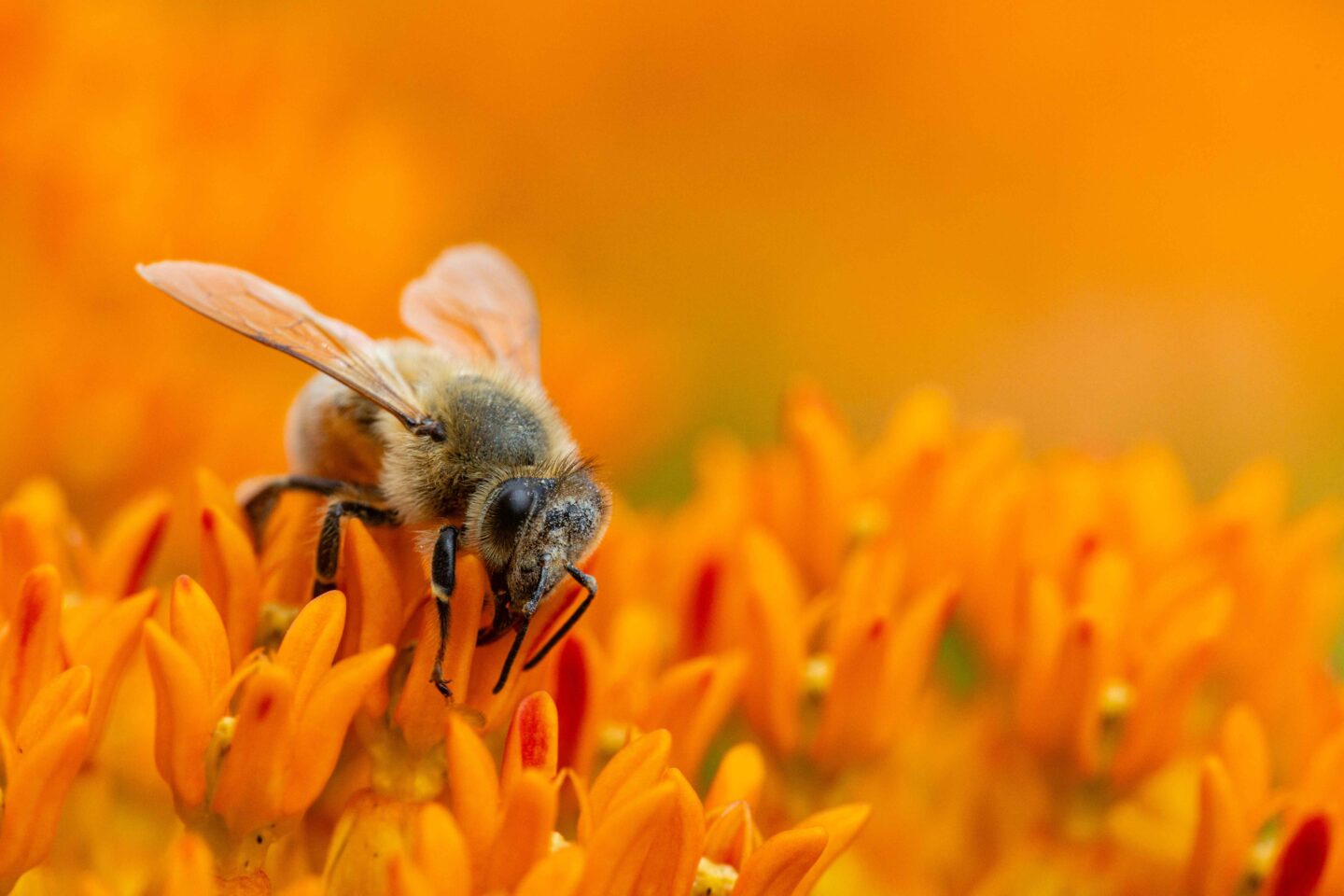
A little over a week later, I found myself lying on the ground, photographing dew drops on fresh grass blades in my old plot. A robin was hunting worms nearby, so I backed off a little, on the off chance it would work its way between those four flags. A few minutes later, the robin hopped right into the square and posed for a photo. I was well and firmly hooked. I spent the next 12 months swept back up in a joyous obsession. None of it felt repetitive. Every one of the 134 visits to my plot was a new adventure that yielded beauty, insights and inspiration.
I ended up photographing about 321 different species of plants, animals and fungi between May 5, 2024, and May 4, 2025. I’ll probably never have an exact count because it is very difficult to identify some insect species from photographs. Regardless, it was a much higher number than the 113 species I photographed in 2018. I think the increase was partly because I visited more times (134 vs. 46) and partly because the prairie was recently burned this time, making it easier to see things on the ground. Most importantly, though, I think I saw more because my 2018 experience had taught me how to be a patient and keen observer. I started my 2024 project by building on what I learned in 2018.
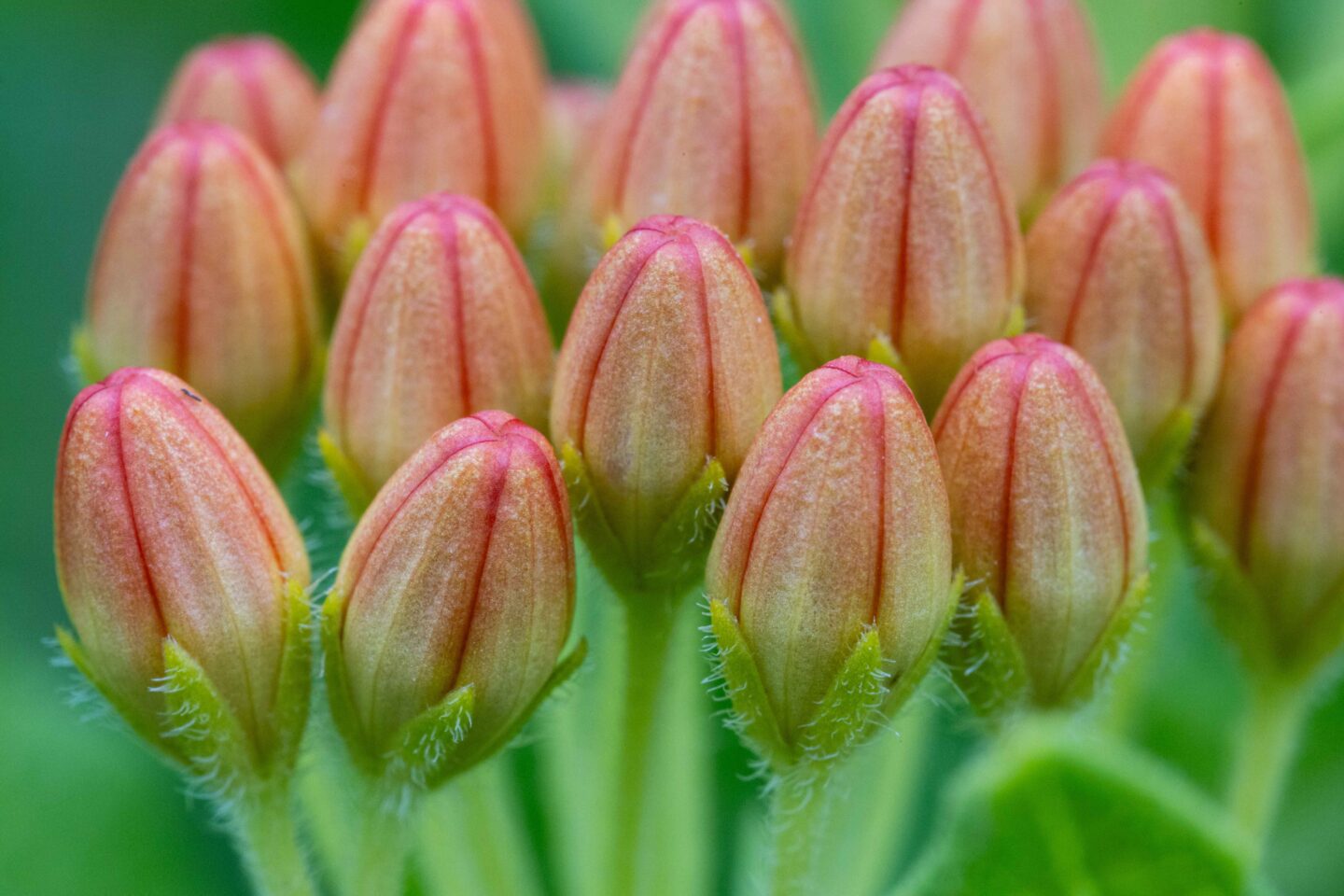
This was not an inventory project, though. Photographing a lot of species was an important component, but the primary intent was to show people the diversity and beauty of prairies. As a result, the most crucial, and enjoyable, aspects of my second year with that plot were the many stories that played out in front of my eyes.
Within those four flags, I watched orb-weaver spiders spin webs and other spiders chase and catch prey without using webs at all. I followed ants as they patrolled sunflower stems looking for “extrafloral nectar” and photographed milkweed bugs and their kids sticking their long mouthparts into butterfly milkweed seeds. After all the gorgeous, fluffy milkweed seeds had popped out of their pods and floated away, I learned that open, empty milkweed pods close up after being soaked by an autumn rain — opening back up again as they dry. Who knew?
I held my breath as a male cobweb spider cautiously approached and mated with a female spider and then scurried quickly away to avoid becoming lunch. I congratulated predatory tiger flies and long-legged flies on successful hunts and later zoomed in on my photos of them to identify what they’d caught. After watching the wiggling “tails” of two spittle bugs encased in frothy bubbles and feeding on sunflower stem juice, I realized that a small brown bug I’d seen earlier might have been one of their parents.
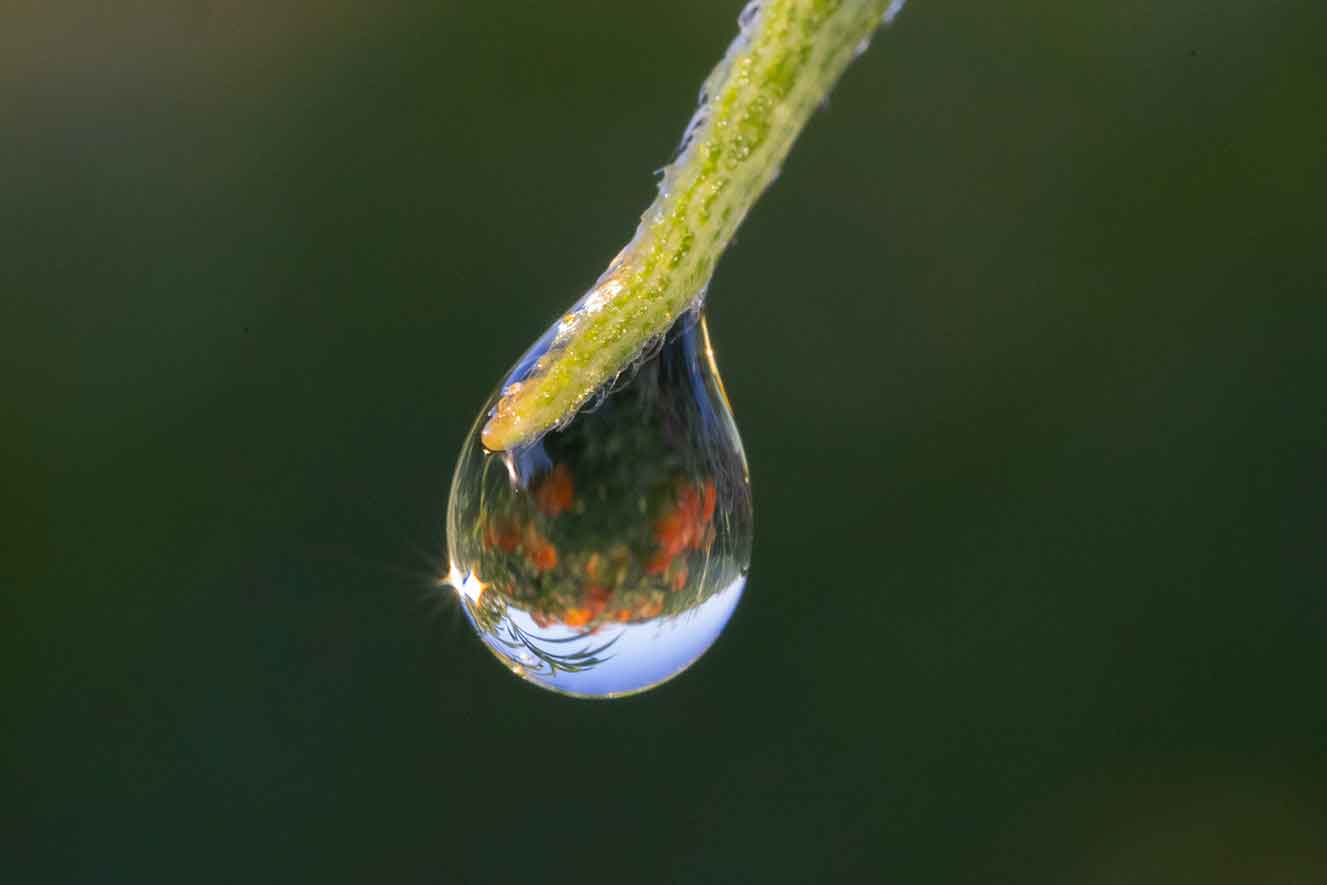
In addition, I had a great time photographing glistening dew drops and framing wildflowers against morning light and once an evening rainbow. On one dark night, I waited for a full moon to rise above the distant trees so I could photograph it behind the empty seed heads of Maximilian sunflower. On another, I sat and waited for lightning bugs to flash their green lights at each other from within my plot and tried, moderately successfully, to capture a photo of them doing it.
When I wasn’t at my plot, I found myself wondering what I was missing. Multiple times, I went home after an hour or so of photography and observation, only to return later in the day to see if a mushroom had wilted or if the first sunflower had opened. I scheduled meetings and appointments around weather forecasts, trying to make sure I’d have time to be at my plot when the light and wind were favorable for photos. Obsessed might not be a strong enough word.
Freeloader Flies
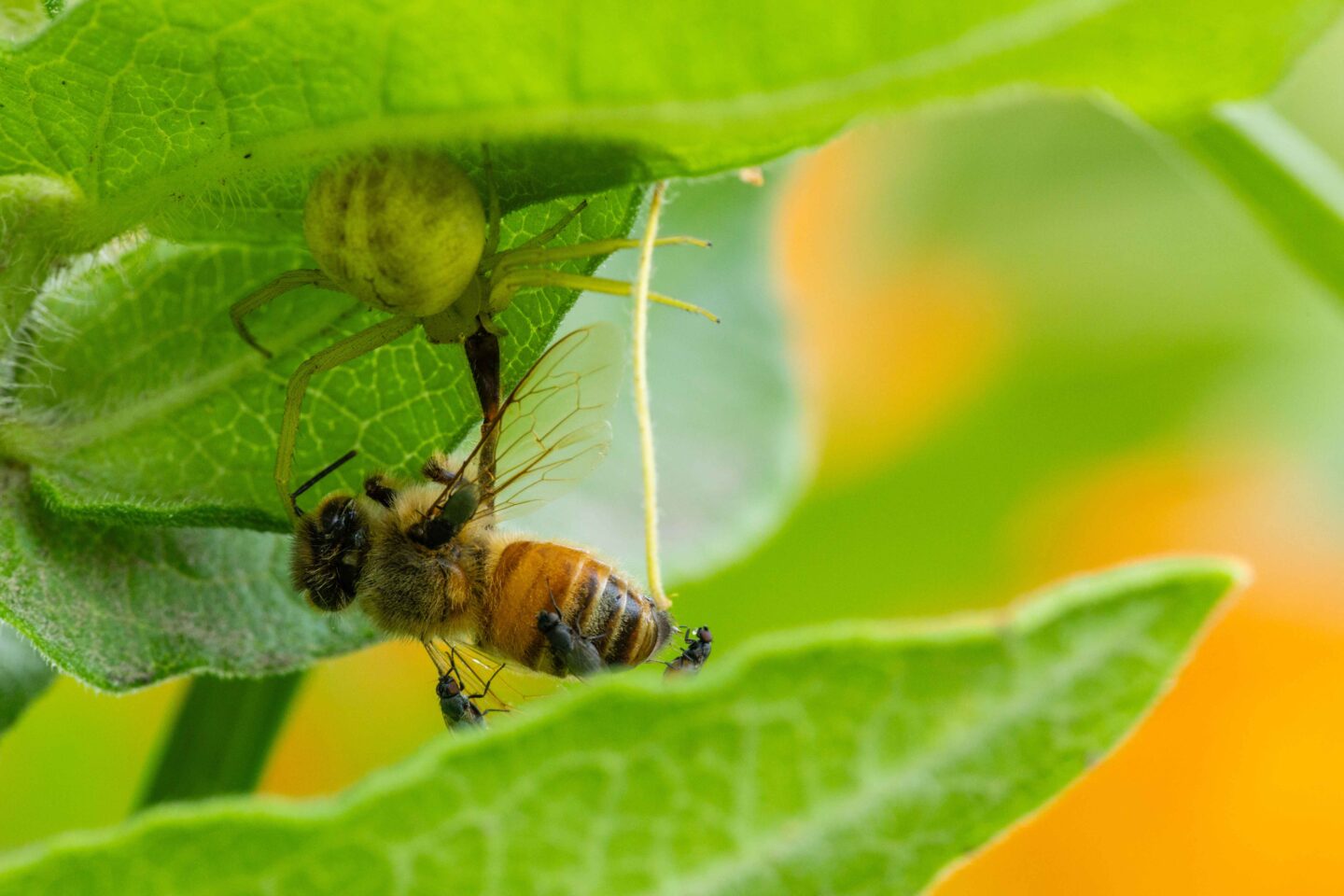
One day in late June, I arrived to find a crab spider feeding on a captured honey bee. As I bent closer, though, I noticed those weren’t the only two creatures involved in the story. A handful of small dark-colored flies were hanging around on the carcass of the bee. It wasn’t immediately clear what they were up to, but some later research identified them as freeloader flies, also known as jackal flies.
Freeloader flies often show up to feed on prey caught and killed by predators like spiders, praying mantises and other invertebrate predators. They are most often seen on prey that release a strong chemical odor when attacked. Honey bees are a good example of that, often using airborne pheromones to warn their sisters of danger. Freeloader flies track down their food by following just that kind of olfactory signal.
Head-Clipping Weevil
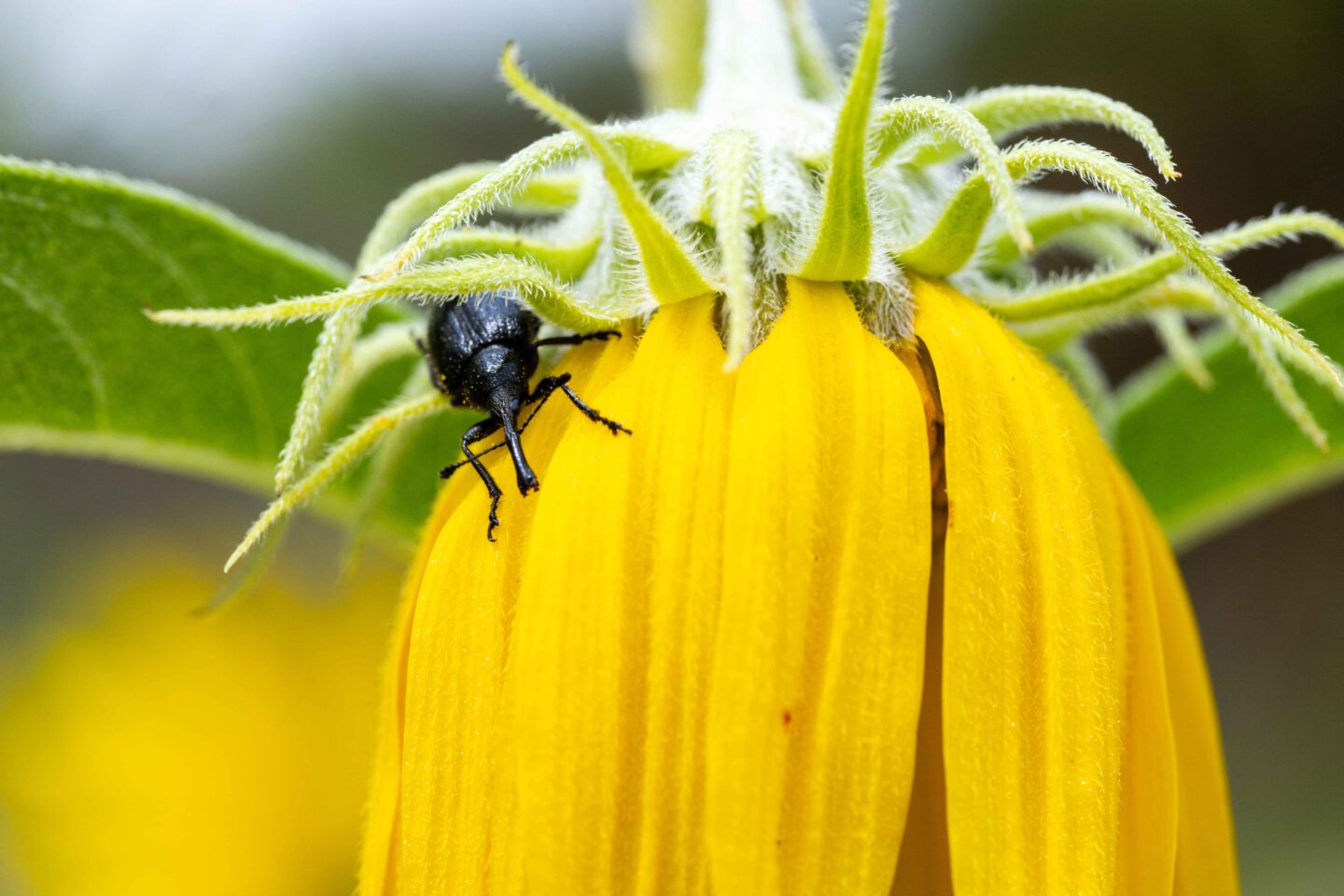
Head-clipping weevils girdle and partially decapitate the flowers of plant species such as sunflowers, purple coneflower and compass plant. They then lay eggs in the dangling heads so their larvae can feed on the soon-to-be decomposing plant matter. Eventually, the flower head falls to the ground and the larvae dig right into the soil below the plant to overwinter and reappear the following year to repeat the cycle.
By girdling the flower stems, the weevil dissuades other insects from laying their eggs in the flower because those competing insects want their larvae to be able to feed on seeds. Since no seeds will be produced from a partially decapitated flower, there’s no reason for those insects to lay eggs there, reserving the flower for the weevil’s own children.
I saw several examples of this in my plot, including one sunflower that looked like it had just been girdled. When I peered up into the interior of the hanging flower head, sure enough, there was a weevil! I laid down on the ground and photographed it from below, but then also got another photo as it crawled out — presumably finished with its egg laying. Over the next several weeks, I watched the flower wilt and, eventually, drop to the ground.
Lynx Prey and Spider Babies
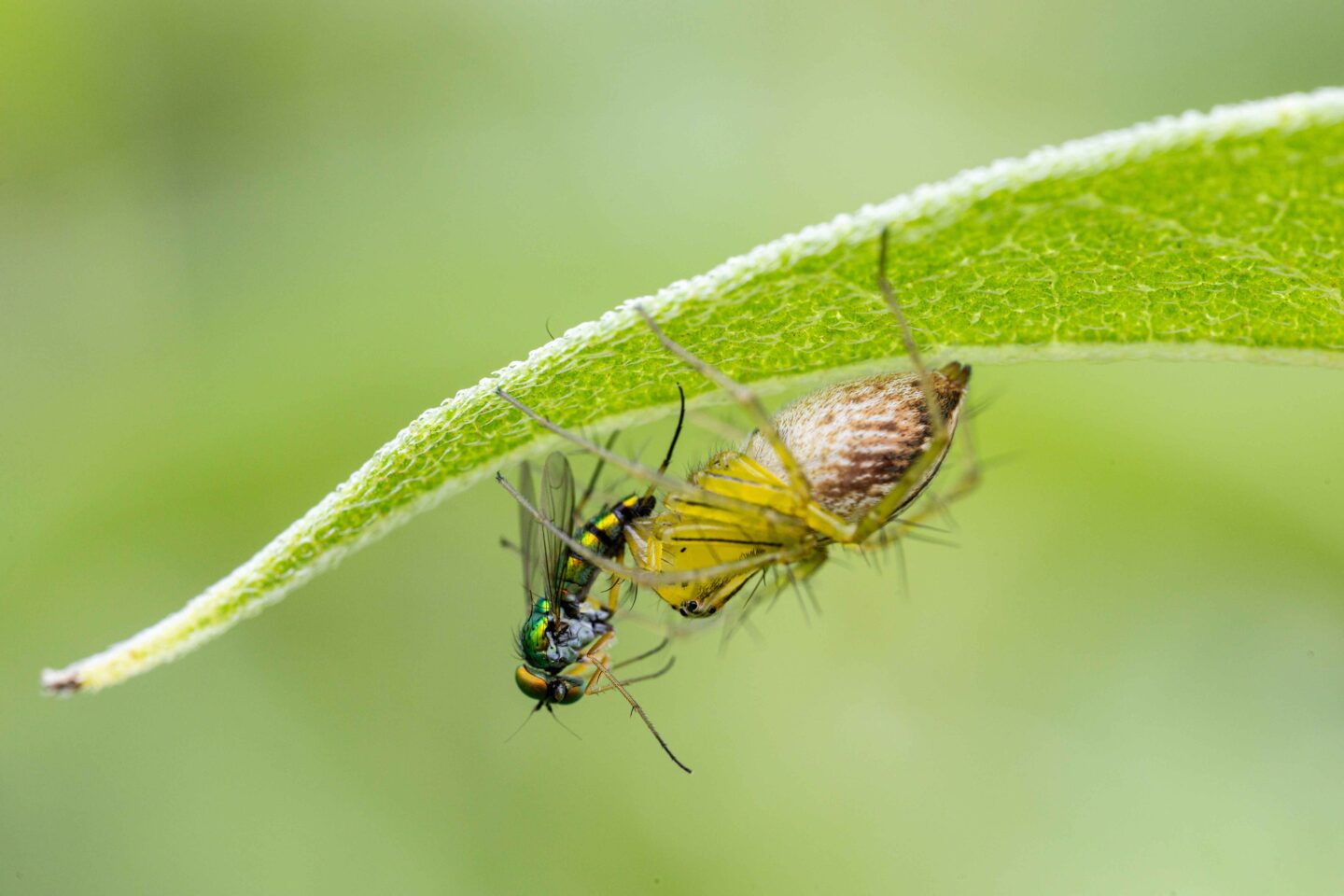
I got numerous photos of female lynx spiders throughout the year. Some were hunting and others were just basking in the sun or sheltering in the shade. I didn’t see a lynx spider every time I visited, but I saw one more commonly than not. I assumed they were all different individuals but hoped they weren’t.
One morning, I discovered a silken egg sac stuck to a blade of grass and a female lynx spider clearly guarding it from danger. Several days later, the eggs had hatched, the mom was gone, and there were dozens of miniscule spiderlings climbing, dangling and floating through the air. I was inordinately happy for both mom and kids and had a great time photographing the little goobers as they started exploring their new world.
Nightshade Gang
Black nightshade showed up in my plot in 2024 but hadn’t been there in 2018. I’m guessing it appeared in 2024 because the prescribed fire allowed light to hit the ground and stimulate germination of this annual species. I was happy to see it, partly because nightshade and its relatives have flowers that rely on “buzz pollination.” When bees hang below the flowers and vibrate their wing muscles at the right resonance, the anthers release their pollen to shower onto the bee. I’ve never photographed that phenomenon and figured it would be pretty neat to capture it within my little prairie square.
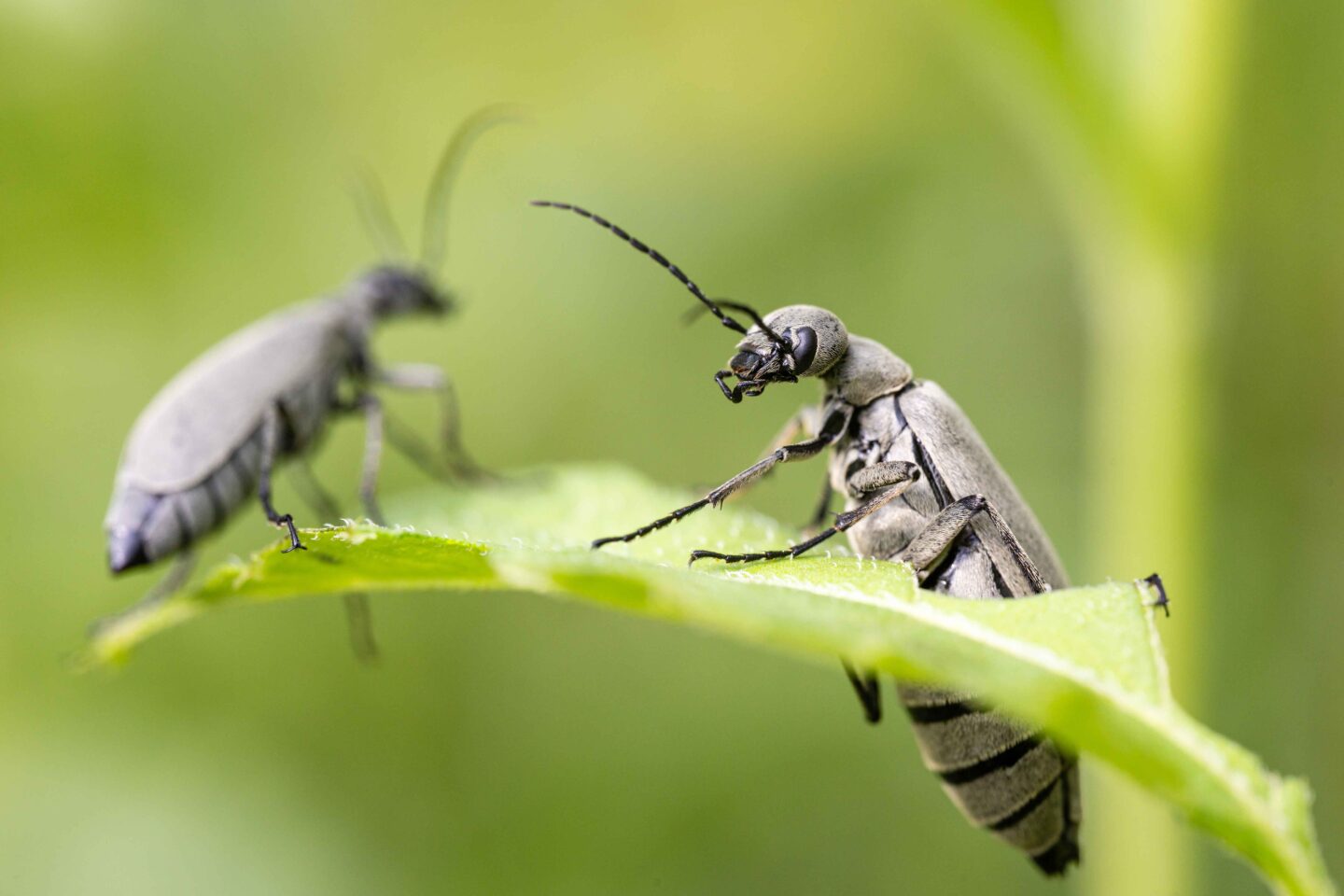
Before I saw any bees visit the plant’s flowers, however, a gang of blister beetles arrived in the plot and completely decimated the nightshade plant. Over the course of a couple of hours, they methodically ate every one of the leaves and flowers, leaving only sad-looking stems. It felt like they were staring at me while doing it, too, daring me to try and prevent them. When they left, the plant appeared doomed and it looked like my chance to photograph buzz pollination wasn’t going to come. Oh well, I had enjoyed watching the gang do their work and didn’t hold it against them.
The story doesn’t end there, though. Annual plants only get one chance at life, so they are hard to kill. This one was no exception, and those sad stems started producing new leaves within a week, followed eventually by flowers and fruits. The production of fruits meant the flowers must have been pollinated, but unfortunately, I was never there at the right time to see or photograph that process. That’s not the blister beetles’ fault, I guess, but remembering the way they stared me down, I blamed them a little bit anyway.
Last Day
The last day of the project was an emotional one. As the evening sun sank toward the trees, I searched for anything I could find and photograph before the light disappeared. An ant was patrolling the small sunflowers, maybe checking to see if they’d started producing extrafloral nectar yet. I found a few sedges that had started to flower and photographed their delicate, dangling anthers.
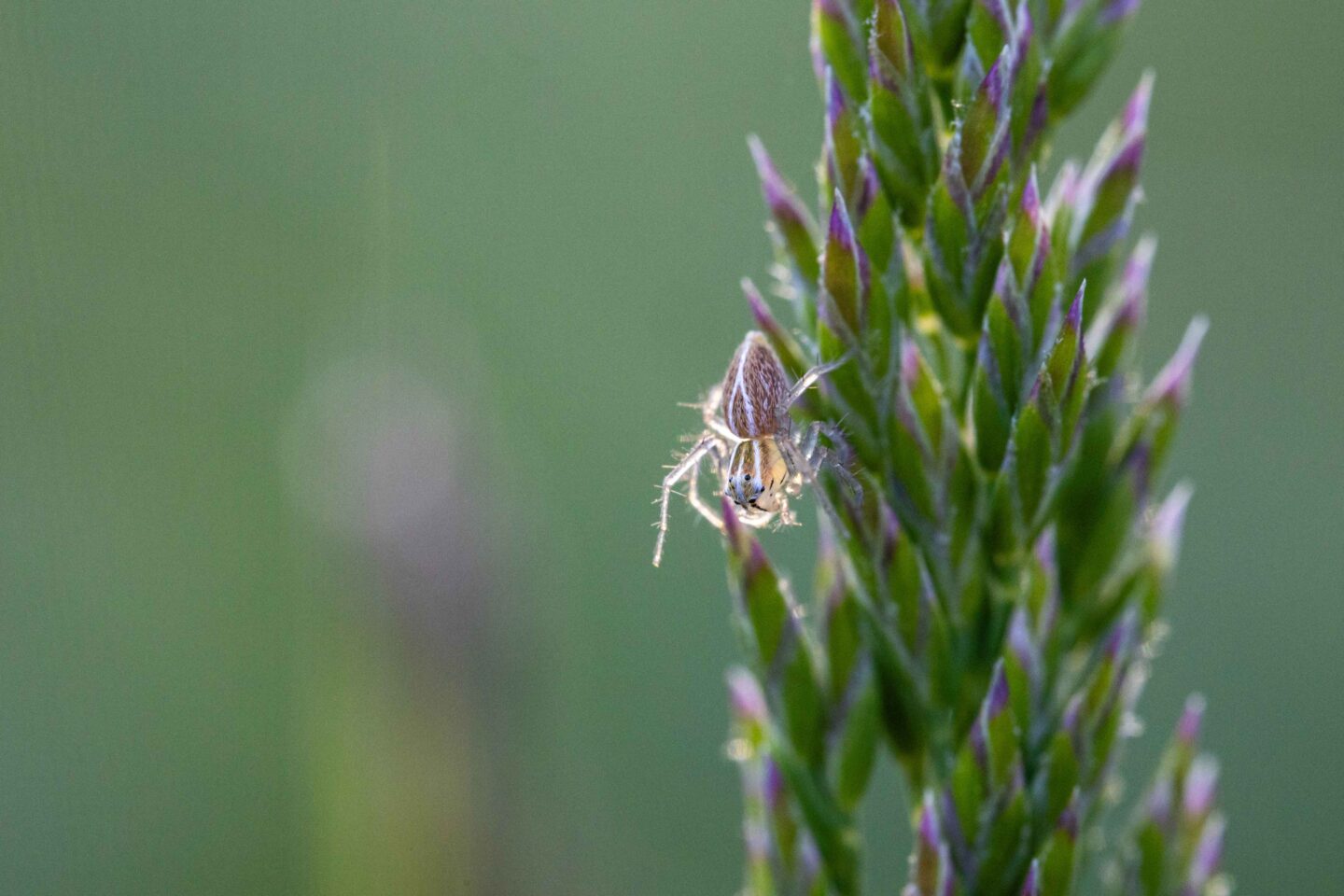
One of the last photos I took before the sun disappeared was of a small lynx spider perched at the top of some Kentucky bluegrass flowers. She was about the right size to have been one of the tiny spiderlings I’d seen hatch out the previous fall, but I’ll never know for sure if she was. Regardless, I wished her well and thanked her for hanging out with me, using her as a proxy for all the other amazing organisms I’d met and marveled at during the past year.
Finally, I packed up my camera gear, swung my pack onto my back, and walked slowly down the mowed trail to my truck, reflecting on the completion of my second year-long joyful obsession. I glanced back at the plot as I left, knowing I’d probably never spend another morning or evening lying in that particular patch of grass. After all, I was done with the project. It would just be silly to do it again.