
By Jenny Nguyen-Wheatley
For 125 years, Nebraska game wardens, better known as conservation officers, have seen through every game law revision and stood at the frontlines of encountering every whim of public sentiment in the field. Their duties have been ever changing, reflecting the shifting landscape of wildlife conservation and public expectations. What started as an open-season mentality on wildlife has evolved into a powerful sense of shared responsibility and stewardship among Nebraskans.
De Facto Open Season
Despite the game laws that existed prior to 1900, hunting and fishing at this time was more of “a de facto open season,” wrote Jon Farrar in “Centennial of Wardens,” published in Nebraskaland Magazine, November 2001. Although overstretched county sheriffs and town constables were responsible for enforcing all state laws, catching poachers was low priority, and wildlife suffered.
In 1901, after mounting pressure from concerned sportsmen, the Nebraska Legislature finally took meaningful action. Alongside the creation of the Game and Fish Commission — a precursor of the Nebraska Game and Parks Commission — the legislature backed up this new agency with the state’s first game wardens.
Lincoln Gun Club President George Simpkins would serve as chief deputy; Joseph Matousek of Brainard was his second; and P.C. Counselman of Omaha, Harry L. McConnel of Albion and George Carter of North Platte were named assistant deputies, reported the Stanton Register on April 9.
This thinly staffed, underbudgeted department depended on 88 special deputies to be their “eyes and ears” throughout the state. These special wardens had the authority to issue citations and make arrests, but they initially served without pay. Wardens were not issued uniforms and, before 1921, depended on inefficient railways, horses and rented vehicles to cover their areas.
Consequently, enforcement during these first several decades was spotty, and game wardens faced an uphill effort to get Nebraskans to abandon their old ways of seeing wildlife as mere commodity. Although fines for violations were steep, up to $500 for dynamiting fish or $300 for killing protected species, the odds of getting caught were miniscule. Furthermore, not all special wardens were armed and were occasionally shot at by violators.
Still, despite its rough start, this new arm of law enforcement was vital to the survival of the fledgling Game and Fish Commission.
![Law Enforcement Infraction Shots. "Youthful Violator." Conservation officer Carl Gettmann points out "no hunting" sign on game refuge to teenage boy carrying firearm and bagged pheasants. [Black and White Negative 2306.] Photographer unattributed, undated. [Before Feb. 1967.] Copyright Nebraskaland Magazine/Nebraska Game and Parks Commission.](https://magazine.outdoornebraska.gov/wp-content/uploads/2026/04/BW-2306-rgb-scaled-e1776899695254-1440x1382.jpg)
Early Conundrums
The challenges in enforcing game laws in the early 20th century were manyfold. The most obvious hurdle being funding, which was controlled by a Nebraska Legislature that continually fielded criticism on whether wildlife law enforcement was good value for money.
The few paid game wardens had to cover an immense territory, and the reliability and competency of the volunteer special wardens was tenuous. Occasionally, special wardens were arrested for violations, which newspapers delighted in reporting.
Market hunting also continued to be widespread. As Farrar wrote, “There were too many hungry settlers, too many families to whom $4 for a dozen prairie chickens was a windfall.”
During the Commission’s first two years, only 5,718 resident and 97 non-resident licenses were issued. Created in 1901, the new license law required all male hunters and anglers over the age of 18 to buy a $1 license and imposed additional restrictions on the taking of fish and game.
The low number of permits sold suggested that many hunters and anglers simply ignored the new law or did not know it existed.
The game department and its wardens had a conundrum on their hands. How do they educate Nebraskans about wildlife conservation? And how do they persuade the public to care? Only then will game laws be honored.
![Seizure of Game from the American Express Railway Company, 537 Quail, 36 Prairie Chicken, by Deputy Carter, December 12, 1902. George Carter was one of the original four deputy game wardens in Nebraska. This photo appeared in the 1901-1902 Annual Report of the Game and Fish Commission, between pages 12-13. [This version scanned from a mounted 35 mm copy slide. Law Enforcement Slide Show #9.] Photographer unattributed. Copyright Nebraska Game and Parks Commission](https://magazine.outdoornebraska.gov/wp-content/uploads/2026/04/RG01.01.014_LE_SS_009-rgb-1440x979.jpg)
Power of the Press
In January 1917, George C. Kosters of Niobrara was appointed head of the Commission and chief deputy warden. It was also Kosters who quickly recognized that building a relationship with the state’s newspapers would be advantageous to the Commission’s objectives. With his political acumen and public support, Kosters fostered respect for game laws by sharing his warden’s exploits in apprehending poachers and violators with the press.
Still, despite his administration’s best efforts, it would be many years before the tide of public opinion would truly turn. But it was a start.
On March 1, 1926, Frank B. O’Connell — former adjutant of the American Legion — was appointed chief deputy warden. Although O’Connell was not a “sportsman of any fashion,” reported the newspapers, he was a competent administrator, wrote Farrar. And he understood the power of the press. While Kosters solicited the favor of the newspapers, O’Connell took one step further by creating his own publication.
In June 1926, the first edition of Outdoor Nebraska magazine — the precursor of Nebraskaland Magazine — was published. In addition to serving as chief game warden and secretary of the Bureau of Game and Fish — formally the Game and Fish Commission — O’Connell was also the magazine’s editor. He used this new platform to spread the word of conservation, to urge the public to adhere to game laws and to advance the aims of his administration.
A Turning Point
O’Connell’s administration was a turning point. In 1927, the legislature determined that all fees collected from hunting and fishing licenses were to fund the work of the Bureau of Game and Fish — a measure that sportsmen had been demanding. In addition to more funding, this measure would also help remove politicians from the game department and increase
its accountability.
The larger budget allowed for hiring more and better qualified game wardens to handle the increasing demands of a new pheasant season in October 1927 and the rise in violations that resulted from more stringent federal waterfowl hunting regulations during the 1930s — a response to plummeting bird numbers. At the end of 1928, a growing department budget left room for 12 to 20 paid wardens to be employed on a seasonal basis.
Then, at the end of the decade, another major shift occurred — one that would usher in the modern era of game, fish and parks management in Nebraska.
A New Era
Prior to 1930, the Bureau and its wardens were effectively one and the same. Law enforcement had made up half of the state’s game and fish department, and its leadership served as both chief deputy game warden and Bureau head. However, during the 1929 legislative session, that changed.
Backed by the Izaak Walton League, “which has been working for a number of years to put in force the Commission form of government in game affairs,” reported Outdoor Nebraska magazine in July 1929, the Bureau of Game and Fish was removed from the Department of Agriculture and merged with the Forestation Commission and the Park Board, resulting in the creation of the Game, Forestation and Parks Commission.
A board of commissioners would increase efficiency and help prevent corruption. Elected officials would also be leaders in their fields, bringing their knowledge and expertise in decision making. However, this restructuring meant that law enforcement would take a less prominent role in the administration of the fish and game department, subsequently becoming one of many divisions that fell under the responsibility of the agency. Still, the role of game wardens became no less vital — it became more focused.
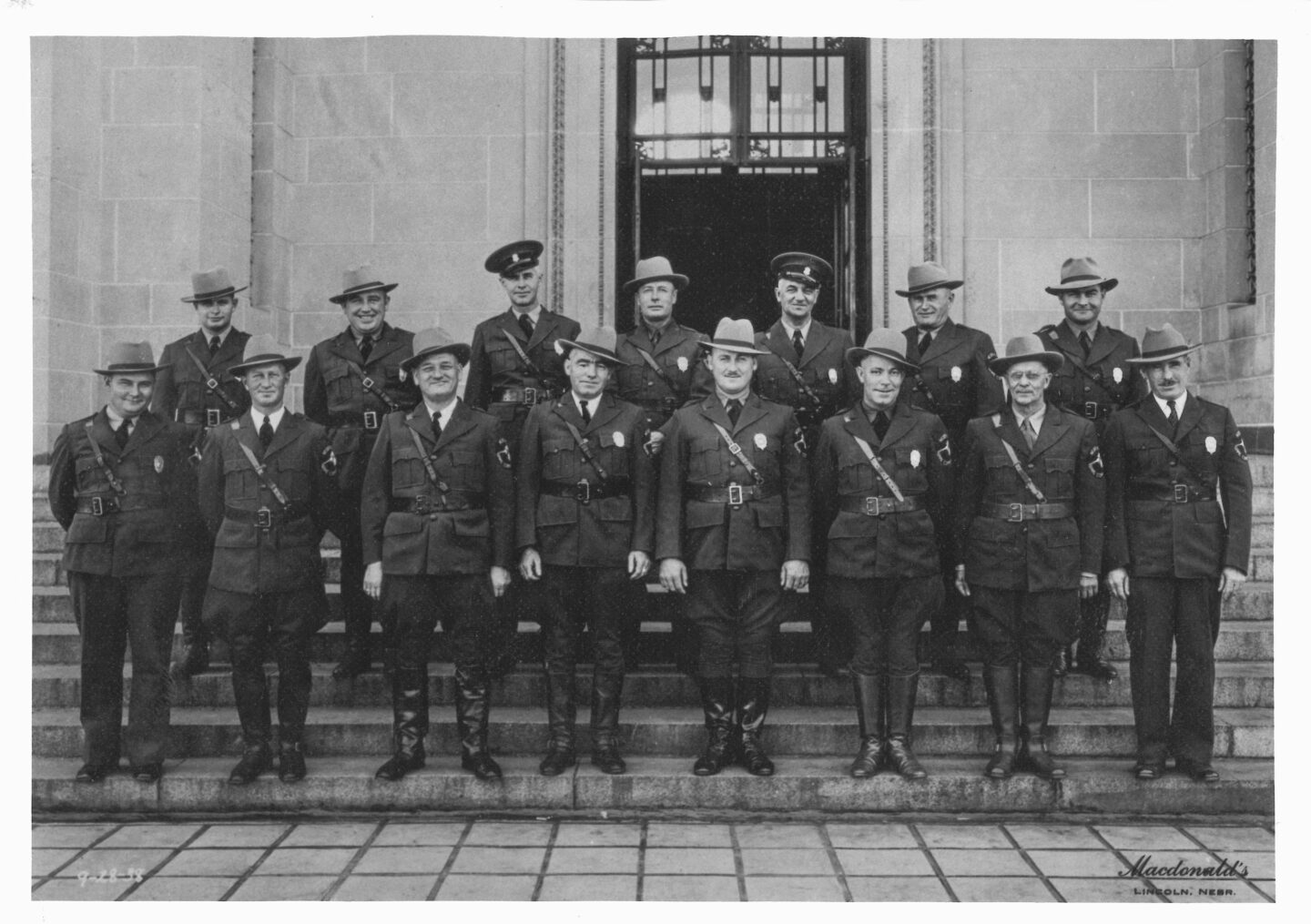
By the end of the year, 17 full-time officers were on payroll and furnished with green and gray, Mountie-like uniforms that were fitting of their position. O’Connell also began eliminating volunteer special deputy wardens, keeping only a few individuals on a commission basis. In a 1929-1931 report, he referred to game wardens as “officers” for the first time.
“In the 1930s and 1940s, less was said about game wardens and more about game farms, improved fish hatcheries and new recreation areas and parks,” Farrar wrote. “Law enforcement had become the reliable old horse in the team. It pulled its load without a lot of attention.”
It seems Nebraskans were finally warming up to their defenders of wildlife and wild places.
![Cornhusker Invitational State Trap Shoot, Doniphan. High school and college. Group of female participants pose with a conservation officer. Photographer unattributed [Rocky Hoffmann or Rex Amack], April 1977. Copyright Nebraskaland Magazine/Nebraska Game and Parks Commission.](https://magazine.outdoornebraska.gov/wp-content/uploads/2026/04/C-5994-copy-1440x976.jpg)
The New Conservation Officer
In 1942, McCook junior college science teacher Paul T. Gilbert replaced Acting Secretary W.H. Lytle as head of the Commission. Under Gilbert and William R. Cunningham, who filled the newly created role of “supervisors of conservation officers,” conservation officers evolved to become much more than game wardens. In 1946, Gilbert’s officers made more than 200 public appearances, including speaking to civic groups, school classrooms and sportsmen clubs to educate the public on conservation.
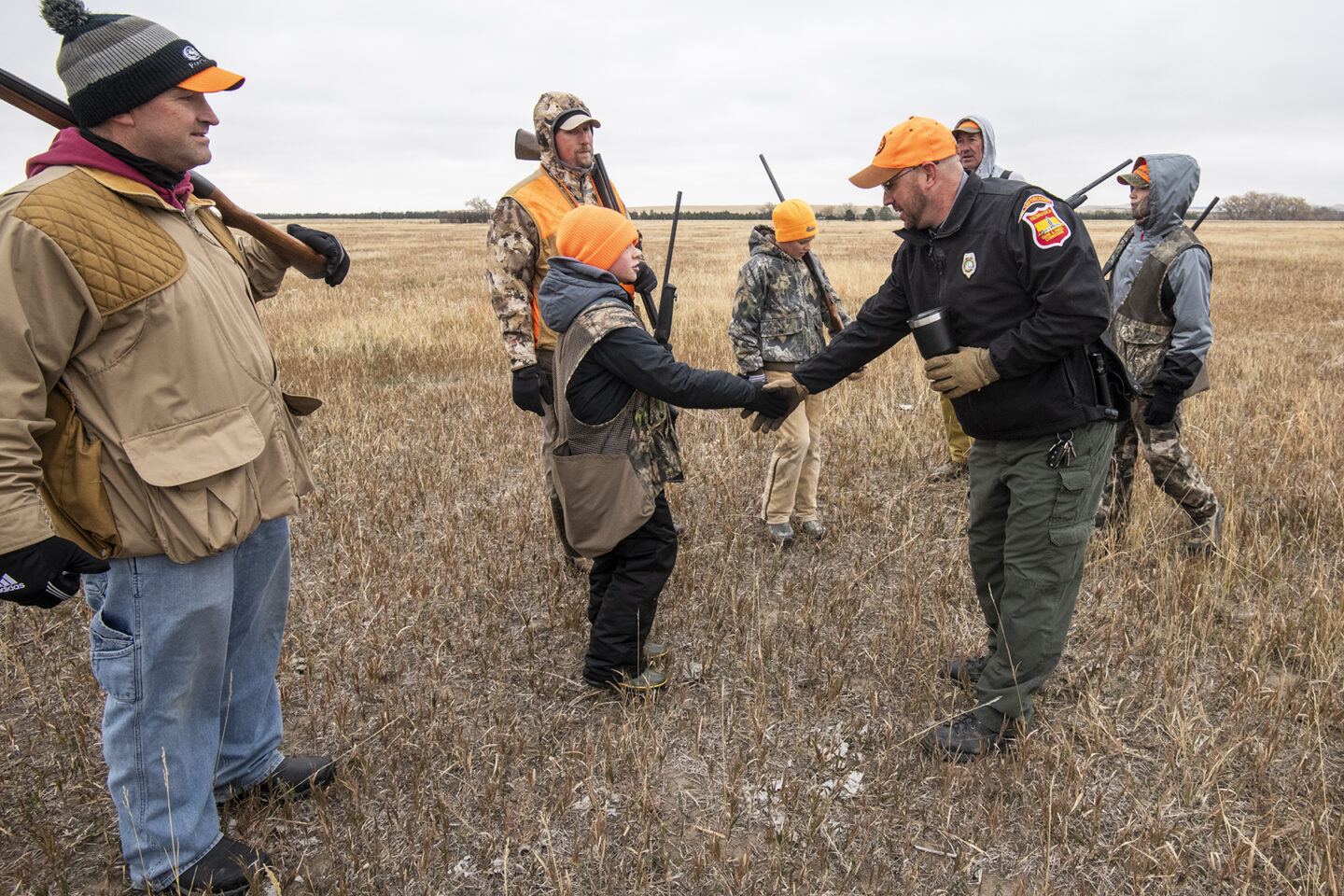
Hired as a deputy warden in 1932, Roy Owen was a legend and often credited with the coming transformation of the conservation officer’s role. A world-class storyteller and public relations genius, Owen also had a special talent for outdoor education. He was an accomplished trap shooter and was devoted to teaching gun safety to children.
“Good public relations are worth a thousand arrests,” Owen often said, highlighting the importance of building relationships and trust with the public. He believed education was key to getting Nebraskans to comply with the law.
During Gilbert’s tenure, the number of officers grew, and the division saw several upgrades in equipment. Although expenditures by the game department were under constant scrutiny, Gilbert moved forward with the purchase of a 22-foot boat to patrol the new Lake McConaughy.
A single-engine Cub Cruiser was also purchased to help catch violators who were using remote areas for concealment, and after World War II, surplus walkie-talkie sets were available for the Commission to obtain.
As editor, Gilbert utilized the pages of Outdoor Nebraska to justify expenses that some in the public decried as “luxury.”
In April 1956, Gilbert died unexpectedly and was replaced by Melvin O. Steen. A former Missouri fish and game division chief, Steen promised to further develop Nebraska’s wildlife resources and believed the state was full of possibilities, reported The Tecumseh Chieftain on June 7.
Steen proved to be a sharp administrator and was relentless in his belief that Nebraskans deserved a top-notch fish and game department and more recreation opportunities. As a result, the legislature increased the cost of hunting and fishing permits three times, and with the expanded budget, Steen grew the number of conservation officers from 29 to 50.
Under Steen’s administration, the expectations of conservation officers also grew considerably. When officers weren’t patrolling Nebraska’s fields, waters, woods and roads, or making public appearances, they assisted with other emergencies as needed, such as flood patrols or storm damage clean-up.
Nebraska’s conservation officers would continue to evolve from O’Connell, Gilbert and Steen’s modernist vision through the turnof the century, and since the centennial, would see through even more changes.
Enter Social Media
Presently, the Nebraska Game and Parks Commission’s law enforcement team continues to face many of the challenges of the last century, in addition to new ones — the rise of social media and technology being two of the most significant factors in changing the way conservation officers have done business during the last 25 years, said Law Enforcement Division Assistant Administrator Travis Shepler.
“Everybody likes to take pictures of what they kill,” said Shepler. “It used to be everything was stored in somebody’s deep freeze in their house. Now, everything’s stored in their phone or on the cloud somewhere.”
Today’s conservation officer must be adept in digital evidence collection, including obtaining search warrants on a violator’s phone, email and social media accounts when needed, along with integrating traditional methods of investigation. The division also employs a team of investigators dedicated to working on complex cases involving commercialization and trafficking.
These investigators are “tech-type, undercover officers” skilled in the collection of digital evidence and analysis, and they have been instrumental in cracking larger, more complex investigations, such as the Noble Outdoors case, when a North Platte man was prosecuted for guiding 114 unlawful hunts to knowing, paying clients between 2015 and 2021 (see page 57).
Social media also has changed the way officers have traditionally shared information and formed relationships with people.
“Historically, the way that was done was meeting with people in person to talk and go into coffee shops,” Shepler said. With social media, those spaces no longer exist, and more people prefer to get their information online.
On the one hand, social media has allowed conservation officers to reach more people. On the other, Shepler also feels that it has hindered their ability to maintain meaningful connections with the public, as conservation officers have previously relied on these relationships to gain tips and information on violations.
Although the division has come a long way since 1901, with 72 sworn-in officers and 5 vacancies to be filled, coverage will always be a problem. Each officer patrols an average of 1,700 square miles — an area larger than the size of Rhode Island. They simply can’t be everywhere at once.
“The number of officers that we have, it’s not enough. It’ll never be enough for us to be behind every violation,” said Shepler. “A deer gets poached on Farmer John’s property. Does he know who to call now? We lost that connection.”
New Tech
Violators, too, are using technology to change the way they poach. The availability of thermal imaging rifle scopes has allowed poachers to unlawfully kill big bucks under the cover of night. Compared to the old method of spotlighting, thermal imaging is just about impossible to detect. At the same time, conservation officers are using this same technology to rescue people at night.
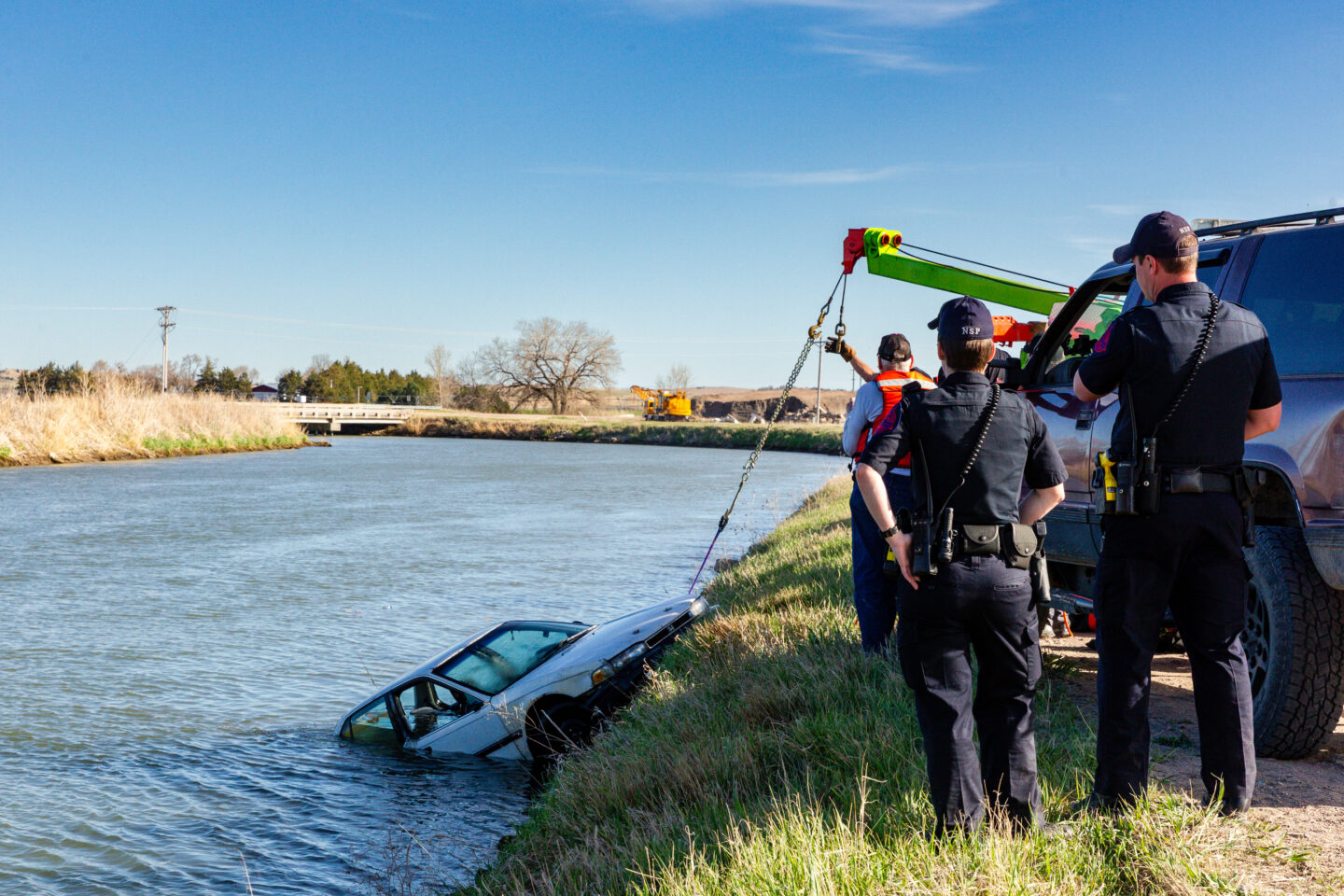
If Shepler could point to one major shift in Nebraskan’s expectations of conservation officers in the last 25 years, it would be public safety. Today’s conservation officers respond to considerably more non-fish-and-wildlife-related calls than they did 25 years ago, and communities have come to rely on them.
“If there’s an accident on the interstate or a domestic violence call in a small town, we may be the only law enforcement available. This day and age, we’re trained and expected to be able to deal with those things,” Shepler said.
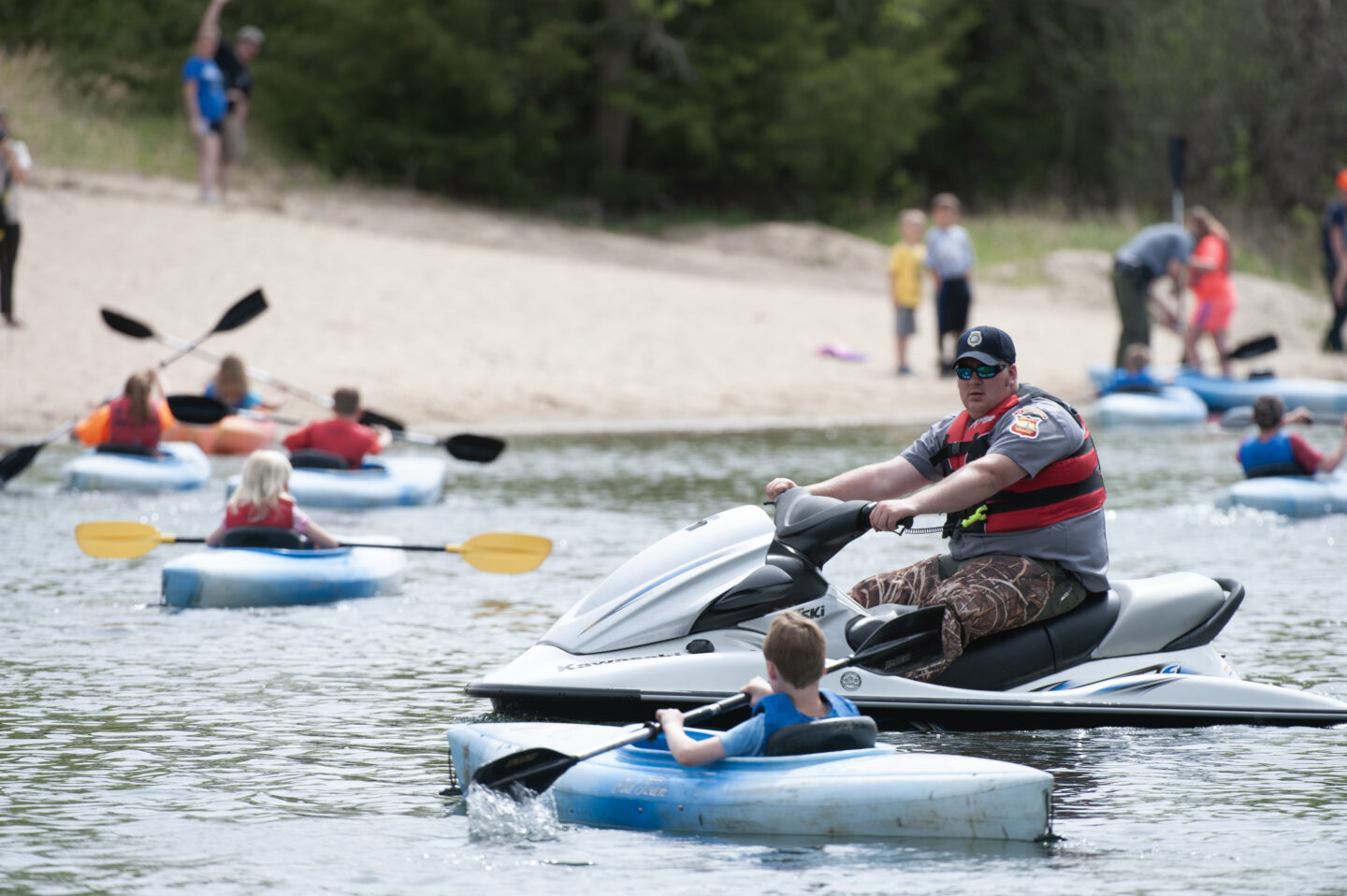
Search and rescue efforts are more common than not. A fleet of all-terrain vehicles, utility-task vehicles, advanced patrol boats, personal watercrafts and airboats are vital for searching missing people in remote areas or drowning victims.
Larger lakes, such as Lake McConaughy, can be unpredictable during storms, capsizing boats and stranding people in the water. It’s also not uncommon for a duck hunter to drown or an ice fisherman to go under, said Shepler, sharing that his team might respond to about 15 sportsmen-related drowning incidents per year. During the flood of 2019, law enforcement patrol boats were used to rescue stranded people in Fremont.
Shepler also told a story of how technology helped save a hiker who had gotten lost deep in a Scotts Bluff canyon. Although the hiker’s phone died, conservation officers were able to locate him by drone, after which local emergency medical services came to the rescue.
The conservation officer’s green and gray uniform has not changed much in the last 25 years, but a load-bearing vest with body armor is a new addition. Although Shepler admits the vests can make officers look more aggressive, their adoption was purely driven by comfort.
“They’re designed so that everything besides your gun can be carried on your vest. And it’s a load-bearing vest that takes the weight off your hips, which historically has caused back problems for law enforcement,” Shepler said. When fully loaded, these vests can weigh as much as 15 pounds.
In 2021, conservation officers also transitioned from the Glock .40 caliber to the 9mm. Advances in ammunition ballistics has come a long way for the 9mm, and the smaller-frame gun allows officers with smaller hands to shoot more comfortably and with less recoil; the 9mm also can hold more ammo in each magazine.
A Complex Job
All in all, a conservation officer’s job has become — if not harder — more complex and diverse. Ironically, officers look forward to the slowness of the fall and winter hunting season after coming off the long park and boating season, with non-consumptive outdoor recreation becoming increasingly popular.
“Most of our calls in the summer are reactive to disturbances — domestic violence, drugs, alcohol, that kind of stuff,” Shepler said. But during hunting season, most interactions are positive and more about compliance checks.
In addition to hunting and fishing law enforcement, conservation officers must also maintain proficiency in boat operation, boating under the influence enforcement and general law enforcement in state park areas, including handling alcohol use, drug use, traffic, domestic violence, assaults, etc. Thus, training requirements have also increased. On top of state-mandated firearms shooting qualifications, the law enforcement division also has added additional training to make sure their officers are prepared, including dynamic shooting, scenario-based training.
Conservation officer Curt Prohaska is a sergeant in the southeast district. After retiring from the National State Patrol, where he served 21 years as a police officer, deputy sheriff, and a state trooper, and transitioning to a career in the financial industry, Prohaska realized that public service and law enforcement was where his passion truly lay. As a CO, Prohaska enjoys combining law enforcement with outdoor education, stewardship and long-term resource protection.
“Conservation work … requir[es] strong law enforcement skills and judgement but applied in a way that protects natural resources for future generations. After many years in traditional policing, that aspect has been especially fulfilling,” Prohaska said. He appreciates working with the public in a setting that fosters positive, proactive interactions rather than strictly reactive enforcement.
What Prohaska enjoys less about being a conservation officer is the paperwork, reporting and time spent navigating the complexities of evolving rules and regulations. While necessary, the administrative workload can sometimes take away from time spent in the field and interacting with the public, he said.
Additionally, “enforcement isn’t always clearly understood by the public. Educating individuals who
may not realize they are in violation can be time consuming, and compliance doesn’t always come easily. That said, those moments also reinforce the importance of patience, communication and professionalism,” he explained.
The downsides don’t outweigh the satisfaction of the work. Serving the public and protecting the state’s natural resources is what ultimately drives conservation officers to do what they do.
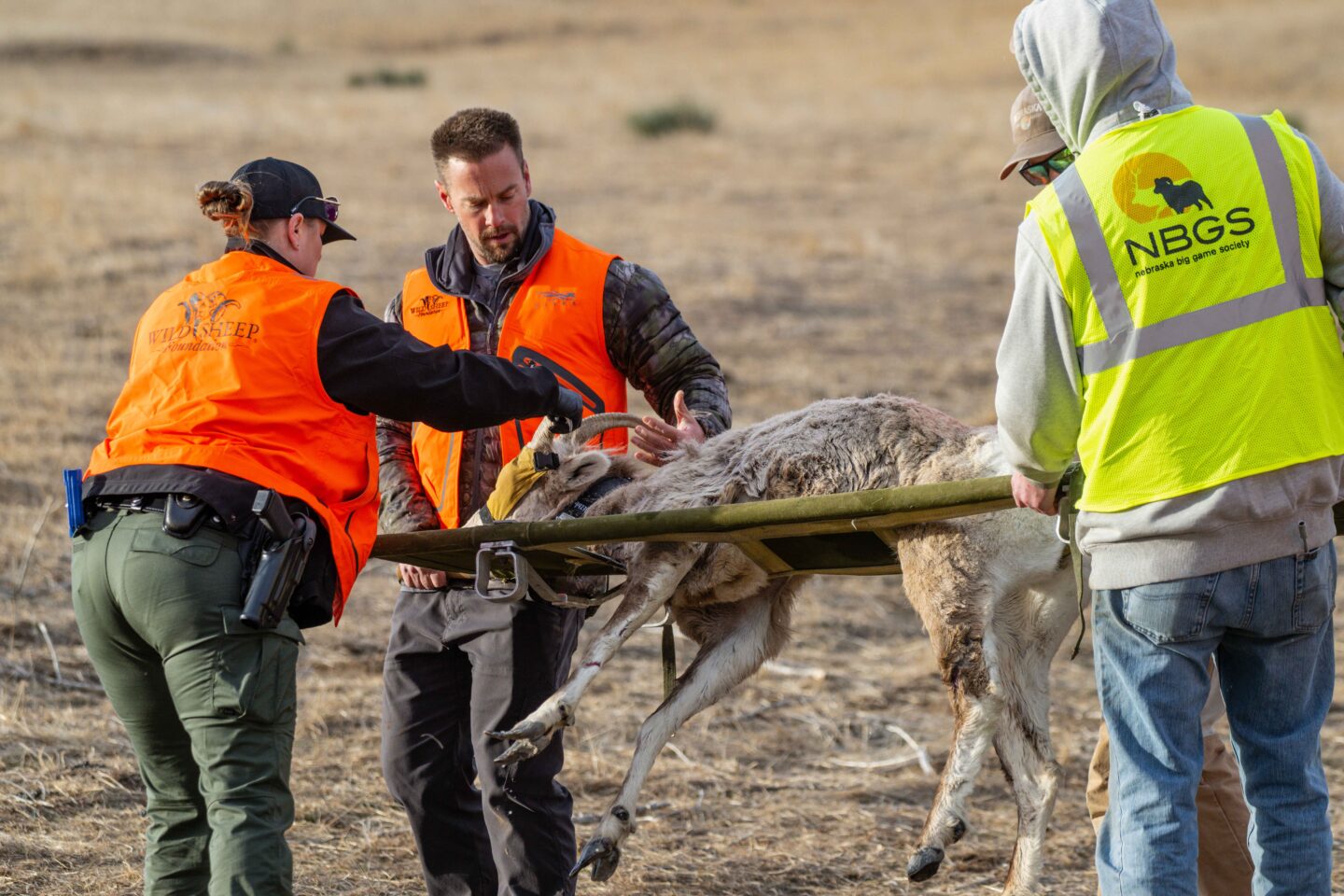
Although there is no “typical” work week, officers do “follow the activity.” They adjust their schedules to whenever hunters, anglers, boaters and parkgoers are most active.
For example, during deer season, Shepler is out early in the morning to check permits. Then he might go home for a couple hours and then go back out in the afternoon. And then again at night to watch for night hunters. On the other hand, during the park season, most bad activity happens during the evening, late night and early morning.
Despite having to work weekends, holidays and some nights, which can put a strain on family life, the job does allow for some flexibility during the week, and it’s fun.
“What other job do you get issued a truck and/or a boat and/or a UTV and/or a jet ski? Where your job is to go out and interact with people who are fishing, and get on the water and ride a boat, and enjoy the sunrise and the quiet?” said Shepler. “And the good thing is, most of the people that we interact with are good people.”
While officers like Prohaska and Shepler found conservation law enforcement later in their careers, there are rare birds like Sophia Gobber, who became a conservation officer right out of college at 21 years old, the minimum age. She is the youngest CO to be hired since southeastern district conservation officer Russell Mort joined 50 years ago. Six years on the team, Gobber still considers herself a “baby” in her career.
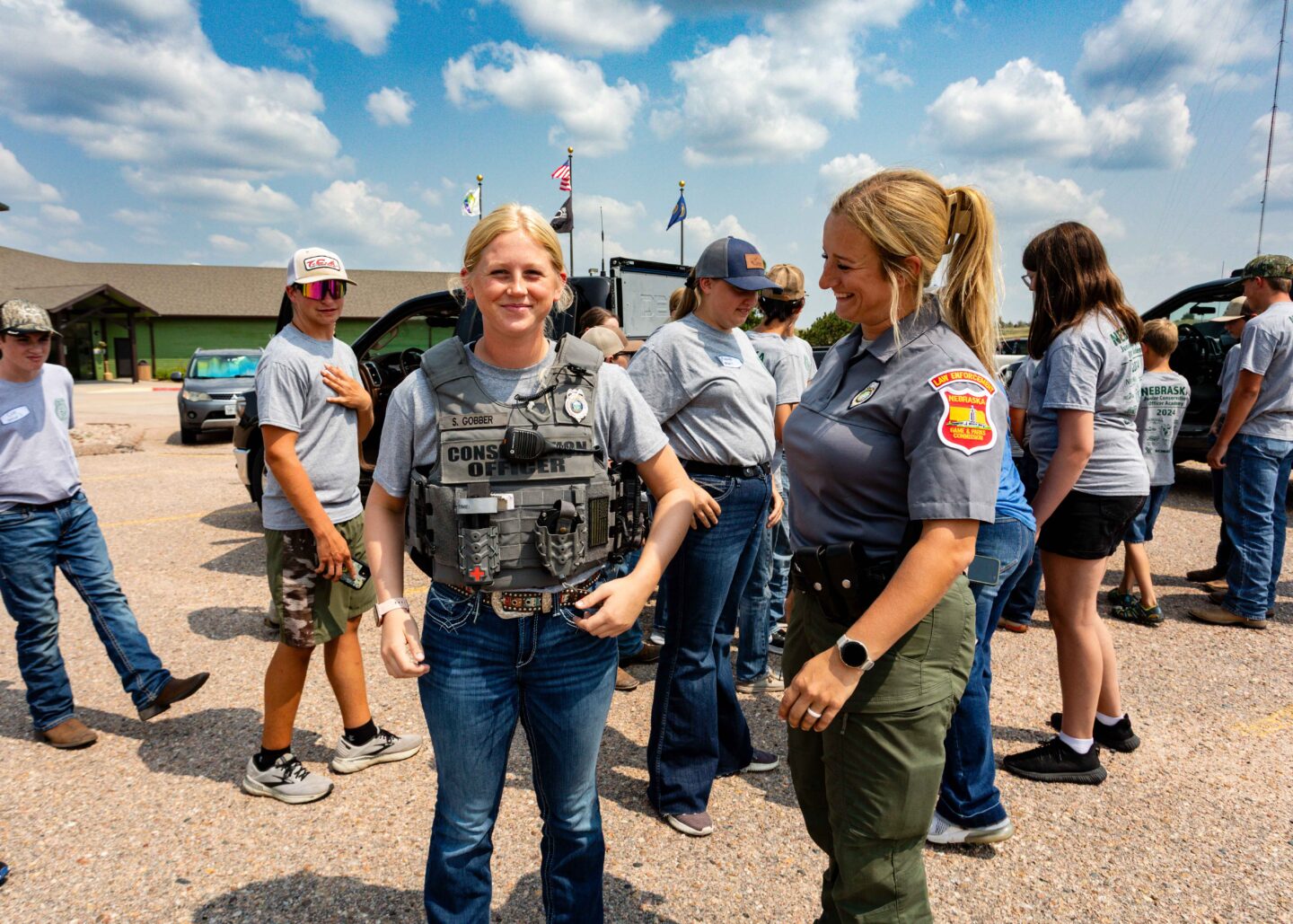
Gobber showed a strong interest in wildlife from an early age. She grew up hunting and fishing near
Syracuse located outside of Lincoln and volunteered her time with a local wildlife biologist, who inspired her to pursue a career in the outdoors. Then, while attending the University of Nebraska-Lincoln, an internship with the Nebraska Game and Parks Commission cemented her path. The time she spent riding along with COs led to her pursuing a double major in fisheries and wildlife and criminal justice.
Accepting the job meant that Gobber was trading the timber and whitetails of southeastern Nebraska for the rolling hills and canyons of mule deer country in the southwest. Prior to becoming a CO, she had never visited that part of the state.
“My husband and I always told each other, ‘Two years and we’re going to move home’,” Gobber said. “But we have absolutely fallen in love with southwestern Nebraska, and the natural resources that are out here, and the people, and the landowners, and the opportunities for being outdoors — personally and professionally. It’s just an amazing place to be.”
Gobber loves the complexity of her work. She enjoys the diversity and ever-changing nature of a career that combines law enforcement, wildlife conservation and education in one. She gets to teach people firearm safety and take kids and first-timers out hunting, and she gets to work with landowners.
“Landowners are what fill my cup,” she said. “I love talking about the wildlife populations that are on their property. If they have problems, I enjoy going out there and working with them.”
Gobber is one of five female conservation officers in the state. The Commission hired its first female conservation officer in 1992, and officer Dana Miller, who continues to serve in Cherry and Hooker counties, was the second hire in 1996.
“It’s obviously extremely challenging on some days to have to constantly prove yourself to some individuals just because of your gender … [but] at the end of the day, becoming a better officer and overcoming those challenges, that’s the most rewarding. And seeing little girls talk about wanting to be a game warden — that’s empowering,” Gobber said.
Changing Expectations
While game wardens struggled with gaining compliance and public support for conservation early in the 20th century, perhaps the most glaring PR challenge is the anti-law enforcement sentiment that has been growing nationwide. Although Shepler would say that the Commission law enforcement has fared better than other agencies, the backlash has created several challenges.
“I do feel like it’s steering people, younger people, totally away from law enforcement,” Shepler said. “[However], we are hiring people that have an interest in the outdoors, for the most part. They may initially, like me, think they’re going to be a biologist. They just go down a different path. So, we’re kind of hiring from a different pool of people.”
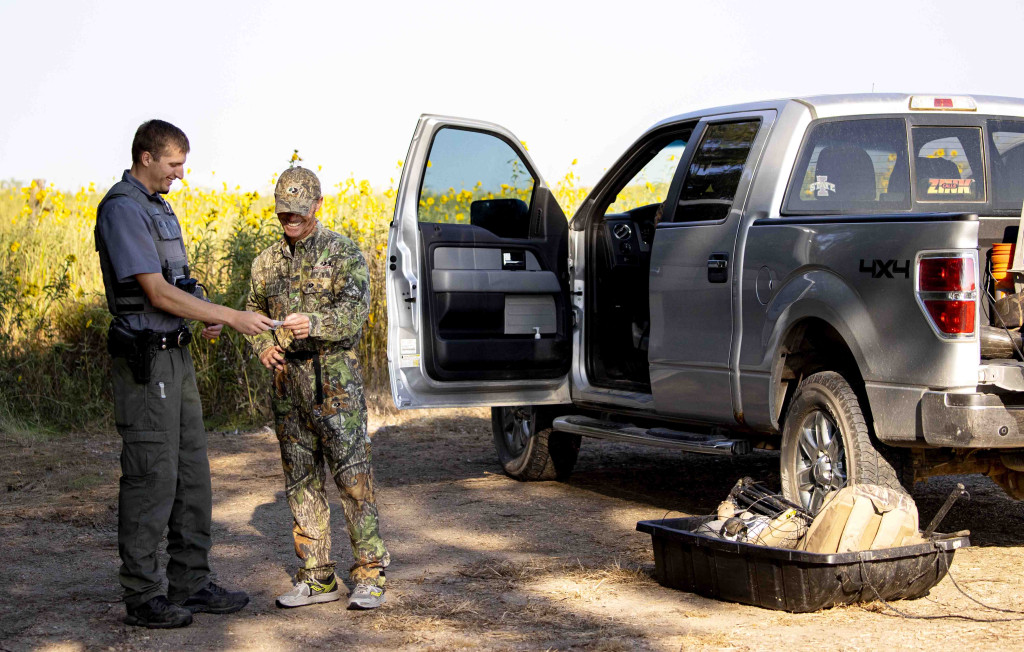
The anti-law enforcement movement, if anything, has reiterated the importance of professionalism. In 2025, Commission law enforcement made the big change of adopting marked trucks, when, for over a century, conservation officers have historically driven unmarked vehicles.
“If we’re making a stop on the interstate [or] we’re making a contact for a domestic violence case, if we roll up in a truck that isn’t marked and has personal plates, there has been questions on whether we are actually law enforcement, even though we’re standing there in full uniform,” Shepler explained. “So, it’s a public safety issue. It’s an accountability issue, because that’s the accountability that the public expects these days.”
Another change is the return of body cameras, which will be in use starting this year. Although COs previously had them, the state legislature and Nebraska Crime Commission passed a statute in 2016 that placed restrictive requirements on the use of body cameras and the storage of video, which at the time, the Commission did not have the infrastructure to fulfill.
“It’s really common during any contact that you expect to be on camera. That’s not a bad thing — that’s one area that’s changed since the anti-law enforcement movement, is the accountability that people expect, and we do, too,” Shepler said.
Also, officers’ well-being and mental health has been more concerning than ever, spurring administrators to make positive changes to provide officers the support they need throughout their careers.
The Future
Conservation law enforcement is changing fast. In addition to checking licenses and enforcing season dates, today’s officers also contend with organized wildlife trafficking, more complex criminal activity, public safety calls in rural areas and growing challenges, such as wildlife diseases and climate impacts. To keep up, conservation officers will continue to modernize and adapt their policies, training and use of technology, just as they did 125 years ago. However, their maintaining positive relationships with Nebraskans will never change.
“Nebraska outdoor traditions are built on respect — respect for the land, the wildlife and for one another. Whether you hunt, fish, trap, hike or simply enjoy our outdoor spaces, you’re part of a shared stewardship that makes this state special. Conservation isn’t just something the agency does. It’s something we all do together,” Shepler said.
“On this 125th anniversary year, we celebrate our conservation officers for their dedicated service protecting Nebraska’s natural resources and helping keep the people who use our state parks and public lands safe,” said Nebraska Game and Parks Commission Director Tim McCoy. “Whether enforcing laws during hunting and fishing seasons or educating and interacting with the public, our COs have been key players in the continuation of our state’s outdoor legacy.”
For much that has changed, the conservation officer’s mission has been unwavering.
Operation No Trace
By Jeff Kurrus
Operation No Trace, conducted by conservation officers from the Nebraska Game and Parks Commission, U.S. Fish and Wildlife Service and multiple state agencies, was one of the largest game violation cases in Nebraska history. After more than four years of investigation and subsequent court proceedings, federal sentencing outcomes were handed down against outfitter Dustin Noble and his business, Noble Outdoors, in U.S. District Court.
Noble was ordered to pay more than $179,680 in restitution and is currently serving 22 months’ imprisonment for 114 big game animals and turkeys he or clients of Noble Outdoors illegally harvested between 2015 and 2021.
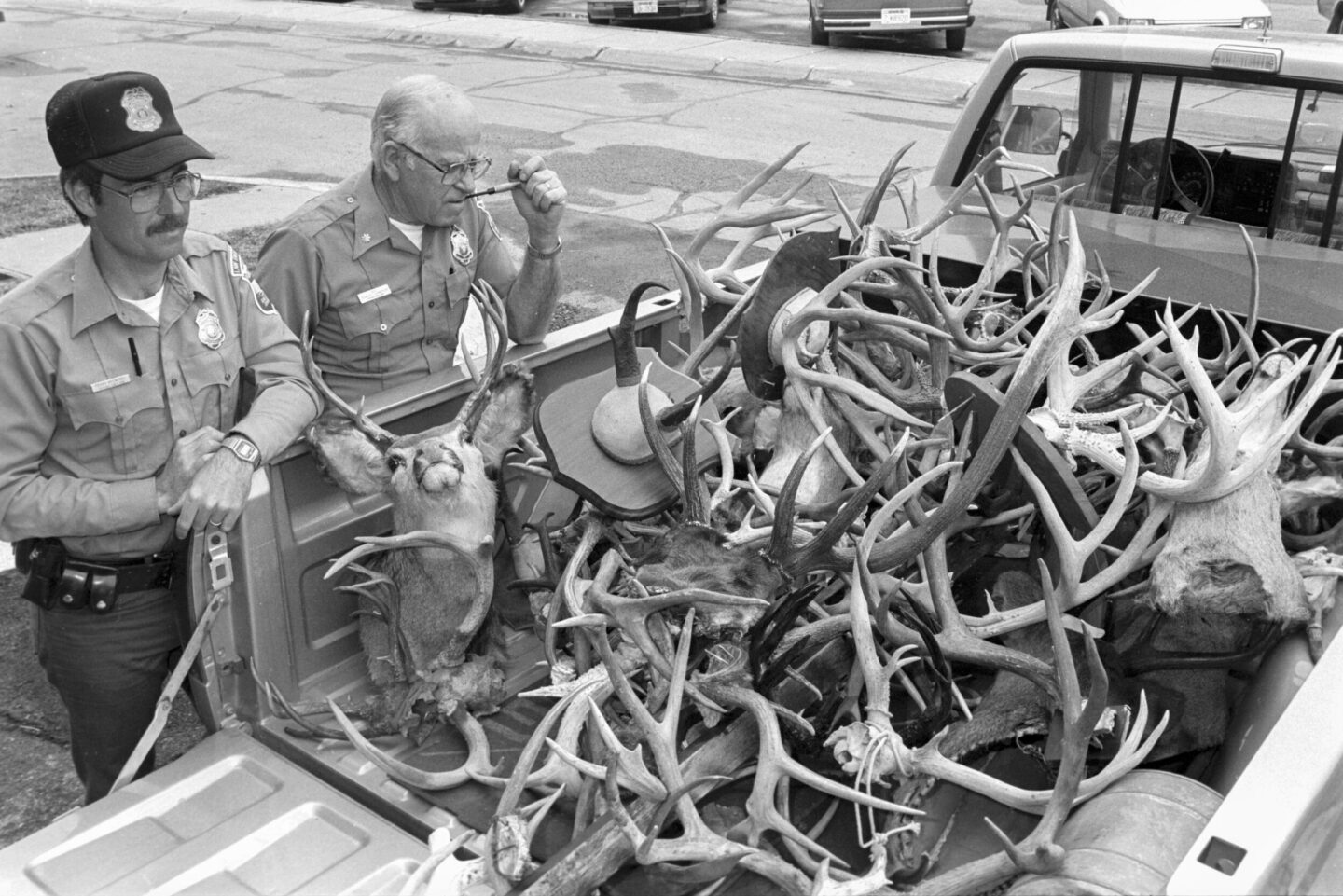
The first evidence from this landmark case came from a traffic stop on the Missouri River bridge near Nebraska City in 2017. A state patrol officer stopped a hunter who had a pronghorn in the back of his truck. The officer called Russ Mort, the conservation officer assigned to that area at the time, who asked where the animal had come from. The pronghorn had not been checked in legally.
The hunter told Mort he had been hunting with Noble and his outfitter business near North Platte. From there, officers investigated and found Noble was hunting and guiding mostly at night with thermal devices and suppressed rifles; he was also leading clients to hunt before the season and dumping carcasses at nearby public areas or in the Tri-County Canal. As a taxidermist, he would mount the heads for the clients.
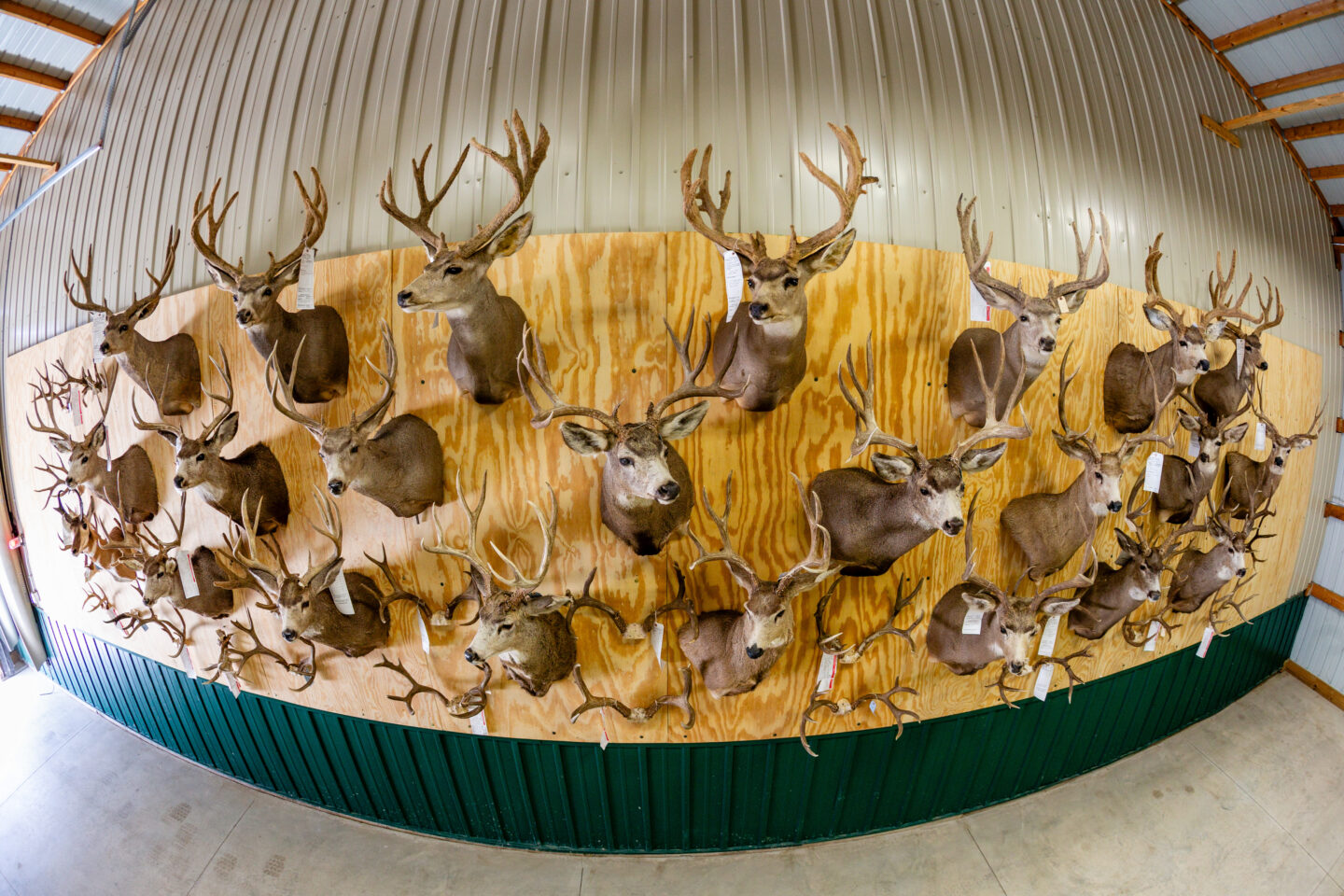
These actions weighed in the favor of investigators from Game and Parks, as well as colleagues from the Fish and Wildlife Service, who began comparing evidence from mounted animals to discarded carcasses found in the field.
In 2020, conservation officers from Nebraska, other state agencies and the USFWS interviewed Noble and many of his clients and executed search warrants on their cellular devices, computers and residences.
“It was a close circle of people that Noble was working with,” Conservation Officer Stacey Lewton said. “They would drive around, harvest a deer by illegal methods, and then leave a beer can up by the road so they knew where to find it later and recover it at night.
“These clients knew up front it was going to be an illegal hunt. ‘Pay me $4,000, and I’ll get you a big deer.’ Some people would buy permits after the animals were already taken down. All of this was happening after Noble had previously received a 15-year revocation of his licenses for other fish and game violations dating back to 2014.”
In the end, conservation officers had gathered enough information to substantiate 114 illegal hunts, mostly for mule deer. Because Noble’s clients had transported mounts across state lines, it became a case of illegal commerce in violation of the Lacey Act.
“Wildlife in Nebraska and across this country is a public resource,” Lewton said. “It belongs to every citizen. When someone intentionally violates wildlife laws for financial gain, they are taking from the public. Our responsibility is to protect that resource so lawful hunters, anglers and families can continue to enjoy it.
“Cases like this require proactive enforcement. When individuals repeatedly choose to operate outside the law, we must be present, attentive and thorough. That is exactly what our officers and partners did.”
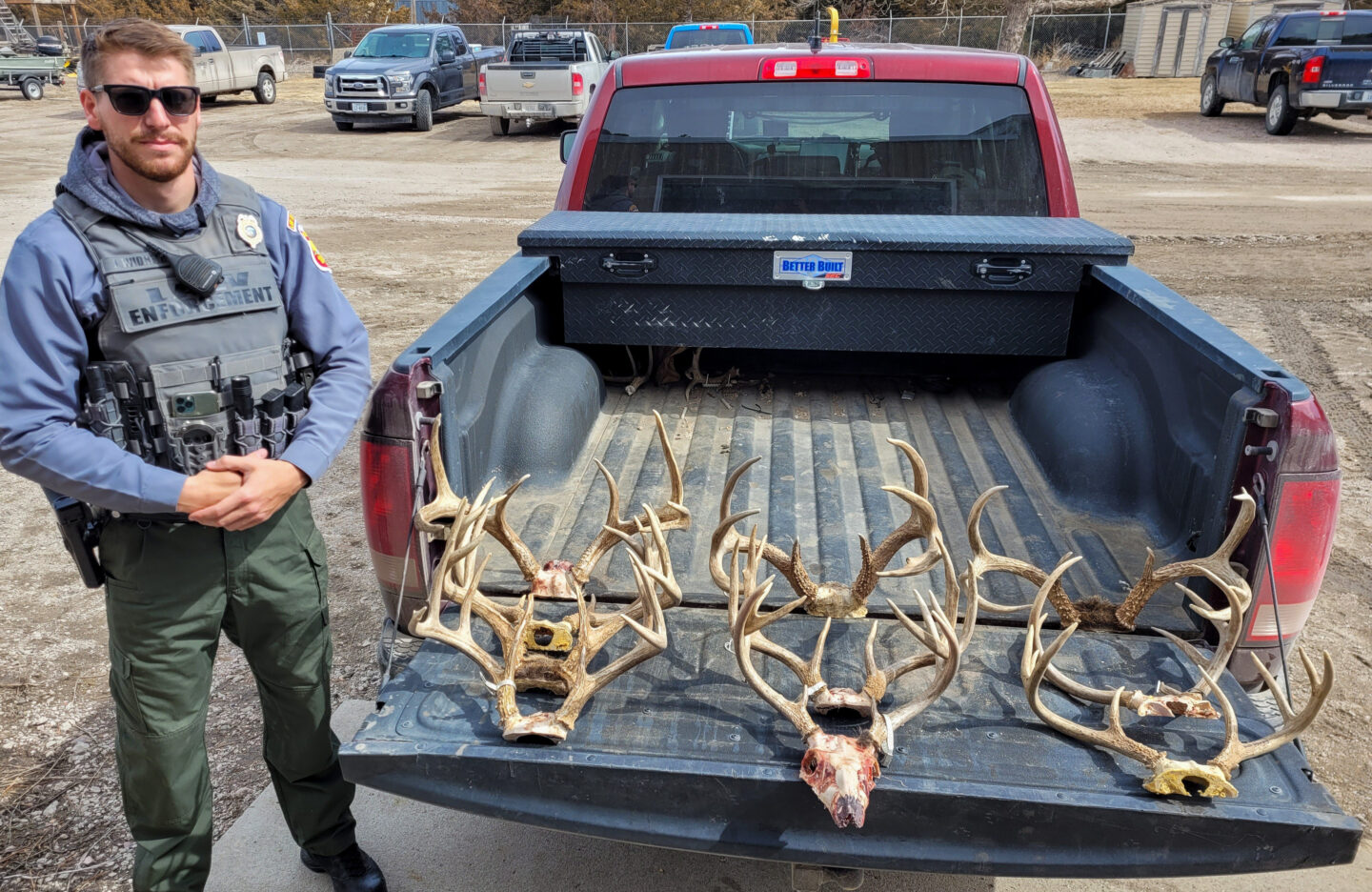
Several of the unlawfully possessed wildlife mounts are now on display inside a Wildlife Crimestoppers trailer. The exhibit highlights the quality of deer and other big game species Nebraska provides through lawful management and conservation.
The display also serves as a reminder that wildlife belongs to the public, and violations involving commercialization or unlawful take will be investigated and prosecuted. Conservation officers are committed to protecting these resources for present and future generations.