Story by Eric Fowler, Photos by Teri Elmshauser
Unlike her husband, Jake, Teri Elmshauser can’t wait for Lake McConaughy to freeze over. For Jake, the ice means there will be no more walleye fishing until spring. For Teri, it means she will soon be making the short drive to the spillway below Kingsley Dam, where she can feed her “addiction” — photographing bald eagles.
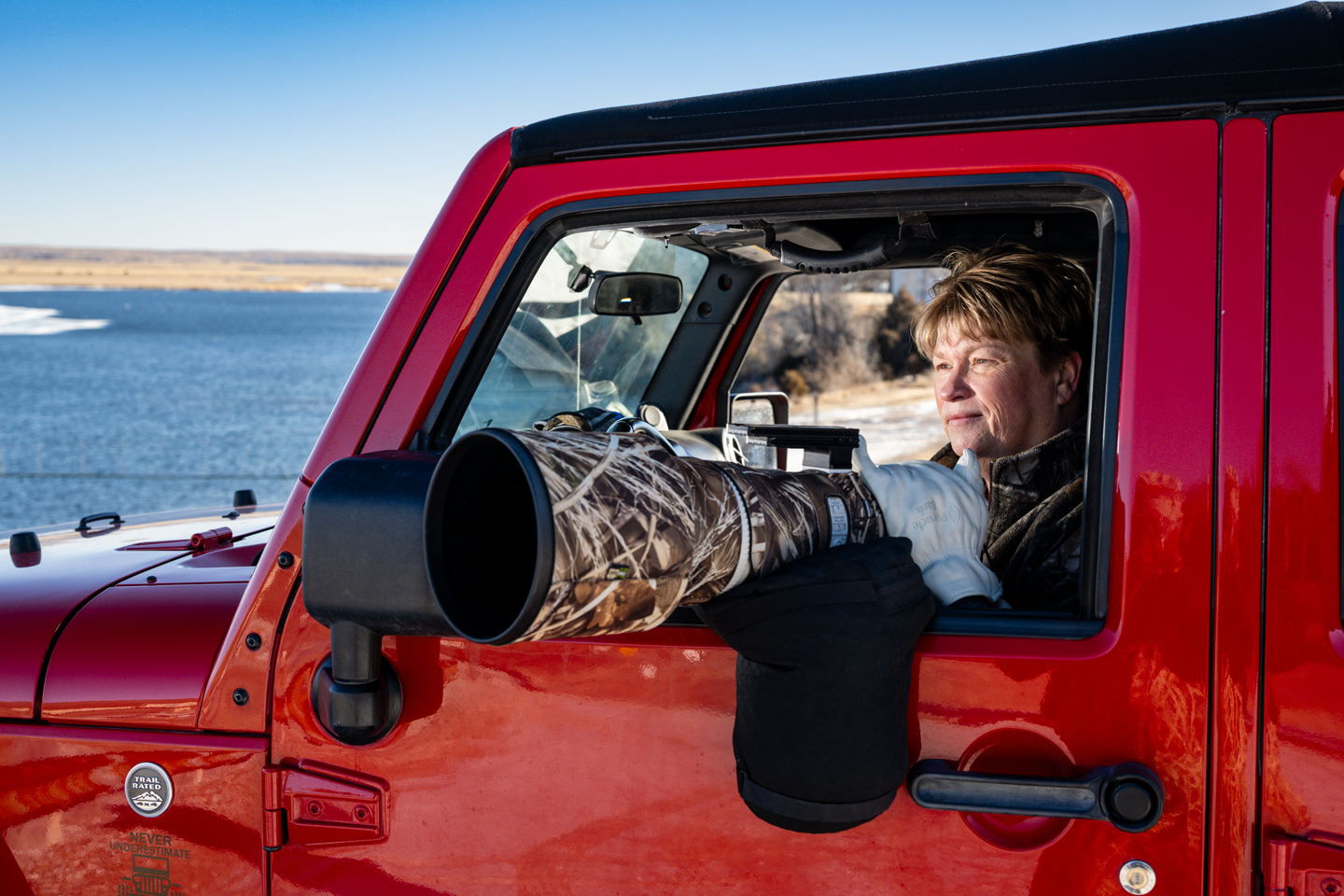
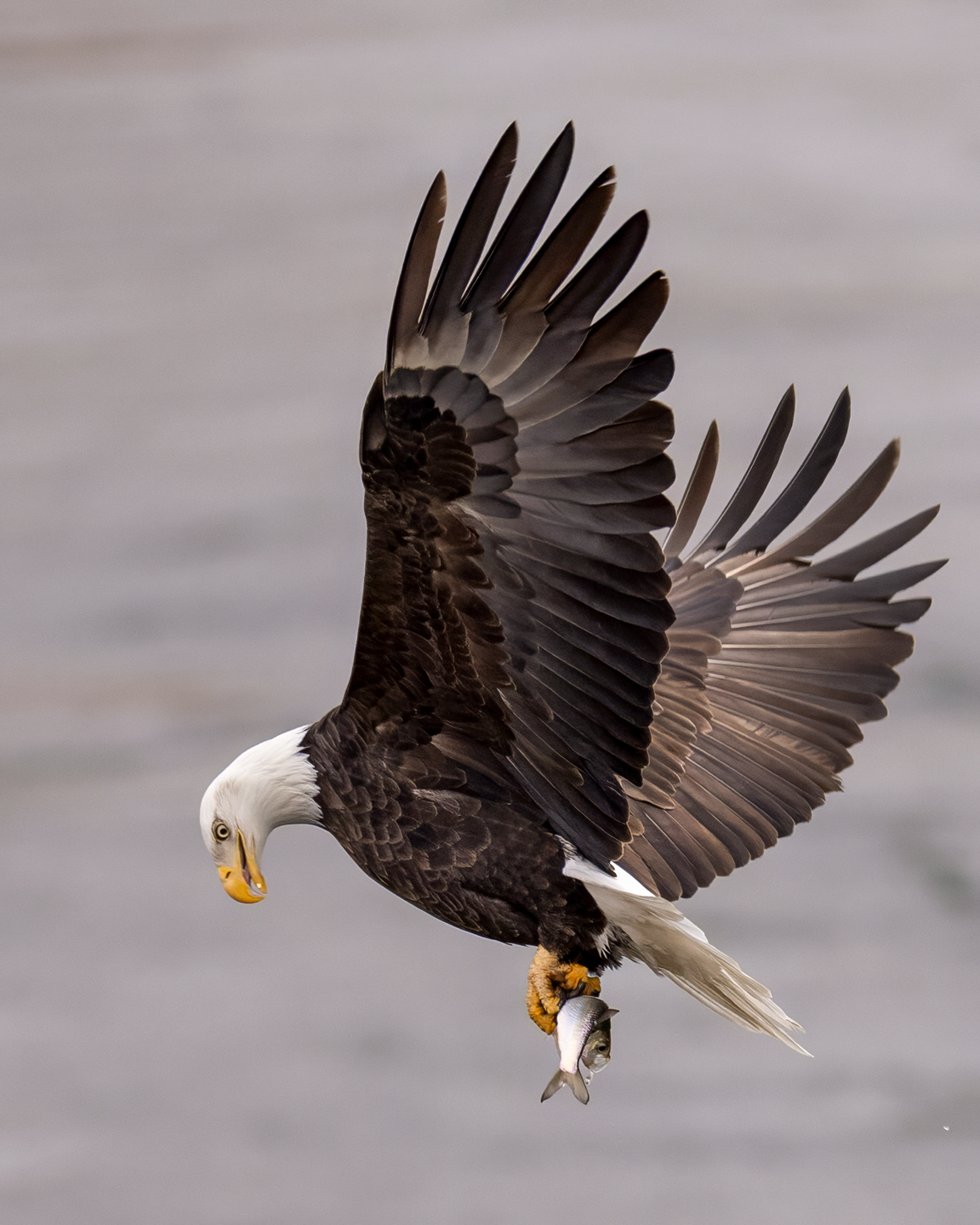
Elmshauser lives 15 minutes from Lake Ogallala, which, in the coldest of winters, can host hundreds of bald eagles. On any given morning when the eagles are around between December and March, you are likely to see her there, sitting in her shiny red photo blind, a Jeep named Rubi. With her huge camera and lens resting on a sandbag in the open window, and a heated blanket in her lap and slippers keeping her warm, she waits for the action: eagles swooping down to feed on fish that are flushed through the dam’s hydroelectric plant. If you frequent Nebraska photography sites like Nebraska Through the Lens on Facebook, you’ve seen her work.
Her interest in photography began as a child in Lincoln. “Grandma used to waste a lot of money on those little 110 cameras and film,” she said. Her interest faded growing up, but was rekindled in 2006, when she bought a basic DSLR with a basic 300mm lens and took a photography class. Soon after, she became enamored with eagles but is quick to say those first photos weren’t great. “I have taken so many bad pictures, it’s unbelievable,” Elmshauser said. “I used to be happy to get them just sitting in a tree in sharp focus. But you just keep going.
“It’s been a slow progression of better equipment, getting a little bit more comfortable with camera settings and learning.”
Following her most recent camera upgrade, Elmshauser now refers to herself as an amateur with professional equipment. “It’s embarrassing, a little bit, but it’s OK,” she said. “I work hard and spend my money on stuff like this. It’s my hobby.”
The camera is only part of the equation. Through many winters, countless hours and thousands of images, Elmshauser has learned how to track the birds in flight, anticipate their next move and capture tack-sharp images of eagles or, in their absence, gulls snatching fish from the water. “Lots of good practice comes from the gulls,” she said.
The result is beautiful photos of eagles, some perched, some in flight and some snatching fish from the water, filling the walls of her home. Elmshauser prefers wildlife photography to landscapes. On weekends, when the eagles are done feeding for the day, or when they aren’t around, she cruises backroads between Lewellen and Paxton looking for subjects.

During the summer, she and Rubi cruise the beaches at Big Mac watching the “different kind of wildlife” that flocks to the lake. And with her husband, she has traveled to photograph elk in Rocky Mountain National Park, sandhill cranes on the Platte River and bears and eagles in Alaska.
Only Alaska tops Lake Ogallala for eagle photo ops, which is why, in the winter, she stays close to home. “It’s kind of hard to venture out when you’ve got this,” she said.
Most weekday mornings provide good photo opportunities, Elmshauser said. She arrives before sunrise and stays until she goes to work. She would come after work, too, if it wasn’t already dark. She will go out on weekends, but they usually aren’t as good, partly due to people coming and going from the eagle viewing center, including some who ignore the signs and walk the banks of the spillway, deterring birds from feeding. She once saw people try to climb a tree that eagles were sitting in. “You can’t pet the eagles, and they’re not going to stay there, so I’m really not sure what you’re doing,” she would’ve liked to tell them.

Every day is different, be it the light or the action, which is part of the appeal. The best action, by far, is when water and fish are flowing through the hydroplant, producing what must sound like a dinner bell to the eagles.
“It’s unexplainable what happens when the water turns on and it’s cold like this,” Elmshauser said last February. “They just go crazy feeding.”
With so many eagle photos in hand already, she tries to limit her exposures to the best action. But Elmshauser said a successful day has little to do with getting the perfect photo or the keeper rate for the day.
Seeing high interest rates and the cost of living take their toll on everyday people in her job as a loan officer at a local bank can be stressful, she said. Being outdoors and engaged with nature helps her let go, even if it is just for an hour before work. “Photography is my check-out zone, if you will,” she said. “It’s why I go out in the mornings before my 8 to 5 and on weekends. It gets my mind in the right place to tackle the day. “A sweet photo is just the cherry on top.”
Eagle Viewing at Lake Ogallala
During the winter, eagles roost in cottonwoods around Lake Ogallala at night. They take flight in search of fish in the spillway before sunrise, and again in the evening before returning to roost. When they aren’t feeding, eagles rest in trees or on the ice around the lake, and on Lake McConaughy above it.
You will find the most eagles at the lake during the coldest winters, when lakes and rivers are frozen and the spillway might provide the only open water in the area. The best viewing and photo opportunities occur when the Central Nebraska Public Power and Irrigation District hydroelectric plant is running and both water and fish are flowing through the dam. That schedule, however, is highly variable during the winter when the district is holding back water to refill Lake McConaughy for the next irrigation season.
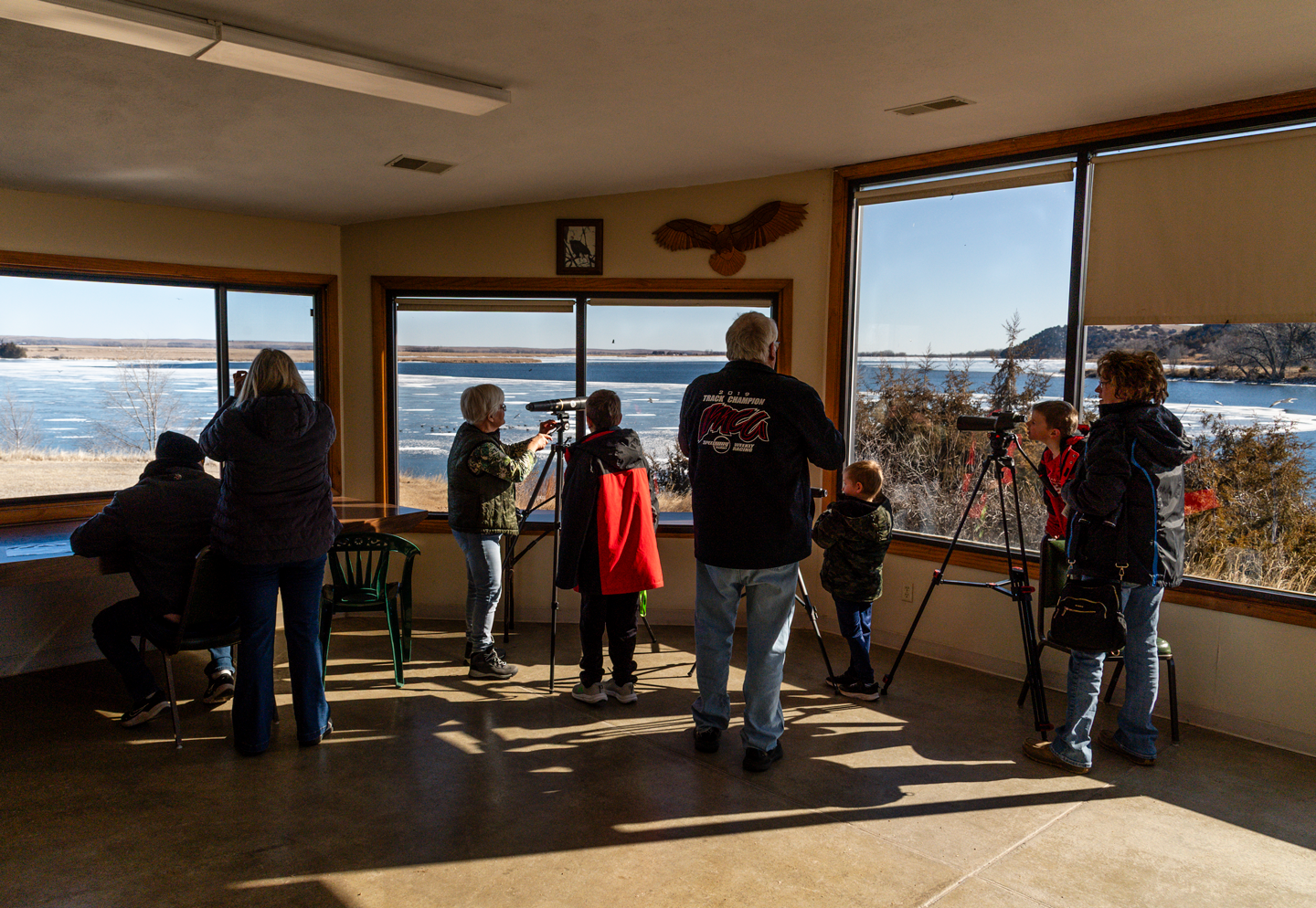
Central’s eagle viewing facility overlooks the spillway. It is open on weekends, typically beginning in late December through February. Binoculars and spotting scopes are available, and educators can answer questions. For more information, go to CNPPID.com, or call 308-284-2332.