
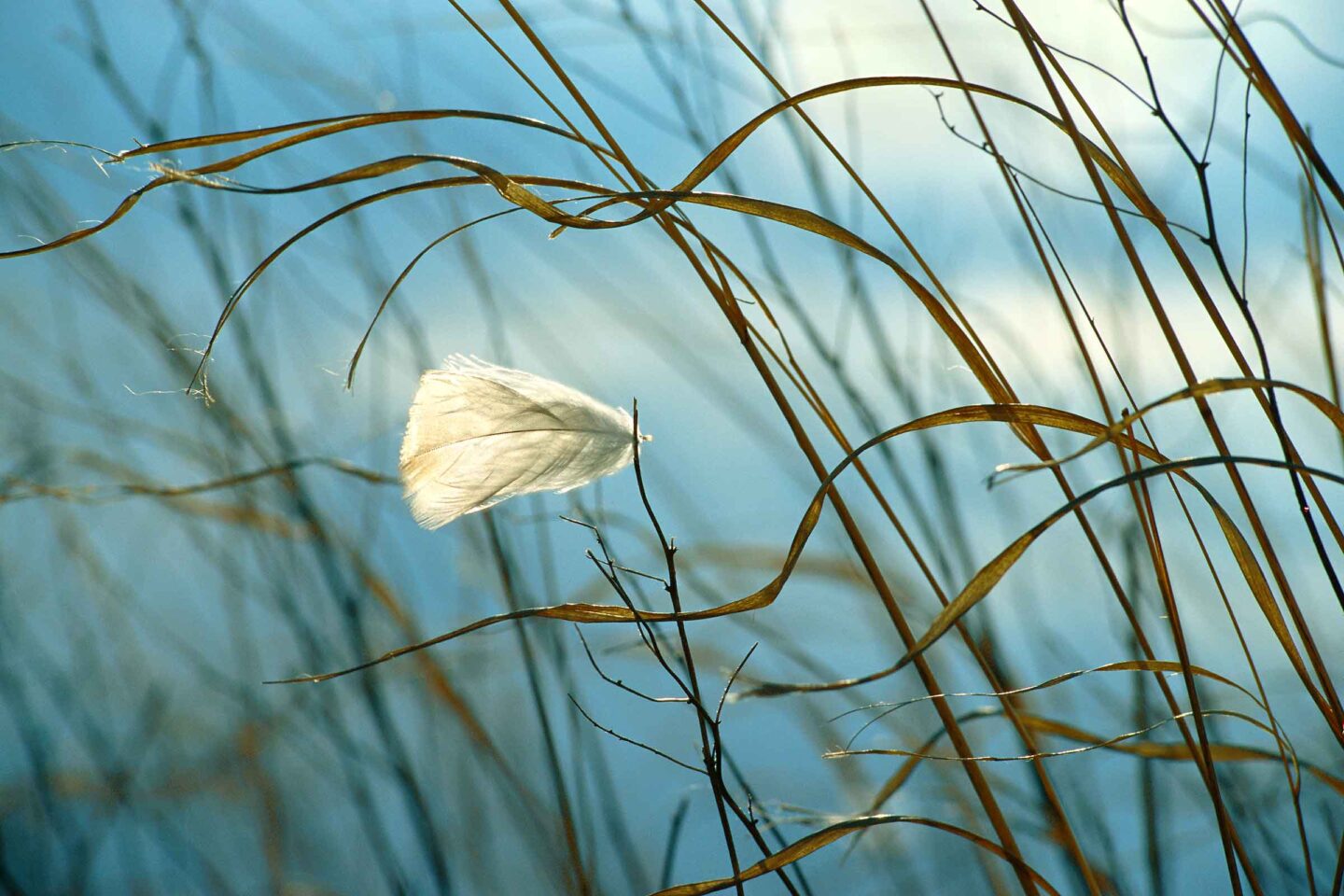
Story and photos by Michael Forsberg
I still remember my first month on the job at Nebraskaland. It was January 1993. I was a newlywed and had just landed a position as a staff photographer and writer for a magazine I had loved since I was a kid in Lincoln. My heart was full and my head was spinning.
On the first day, I was introduced to Carl Wolfe, my office mate. Wolfe, a biologist and longtime outdoor educator, greeted me kindly then quickly pointed at the paper wasp nest suspended by fishing line from the ceiling near my new desk. “That is Dick Turpin’s. He just moved to the second floor but left the nest behind. He thought it still might have wasps in it.” He couldn’t help but grin.
Fortunately, I wouldn’t be at my desk much. I would be out learning to be a storyteller.
My first day afield was spent photographing field sparrows riding prairie seed heads down to the ground to feed during a snowstorm and fading light at Bur Oak Wildlife Management Area near Seward. My first wildlife story was documenting the daily rhythms of wintering bald eagles during a subzero week at Lake McConaughy. I used a cardboard refrigerator box as a blind covered with an old white bed sheet.
My assigned gear was a used Nikon F3 with a motordrive that shot a blistering six frames per second, and a 24mm, 50mm, 200mm macro and 400mm f3.5 prime lenses. No autofocus. No zooms. Old school. We shot unforgiving color slide film only and at $12 a roll for purchase and processing 36 exposures, there was little room for technical error or poor compositional judgement. When legendary Nebraskaland staffer Jon Farrar reviewed my first photos on the light table in his dimly-lit corner office, he said, “Kid, your work is different.” I took it as a compliment.
At our all-staff meetings, I learned the complexity of how a monthly statewide magazine was planned. We worked on issues up to two years in advance while sitting around a table stained with coffee and donuts arguing content and jockeying for position and placement for our stories that we would write, photograph and assist in layout. I didn’t know it then, but I was in the best storyteller’s boot camp I could ever imagine.
My early years with Nebraskaland shaped me more as a photographer than any other period in my life. Beyond the nuts and bolts, I learned how to track animals and gauge their movements, build blinds, manage extreme heat and cold and get trucks unstuck from a variety of circumstances without the assistance of AAA.
I acquired simple truths, such as leaving the fence gate the way you found it; if a rancher tells you it’s just over the hill, you better pack a lunch; and the land you are standing on is not just someone’s property but a family’s livelihood. It also taught me how to approach and work with people when access and acceptance are necessary to tell a story, and those things are built on trust. And trust takes time.
Most importantly, my work with the magazine helped me to see the often overlooked and underappreciated beauty of one of the most ecologically diverse states in the Union. In short, I fell in love with wild Nebraska, and that love has instilled in me an unwavering responsibility to conserve and protect it for generations to come.
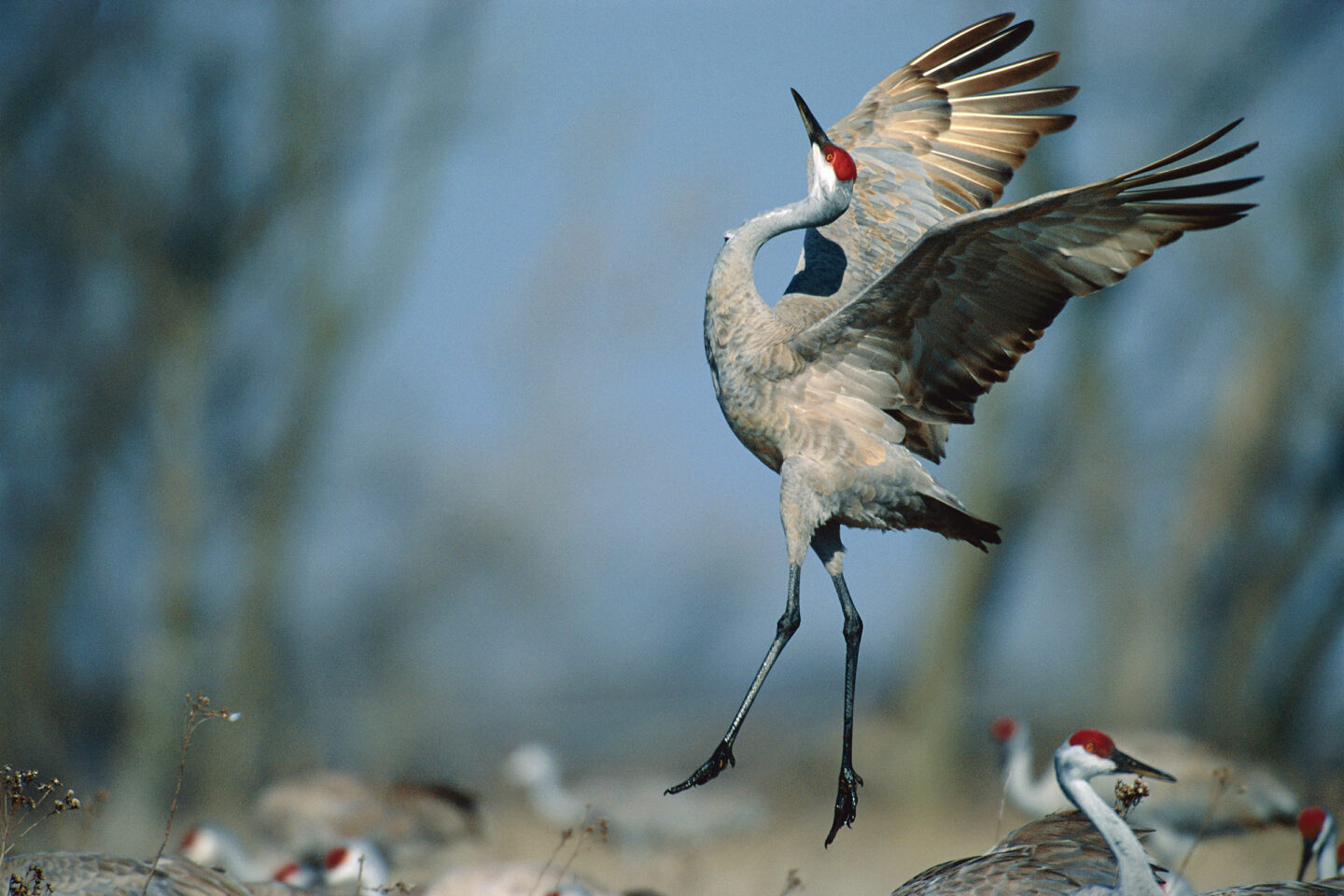
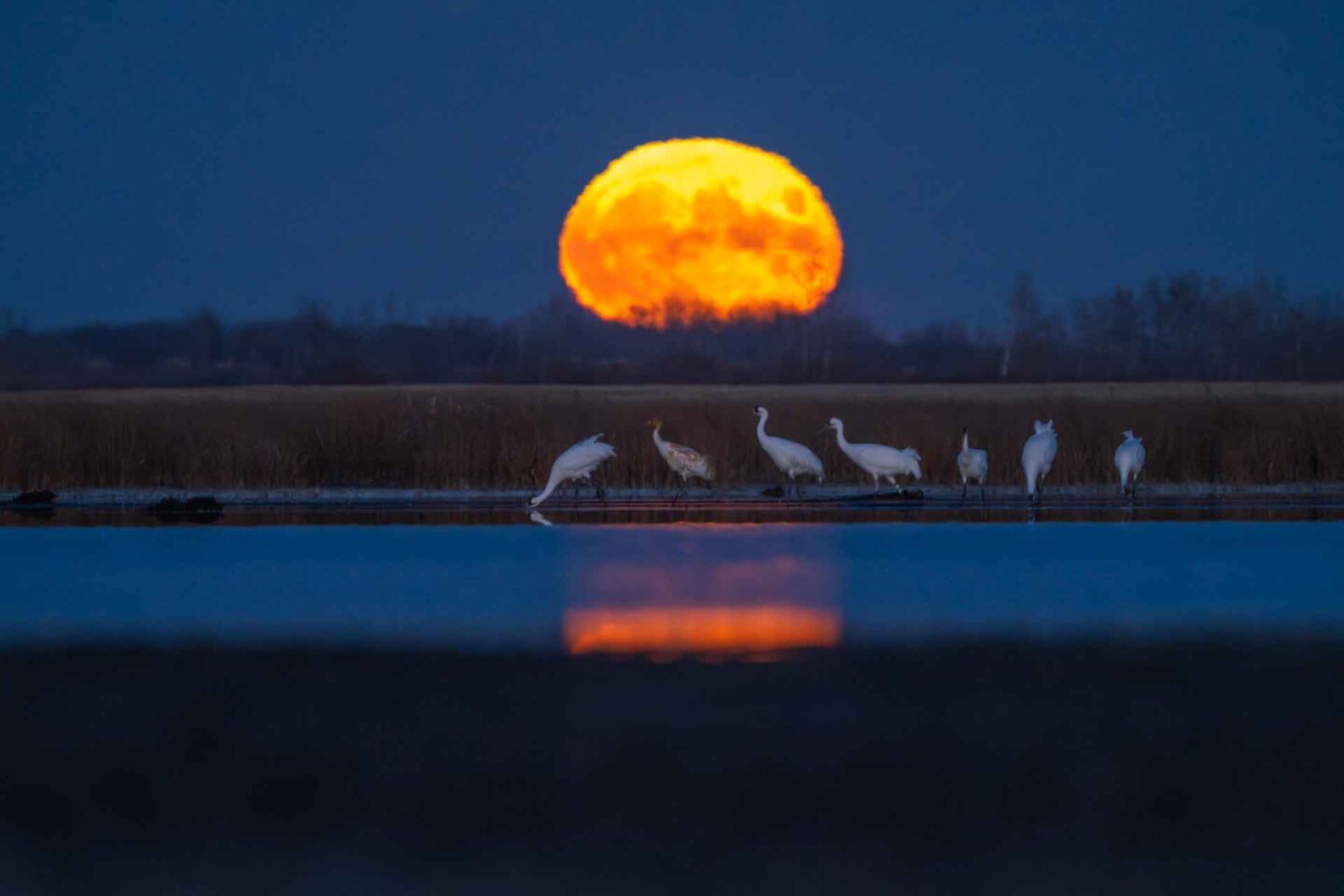
Today in my rearview mirror, I see with clarity the privilege I’ve had, camera in hand, to show the world how North America’s cranes connect habitats and people along the Central Flyway; how a lingering wildness still survives across the 1 million square miles that is the Great Plains ecosystem; and how a team of like-minded souls can capture change over time across the Platte Basin by following a drop of water from mountains to plains and witness a watershed in motion, build community, and help grow the next generation of conservation storytellers.
In that mirror I also see an older and grayer me.
Looking forward through the glare of a bug-stained windshield, admittedly the future is harder to see. But what I know is there are stories that want to be told and people who need to tell them. And that is why this magazine is so important. Our relationship with the land and what we hold dear is really one big, unfurling, never-ending story. We share, care, learn and grow together by telling these stories.
Here’s to another 100 years, Nebraskaland. I am grateful.
Michael Forsberg, a Lincoln native, was a full-time member of the Nebraskaland Magazine staff from 1993 to 1999. He has since published three books, co-founded the Platte Basin Timelapse and received numerous awards for his conservation writing and photography. A faculty member in the School of Natural Resources at the University of Nebraska–Lincoln and a Senior Fellow with the International League of Conservation Photographers, he continues to contribute to Nebraskaland.
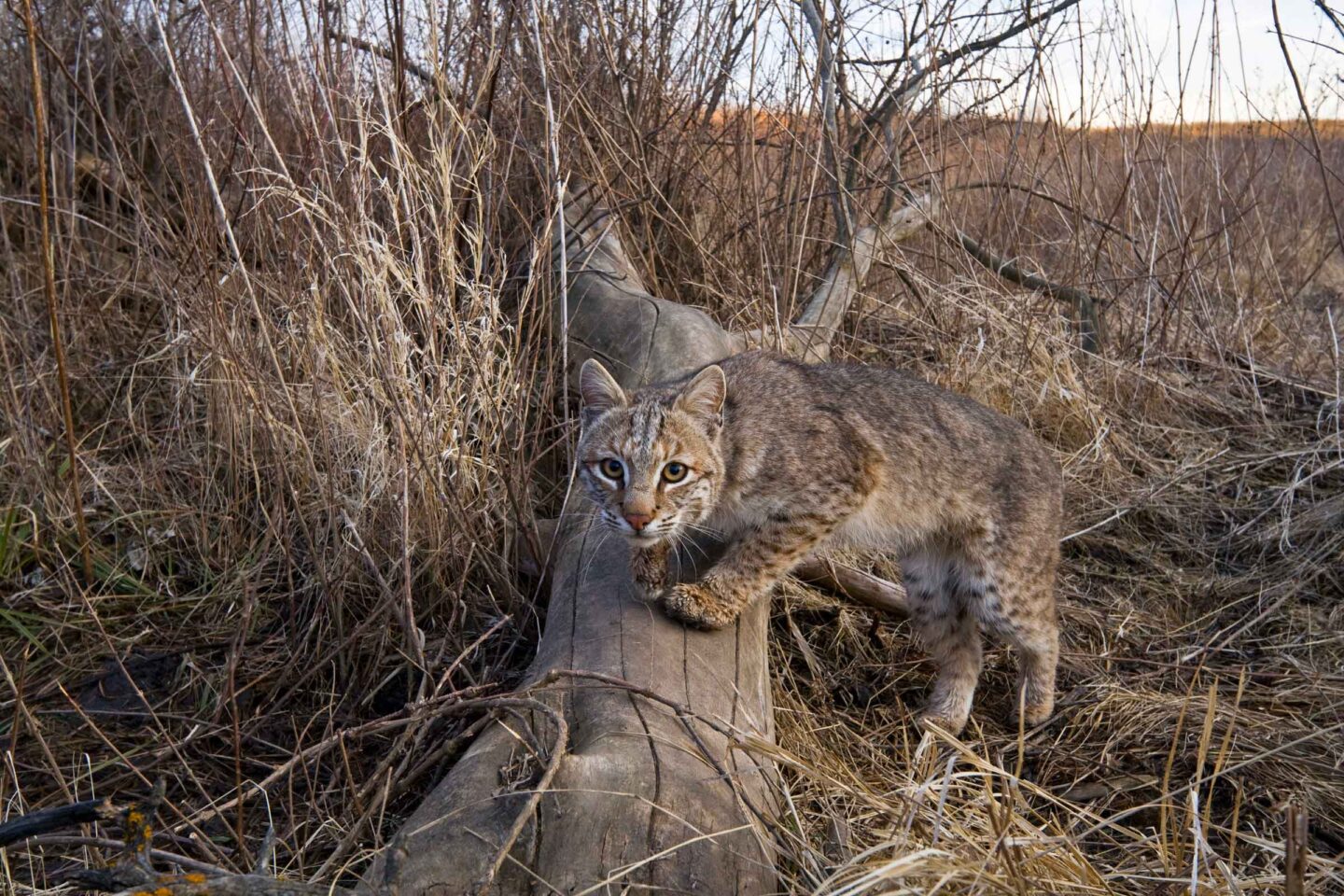
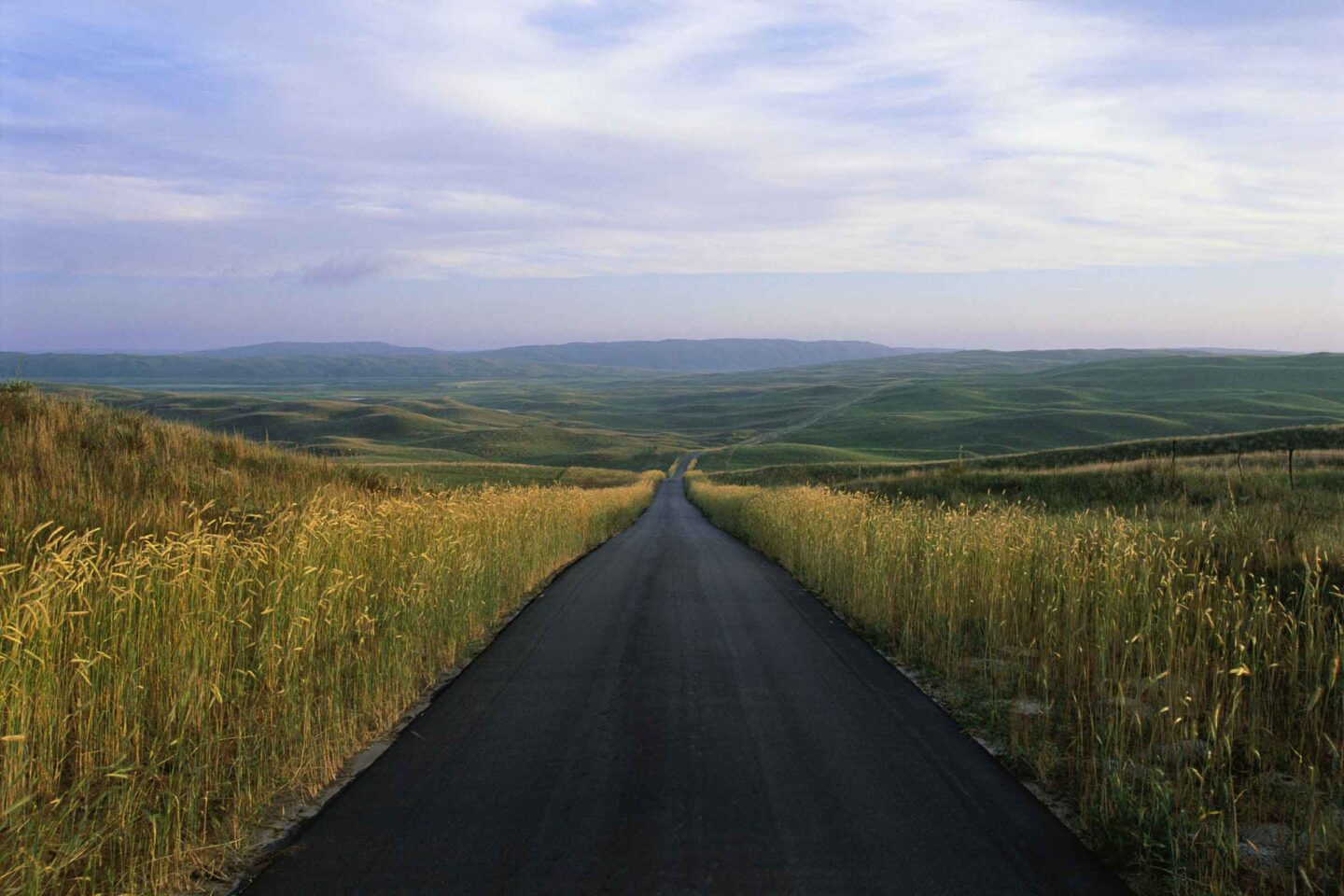
near Denton, Nebraska. Photo by Michael Forsberg.