Daryl Bauer, Fisheries Outreach Program Manager
Oh man, the tropical heat and humidity make it miserable outside right now. It may well be that way for most of the next couple of months. This heat must make the fish miserable too, right?
Well, not really.
It is said that fish are “cold-blooded” creatures. More correctly, they are the same temperature as their environment. You might say they are “cold-blooded” in January, but it sure is not that way in July and August.
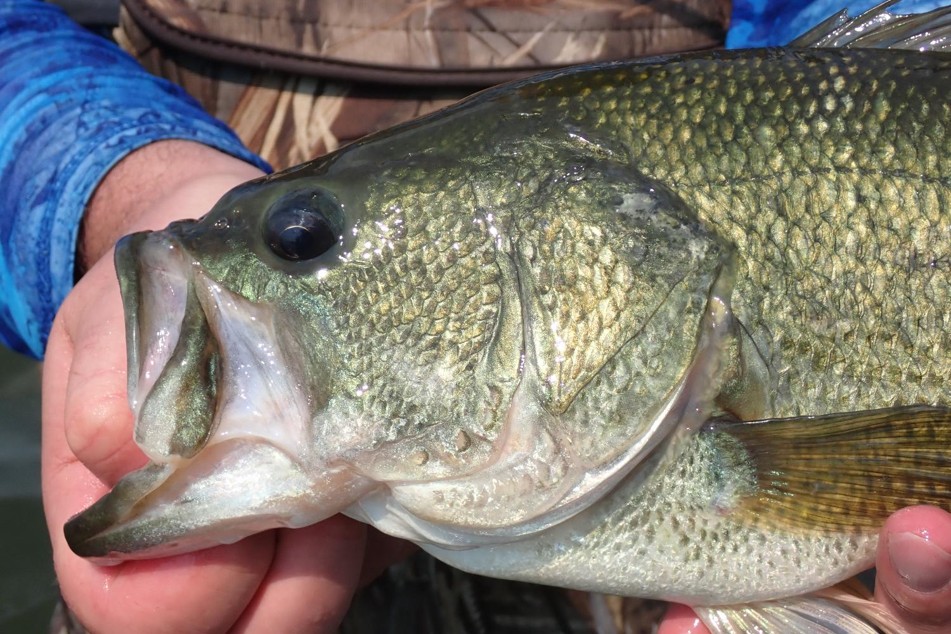
Nebraska has a variety of species of fish including those that thrive in cold water. Others thrive in warm water. Still others are at their best somewhere in between. Coldwater species like trout truly cannot survive when water temperatures get too warm, into the 70s F or higher. On the other hand, we also have warmwater species like largemouth bass and channel catfish. Those warmwater fish can survive Nebraska winters, but they are at their metabolic peak when our water temperatures max out each summer.
Metabolism rates of fish increase as temperatures increase. During the heat of summer fish are eating more food than they are when the water is cooler. They must eat more to fuel higher metabolism rates.
Finding cold- and coolwater species during the summer is not as simple as finding cooler water. It is true that those species may prefer areas where they can find water temperatures closer to their ideal; however, they still must find food. If they can locate sufficient prey in or near water at ideal temperatures, they can grow fast and fat. However, often, they are forced to compromise by staying in warmer waters where there is prey. Even near lethally warm temperatures feeding activity will continue non-stop right up to the point where they perish.
If fish are feeding as much or more than ever during the heat of summer, why does fishing get tougher?
The reason for that is the entire aquatic food chain is operating at the crest of productivity during the summer. Natural prey is at peak abundance. All a fish needs to do to find something to eat is almost literally to just open its mouth.
Feeding activity may be intense during the summer, but it typically is brief. Fish capture all the prey they need in a short period of time. Once full, they conserve energy until the next feeding window.
To be successful during the dog days of summer spend as much time as possible fishing during prime times. Fish that are activity feeding are always easier to catch than those that are not.
Low-light periods early and late in the day, perhaps after dark often are prime times. Try to identify key spots where the fish are likely to feed. There should be an abundance of prey present. Plan to be on those hot spots at prime times ready to take advantage of brief feeding frenzies when they occur.
It is true that fish often become most selective when prey is abundant. It can be most critical to match the size, shape and behavior of actual prey when that prey is abundant.
During feeding periods, fast retrieves often work better during the heat of summer. Panicked, fleeing prey items become easier targets for fish to catch, and stand out from the crowd of natural prey. Fast retrieves also give target species less time to identify phony presentations.
On the other hand, in between feeding periods, slowly-presented natural presentations may be the only way to tempt a fish or three to bite. Remember that everything is relative: A good day during the dog days of summer may be scratching a fish or two. Or, you may have to grind and patiently wait for infrequent feeding frenzies.