
By Monica Macoubrie
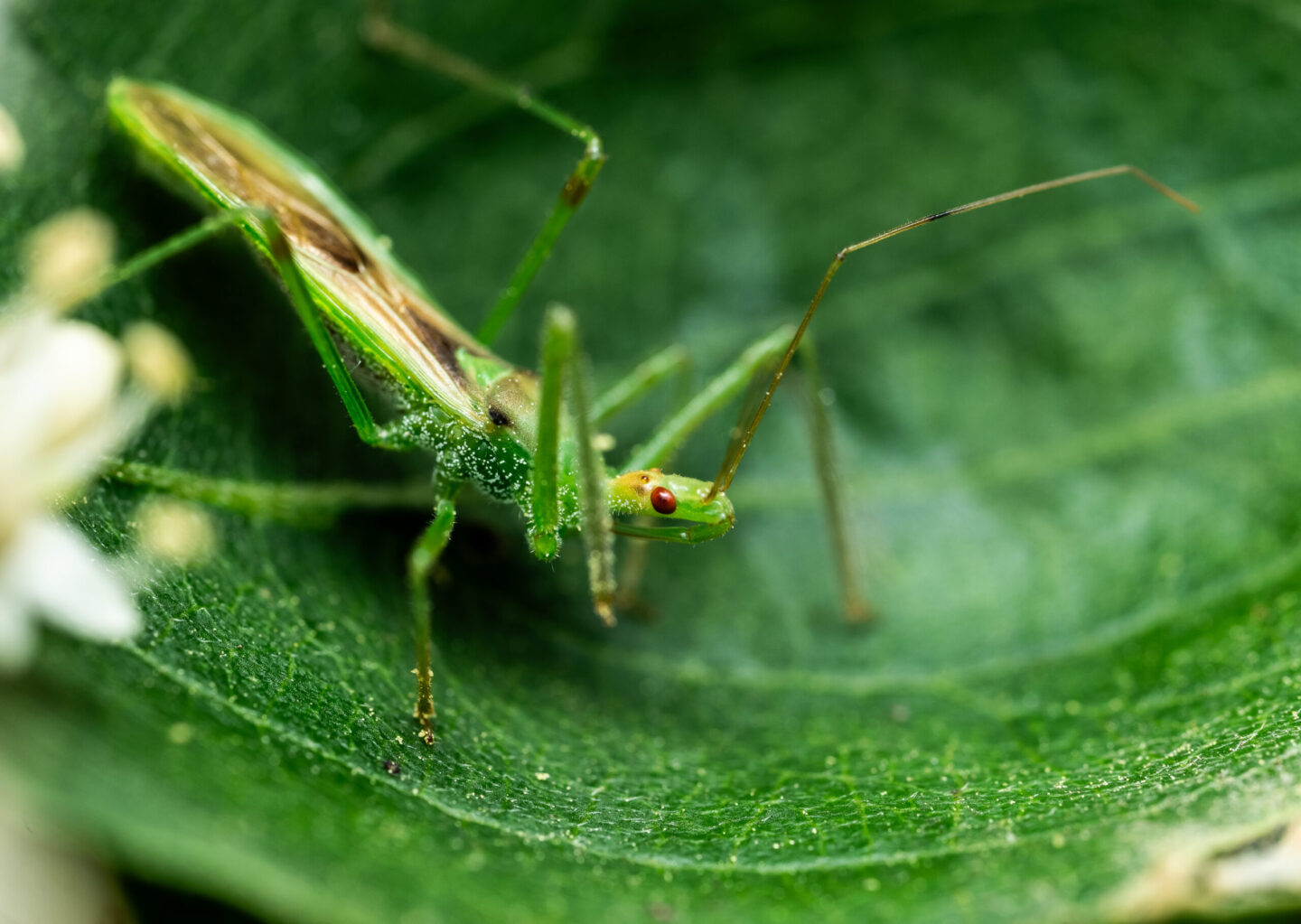
Every assassin has a signature style — at least, that’s what I know from the movies. They move quietly, blend into their surroundings, wait for exactly the right moment and strike with remarkable precision before disappearing without a trace. Nebraska’s assassin bugs check every one of those boxes.
Fortunately for us, these tiny killers don’t have people in their sights. Instead, assassin bugs spend their lives hunting other insects. They are masters of camouflage armed with a dagger-like beak and have the patience of a trained sniper. As some of nature’s most efficient predators, assassin bugs can hide just about anywhere, and eliminate flies, caterpillars, beetles, aphids and others that never see them coming.
So, what else earns these insects such a dramatic name? As it turns out, quite a lot.
Built for the Hunt
Assassin bugs belong to a large family of insects called Reduviidae, with around 7,000 species found around the world and about 150 species occurring throughout North America. Nebraska is home to several species that can be found in just about every habitat.
Unlike plant-feeding insects, assassin bugs are carnivores. They don’t nibble leaves or sip nectar. Instead, they stalk, ambush and patiently wait for other insects to wander within striking distance.
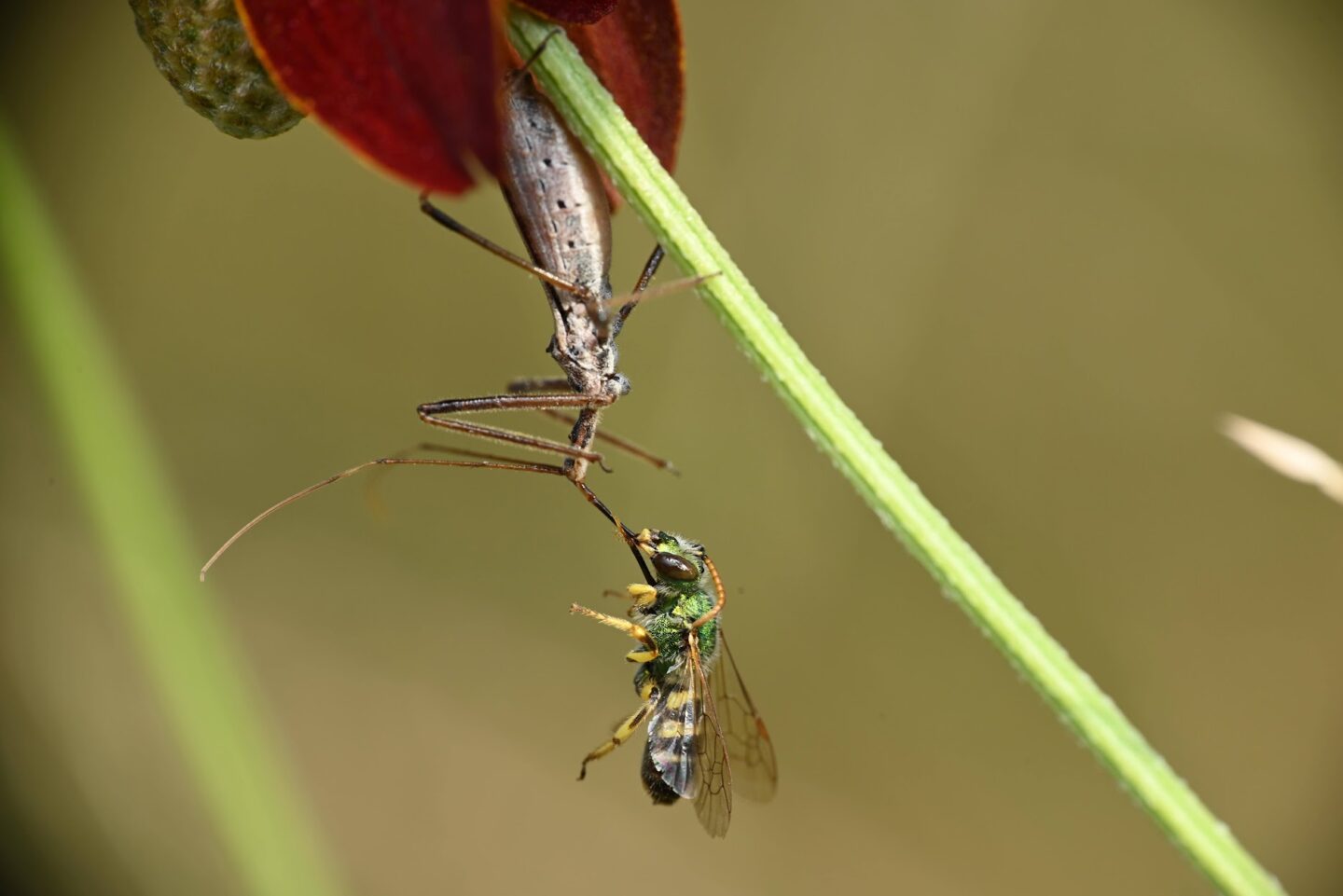
The assassin bug’s secret weapon is a needle-like mouthpart called a rostrum. Folded beneath the head when not in use, this piercing beak acts like a tiny hypodermic needle and a straw. Once an assassin bug grabs its prey with its front legs, it plunges the rostrum into the victim and injects saliva with a special enzyme that quickly paralyzes and liquefies the insect’s internal tissues, similar to what spiders do. The assassin bug then drinks the nutrient-rich liquid through the rostrum like a soda straw, leaving behind nothing more than the empty exoskeleton.
Masters of Camouflage
Many of you may be saying, “I’ve never heard of assassin bugs, let alone ever seen one.” One reason they often go unnoticed is that they’re experts in camouflage.
Many Nebraska species are shades of brown, gray or black that resemble bark, dried leaves or stems. Their slow, deliberate movements make them even harder to spot. Some species remain perfectly still for long periods, waiting for an unsuspecting fly, caterpillar, beetle or grasshopper to wander closer enough to attack.
Young assassin bugs, called nymphs, sometimes take camouflage to another level. Certain species cover themselves with dust, bits of plants or even the remains of insects they have eaten, essentially wearing a disguise that helps them hide from predators while they hunt.
Not Every Assassin Is the Same
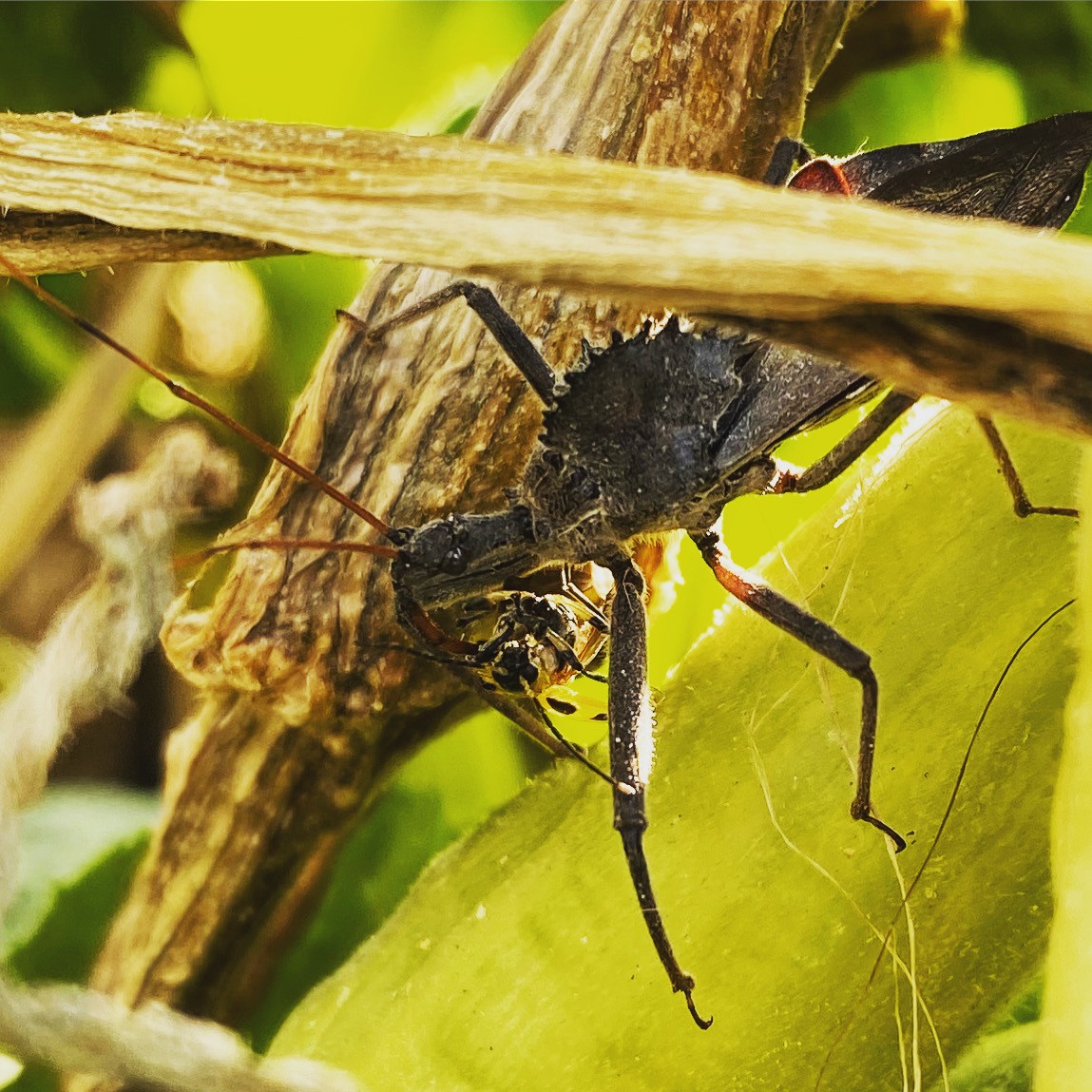
One of Nebraska’s most recognizable species is the wheel bug. It’s also the largest assassin bug in North America, growing to more than 1 inch long. Its name comes from the distinctive semicircular crest on its back that resembles an old-fashioned gear or cog-type wheel. This strange “wheel” makes the insect almost impossible to confuse with anything else.
Despite the intimidating appearance, the wheel bug spends most of its time hunting caterpillars, stink bugs, Japanese beetles and other insects among trees, shrubs and gardens.
Nebraska is also home to several smaller assassin bug species that lack the famous wheel but are equally skilled hunters. Some specialize in hunting on tree bark, while others patrol prairie vegetation or woodland understories.
A Bite You’ll Remember
Although assassin bugs are not aggressive toward people, they can deliver an impressively painful bite if handled or accidentally trapped against the skin. Unlike mosquitoes, assassin bugs do not feed on human blood. They bite only in self-defense.
Their sharp rostrum is designed to pierce the hard exoskeletons of insects, so it’s not a surprise that it can penetrate human skin as well. People often describe the bite as intensely painful, sometimes compared to a bee or wasp sting. The area may remain sore or swollen for several days.
The good news is that bites are uncommon and easily avoided if you don’t pick up an assassin bug.
A Predator Worth Protecting
Predators don’t always receive the same admiration as butterflies or lady beetles, but assassin bugs perform valuable work behind the scenes. Every caterpillar, aphid, beetle or grasshopper is one less insect competing with crops or plants.
So, the next time you’re exploring a prairie trail or tending to your garden, take a closer look at the stems and leaves around you. If you spot a long-legged insect frozen in place with its beak tucked beneath its head, you’ve likely found one of Nebraska’s smallest and most effective hunters.