Daryl Bauer, Fisheries Outreach Program Manager
Have often said that predator/prey dynamics determine fish behavior most of the time. Also have noted that as anglers it is doubly important to know this. Understanding those dynamics will give clues on where to find fish and then also how to catch them.
A couple weeks ago I blogged about a classic summer predator/prey relationship, Piggy Loves Kermie. Got another one to mention this time, another classic pattern for late summer. . . .
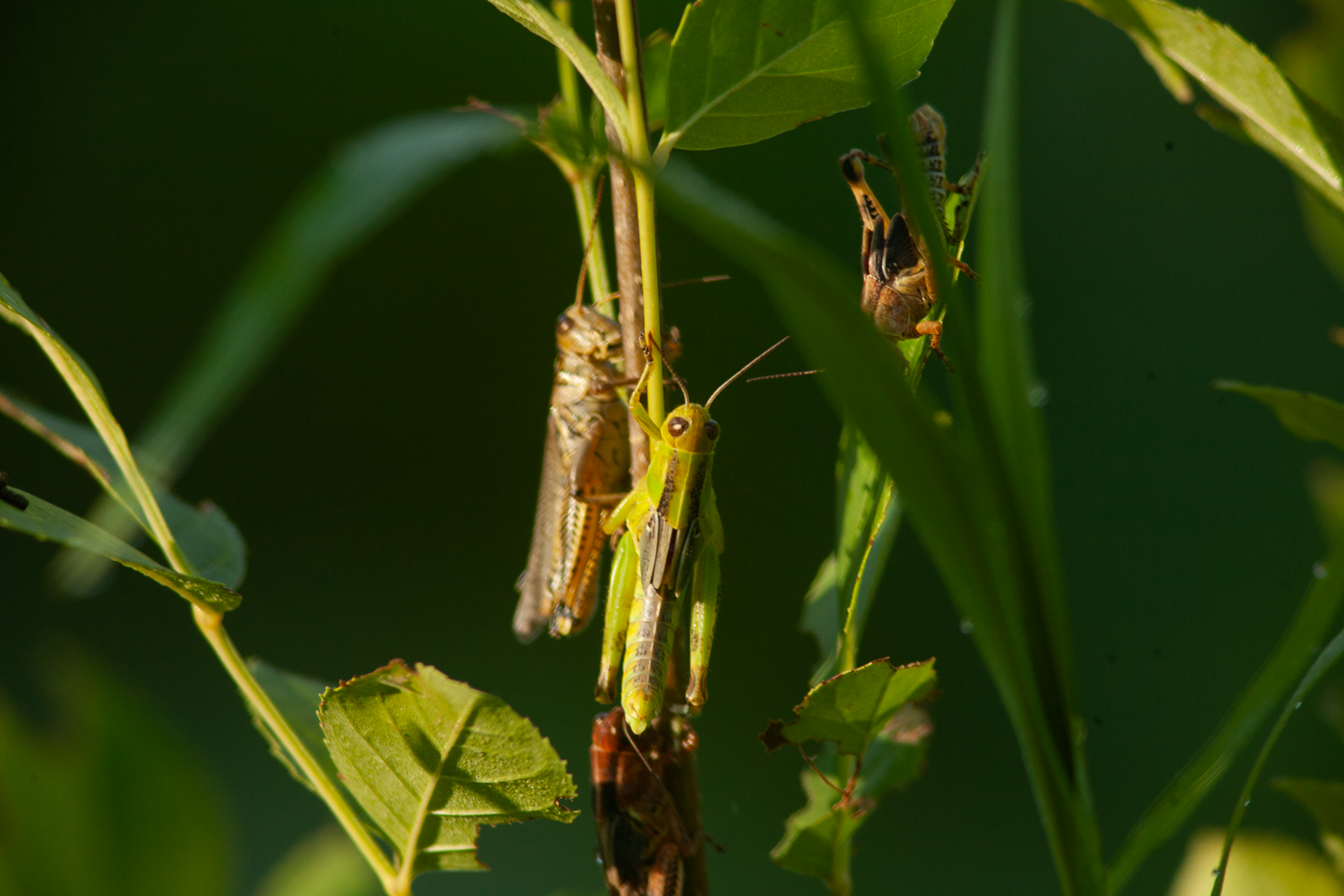
Nebraska is in the middle of the Great Plains. Settlers in our state quickly discovered that the Great Plains are full of grasshoppers. We have grasshoppers every summer. Some summers there are more than others, but I do not ever recall a summer when we did not have any grasshoppers. Recently, again noticed waves of ‘hoppers in Nebraska grass.
If you are a trout angler, you know how important grasshoppers can be as a late summer and fall prey item for stream trout. Fly anglers are very conscious of “matching the hatch”. On many streams the “hatch” in late summer and fall is grasshoppers.
If you do not fly-fish you are reading this thinking, “Blah, blah, blah, grasshoppers for trout, whatever”. Even if you are not planning to fish for trout the next few weeks that attitude might be a HUGE mistake.
Remember we live in a land that is full of grasshoppers. Those ‘hoppers are also important food items for many other species of fish, not just trout. For example, I have fished Nebraska rivers for channel cats in late summer and found that grasshoppers were by far the best bait. The cats were not slurping ‘hopper patterns off of the surface, although that would not have surprised me. Instead, if you curled 3 or 4 hoppers on a hook, put a weight on the line and then dropped that into some likely looking spot, there often immediately was a channel cat on the end of the line.
Fish in Nebraska pits and ponds are also very likely to eat grasshoppers. It is not at all unusual to find bluegills “kissing” ‘hoppers from the surface. Pit and pond bass will also be grasshopper eaters, as well as channel catfish in those waters. Especially look for those fish to be feeding on grasshoppers when the wind blows hard enough to deposit some in the water.
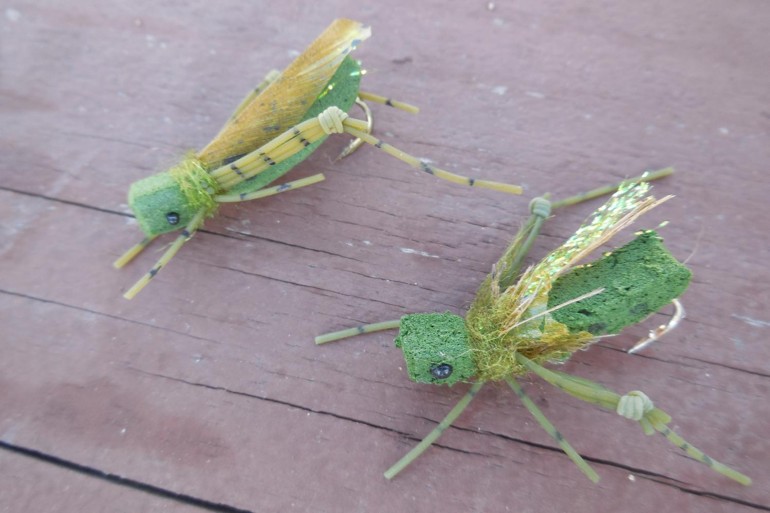
Back to fly fishing, break out the fly rod to present artificial ‘hopper patterns to stream trout or pit and pond bluegills and bass. There are more ‘hopper patterns than you can shake a stick at. Pick your favorite and tie it or buy it.
If you have not succumbed to the fly rod addiction, you can catch fish on the ‘hoppers themselves. Although my fly-fishing buddies will cringe at the thought, you can have a lot of fun catching live grasshoppers alongside a trout stream. Tie on a long shank, light wire hook and hook a live ‘hopper through the collar behind the head. Drop a live ‘hopper into the current and let it drift. Trout will usually be holding under an over-hanging bank or near some piece of cover. Grassy banks usually are best.
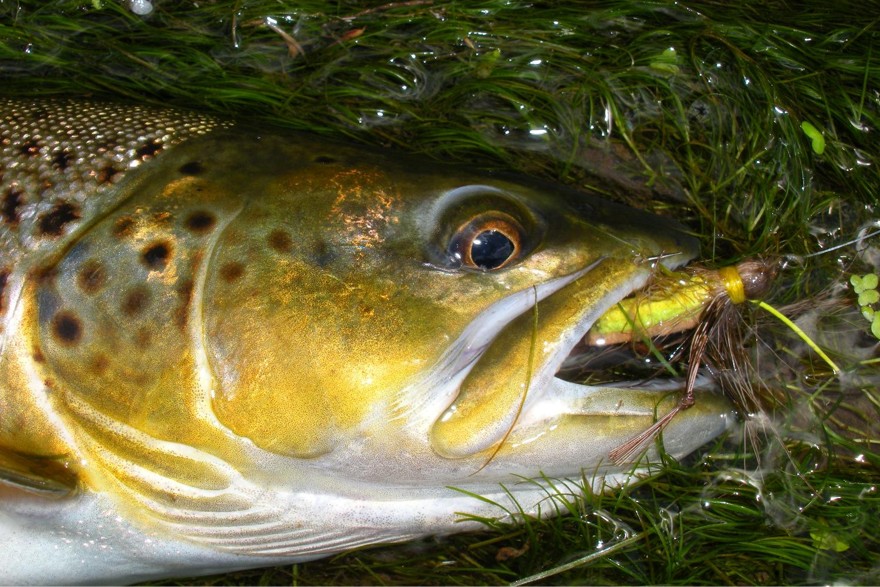
If the ‘hopper becomes water-logged before it is eaten by a trout, so what? Keep drifting it. Stream trout also eat grasshoppers that have died and started sinking. As a matter of fact, Nebraska’s rod & reel state record brown trout was caught from the Snake River below Merritt Reservoir in late July 1973 on a grasshopper. That brown trout weighed 20 pounds 1 ounce. It ain’t just small fish that eat grasshoppers!
On standing waters you also can cast the ‘hopper patterns on a fly rod. Or, fish the real thing. A casting bubble or small float/bobber may be needed to cast and fish live grasshoppers on the surface. Or you can add some weight to your line and fish some water-logged ‘hoppers on the bottom.
Catching grasshoppers for bait can be half the fun. They are easiest to catch in early morning. Then they are cool and there is some dew to keep them down. Have also heard that you can catch a lot of ‘hoppers after dark.
If possible, catch them early and then keep them cool until you are ready to use them. However, if you are like me, you may not think of collecting the grasshoppers ahead of time. Then you have to wander through the grass later in the day. You will have to be quick to chase them down. Focus on one grasshopper and keep after it until it finally sits long enough for you to catch ’em.
If you are really serious about catching grasshoppers, take a dip-net. You can either pin some ‘hoppers under the net or stroll through ‘hopper habitat sweeping the dip-net back and forth. Catch them in the mesh as they jump and fly.
I have no magic ideas for ‘hopper containers. Usually end up using a plastic pop bottle or some other plastic container or a zip-lock bag. However, if you wish, get on the interwebs and look for cricket containers, tubes or shakers.