
By Monica Macoubrie, Wildlife Education Specialist
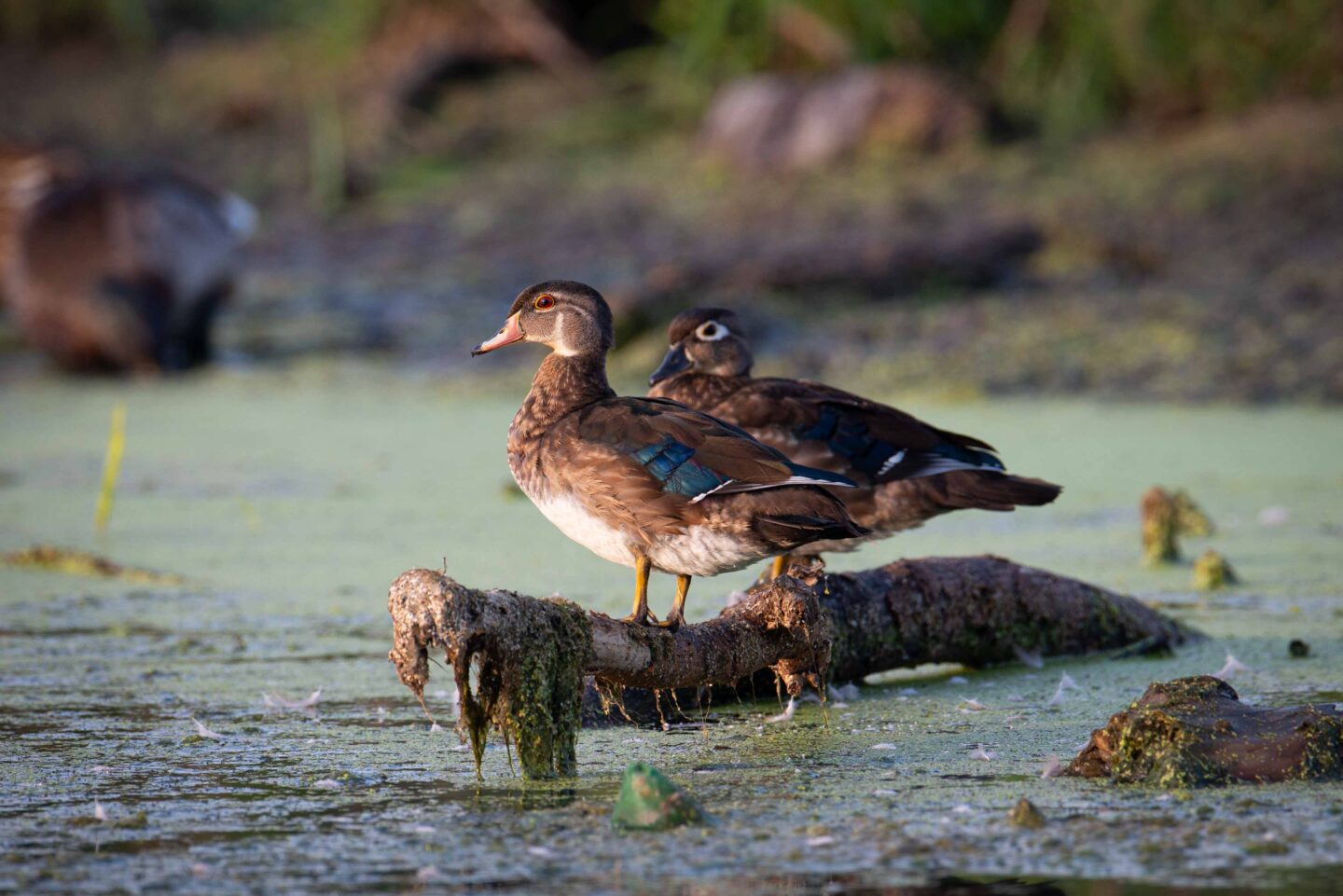
If you’ve driven past a Nebraska wetland lately, you’ve probably noticed that things seem quiet. The noisy spring courtship displays are over, ducklings are growing fast and many of the colorful males that stole the show a few months ago now look drab. While the appearance of the season might seem muted, late summer is one of the most vulnerable periods in a duck’s year.
Nebraska sits in the heart of the Central Flyway, making it a crucial stopover for millions of waterfowl each year. While fall migration is just beginning to rear its head, many ducks are spending late July and August accumulating fat reserves, molting (replacing worn feathers) and preparing for the long journey ahead.
Every adult duck replaces all its flight feathers at once during the annual molt, and for several weeks, they’re completely unable to fly. That’s why ducks become secretive during late summer, hiding in dense marsh vegetation where predators are less likely to find them.
Nebraska’s Wetlands Become Rest Stops
While many people think of migration as a fall spectacle that begins in October, the first wave actually starts much earlier. Blue-winged teal begin moving south in late summer, followed by pintails, shovelers and other dabbling ducks. By September and October, diving ducks begin arriving in greater numbers, transforming Nebraska’s wetlands into bustling rest stops along the Central Flyway.
For a few short weeks, prairie potholes, Sandhills lakes, reservoirs and Rainwater Basin wetlands become some of the busiest “airports” in North America — except every traveler has feathers.
As ducks begin gearing up for migration, it’s helpful to know there are two main types you’ll see in Nebraska: dabbling ducks and diving ducks.
Dabbling Ducks – The Upside-Down Feeders
If you’ve ever seen a duck with its tail sticking straight into the air while its head underwater, you’ve watched a dabbling duck at work.
Rather than diving beneath the surface, these ducks tip forward to feed in shallow water. They sift seeds, aquatic plants, insects and small invertebrates from wetlands, marshes and flooded fields. Because they feed near the surface, dabblers can launch almost straight into the air when startled — a handy escape tactic when predators are near.
Some of Nebraska’s most familiar dabbling ducks include:
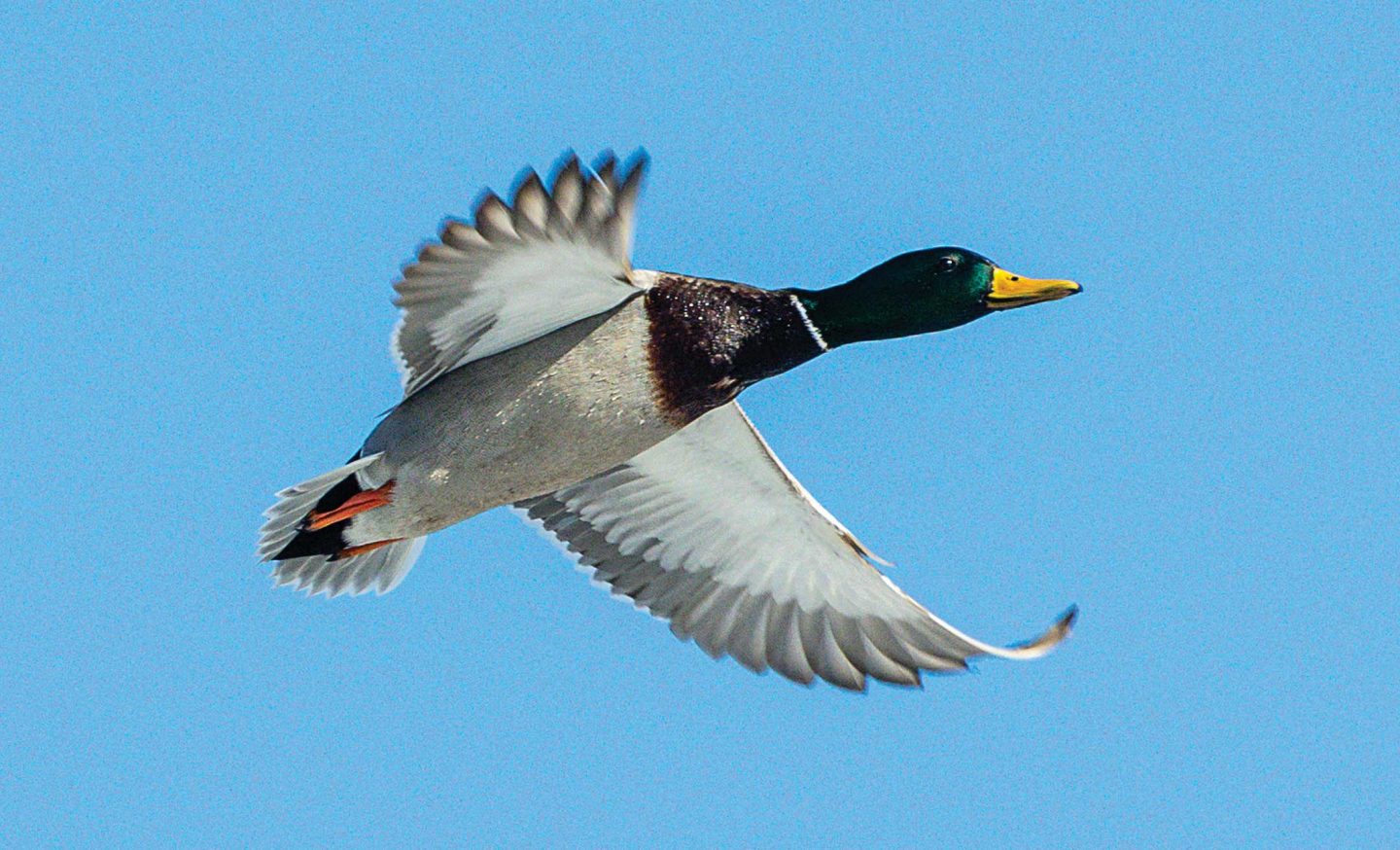
Mallard
The mallard is Nebraska’s best-known duck and can be found almost anywhere there’s water. By late summer, however, the brilliant green-headed drakes (males) have lost their trademark colors. They enter “eclipse plumage,” a temporary, dull-colored plumage that helps camouflage them while they molt. During this molt, drakes lose all their primary flight feathers at once, leaving them unable to fly for several weeks. To stay safe during this vulnerable time, they hide among dense cattails and marsh vegetation, usually in large congregations, until their new feathers grow in.
Blue-Winged Teal
If one duck signals the beginning of fall migration, it’s the blue-winged teal. These small dabbling ducks are among the earliest migrants in Nebraska, with some already beginning to move south by late August. Right now, they’re gathering in shallow wetlands, feeding heavily on aquatic seeds and insects to fuel one of the longest migrations of any North American duck — many will eventually spend the winter as far south as South America.

Northern Pintail
Elegant and slender, northern pintails are often called the “greyhounds” because of their graceful shape. While they won’t become common until migration ramps up, a few early birds begin appearing across Nebraska wetlands toward the end of summer. Pintails favor shallow marshes where they dabble for seeds and aquatic vegetation.

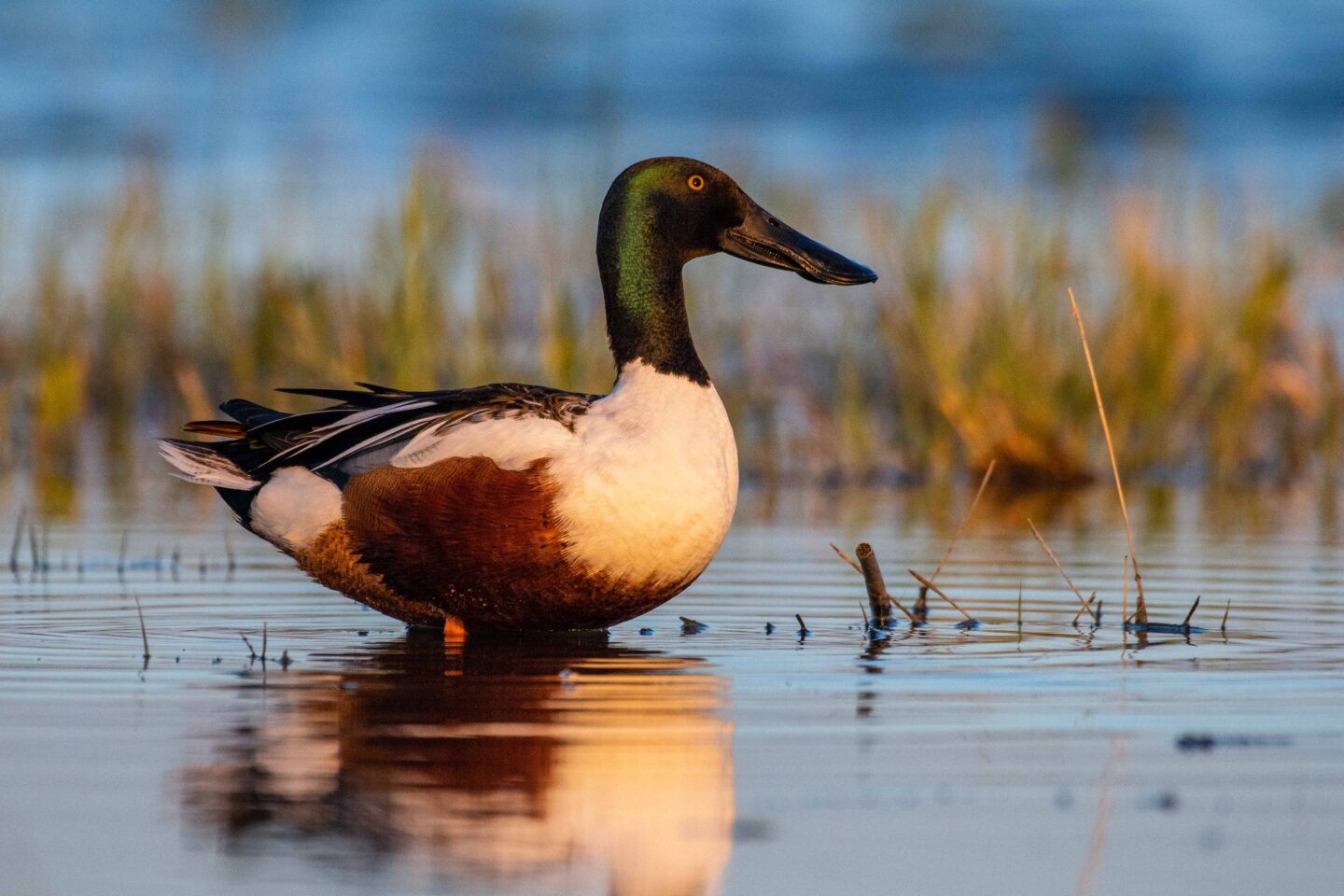
Northern Shoveler
There’s no mistaking a northern shoveler’s oversized spoon-shaped bill. That unusual bill works like a sieve, allowing shovelers to strain tiny aquatic insects, crustaceans and seeds from the water. They often feed by slowly spinning in circles, creating miniature whirlpools that bring food closer to the surface.
Diving Ducks – The Underwater Specialists
Diving ducks take a completely different approach. Instead of tipping forward, they disappear entirely beneath the surface, using powerful legs positioned farther back on their bodies to propel themselves underwater. This makes them exceptional swimmers but somewhat awkward walkers. Unlike dabbling ducks, diving ducks usually need a running start across the water before becoming airborne.
Nebraska’s diving ducks include several impressive species.
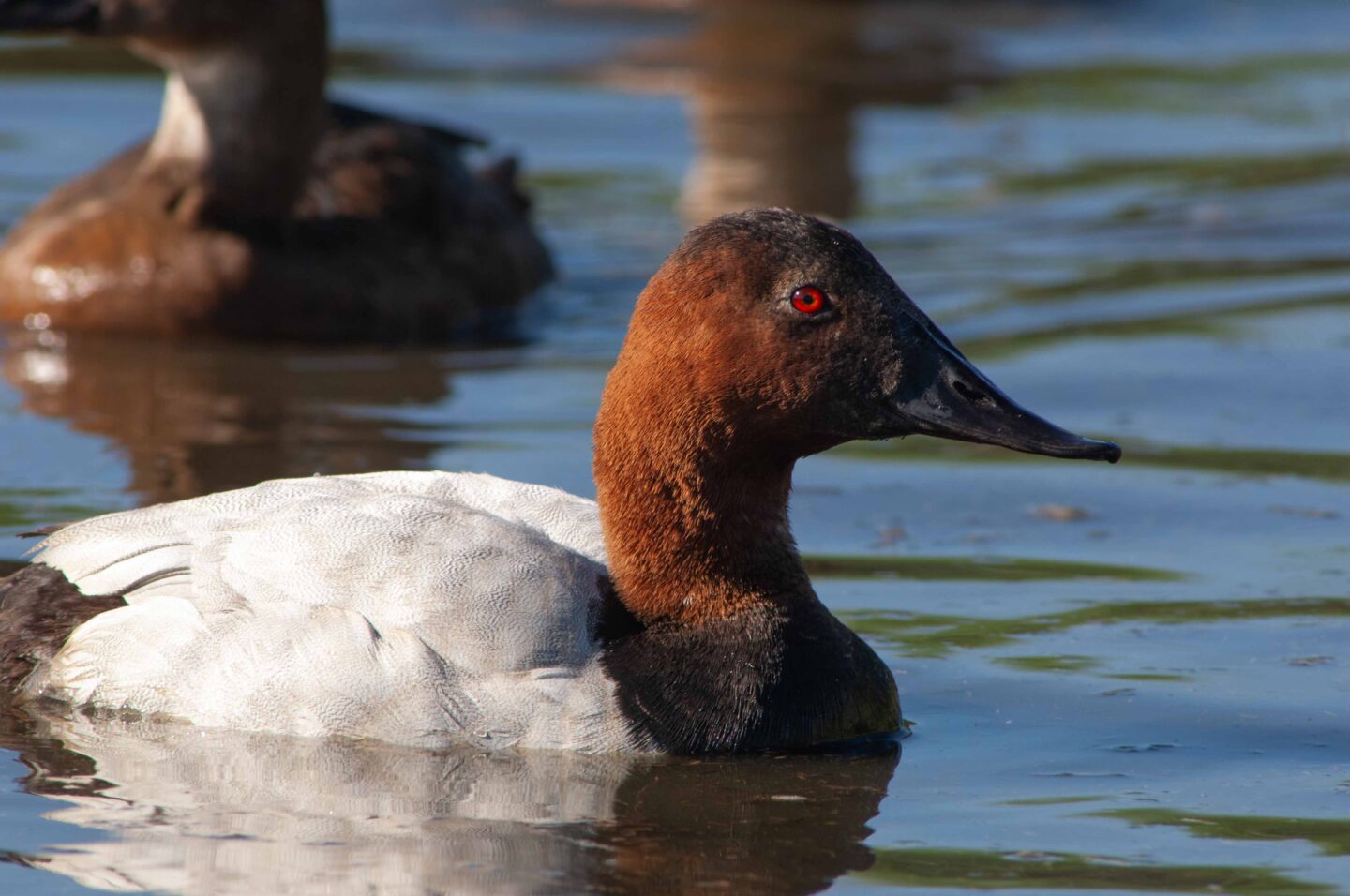
Canvasback
Few ducks are as iconic in Nebraska as the canvasback. Large flocks migrate through the Rainwater Basin and other wetlands each fall, but by late summer many are still farther north completing their molt. Canvasbacks dive for submerged aquatic plants, especially wild celery, though they’ll also eat snails and other aquatic animals. Their long, sloping profile gives them one of the most recognizable silhouettes of any duck.
Redhead
Nebraska plays an important role for redheads during migration. These ducks dive repeatedly for pond weeds, bulrush tubers and aquatic invertebrates. Like many divers, they’re excellent swimmers capable of remaining underwater for surprisingly long periods while searching for food.

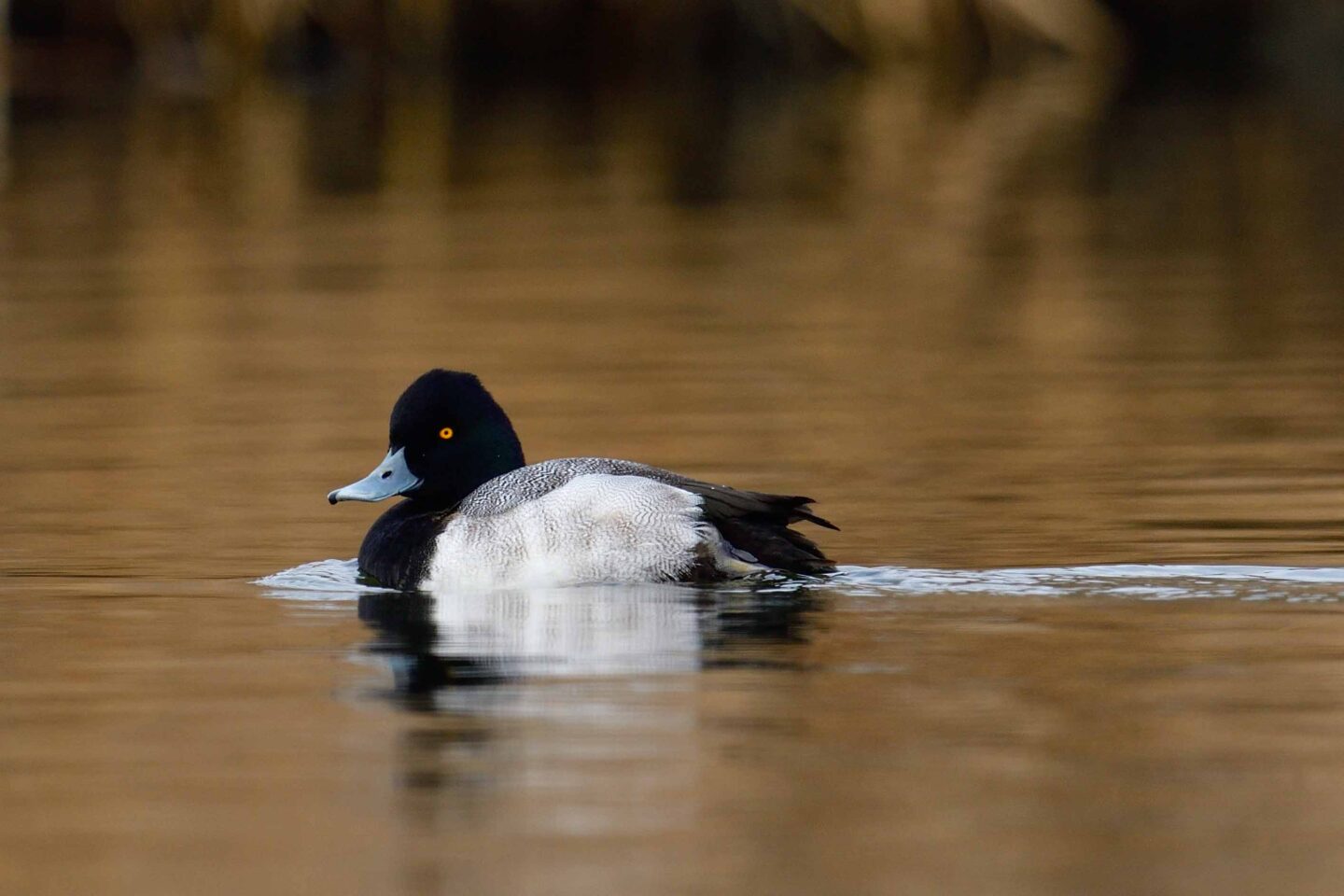
Lesser Scaup
Scaup are among Nebraska’s most abundant diving ducks during migration. Unlike many dabblers that prefer marshes, scaup often gather on larger lakes and reservoirs where they dive for mussels, snails, aquatic insects and other prey hidden below the surface.
The Next Time You Spot a Duck…
The next time you’re watching ducks, see if you can tell what kind of eater you’re looking at. Is it tipping forward with its tail in the air? You’ve likely found a dabbling duck. Did it vanish beneath the surface and pop up several yards away? That’s a diving duck.
It’s a simple distinction, but once you know the difference, Nebraska’s ducks become much easier — and much more fun — to identify. And with migration just around the corner, those quiet wetlands won’t stay quiet for long.