
By Eric Fowler
A project that began with plans to replace a dilapidated boat ramp at Standing Bear Lake in Omaha grew into a major Nebraska Game and Parks Commission Aquatic Habitat and Angler Access program project that will start paying dividends for anglers this year in the form of keeper-sized bluegill and saugeyes, countless small bass and some decent channel catfish.
One of the first major flood-control reservoirs built by the U.S. Army Corps of Engineers in Omaha, Standing Bear had suffered the same fate as other mid-sized waters since it was completed in 1975. Sediment washed into the lake from the watershed and shoreline erosion, and the presence of common carp had muddied the waters, creating poor conditions for gamefish.
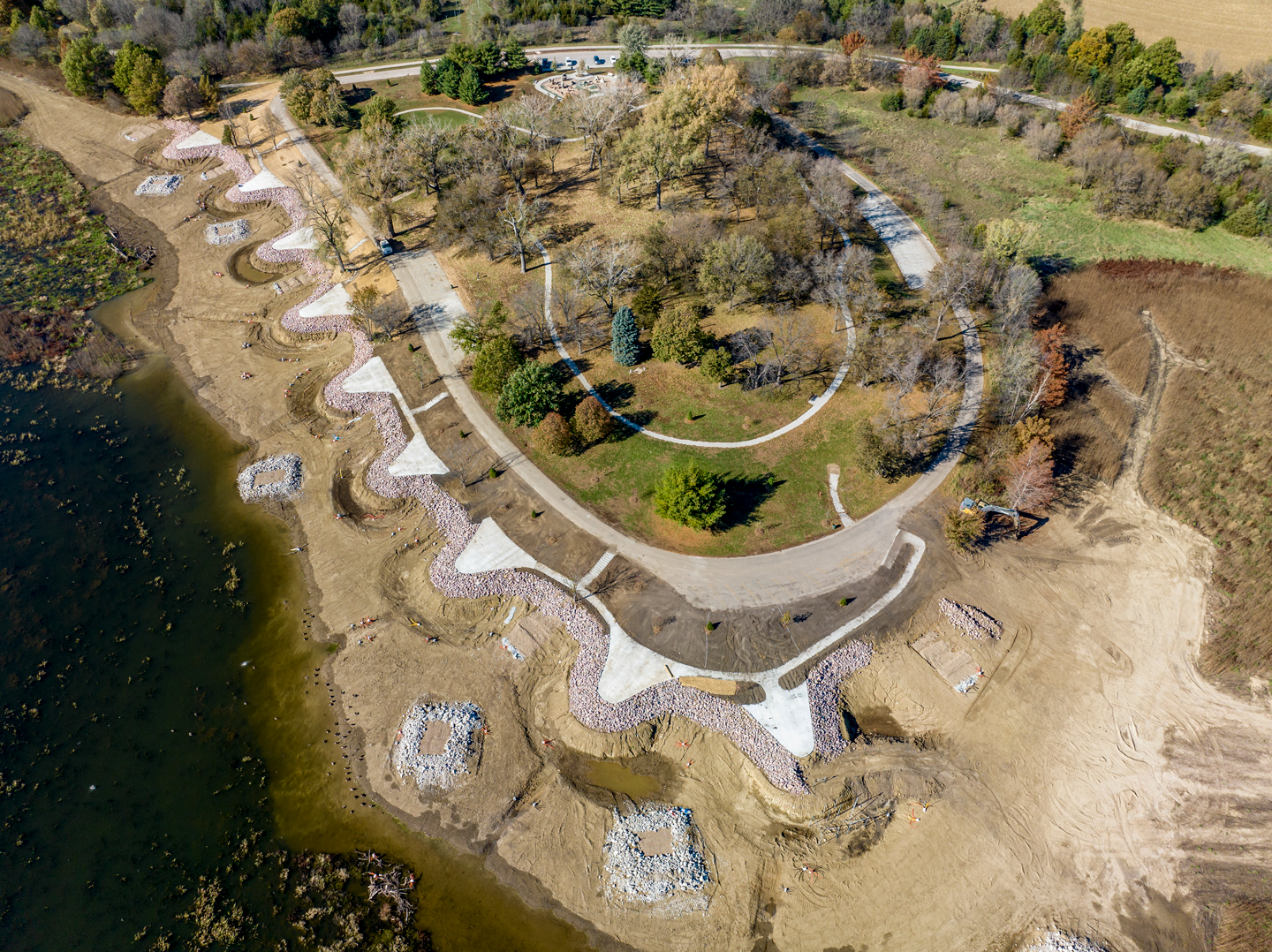
The lake, owned by the City of Omaha, was drained late in 2022 to allow for construction. A new two-lane boat ramp replaced the old ramp, and a kayak launch was also built. Breakwaters were added to protect both launches and for fishing access, and the parking lot was reconfigured to improve traffic flow.
On the lake’s north side, nine fishing points were constructed along a 350-yard stretch of shoreline, one of which includes an accessible fishing pier and sidewalk. Stairs and sidewalks lead to the other points. These improve a shoreline that previously was steep, lined with riprap and trees and difficult for anglers to access. Sediment removed in front of each structure and the boat and kayak launches will help keep aquatic vegetation at bay and give anglers easy access to deep water.
Artificial habitat and fish attractors were placed within casting distance of the structures and in other locations around the lake. This includes 19 rock shoals, more than 100 artificial PVC fish attractors made by Connor Tjepkes and fellow Troop 308 members as part of his Eagle Scout project, and 240 cedar trees placed with the help of volunteers from the Nebraska B.A.S.S. Nation.
Restocking the lake began in the fall of 2023 when a few adult bass and bluegills were moved from other area waters. Heavy rain in May of 2024 filled the reservoir seemingly overnight, and more than 50,000 fingerling bass and bluegills have been stocked since, as well as 8,000 10-inch channel catfish and 33,000 fingerling and advanced fingerling saugeyes. No black crappies were stocked, but there was no need, as that species found its way into the lake from upstream ponds, as did a few more adult bass.
Jacob Werner, district fisheries biologist, said fish are thriving in the abundant aquatic vegetation that sprouted in the clear, carp-free water. While their spring trap-net surveys for some reason didn’t sample many bluegills, there are plenty in the lake, including good numbers of 5- to 8-inch fish. He was pleasantly surprised with how the saugeyes are doing and said anglers can expect fish to reach the 15-inch minimum length limit this year. Crappies are present up to 8 inches and need some time to grow, as do the channel catfish, which are topping out at 16 inches. There are a “ridiculous” number of bass in the 7- to 10-inch range from the first year-class that is comprised of stocked and naturally reproduced fish.
“The fishery is progressing really nicely,” Werner said. “It’ll produce some nice bluegills, and the saugeyes in there actually look incredible.”
With the number of fish present, “It will be a phenomenal place to take a kid,” Werner said.
Jeff Jackson, aquatic habitat program manager, said while numerous reservoirs have been built in the Omaha Metropolitan Area since the last of the original four Corps reservoirs were completed in the 1980s, rehabilitating Standing Bear Lake and basically creating another new lake within a short drive of 56,000 resident anglers and 1 million people, is well worth the $2.6 million investment. “There’s probably nothing more important,” he said. “You can’t build enough lakes
there.”
Other Aquatic Habitat and Angler Access Program Projects Nebraskans can enjoy this year include:
Medicine Creek and Swanson SRAs
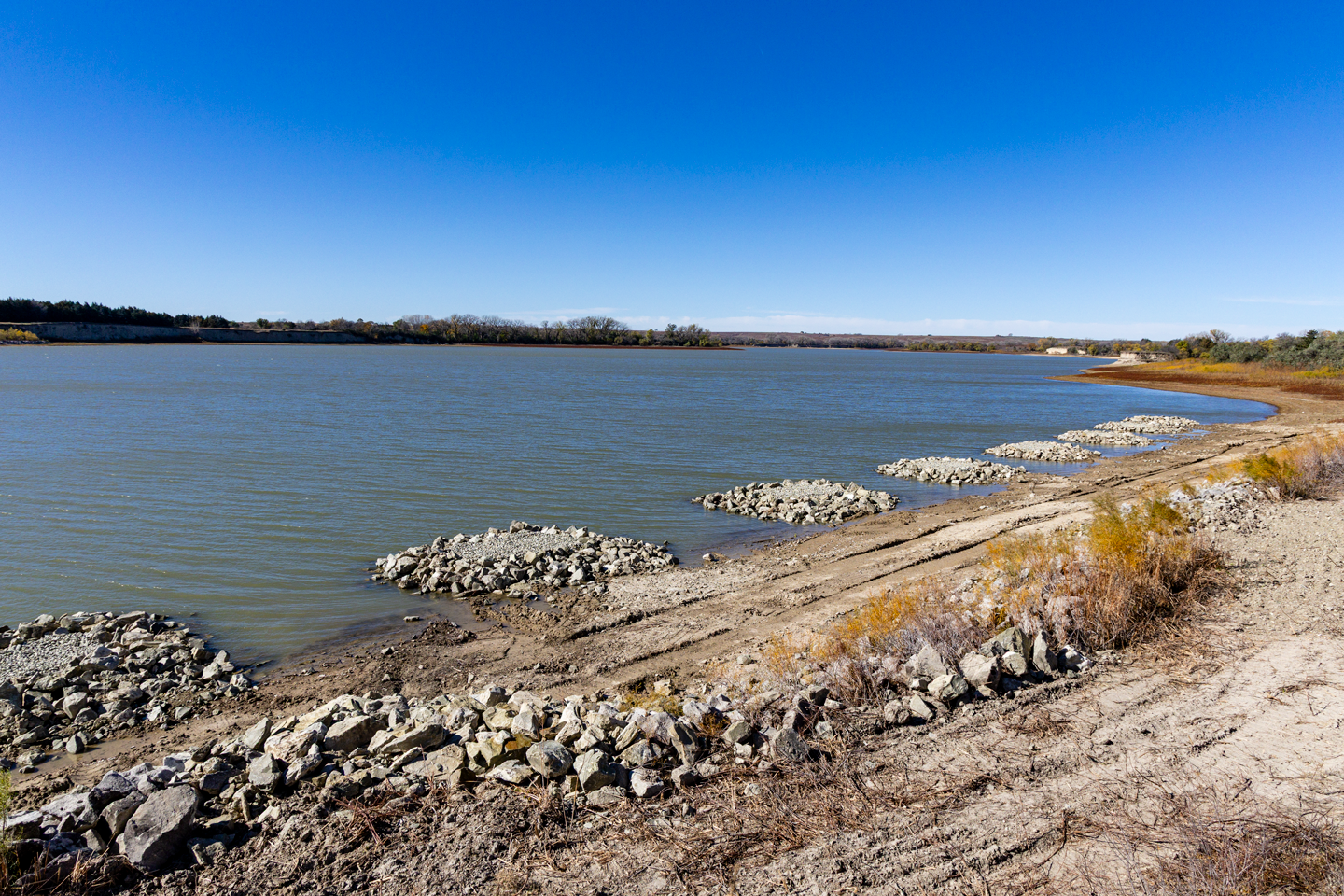
In partnership with the U.S. Bureau of Reclamation, 42 rock shoals were built in the lakebed at Medicine Creek Reservoir in 2025 and 43 at Swanson Reservoir in 2023. The 10-by-20 foot wide, 3-foot-high structures were constructed in what will be 8 feet of water when the reservoirs are at full pool, providing habitat for fish where there is little except when the lake is full. Buoys will mark the structures so they don’t present a hazard for boaters.
I-80 Lakes
Invasive eastern red cedar and Russian olive trees were removed from 11 borrow pit lakes along Interstate 80 between North Platte and Minden to improve shoreline access for anglers. As part of the project, funded in part by a Nebraska Environmental Trust grant, some of the cedar trees were placed in the lakes for fish habitat.
The lakes include: War Axe SRA, North Kearney Rest Area DOT, Fremont Slough, Pawnee Slough, East Gothenburg, West Maxwell, Daar, Blue Hole, Coot Shallows, Bufflehead and Bassway Strip WMAs.
Windmill SRA
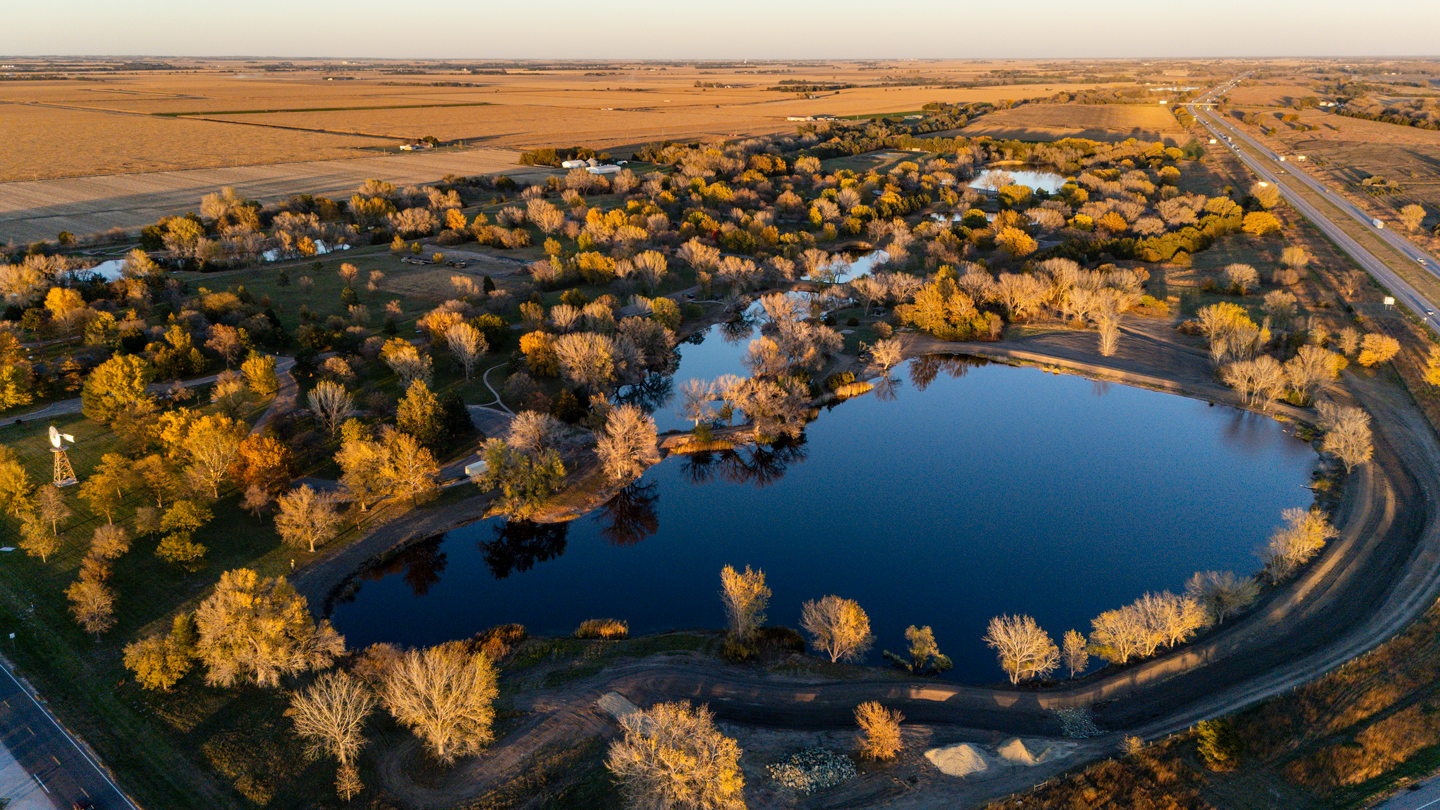
Work will be completed this spring on a project to deepen shallow bottlenecks that cause Lakes 2, 3, 4 and 6 to become disconnected when water levels drop in the summer and to add depth variation in other locations. The project also included the addition of a fishing point on Lake 2, a floating dock on Lake 4, and improved access in several more locations on those and other lakes, including a new parking lot near Lake 4. Floating islands seeded with plants will be installed this spring in Lake 6. The root structure extending below the islands will provide additional fish habitat. A new channel will carry floodwaters around Lake 1 and lessen the likelihood of carp and other rough fish entering the lakes, as was the case in 2019. A renovation is tentatively planned for that lake in 2026.
Fort Robinson State Park
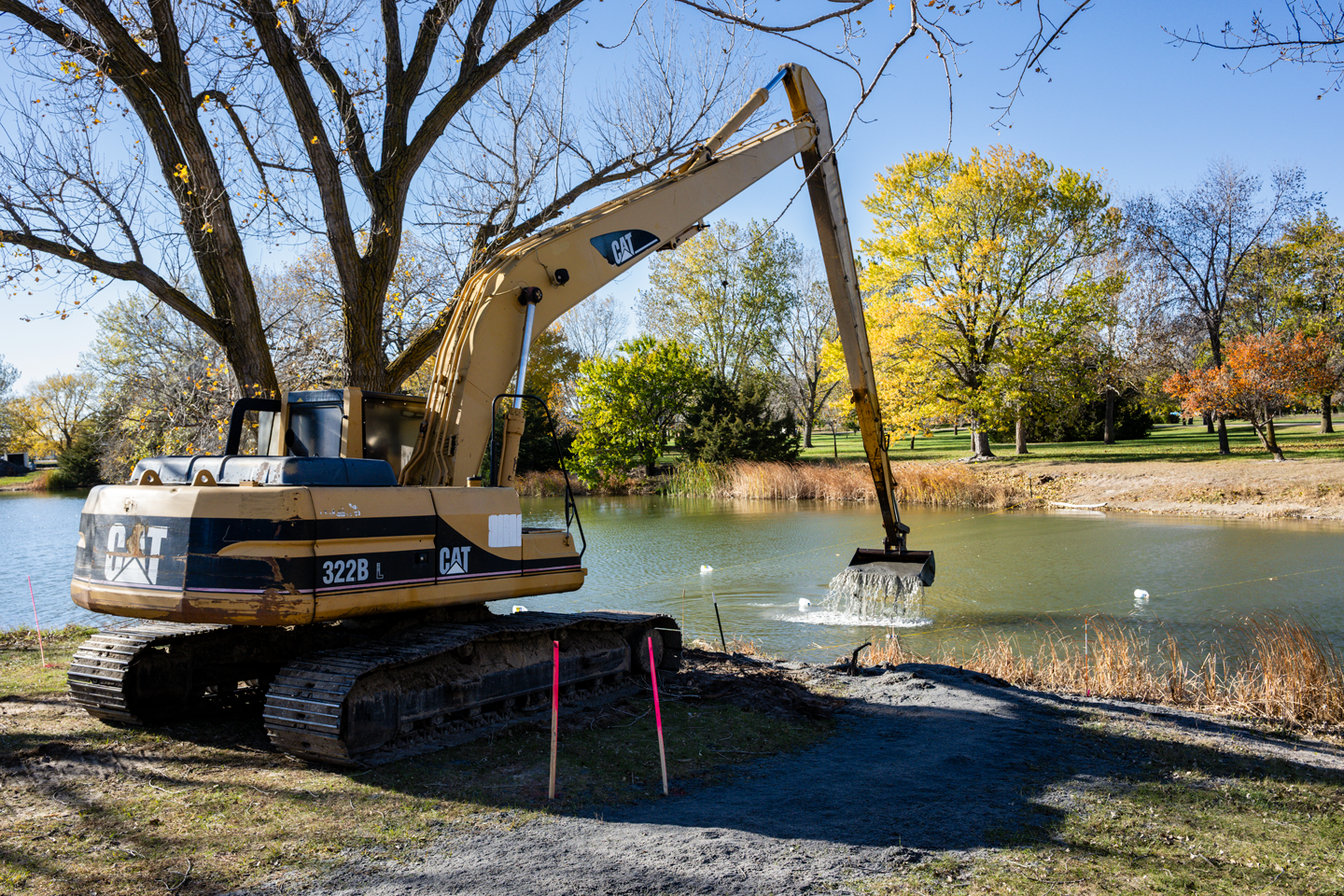
Work is underway to reconnect and restore 51 miles of Soldier Creek. The dam that formed Carter P. Johnson Lake, which was drained in 2023 because it posed a high hazard to the park’s campground, will be removed. Downstream, Crazy Horse Pond will be deepened and the stream routed around the pond. A pipe will continue to feed water to the pond. A U.S. Bureau of Reclamation Water Smart grant will fund a majority of the project, which also has support from the Nebraska Department of Natural Resources, Upper Niobrara White Natural Resource District and the Nebraska Department of Environment and Energy.
Starting in 2026
Niobrara State Park Pond
Work will begin this spring to reconfigure the pond, which is larger than the watershed can maintain. Leaks will be sealed and a well installed to maintain water levels. A small boat ramp will be built on the south side of the pond that can be used as a kayak launch.
Smith Lake WMA
Work will begin this spring to reconfigure the outlet and improve the road to the south side of the lake, where nine fishing points will be built to improve angler access. An additional point will be built on the northeast corner of the lake, and a breakwater will be added to protect the boat ramp. Some dredging will be done around the points.
Oglala National Grassland Ponds
Work will begin this summer to deepen Agate and Boardgate Reservoirs to prevent summer kill, and to improve angler access. Fencing will be installed to prevent cows from wading in the ponds, and new outlet structures will help maintain water levels. Access improvements include an accessible parking area, kayak launch and fishing point at Agate. The U.S. Forest Service, a partner in the project, recently improved roads to the lakes.
Improved Boat Access
Projects were completed at Bluestem SRA, Lewis and Clark SRA-South Shore, Avocet WMA, Frye WMA, East Midway SRA, Gallagher Cayon SRA, Phillips Canyon SRA, Plum Creek WMA, and Merritt WMA/SRA, including new boat ramps, accessible kayak launches, fishing piers, boat docks and restrooms, and parking lot expansions. More boat ramp improvements are planned this year at Verdel Landing and Frenchman WMAs, Swanson Reservoir SRA and Indian Cave State Park.
A 100-Year Focus on Recreation
By Jeff Kurrus
Since its inception, Nebraskaland Magazine — formally Outdoor Nebraska — has strived to provide the most up-to-date information on places its readers could fish, hunt and recreate.
That began with the magazine’s first issue in June 1926, when outdoor enthusiasts were briefed on new land access: “Four holdings have already been purchased by the Bureau [the now Game and Parks Commission] and thrown open to the public. The largest of these is Goose Lake, in Holt County.” That first publication went on to discuss the other acquisitions: Walgren Lake in Sheridan County and Rat and Beaver lakes in Cherry County.
At the time, Nebraskans, with an increasing amount of spare time and money, were hungry for places to hunt, fish, camp and enjoy nature. And with the advent of the automobile, more of them had the means to get there.
While there were thousands of miles of rivers and streams and hundreds of natural lakes, mostly in the Sandhills, all but a handful of the more than 400 public reservoirs we now take for granted hadn’t yet been envisioned. There were only four state parks, and the agency was just beginning to acquire the first wildlife management areas, of which there are now more than 250.
So any time the Commission acquired land “to provide fishing and hunting for the thousands of Nebraska citizens who desire such outdoor recreation,” Outdoor Nebraska editor Frank O’Connell wrote in 1926, it was welcome news.
One example is the Spring 1952 issue that features a cover teaser that read: “Four New Waters Open to Fishing.” These lakes were Medicine Creek Reservoir, Atkinson Lake, Hull Lake and Smith Lake.

The article revealed the most excitement, and trepidation, over Medicine Creek. “Approximately 175,000 fish — both adult and fingerlings — have been released by the Game Commission. These fish — affording a diversity of fishing — consisted of walleye, white bass, largemouth bass, crappie, bluegill and catfish.”
Excitement, however, was tampered in the next line: “Though the reservoir has been amply stocked with most major species of game fish, Nebraskans are cautioned not to become too optimistic about future fishing in the reservoir. … If Medicine Creek does follow the pattern of most other reservoirs, fishing could be expected to decline in years. Tons and tons of silt being carried into the reservoir could cover and kill vegetation.”
The article went on to discuss that this silt would cloud the water, eliminating the insects that use this vegetation and provide food for fish. Plus, the fluctuating water levels “could play havoc with fishing success.”
Land continues to be acquired for Nebraskans to enjoy, and while a reservoirs continue to be built, there are few suitable locations to do so. Nebraskaland continues to highlight those additions. At the same time, it also highlights the work of the Commission’s Aquatic Habitat Program, which since 1995 has been helping reverse some of decline that occurs as reservoirs age. More than 70 years after it filled, Medicine Creek is benefitting from that program with the addition of rock shoals last year.