
By Andrea Faas
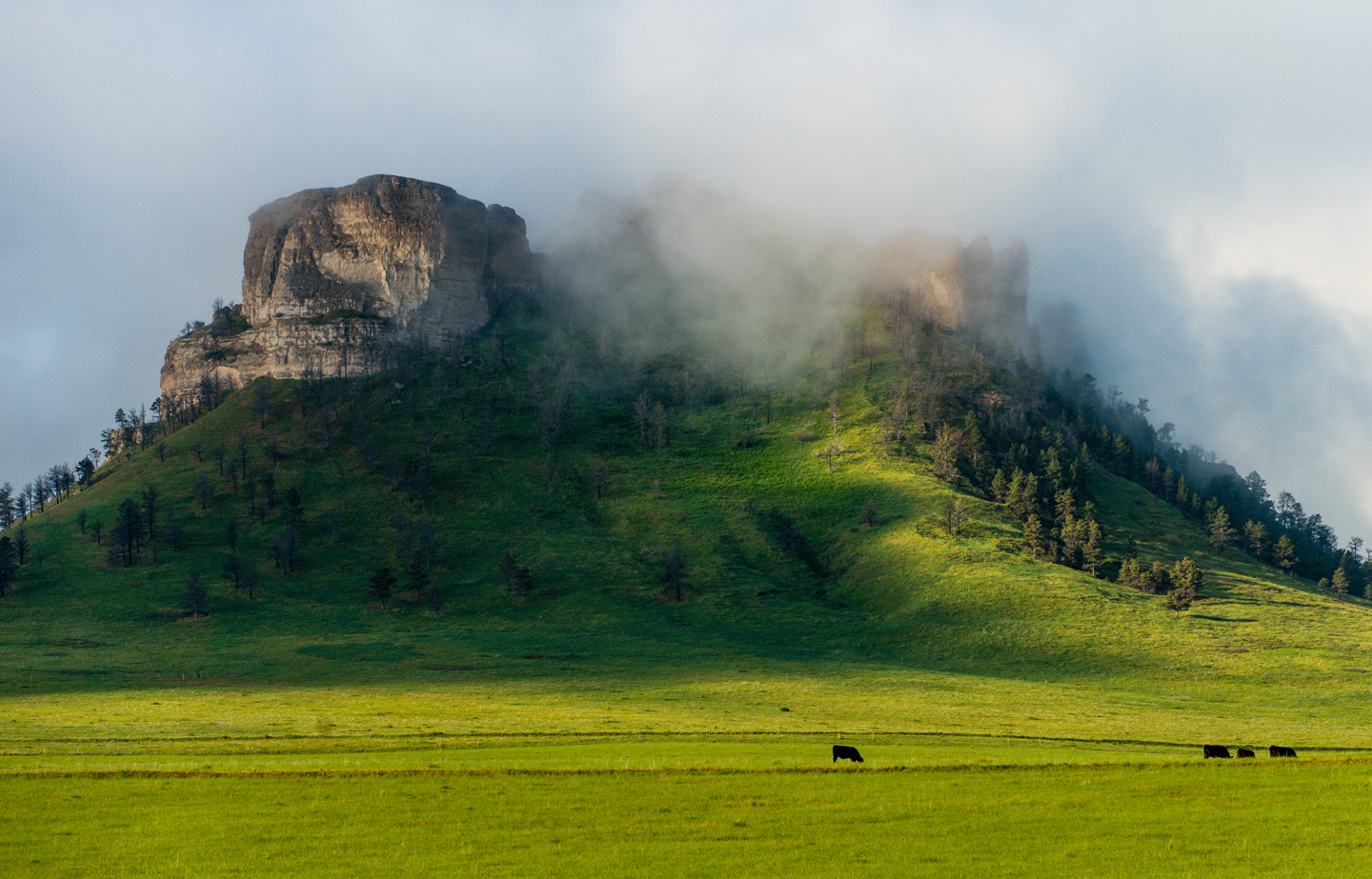
On a recent morning, the fog resembled a heavy blanket of humidity. It truly was a low cloud that obscured everything more than a quarter mile away. Driving cautiously, I made my way to a local wetland area to enjoy the early morning.
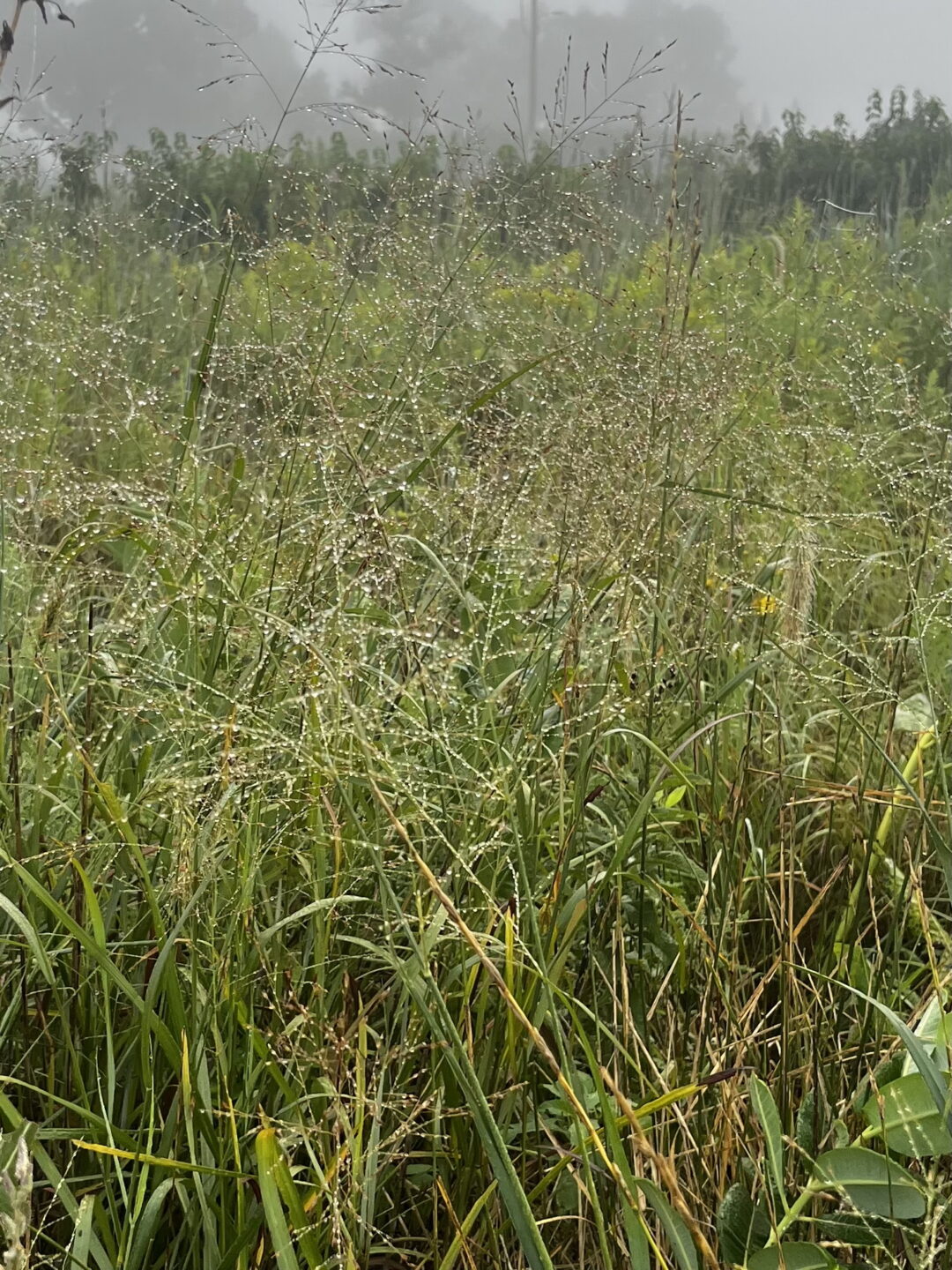
Cool foggy mornings are best appreciated at a slower pace. The thick fog was grey to bright white, settling low in valleys and hovering over waterbodies, showing only the silhouettes of shrubs, trees and waterfowl. Up close, the water droplets looked like diamonds on a delicate spiderweb and encrusted gems on flowers and grasses. The moisture brought out the gold and purple colors of the fall prairie mixed with fading pinks and greens from the summer prairie.
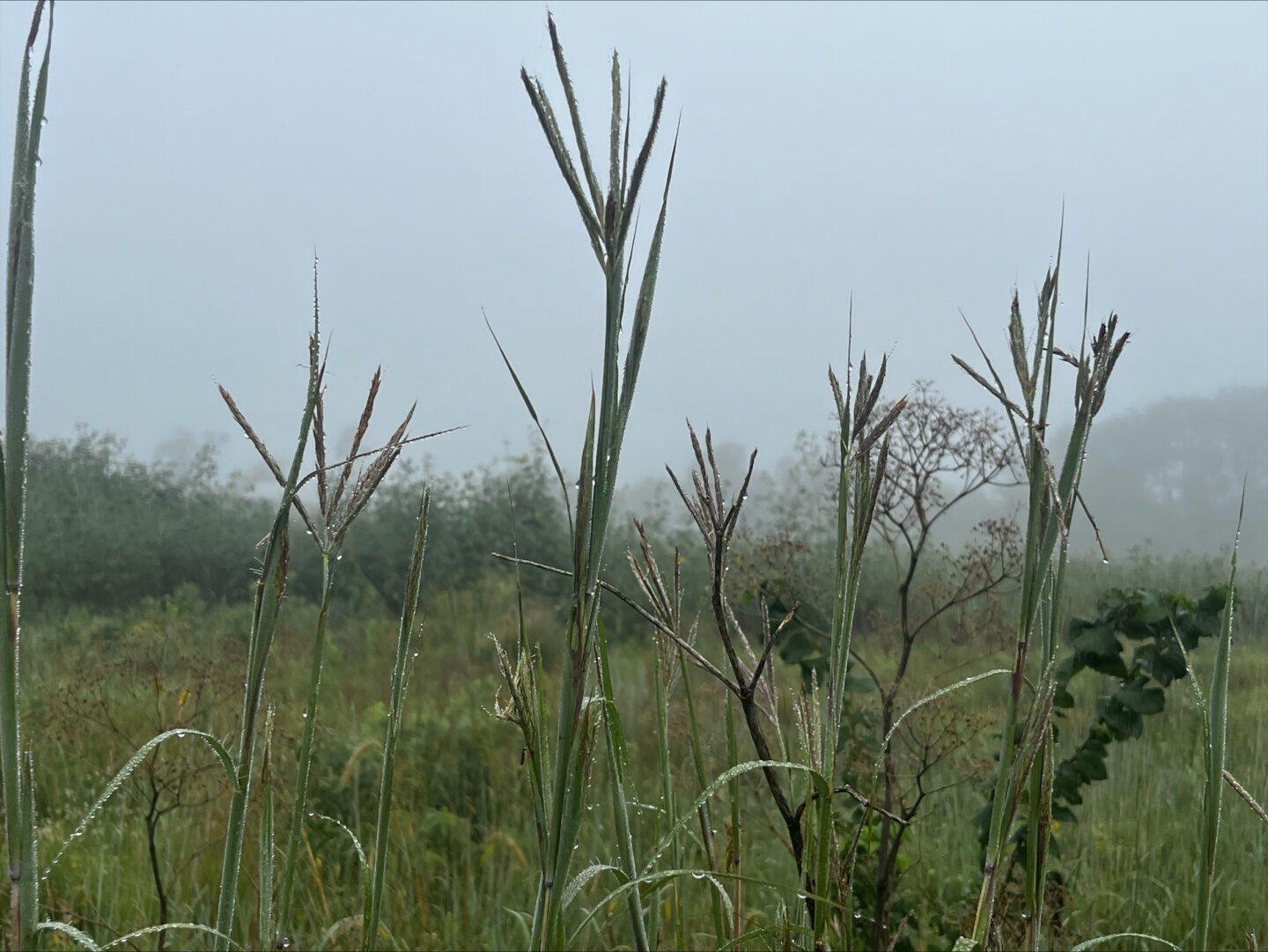
Scientifically speaking, fog is a low cloud that is formed during periods of high humidity, when something warm, such as air, water or the ground, meets something else that is colder, such as air, ice or snow. Fog can form in three ways, and all involve high humidity and temperature change.
In Nebraska, radiation fog forms because the sun light (radiation) heats the ground, air and water during the day and drives up humidity. Then at night, the air cools and the water vapor (water in a gas form) condenses to form water droplets around particles of dust, ash or other particulates in the air. As more droplets form collectively, it becomes a low cloud. This fog usually only lasts until the sun rises and the light warms the air again.
Advection fog forms when warm air saturated with water vapor moves over a colder surface. For example, tropical winds blow in from the Pacific Ocean and cross a colder current off the West Coast to create fog in places like California, Oregon and Washington.
Freezing fog happens when water droplets freeze when they touch surfaces leaving a layer of frost.
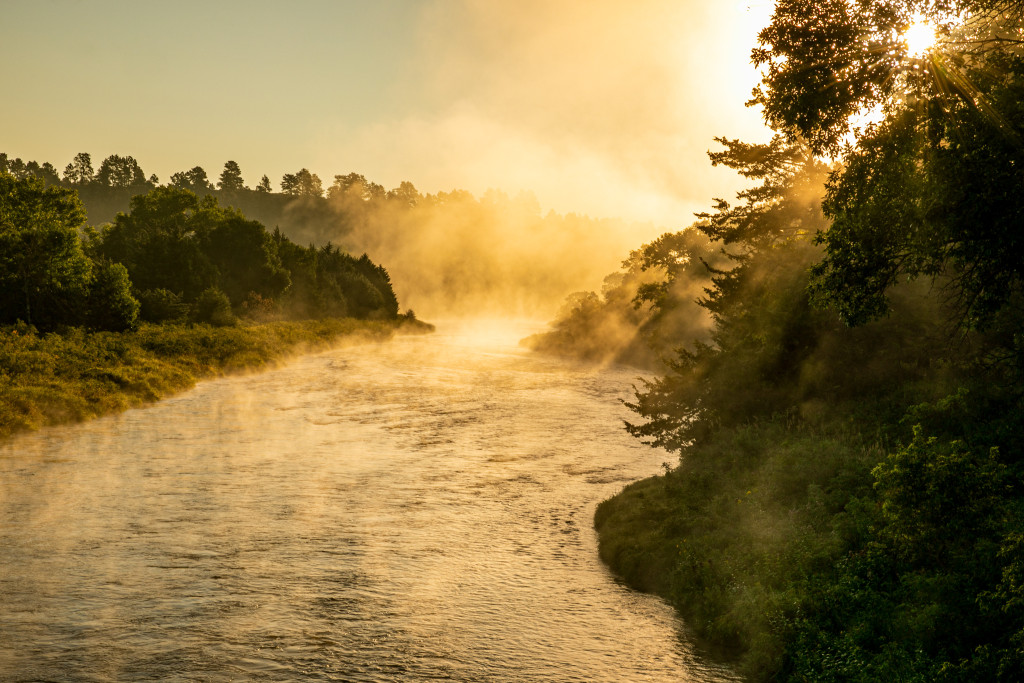
After a walk on the wet trail, I returned to my car and noticed that the sky was getting brighter as the sun burned off the fog. Birds and insects became more active as their wings dried. The details of plants and the landscape in the distance became clearer as did my mind for the day ahead.
As summer fades to fall, I look forward to mornings when the dormant prairie will be covered with frozen crystals that will only be there until the sun melts them away.