
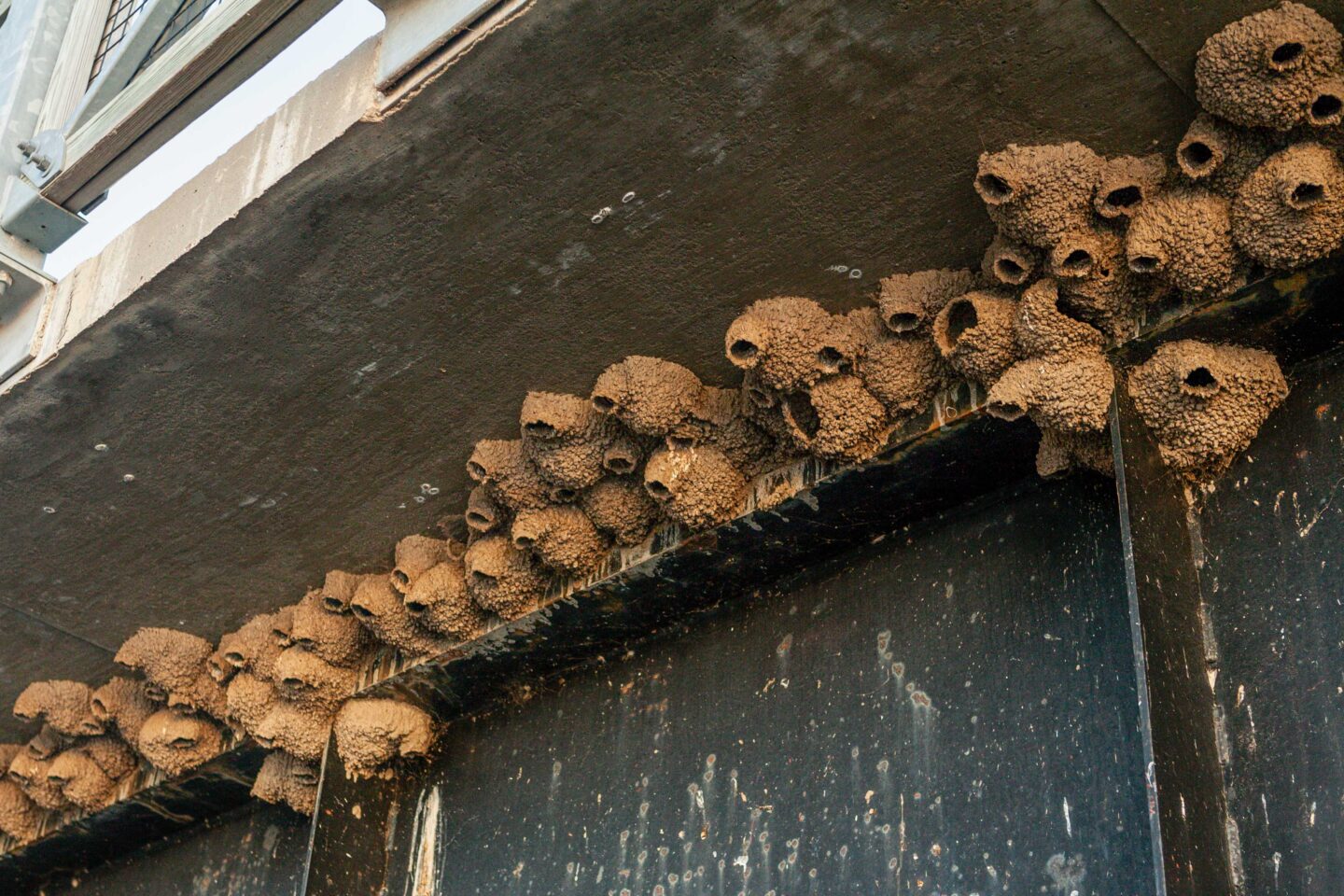
By Monica Macoubrie, Wildlife Education Specialist
Across prairies, marshes, riverbanks, and even under the eaves of barns and homes, birds craft homes that range from delicate masterpieces to downright strange. Some dig underground burrows, others build with sticky saliva and a few don’t build nests at all — because who has time for that? In a state known for its extremes of wind, rain, heat and cold, Nebraska’s birds have developed nesting strategies that are as wonderfully weird as they are effective.
Brown-headed Cowbird
The brown-headed cowbird is one of the weirdest nesters you’ll find in Nebraska. They don’t build nests. They don’t gather twigs. They don’t sit patiently on their own eggs. Instead, the female quietly slips into another bird’s nest, often when the parents are distracted and lays a single egg before flying off like nothing happened. The unsuspecting host parents then incubate the egg and raise the chick as their own.
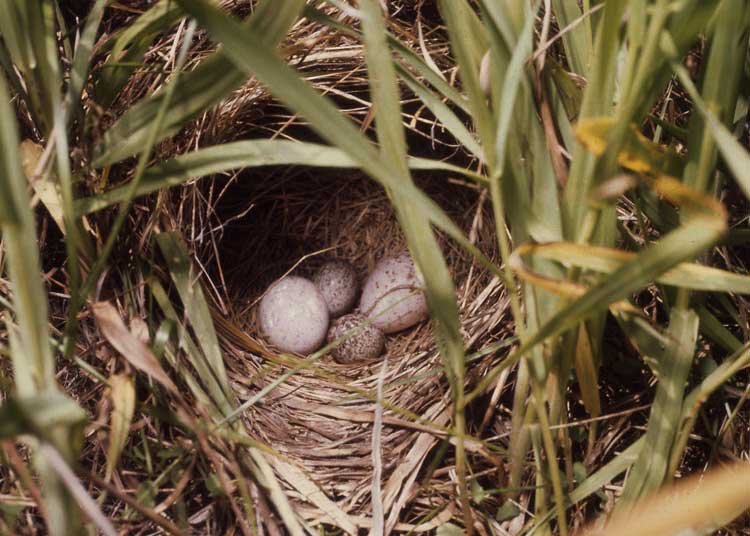
The cowbird chick usually hatches earlier and grows faster than the other babies in the nest. It begs loudly and constantly, often getting the bulk of the food. Sometimes the host’s own chicks don’t survive the competition. It feels sneaky and a little harsh, but this strategy evolved for a reason.
Historically, cowbirds followed the massive herds of bison to eat the insects that bison would disturb while foraging. However, because herds were always moving and the cowbirds’ nomadic lifestyle did not allow for the raising of chicks, these birds evolved over time to lay eggs in other birds’ nests.
Strange? Definitely. But in the wild, survival doesn’t always look polite.
Piping Plover
If cowbirds are sneaky in their nesting strategies, the piping plover’s nesting habits are the opposite: simple, exposed and somehow, still successful. Piping plovers don’t build much of a nest at all. They make a shallow scrape in the sand or gravel and lay their speckled eggs right out in the open. No cozy cup of twigs. No hidden branches. Just a small dip in the ground that blends in almost perfectly with the beach around it.
The eggs are beautifully camouflaged, looking exactly like tiny pebbles scattered in the sand. Adults are masters of distraction, too. If a predator, or curious human gets too close, a plover will limp away, pretending to have a broken wing to lure danger away from the nest. It’s dramatic. It’s risky. And it works!

Here in Nebraska, especially along wide sandy riverbanks and sandbars, their nesting strategy depends entirely on open space and good camouflage. It may not look like much but that simple scrape in the sand is everything to them.
Bank Swallows
The bank swallow doesn’t build up, it digs in. These small swallows nest in vertical dirt or sand banks, such as river edges or sandy pits, where they tunnel straight into the soil. Using their tiny feet and sharp bills, they carve out narrow burrows that can stretch several feet back into the bank. At the end of that tunnel is a small chamber lined with grass and feathers where they lay their eggs.
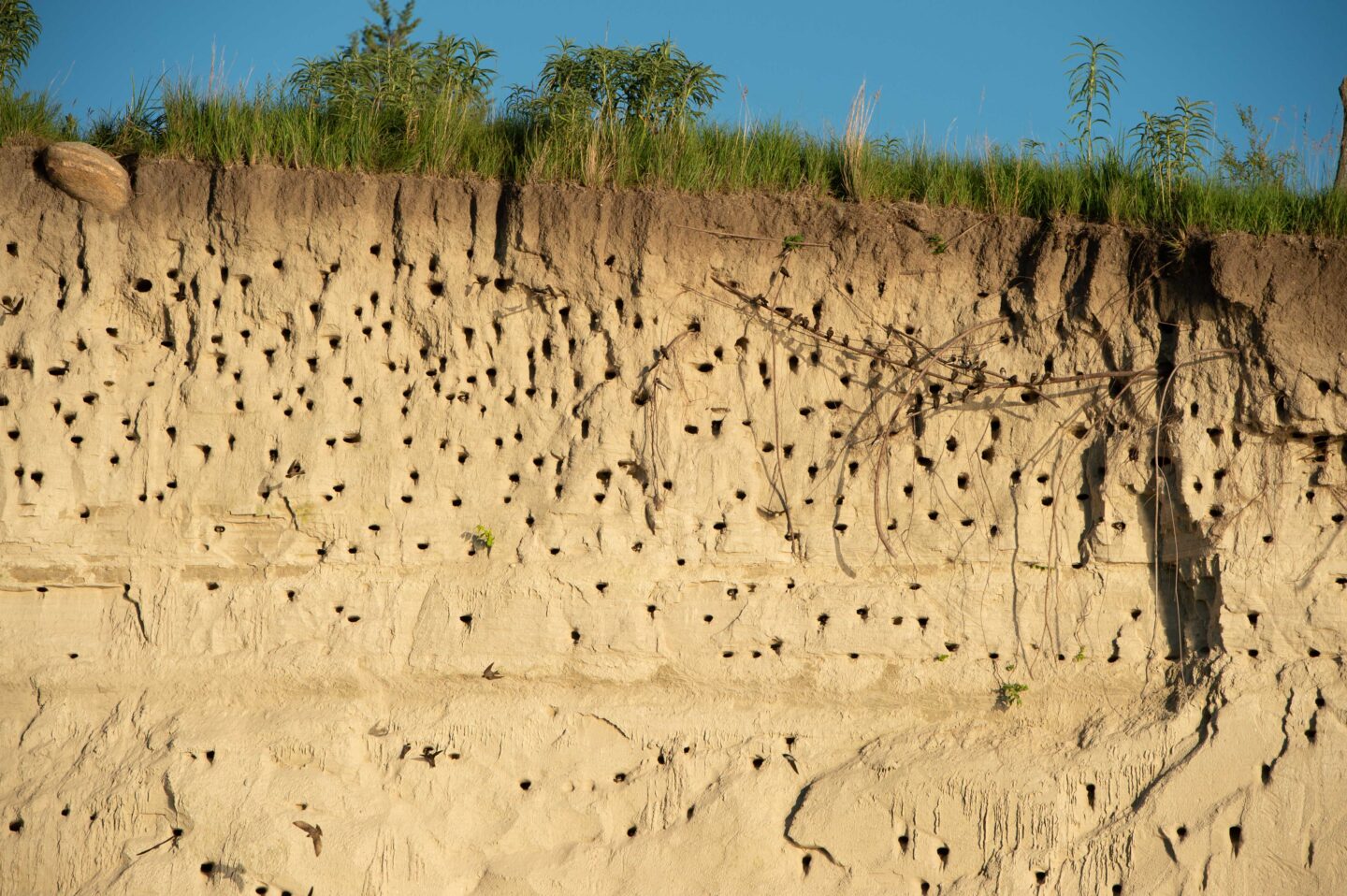
From a distance, a nesting colony looks like a wall full of little holes, almost like someone took a giant pegboard and stuck it into the earth. Dozens, or even hundreds of swallows may nest side by side, constantly swooping in and out of their tunnels. It’s busy and loud and a little dusty, but those deep burrows keep their eggs protected from predators and harsh weather. Digging their homes straight into the landscape might not look glamorous, but it’s a clever way to stay safe while raising a family.
Burrowing Owls
The burrowing owl takes the underground approach of nesting to a whole new level. Unlike most owls that roost in trees, burrowing owls live burrows, often ones dug by other animals, such as prairie dogs or ground squirrels. They’ll sometimes enlarge these tunnels or even dig their own if the soil is soft enough. Burrowing owl homes are surprisingly spacious inside, with multiple chambers for nesting, resting and escaping the heat of the day.
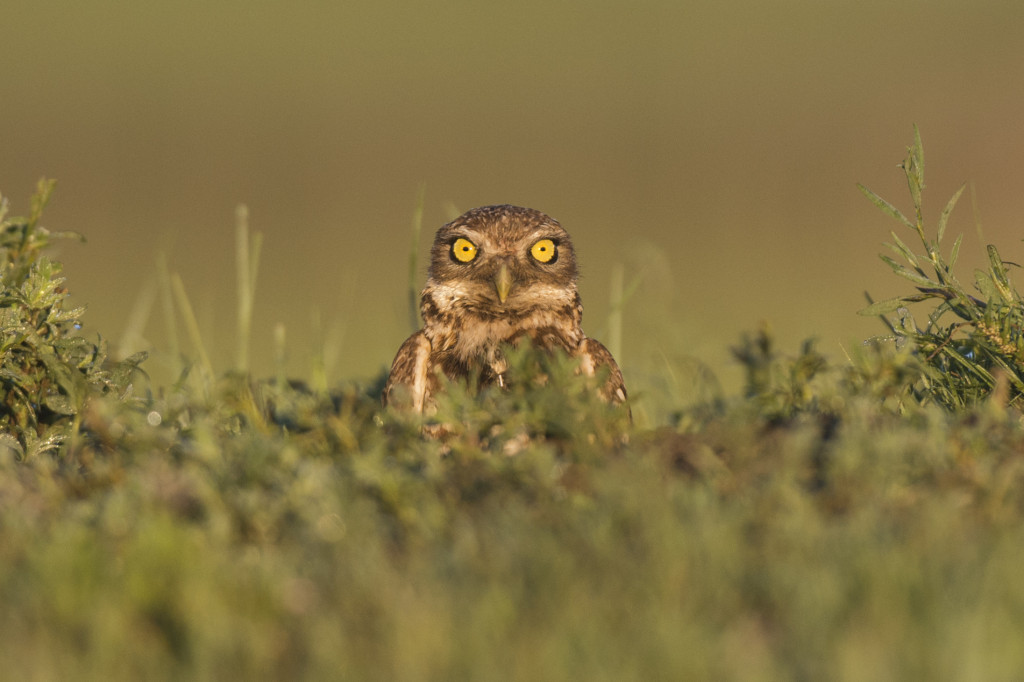
These owls are small but mighty. During the day, you might see them standing near the entrance of their burrow alert and watchful. They will bob their heads and scan the horizon. At night, they’re silent hunters, swooping out of their burrows to catch insects and small rodents.
Living underground helps burrowing owls avoid predators and extreme weather, but it also means they need to share space with other creatures that stay alert to any other intruders. It’s a cozy, unconventional community.
Ruby-throated Hummingbird
True to hummingbirds’ delicate stature, their nesting game also matches their tiny persona. The female builds a miniature cup-shaped nest often no bigger than a walnut out of soft plant fibers, spider silk and lichen. The silk makes the nest stretchy, so it can expand as the chicks grow, while lichen camouflages it perfectly against tree branches.
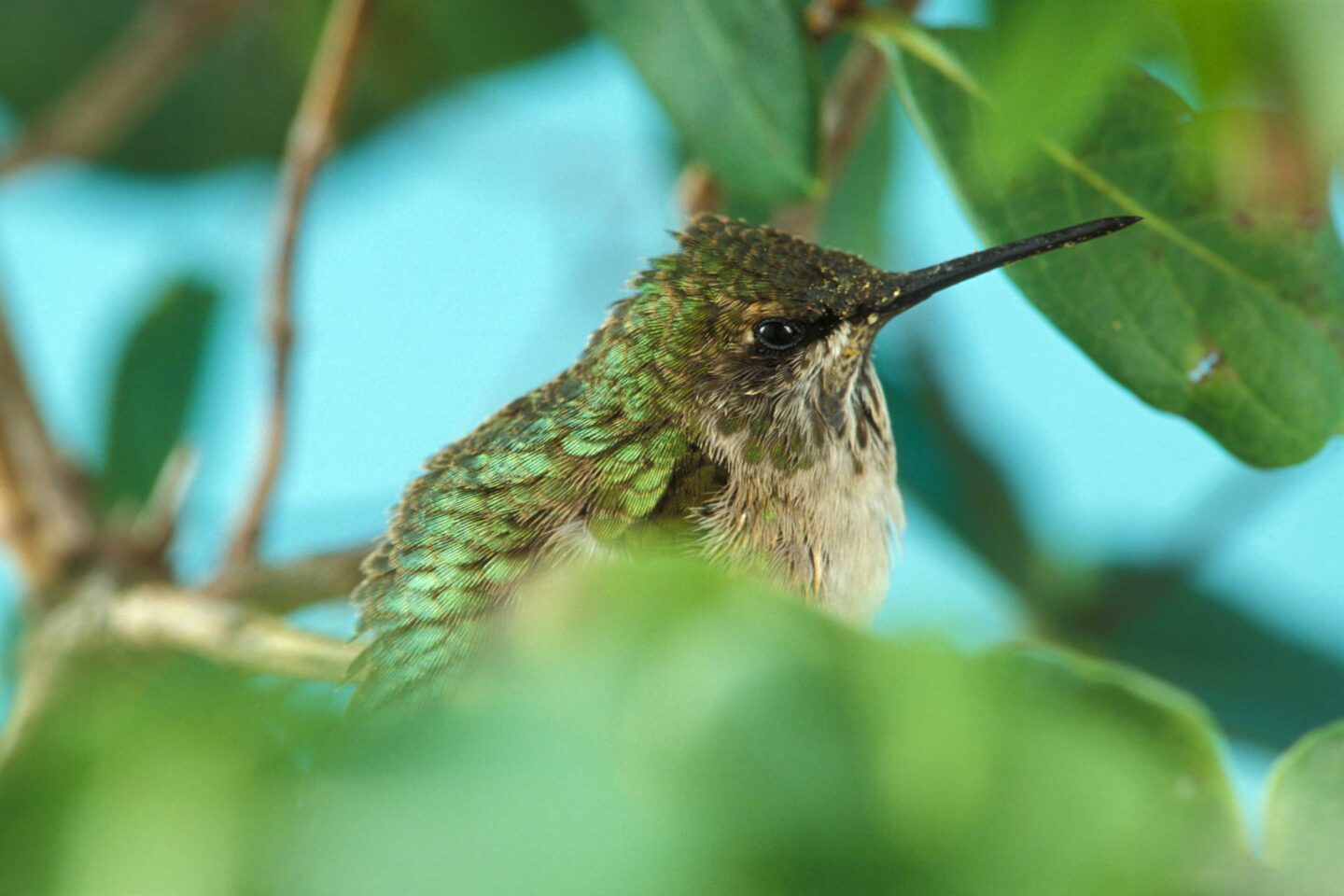
Hummingbirds are meticulous parents. They lay just one or two eggs at a time and guard the nest carefully, returning constantly to feed chicks with regurgitated nectar and tiny insects. From a distance, the nest is nearly invisible, clinging to a slender branch or fork in a tree, hiding in plain sight. For example, the precision, patience and craft of a ruby-throated hummingbird’s nest is astonishing.
Nebraska’s birds really do show just how creative and varied nesting strategies can be. Some hide their eggs in other’s nests, some dig deep into the earth, and some leave their eggs exposed to the world. Each approach has its own risks and rewards, shaped by evolution and the environment. Watching all these different strategies reminds us that one size does not fit all.