
By Monica Macoubrie, Wildlife Education Specialist
On warm Nebraska evenings, just as the last streaks of orange fade from the western sky, a shift begins. The daytime chorus of birds gives way to a different soundtrack — one filled with chirps, buzzes, rattles and clicks. While crickets often get the credit for these nighttime concerts, some of the loudest performers hidden in our trees, shrubs and prairie edges are katydids.
These remarkable insects spend much of their lives out of sight, blending perfectly into the green of Nebraska’s landscape. Once you learn to recognize them, you’ll realize they’ve been all around you the entire time.
Masters of Disguise
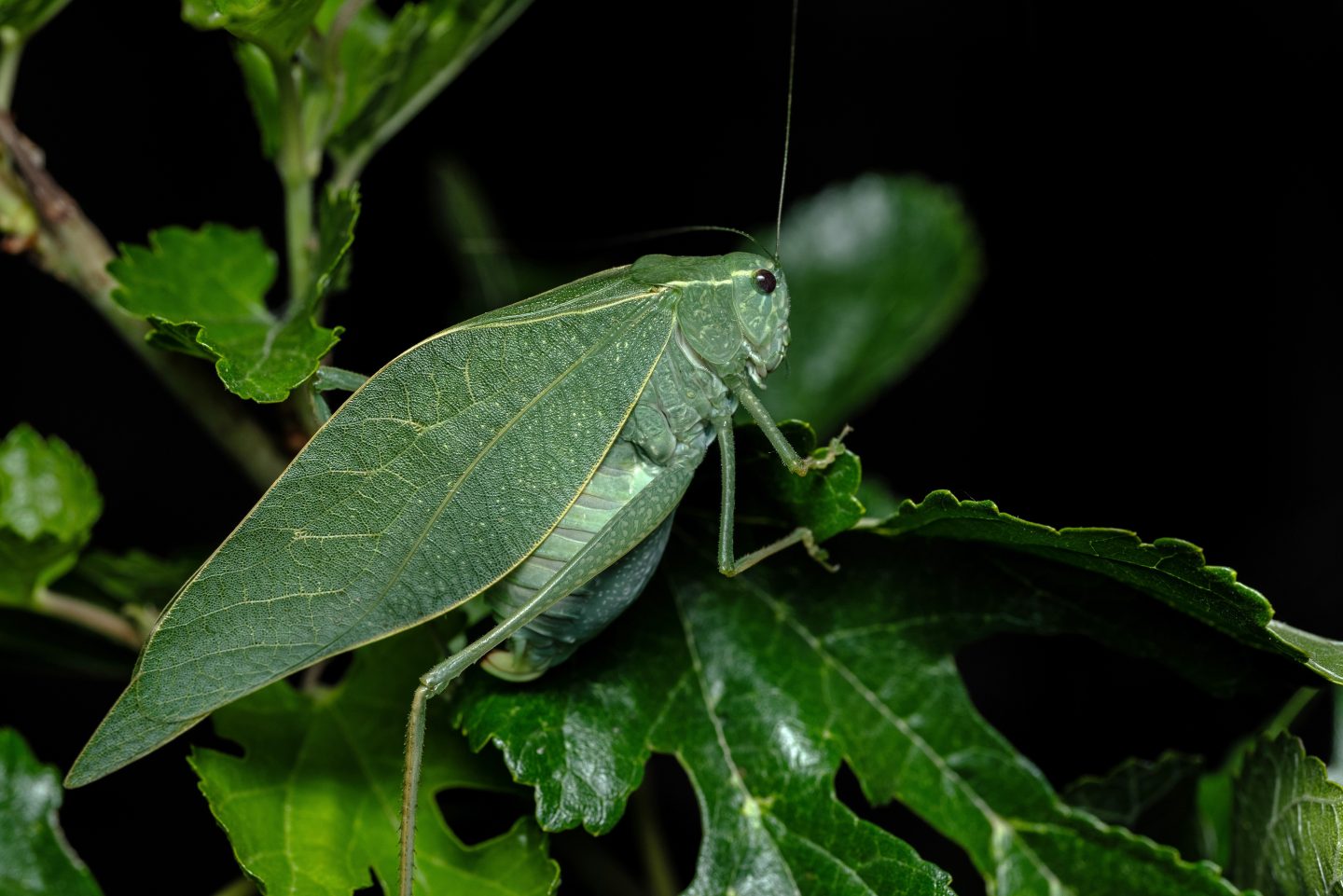
If there was an award for camouflage in the insect world, katydids would be strong contenders. Most species are bright green, with wings that closely resemble leaves, complete with vein-like patterns. Some even have markings that mimic leaf damage or age spots. This disguise allows them to disappear among the cottonwoods, oaks and shrubs that line Nebraska’s rivers and woodlands. Even when one is sitting in plain sight, your eyes may slide right past it.
Their camouflage isn’t just for show. Katydids are a favorite meal for birds, bats, spiders and other predators. Looking like a leaf is often the difference between surviving the night or becoming someone’s dinner.
More Than One Kind of Katydid
Nebraska is home to several species of katydids. Some are large and leaf-like, while others are surprisingly slender and grasslike. Among the most familiar are the true katydids, whose loud, rhythmic calls echo from trees on summer nights.
Conehead katydids, with their distinctive pointed heads, are often found in grasslands and roadside vegetation.
Meadow katydids tend to be smaller and inhabit prairies, wetlands and field edges. Just like each species is unique physically, each species also has its own voice.

Soundtrack of Late Summer
Katydids are among the defining sounds of August and September. Their calls become especially noticeable after sunset when temperatures remain warm and the air is still. The sounds are produced by males rubbing specialized parts of their wings together, a practice called stridulation. One wing acts like a file, while the other functions like a scraper. The result is a surprisingly loud song for an insect that may be hidden 30 feet above your head in a tree.
The purpose of all this noise is simple: attracting a mate. Females listen for the calls of males from their species, helping ensure that the right insects find one another amid the nighttime chorus. What sounds like random noise to us is a complex communication system that has been perfected over millions of years.
Katydid vs. Cricket
Both katydids and crickets make sounds by rubbing their wings together, but their songs sound quite different.
Katydids
- Usually produce a loud, rhythmic buzzing or rasping call.
- Many species sound like they are saying “ka-ty-did” or “katy didn’t.”
- Calls are often slower and more deliberate than cricket chirps.
- Most active on warm summer nights, especially in trees and shrubs.
Crickets
- Produce the familiar, repetitive chirping sound associated with summer evenings.
- Chirps are typically shorter, clearer, and more evenly spaced.
- Many species call from the ground, grassy areas or low vegetation.
- Chirping rate often increases as temperatures rise.
Quick way to tell them apart:
- Katydid = buzzes, rasps or repeated “katy-did” phrases
- Cricket = distinct, repeated chirps
Built for Jumping
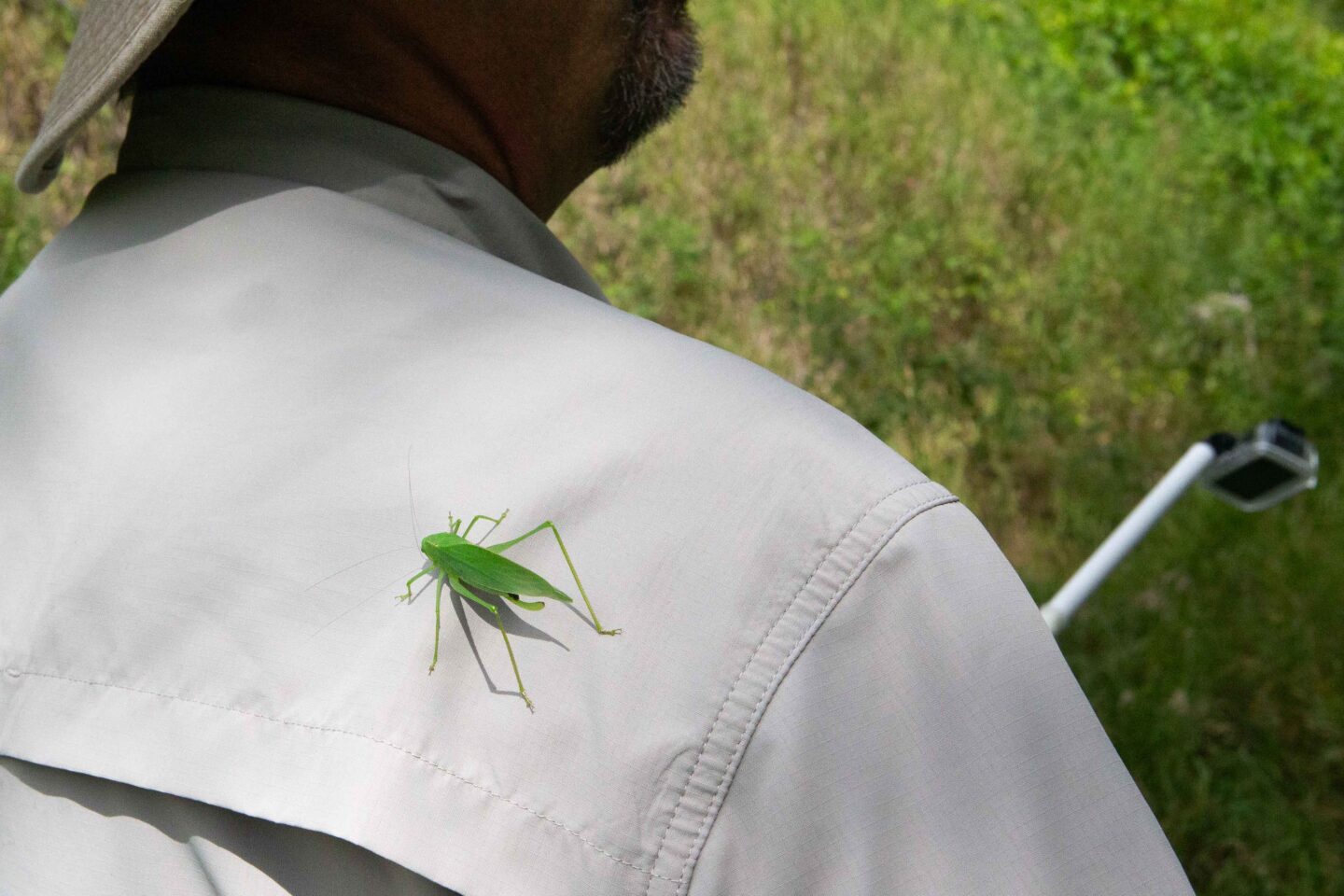
Like their cricket and grasshopper relatives, katydids have powerful hind legs designed for jumping. When startled, they can launch themselves surprisingly far in an instant. These insects can jump 10-20 times their body length, and some species rely more on climbing and short hops while others are capable of longer, more powerful leaps. To understand this comparison, imagine if a 6-foot-tall person could jump 15 times their body length and leap about 90 feet in a single bound.
This ability to jump helps katydids escape predators, but it can also startle unsuspecting humans. Anyone who has reached into a shrub and experienced a large green insect suddenly leaping out knows exactly how dramatic a katydid exit can be. Fortunately, katydids are harmless. They don’t sting, and they’re far more interested in avoiding you than interacting with you.
A Brief Life Aboveground
The katydids we hear singing each summer have spent months developing from eggs laid the previous year. These eggs overwinter in soil, plant stems or other protected locations and hatch when temperatures warm in spring. After hatching, young katydids, called nymphs, resemble miniature adults but lack fully developed wings. As they grow, they shed their exoskeleton through a series of molts, becoming larger and more developed with each stage.
By mid- to late-summer, most katydids have reached adulthood. Once mature, they focus on feeding, finding mates and producing the next generation. Males create the familiar nighttime songs by rubbing their wings together to attract females. After mating, females lay eggs that will remain dormant through winter. By the time Nebraska’s first hard frosts arrive, most adult katydids have completed their life cycle, leaving behind eggs that will hatch the following spring
Listening to Nebraska After Dark
One of the best ways to appreciate katydids is simply to spend time outside on a summer night. Sit on a porch, take an evening walk through a park, or stand quietly along the edge of a prairie preserve.
At first, you may hear only a wall of insect noise. But listen closely, and individual sounds will emerge. A cricket chirps nearby. A cicada buzzes in the distance. Somewhere overhead, hidden among the leaves, a katydid adds its distinctive voice to the chorus.
And among the most talented performers in this nightly concert are the katydids — masters of camouflage, musicians of the treetops, and some of Nebraska’s most overlooked wild neighbors.