
By Greg Wagner
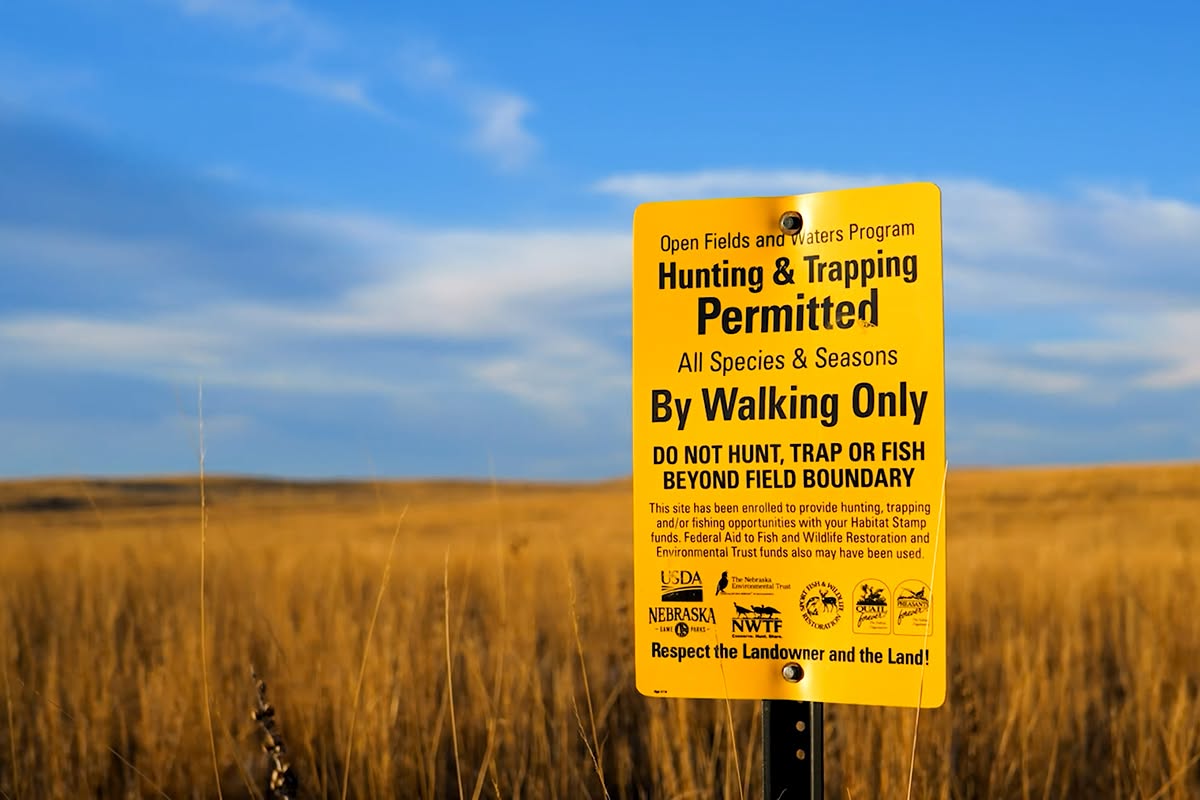
Nebraska offers hunters a challenge: more than 97% of the state’s land is privately owned. Yet hunters can still find opportunities across state wildlife management areas, federal properties, conservation partner lands, along with private properties enrolled in the Open Fields and Waters Program and the Stubble Access Program. Hunters may also want to check out the Managed Access Program, a reservation-based hunting system designed to provide controlled access to hunting lands while promoting wildlife conservation.
The Nebraska Game and Parks Commission has consolidated these opportunities in its Public Access Atlas, which identifies over 1.3 million acres of publicly accessible land in the state’s 2026-27 edition. Access rules vary by property, so hunters should check the current atlas and posted signs before heading out. Please know some Open Fields and Waters site contracts, fencing and landscapes remain affected by the wildfires earlier this year in the west.
Finding success requires more than locating a piece of public land. Hunters need to identify suitable habitat, plan a legal and low-disturbance approach, understand how hunting pressure affects their target species, and adapt to changing field conditions.
The effort can pay off in rewarding hunts and lasting memories.
Eight Ways to Prepare for a Successful Hunt
- Use technology: Before hiking a single acre, use mapping tools like onX Hunt, HuntStand or Google Earth to break down the terrain. Using mapping applications can reduce unnecessary walking, help you plan entry and exit routes and identify habitat features before you arrive. Look beyond the public land to check out what the habitat on the surrounding landscape is like. Note natural funnels (pinch-points), harvested row crop fields, livestock grazing pastures and water sources. Focus on transition and edge zones where different habitat types meet on publicly accessible lands and drop a pin on them. Mark any wildlife food plots. Regarding upland game, look for a mix of native grasses, thick shrubs, edge cover, and nearby food sources. If you are hunting deer or turkey, note their travel corridors and bedding/roosting areas. For big game, consider using lockable trail or game cameras to identify and evaluate areas of use by the desired species. Used sparingly, the cameras, especially the virtual and cellular versions, can provide valuable, timely information without much interference. However, there is always the risk of theft. Please know trail or game cameras do not eliminate the need for careful field observation.
- Put forth the extra effort: A quality hunting experience is dependent on extra effort. So initially, avoid convenient hunting locations. Once you select some areas, identify promising habitat first, and then assess hunting pressure and access routes. Investigate overlooked habitat. Go where other hunters will not go or have not gone. Be prepared to hike further into the larger areas. Get far away from roads, parking lots, signs and easily accessible spots or those frequented most often by hunters. Make sure to pack a bag with your essentials for the entire day. Take to the back corners and the odd areas, the out-of-the-way patches of habitat. Watch for areas off the beaten path with appropriate habitat and limited hunting pressure. During the deer breeding period called the rut, consider a longer sit when habitat, wind direction and your hunting strategy support it. Choose a position with safe shooting lanes and adequate visibility and remain alert to the movements of other hunters. Never assume that approaching or moving game will present a safe shot.
- Know the regulations: Public areas have standard and specific regulations. Read the public lands atlas, hunting guides and regulatory signs on the areas for those details. Be able to recognize property boundary signs. Site-specific restrictions, allowed methods of take, access conditions and the need to check for updated information before each trip are all crucially important things to know and do.
- Contact the area manager, biologist or technician: Truly one of the most overlooked resources when it comes to hunting publicly accessible lands in Nebraska are the individuals who spend time on them working on a regular basis: the area manager, biologist or technician. Public land tracts have someone who oversees and manages them. These wildlife professionals possess a wealth of knowledge and information about seasonal conditions, habitat, game species and hunting pressure. They are listed on page three of the Public Access Atlas.
- Have familiarity with game species: Understand the biology and habitat requirements of the animal you are pursuing. Every game species has unique needs for food, water, cover, shelter and space. This will influence its daily movements, seasonal patterns and preferred habitat. Taking the time to study these behaviors helps you recognize sign, identify promising areas and make informed decisions about where to hunt. On public land, where hunting pressure can influence animal movement and behavior, this knowledge becomes even more valuable.
- About scouting: In-person scouting on publicly accessible land bridges the gap between digital maps and actual animal movement. Boots-on-the-ground scouting will help you locate high-value sign and outmaneuver other hunters. Scouting before your hunt is very important at most locations. Don’t over-scout an area, however, or go to one too often before the hunt. Pre-season scouting is not allowed on Open Fields and Waters Program tracts. Some species such as deer do not tolerate much disturbance and will leave an area if slightly disturbed. Cautious scouting during midday hours for big game is strongly suggested. Be sure to avoid known or possible deer bedding areas. This decreases the chances of hampering other hunters around sunrise and sunset. A good set of binoculars is also a must-have for public landing scouting and hunting.
- When to hunt: Skip the packed opening mornings and days around major holidays. Hunt weekdays or during the middle of the day when other hunters leave or head back to camp. Know that midweek hunts may offer less competition at some public areas. Other good times to go hunting on public lands are Sunday mornings when folks are at church services and Saturdays when the Nebraska Cornhusker football team plays on television. These tend to be the lighter traffic periods. Also, mid to late-season hunting on public lands offers much potential, with little competition in the field.
- Hunting safely: Staying safe on publicly accessible hunting lands demands high visibility, respect for shared space and strict firearms/shooting discipline. Always wear a blaze orange hat and vest when firearm deer hunting or turkey hunting during the firearm deer hunting season, as required by law. It is also a good idea to wear blaze orange clothing while upland game hunting or going to and from your hunting spots for archery deer or turkey. Use your voice, switch a flashlight, headlamp, or cap lights to a bright setting if you encounter or pass other people in low light or dense cover. Give other hunters plenty of space, be kind and double-check your target and background before shooting. Nebraska Game and Parks also advises hunters to control their firearm’s muzzle, keep their finger off the trigger until ready to shoot, know where hunting partners are at all times, and never shoot at movement or sound through thick brush.
Research more about hunting public lands in Nebraska at OutdoorNebraska.gov.
Kyle Smith is a Fish and Wildlife Biologist/Habitat Manager for the Nebraska Game and Parks Commission. He is based at the Osage Wildlife Management Area near Tecumseh, NE.