
By Monica Macoubrie, Wildlife Education Specialist
Take a walk in the fall, and you’ll probably experience the crunch, crunch, crunch of fallen acorns underneath your feet. And if you’re lucky (or unlucky), a squirrel might even throw one at you. Acorns are scattered everywhere this time of year.
Oaks are especially common in eastern Nebraska, along rivers and streams. Of the 90 oak species found in North America, seven of them are found in our state. Every species produces acorns.
To us, these little brown nuts cover sidewalks, make a racket when we walk on them and can leave our yards looking a bit messy. But for Nebraska wildlife, acorns are a big deal. They’re an important source of food in the fall, and when oak trees start dropping them, wildlife knows exactly where to look.
A Closer Look at Acorns
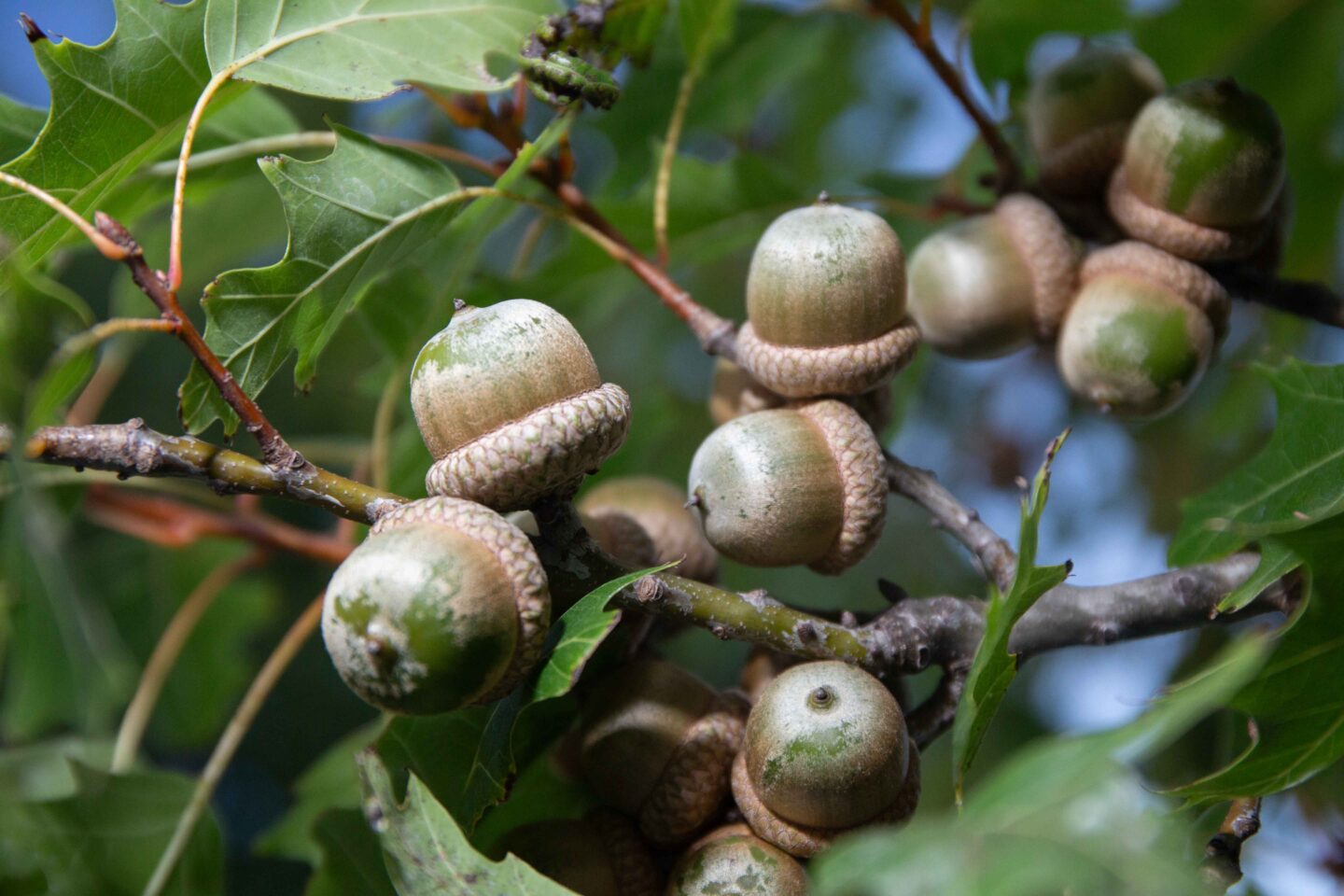
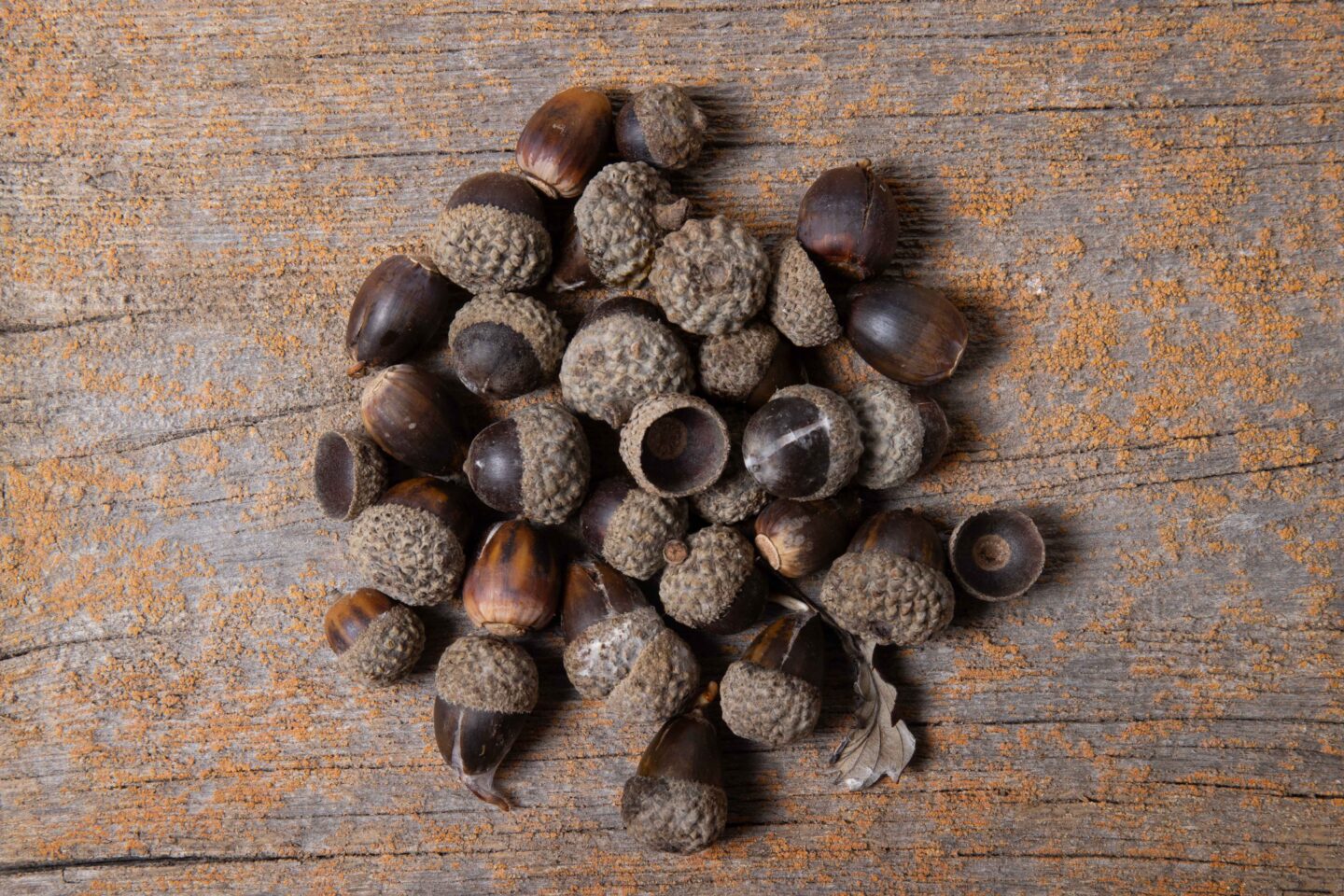
Acorns come in all sorts of shapes and sizes, depending on the oak species. Some are long and narrow, while others are short and chunky. Their caps can look completely different, too. That little “hat” on top of an acorn is called a cupule, but most people just call it a cap. It’s the structure that held the developing acorn on the tree. Once the acorn matures and falls, the cap may stay attached, depending on the species.
One of Nebraska’s most familiar native oaks is the bur oak. These trees are tough, handling just about anything the Great Plains can throw their way, from unbearable dry summers to freezing winters. Bur oaks can even grow in places where other trees might struggle to survive. This species produces some of the largest acorns of Nebraska’s native oaks, and they’re hard to miss. Their caps have shaggy, fringed edges that make them look like they’re wearing tiny, fuzzy hats.
Oaks are Acorn Factories
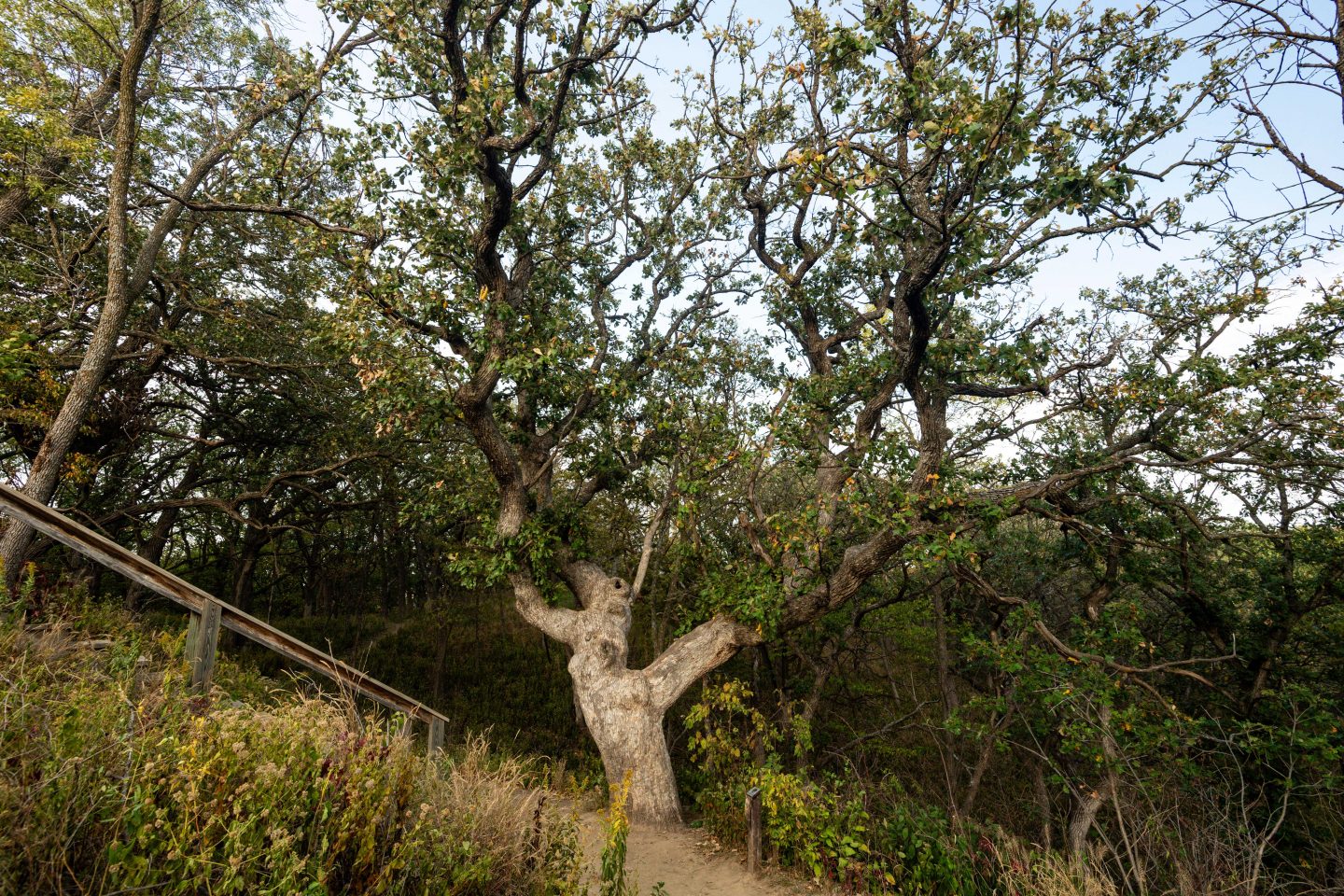
Not every fall looks the same beneath an oak tree. Some years, the ground is practically covered in acorns. Other years, you might be lucky to find a handful. That’s because oak trees have what scientists call “mast years,” when they produce an unusually large crop of acorns. These big years typically happen every two to five years, with much smaller crops in between. A single large oak can drop around 10,000 acorns during a mast year.
So, what makes an oak tree suddenly “go nuts”? That’s something scientists are still trying to figure out. Weather plays a role in how well acorns develop. A cool, wet spring can affect pollination, while a hot, dry summer can influence how many acorns mature. But weather alone doesn’t explain why some years produce an enormous crop while others barely produce any. Scientists have also explored chemical signals between trees and the timing of pollen release, but there’s still plenty we don’t know about what triggers a mast year.
As strange as these boom-and-bust cycles might seem, they actually give oak trees an advantage. It’s a strategy called predator satiation. Squirrels, deer, turkeys, blue jays and plenty of other animals love acorns, but even they can only eat so many. When an oak produces thousands of acorns at once, there’s a good chance some will escape hungry mouths and have an opportunity to grow into new trees.
The smaller acorn crops between mast years also help. With less food available, wildlife populations may stay lower, meaning fewer hungry animals are around when the next big crop comes along. It’s a bit of a numbers game that gives oak trees a better chance of getting at least some of their seeds to survive.
The effects of these big acorn crops reach beyond the oak trees themselves. A bumper crop provides plenty of food for wildlife and may help boost populations of animals such as deer and mice. More deer and mice can also mean more ticks, potentially increasing the risk of tick-borne diseases, including Lyme disease.
Of course, producing thousands of acorns takes a lot of energy. During a mast year, an oak tree may put so much effort into producing acorns that its own growth slows down. It’s an interesting trade-off: less energy spent growing that year in exchange for a better chance of producing the next generation of oak trees.
Essential for Wildlife
For many animals, fall is all about eating as much as possible before winter arrives. Acorns are packed with fats, carbohydrates and other nutrients, making them a valuable source of energy.
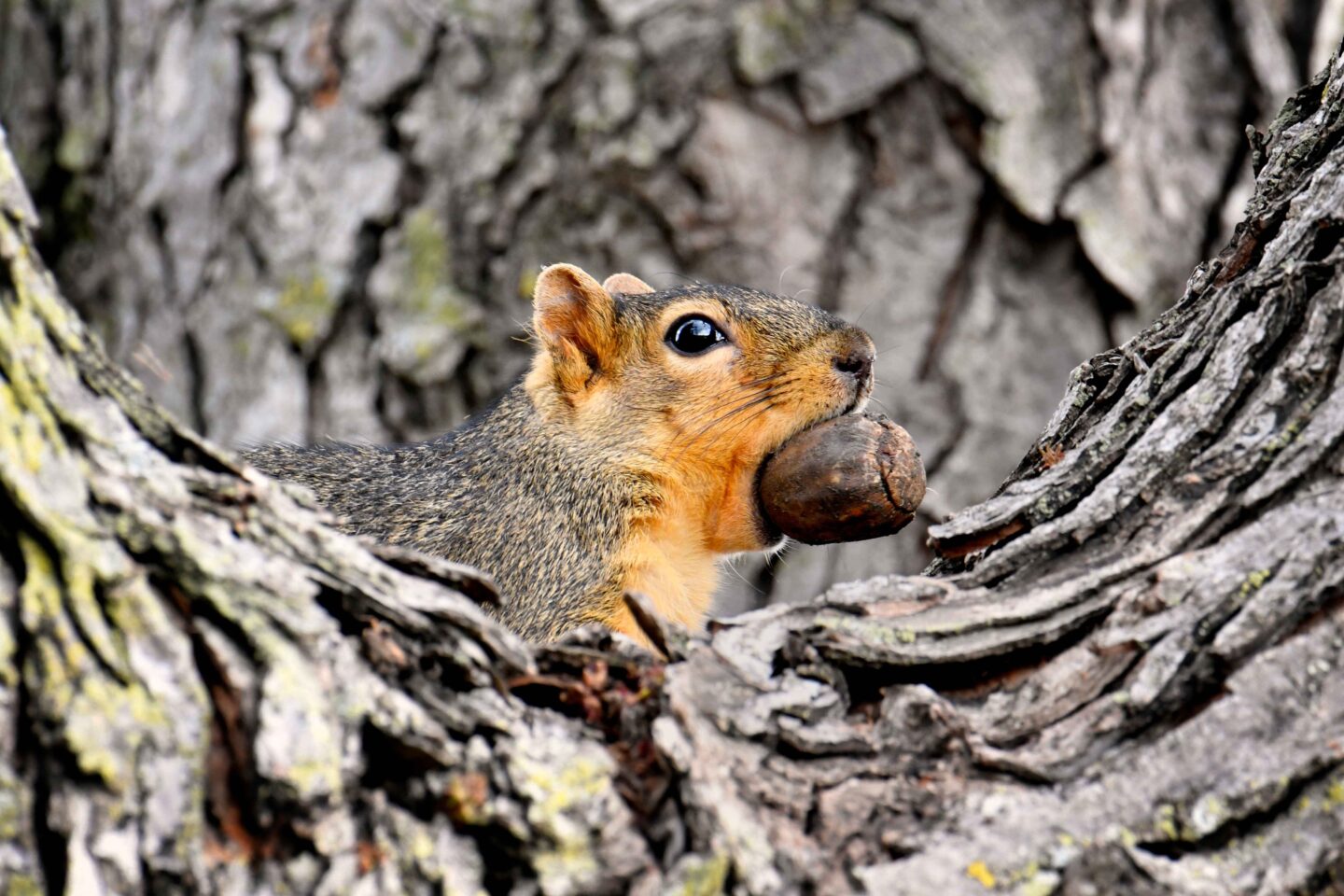
Squirrels are probably the first animals that come to mind, and they certainly make good use of acorns. Fox squirrels are common throughout Nebraska and spend plenty of time gathering nuts and other foods in the fall. But they’re far from the only ones enjoying the acorn buffet. White-tailed deer, wild turkeys, blue jays, woodpeckers, mice and plenty of other wildlife take advantage of acorns when they’re available.
Some animals eat acorns as soon as they find them, while others have a different plan. Squirrels, for example, often bury acorns to save for later. They don’t always remember where they put them, though. Those forgotten acorns may eventually sprout and grow into new oak trees. So, while wildlife depends on oak trees for food, some animals also help oak trees spread their seeds. It’s not a bad deal for either side!
Human Use of Acorns
People, too, have been eating acorns for thousands of years. Indigenous peoples, including the Omaha and Ponca, have traditionally used bur oak acorns as a food source.
But before you pick one up and take a bite, there’s something you should know. Acorns contain naturally occurring compounds called tannins, which give them their bitter taste. In large amounts, tannins can cause digestive problems, so raw acorns aren’t something you want to snack on. Oak trees produce tannins as a defense against insects, fungi and other organisms that might damage their seeds. Different oak species have different amounts of tannins.
There are two major groups of oak trees: white oaks and red oaks. Knowing the difference can make identifying acorns easier, especially if you plan to eat them. White oak acorns tend to have less tannins, thus making them taste milder and nuttier, while red oak acorns generally contain more tannins, causing them to taste more bitter.
White oak acorns mature in just one growing season. That means the acorn you find beneath a white oak in the fall started developing earlier that same year. Their caps are often shallow, with bumpy or warty scales, and the inside of the cap is smooth. The acorns tend to be oblong and generally have a sweeter, less bitter taste because they contain fewer tannins. Bur oak, chinkapin oak, dwarf chinkapin oak and white oaks, are all members of this group.
Red oak acorns take a little longer to mature. Instead of one growing season, they need two. That means a red oak can have both tiny, immature acorns from this year and fully mature acorns from last year on its branches at the same time.
The acorn caps of red oaks are often shallow and saucer-shaped, with tightly packed, flatter scales. Unlike white oak acorns, the inside of a red oak acorn’s cap is fuzzy. The nuts are often rounder and tend to have a more bitter taste because of their higher tannin content. Northern red oak, black oak and blackjack oaks are all found in this group.
Leaching
So how did people make acorns edible? The process is called leaching, which uses water to remove much of the bitterness.
There are two common ways to do this:
- Cold-water leaching: Shelled, crushed or ground acorns are soaked in cold water. The water is changed several times a day over several days or even weeks until much of the bitterness is gone. This method helps preserve the starches in the acorns, making it a good option for anyone planning to turn them into flour.
- Hot-water leaching: Shelled and chopped acorns are boiled in several changes of fresh water until much of the bitterness is removed. This method is much faster, but the heat cooks the starches, which can change how the acorns work in baking.
Once properly prepared, acorns can be ground into flour and used in a variety of foods.
A Little Nut with a Big Job
It’s easy to overlook acorns. They’re small, brown and, by the time fall is in full swing, there can be so many of them on the ground that you barely notice them anymore. But spend a few minutes beneath an oak tree, and you’ll start to see things a little differently. A squirrel scurries off with an acorn. A blue jay flies away with another. A deer searches through the leaves for an easy meal. And somewhere nearby, an acorn has been buried and forgotten.
That forgotten acorn might never grow into anything. But if the conditions are right, it could eventually become another oak tree, providing food and shelter for wildlife for years to come.
So, the next time you’re walking through Nebraska in the fall and hear that familiar crunch, crunch, crunch beneath your feet, look down. Those little brown nuts are doing a lot more than making noise. They’re feeding wildlife, helping oak trees spread and playing a big role in Nebraska’s fall landscape.