Daryl Bauer, Fisheries Outreach Program Manager
Our Aquatic Habitat Program is unique in the country. Over the years we have tried a lot of things and learned some lessons. Ultimately, we want to maintain and enhance Nebraska fishing by improving water quality and aquatic habitat. The goal is not just to make it easier to catch fish, but to actually improve productivity.
Have always said that one of the best habitats you can have for fish is aquatic vegetation. There is hardly a species of fish that does not benefit in some way from some type of aquatic vegetation. At the very least, aquatic vegetation can help prevent shoreline erosion and siltation. That results in better water quality, and clear waters are productive waters.
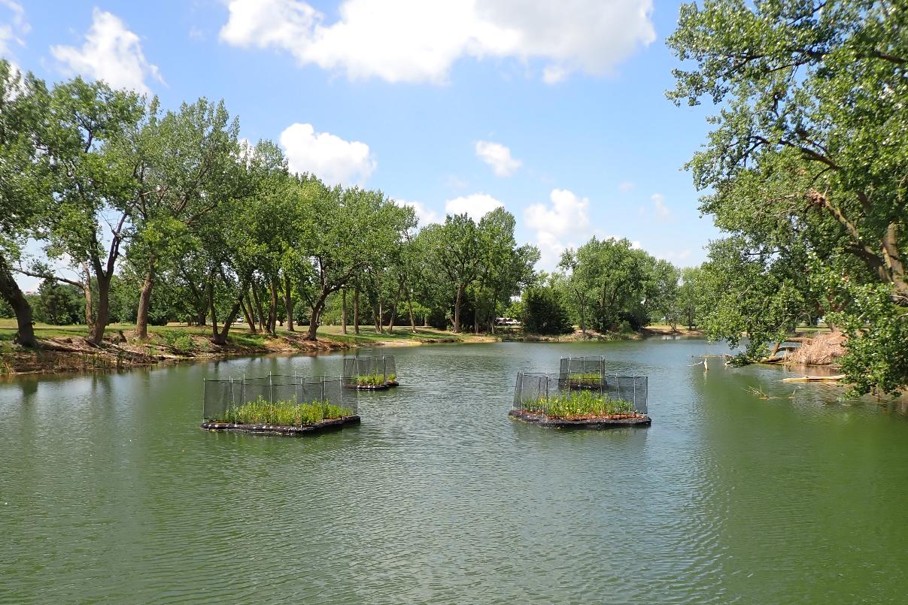
Recently, our Aquatic Habitat Program is trying some different aquatic vegetation features. These are floating mats with a variety of rooted aquatic vegetation planted on them. If I may, I called them the title of this blog post–“vegemats”.
We have been doing a number of aquatic habitat and access improvements on the pits at Windmill SRA recently, (Windmill Aquatic Habitat Project). Part of that project has included the installation of vegemats. Those have been placed on pit #6, the “back” pit at Windmill.
The mats have been anchored over deep water. They have fencing around them to prevent muskrats and geese from mowing them down. If they perform has hoped, the plants will flourish, and their roots will grow and expand below the mats. That cover should be attractive to a variety of aquatic insects and other tasty morsels for fish to eat. In addition, they will provide shade and cover.
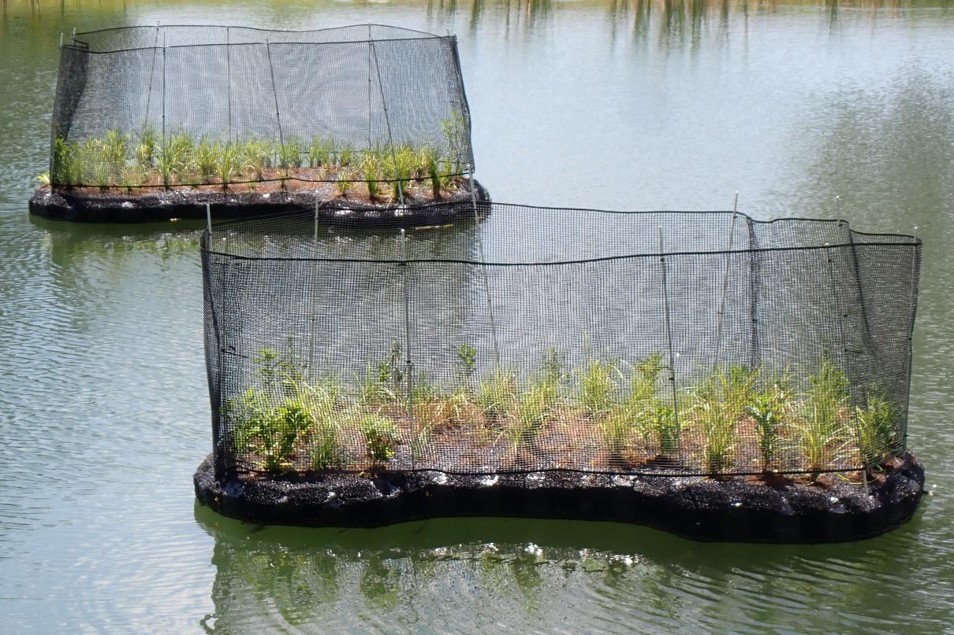
We will be evaluating how well the vegemats work and how durable they are. A big question is how well they will come through a Nebraska winter.
If they work well, we will look for more opportunities to use them. If not, well then we will move on to the next idea.