
By Jenny Nguyen-Wheatley
Photography and Nebraskaland are synonymous. The magazine is known for its intimate portraits of fauna and flora, sweeping landscapes of eastern prairies and western escarpments, waterways and the people who enjoy them. While it’s difficult to imagine a time when photography was not the dominant medium, we would be remiss to forget the vital role that traditional illustrations played during the magazine’s history.
Although Outdoor Nebraska — Nebraskaland Magazine’s precursor — was primarily, and sparsely, illustrated by black-and-white photographs, paintings and syndicated comics and cartoons prior to 1949, it was the “Bud” Pritchard years of the 1950s through 1970s that transformed the magazine into the visual powerhouse it is today. For a while, traditional illustrations accomplished what photography could not.
Better Than Photography
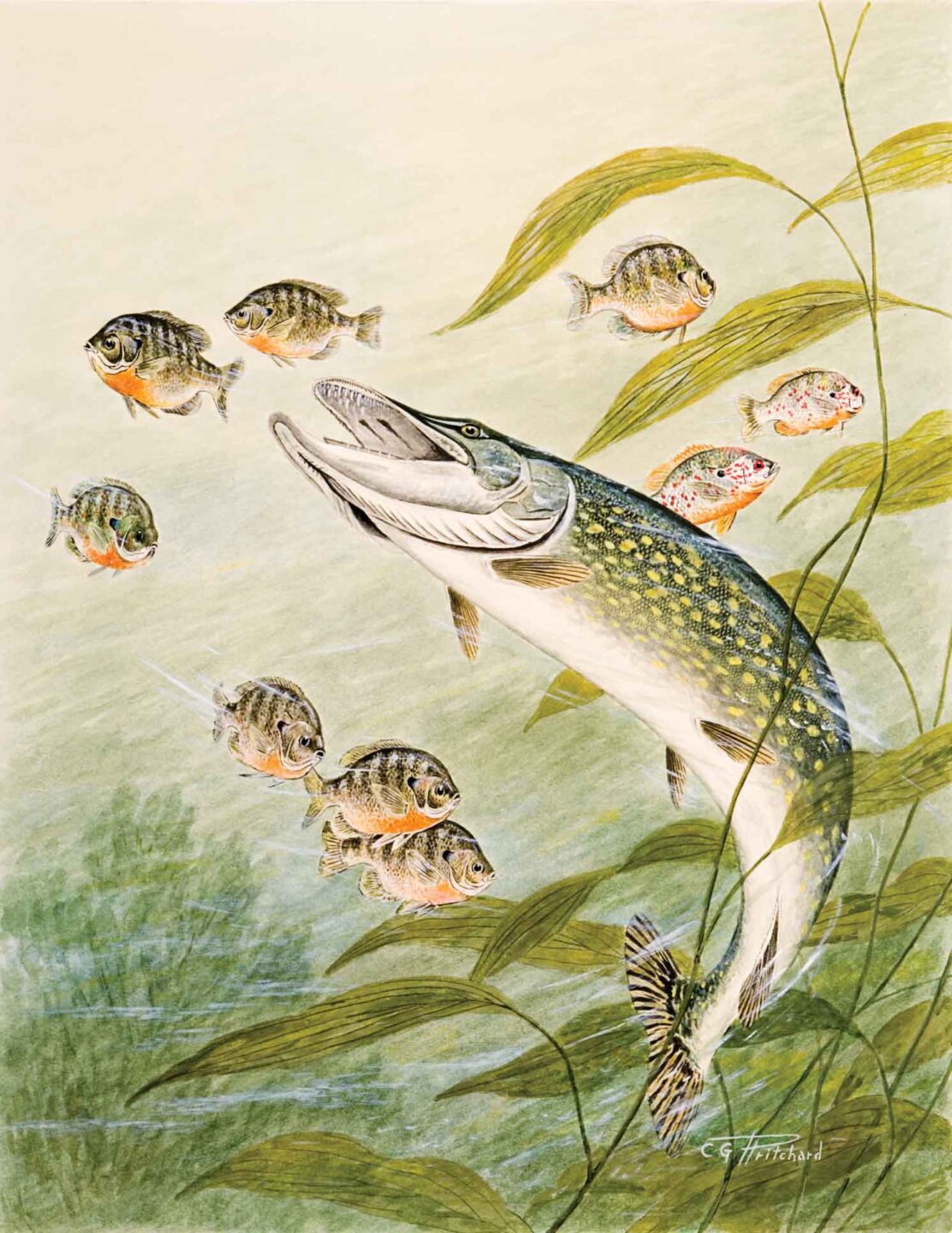
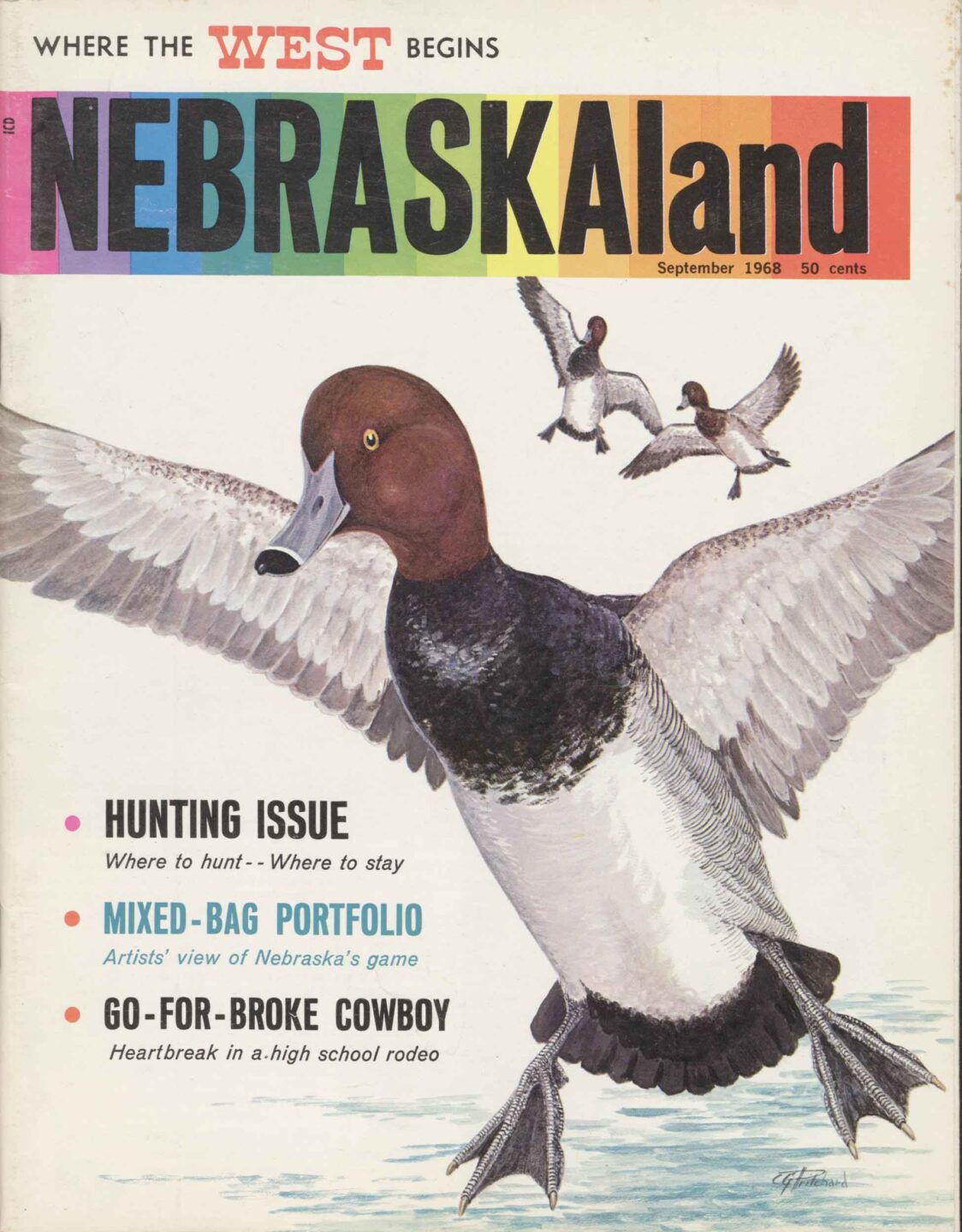
An English springer spaniel flushing a covey of quail, mallards touching down on water, an underwater view of a brown trout tussling with a fisherman above, a white-tailed buck leaping over a fence and seemingly off the page … until the 1960s, these up-close portraits of wildlife would have been difficult or nearly impossible to capture in detail on film. Camera technology had yet to keep up with the demands of Outdoor Nebraska, and it would take a skilled artist to carry the magazine through the next 20 years.
Having grown up on his family’s farm near Kenesaw northwest of Hastings, Claremont Gale “Bud” Pritchard spent countless hours observing migrating birds on the two marshes near his home. Wildlife captivated the young Pritchard so intensely that he began sketching and painting their likeness as a boy — and he didn’t stop, not even for the Second World War that shipped him to places such as India, North Africa, Italy and the Philippines, where he sketched local birdlife and scenery on the backs of military forms and scraps of paper.
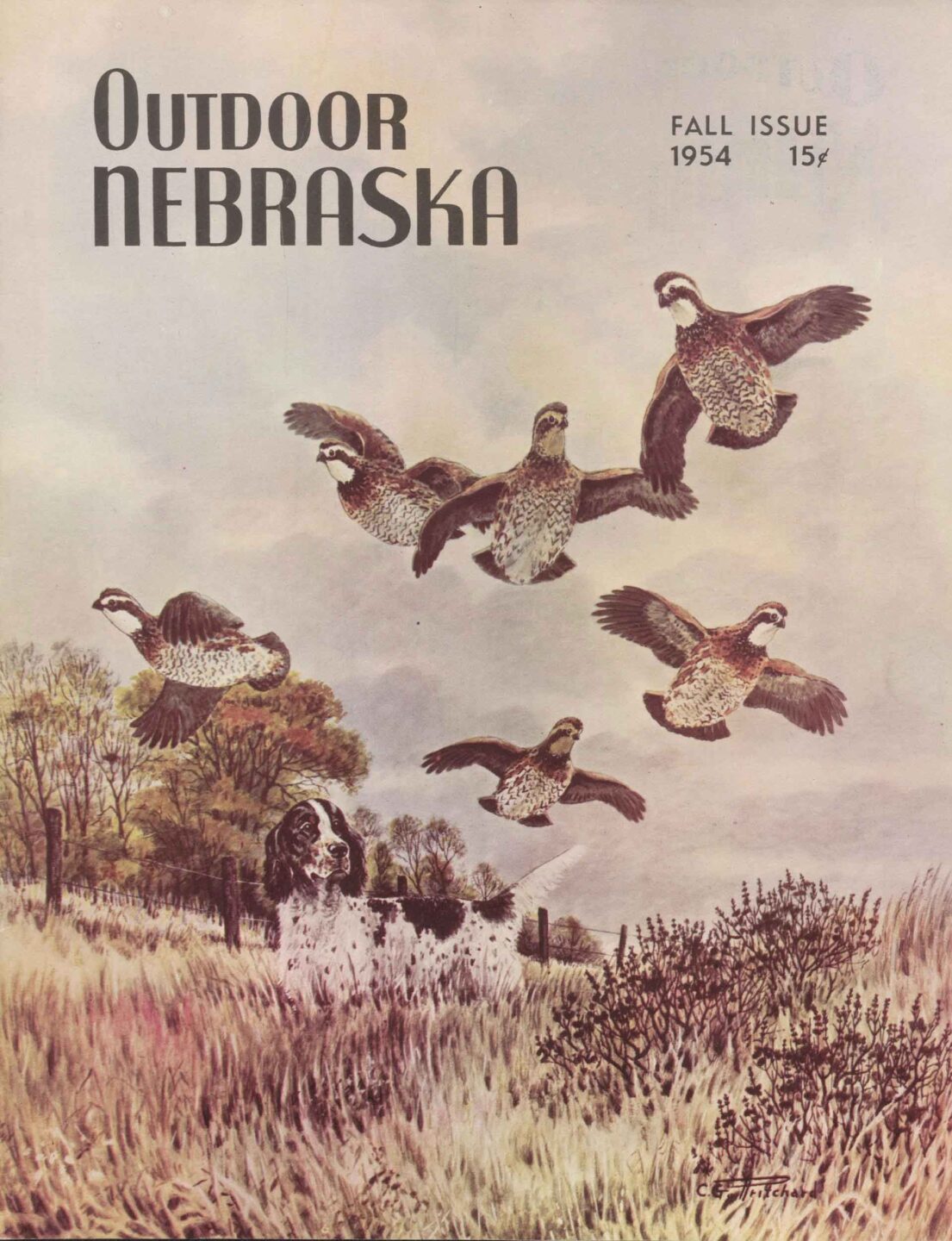
Once home, Pritchard caught his big break to become a professional artist. By chance, he met pheasant and quail biologist David Damon, who shared Pritchard’s wildlife art with the Nebraska Game, Forestation and Parks Commission Director Paul T. Gilbert. As editor of Outdoor Nebraska, Gilbert offered the artist a job, and by the Summer 1950 issue, C.G. Pritchard appeared on the staff page as “Artist” — the magazine’s first full-time illustrator on payroll. For the next two decades, Pritchard’s work would go on to define the look of the magazine, and in many ways, also the agency.
“Considering that high-speed photographs capturing animals in motion were not widely available,” wrote longtime magazine editor Jon Farrar in his March 2006 story “Bud Pritchard — Birder, Artist, Gentle Man,” “Pritchard’s ability to render animals in motion was remarkable testimony to his years of field study and sketching.”
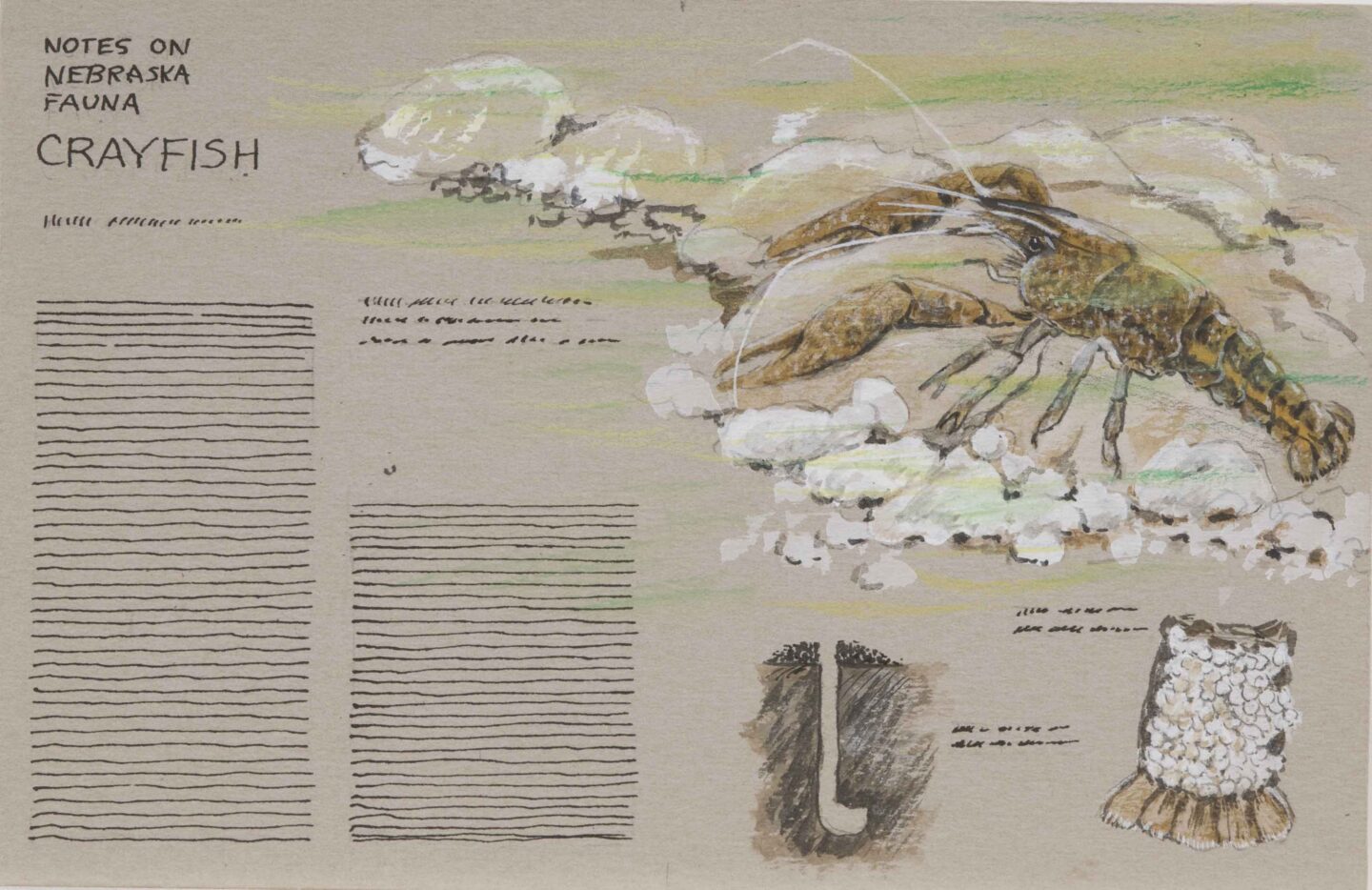
His art appeared on 43 magazine covers from 1950 through 1958 — every cover except two. “Notes on Nebraska’s Fauna,” a profile of a wildlife species, including lesser-known nongame species, premiered in 1950 and ran through 1992, alternating with “Notes on Nebraska’s Flora” from 1971 to 1989 — Pritchard’s artwork illustrated 193 of these features.
Education Through Art
Magazine covers weren’t the only place where traditional illustrations made a lasting impact. Subsequent Nebraskaland illustrators also contributed to the plethora of artwork the magazine and Commission required over the years to inform and appeal to hunters, anglers and other outdoor enthusiasts. Because accurate identification of game, fish and flora species was a priority to the Commission, illustrators were frequently called upon to produce art that could show wildlife characteristics in fine detail.
Jack Curran was — pun intended — a jack-of-all-trades, producing artwork and photography wherever needed during his tenure as art director and contributor during the mid-1960s through mid-1980s. Under Curran, Roger Meisenbach joined for a short period in 1968-1969 to offer his perspective on history and the outdoors.
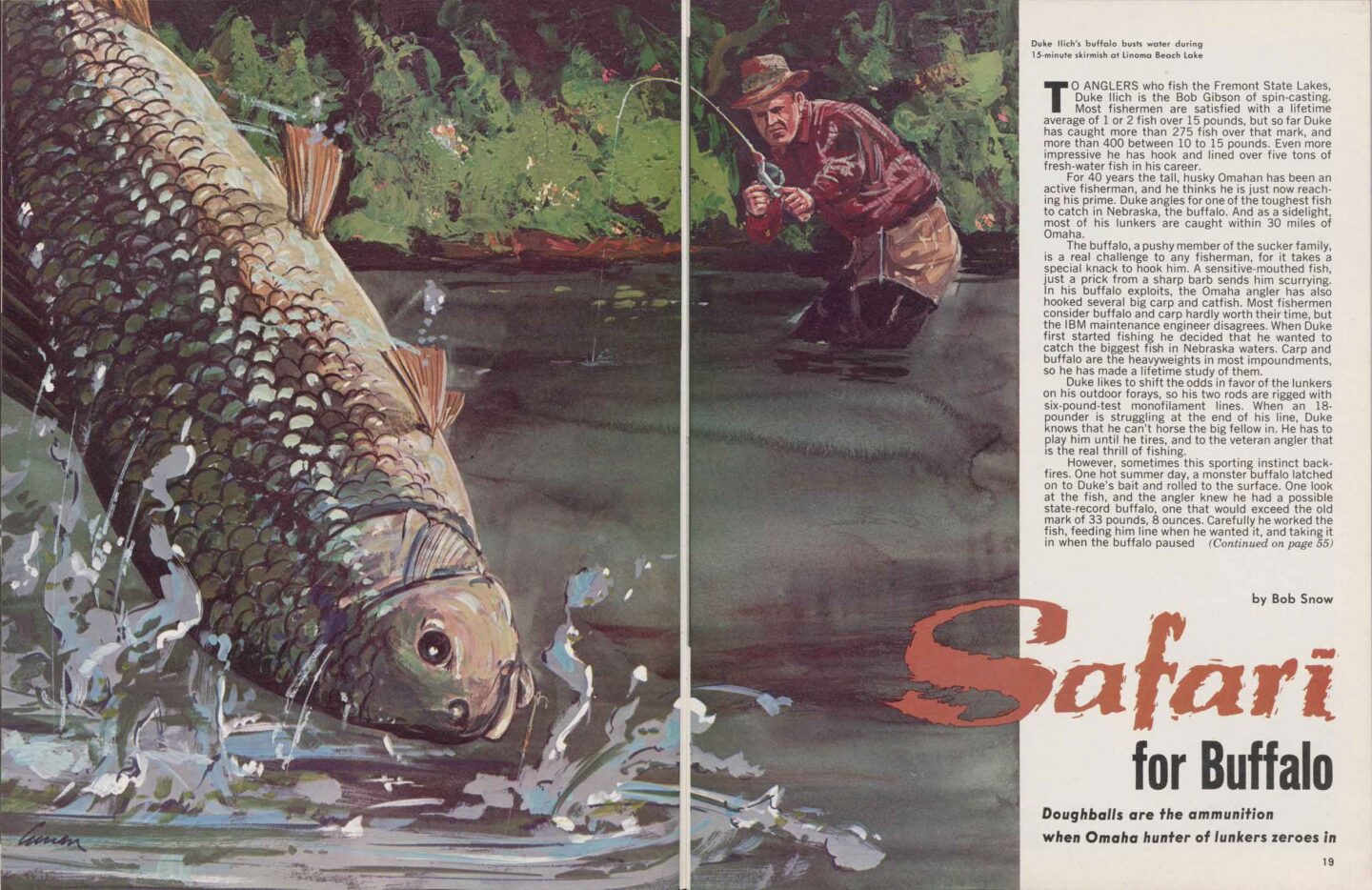
Michele Angle Farrar, whose work began appearing in the late 1960s, was especially skilled in watercolors of native plants, illustrating the “Notes on Nebraska’s Flora” series. She became Nebraskaland’s art director in the early 1970s.
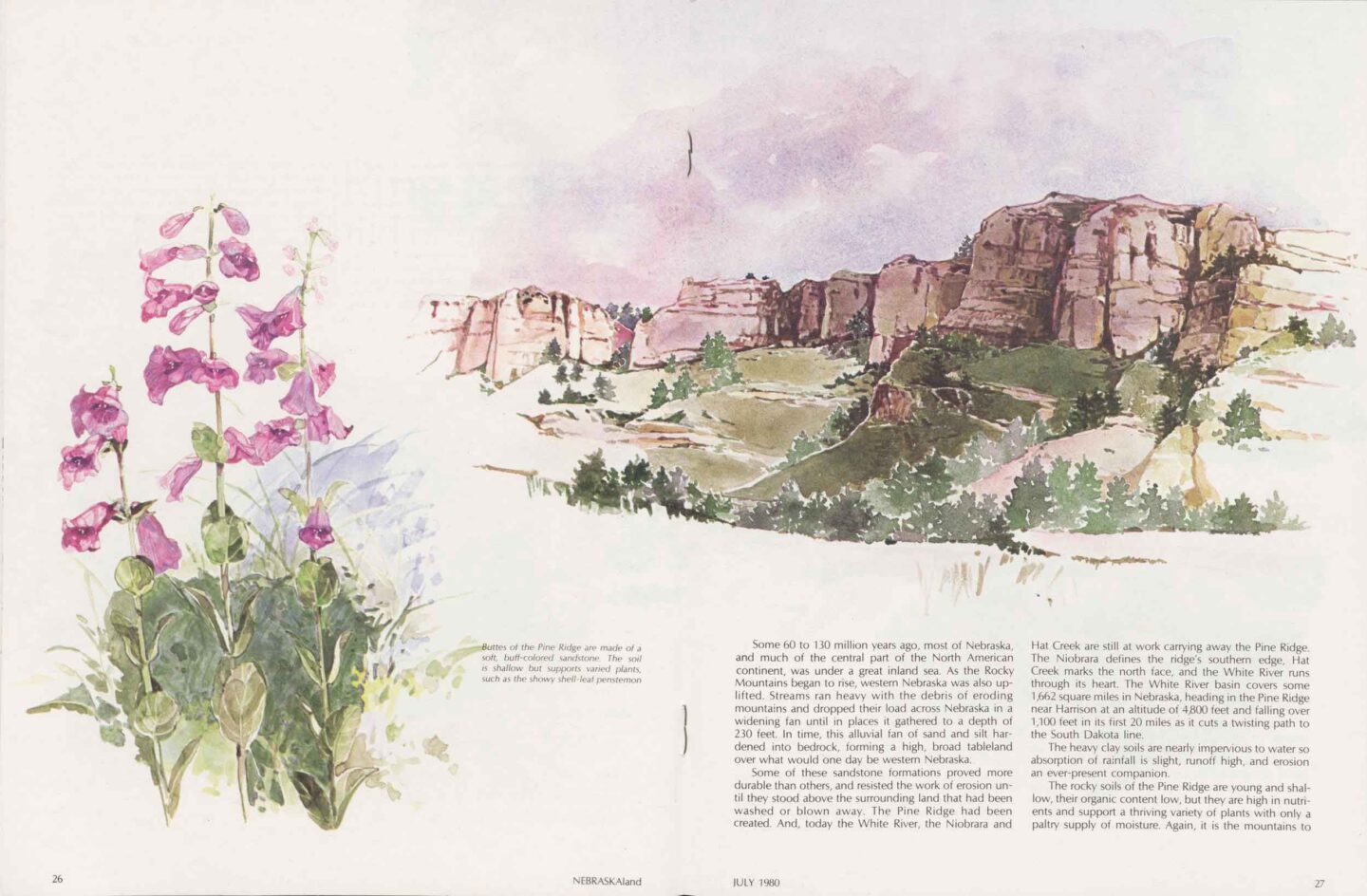
Appearing on the masthead as illustrator beginning in the mid-1970s, Duane Westerholt took over as art director after Angle Farrar’s departure in 1981. He was best known for his detailed line drawings, including comparative anatomy sketches of young versus older turkeys, waterfowl profiles and a portrait of the legendary conservation officer Loron Bunney.
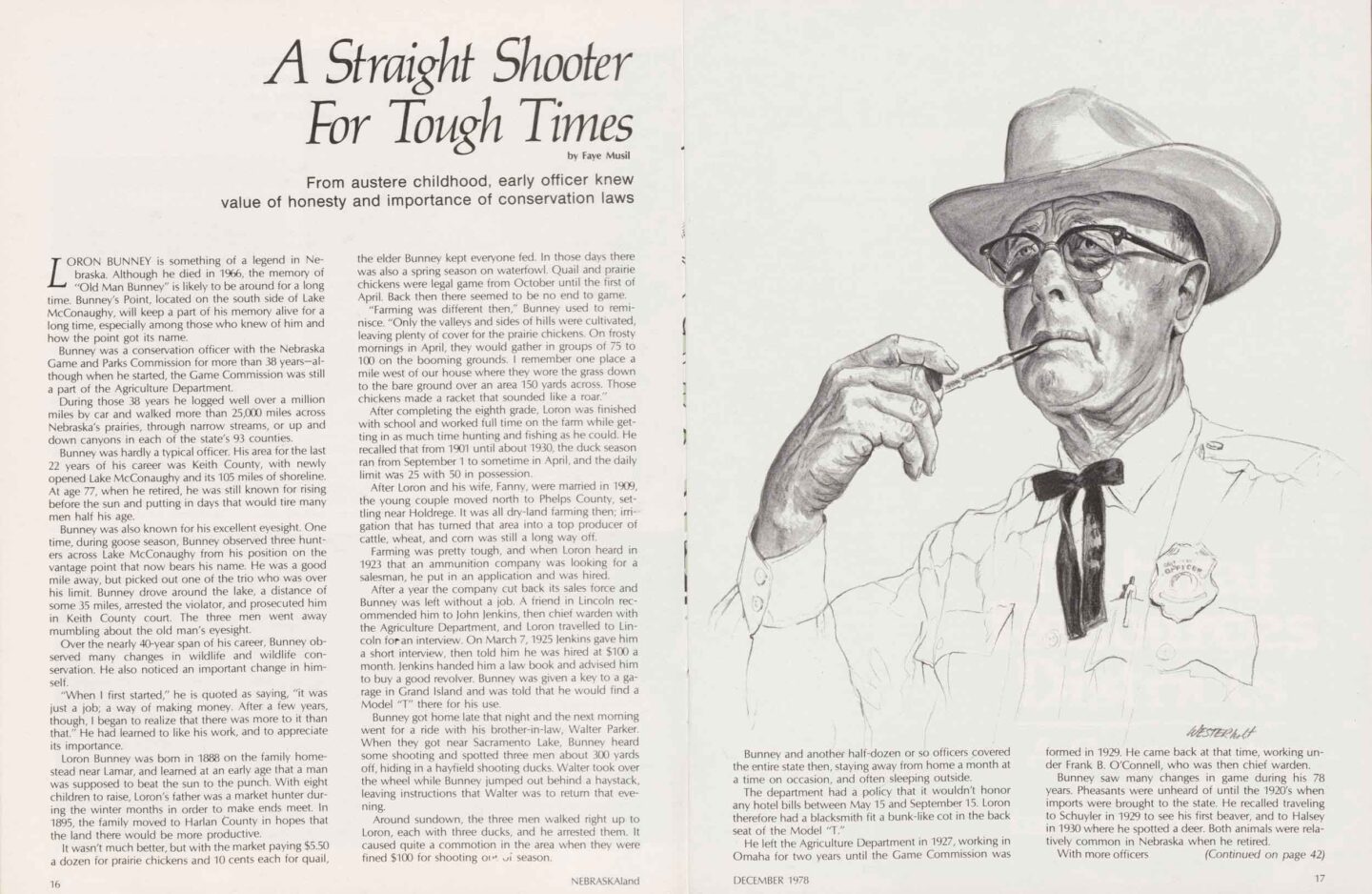
Longtime staffer Steve O’Hare bounced between different mediums, providing photography to the magazine beginning in the mid-1970s and contributing his unique style of woodcut prints in the 1980s.
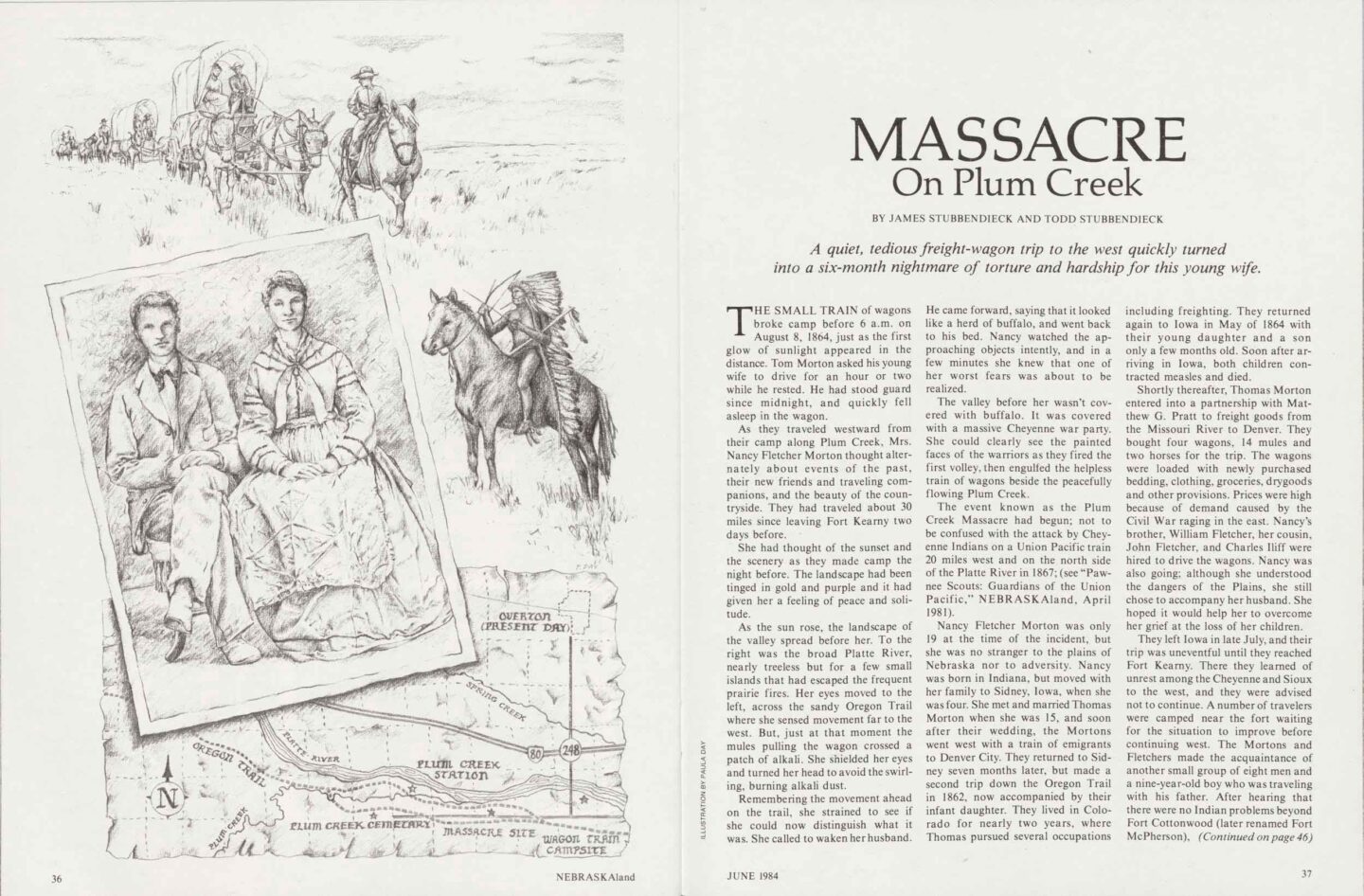
Along with O’Hare, illustrator Paula Day and Dan Curran also provided sketches in the mid-1980s that supported a range of feature stories, including those on hunting, fishing and history. Similarly, Christine Mercer’s pencilwork added life to sportsmen’s tales published between 1981 and 1983; she also illustrated the Nebraskaland Magazine Wild Game Cookbook published in 1999.
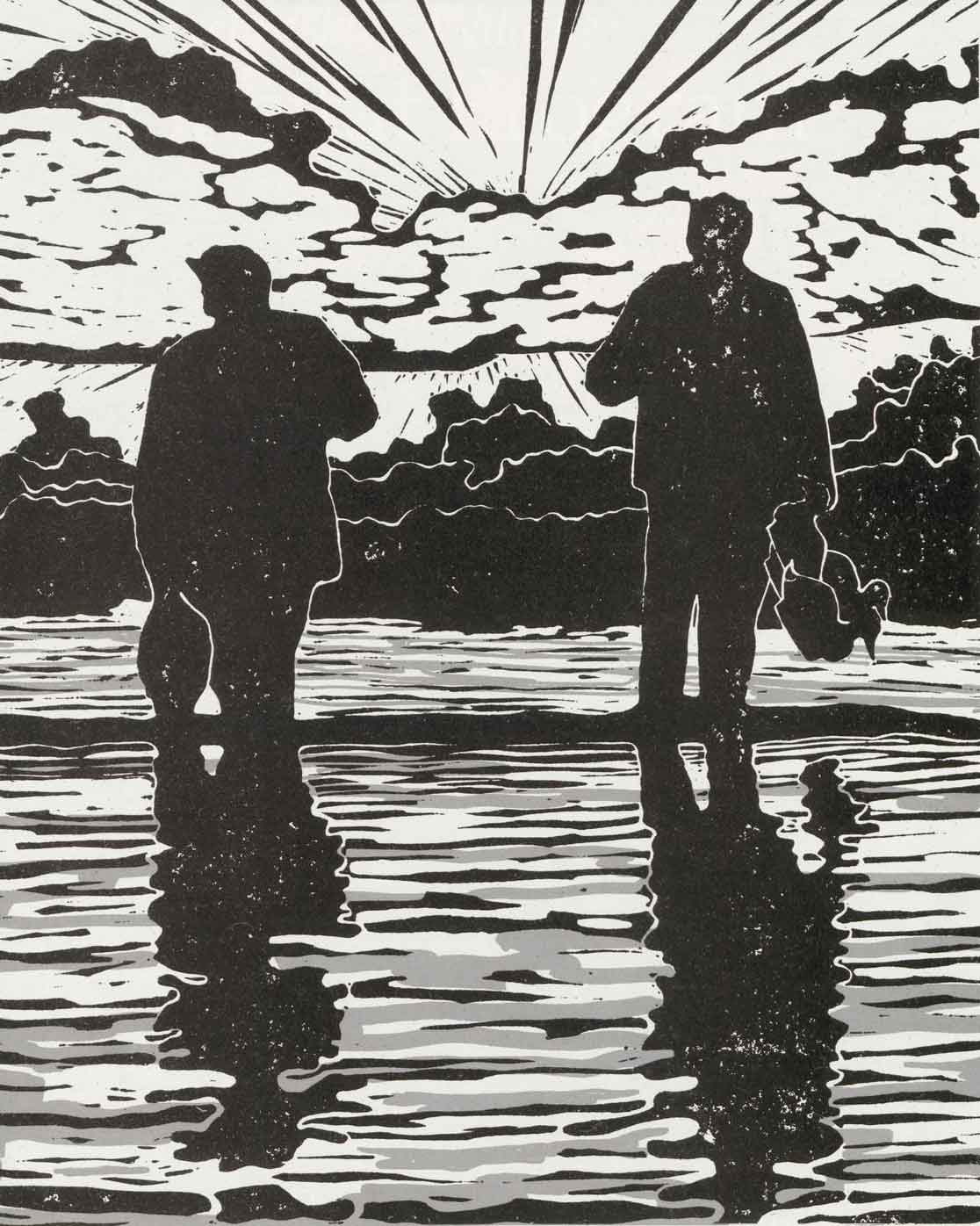
After Pritchard’s death in 1975, Lincoln native Neal Anderson took over the long-running “Notes on Nebraska’s Fauna” series, producing nearly 100 gouache paintings for the department on a freelance basis until 1989.
Tim Reigert, who retired earlier this year, contributed line art and watercolors of flora and fauna, illustrations for how-to stories and comical sketches of people in the outdoors during his 30 years as art director.
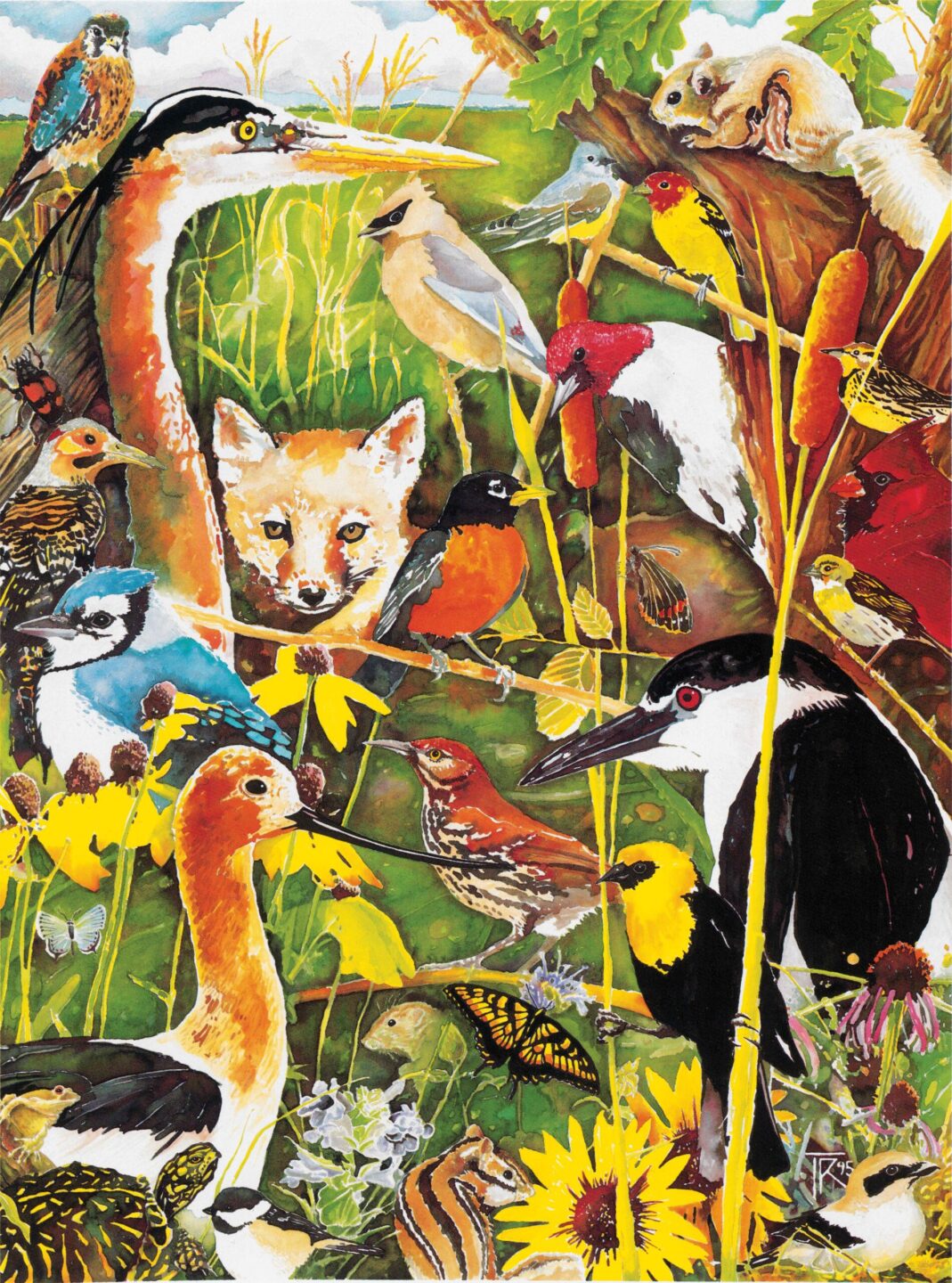
Countless freelance artists also supported the magazine during the last century.
Each of these artists contributed illustrations that helped educate Nebraskans who may have had no other way to learn about the flora, fauna and beautiful places found in their own state, especially before the internet. Even after advancements in photography, traditional artwork continued to fill a niche illustrating how-to articles, complex conservation ideas, humor, sportsmen’s tales and hard-to-photograph wildlife situations.
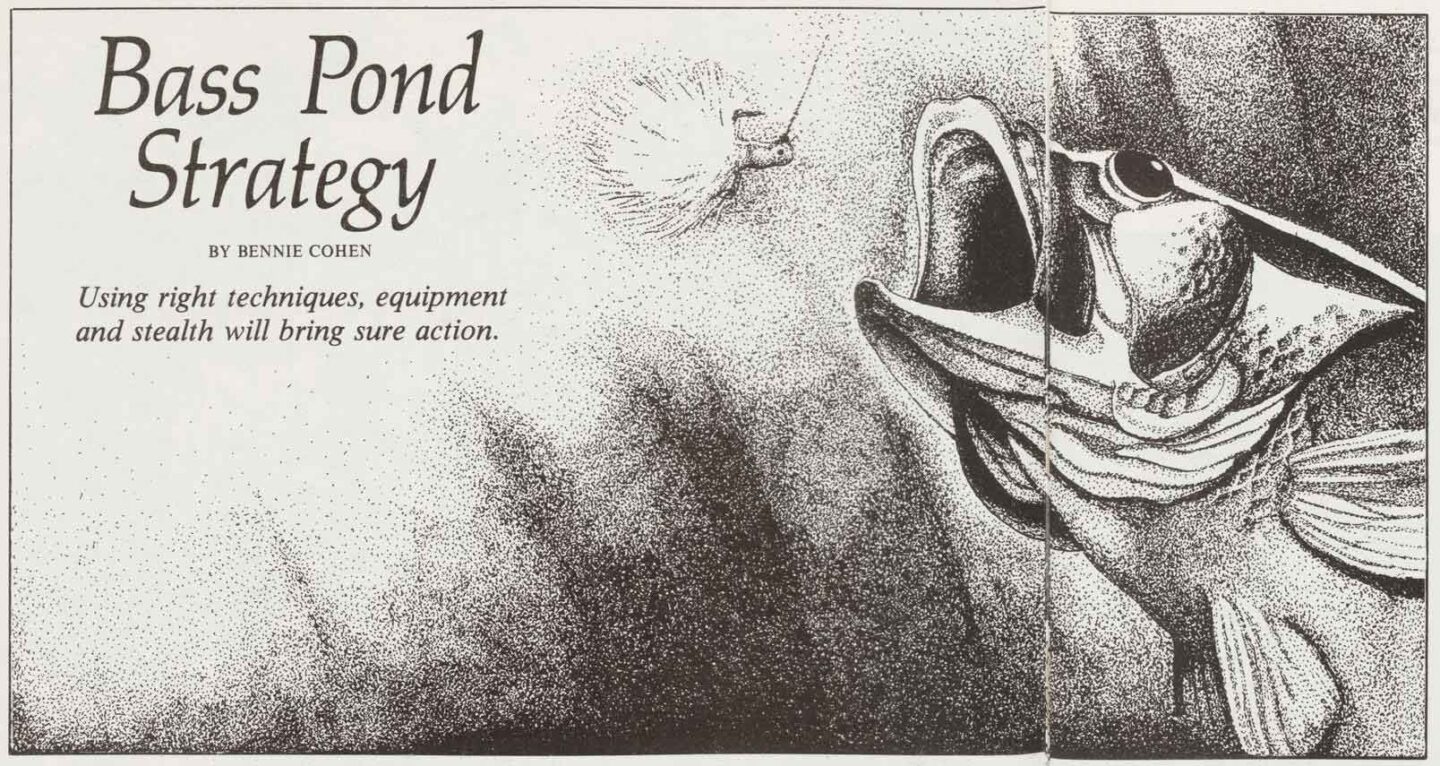
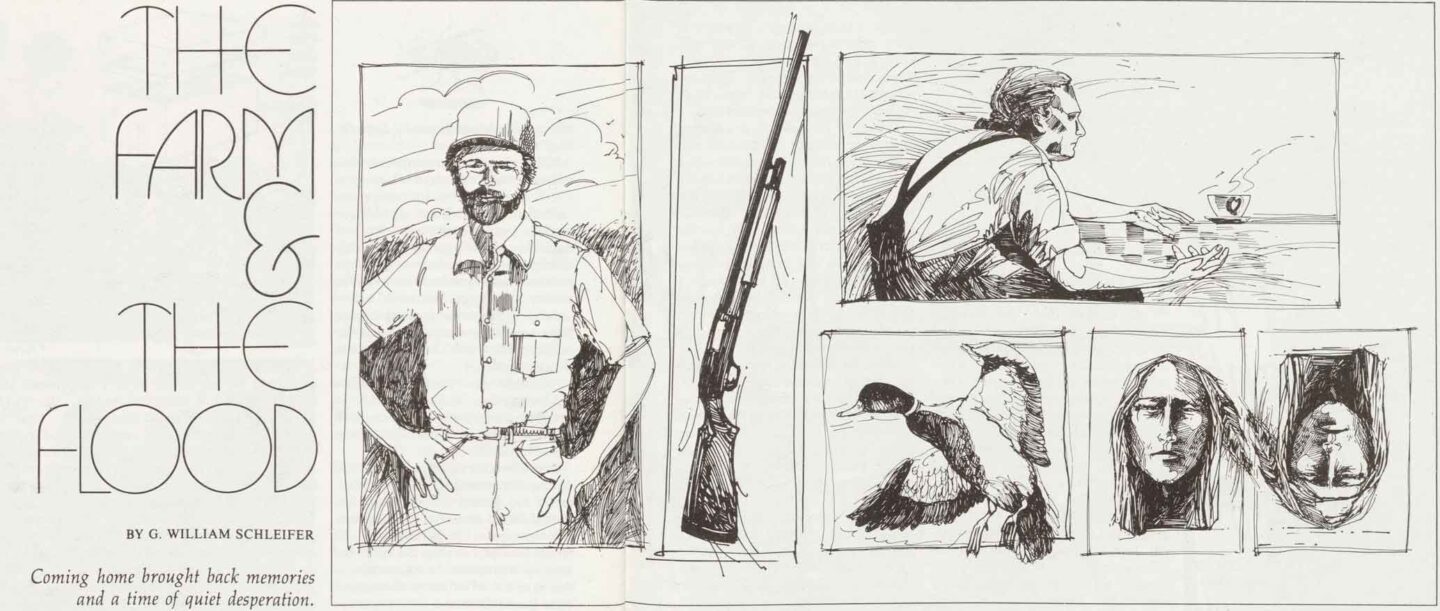
To Imagine History and Place
Although Nebraskaland is best known for its stories on wildlife and outdoor recreation, history, culture and tourism have long been subjects the publication regularly covers. One artist rises above the rest in this regard — Frank Holub, who began contributing to Outdoor Nebraska in the 1960s.
Holub’s most iconic work is arguably “Giganticus” — also known as “The Monster of Walgren Lake” — which appeared on the January 1962 cover: A green, dragon-like creature with red eyes rising out of a rippling Walgren Lake, startling cattle — its favorite food — that had been grazing on the shore and causing a horse to rear on a nearby hill and nearly throw its rider.
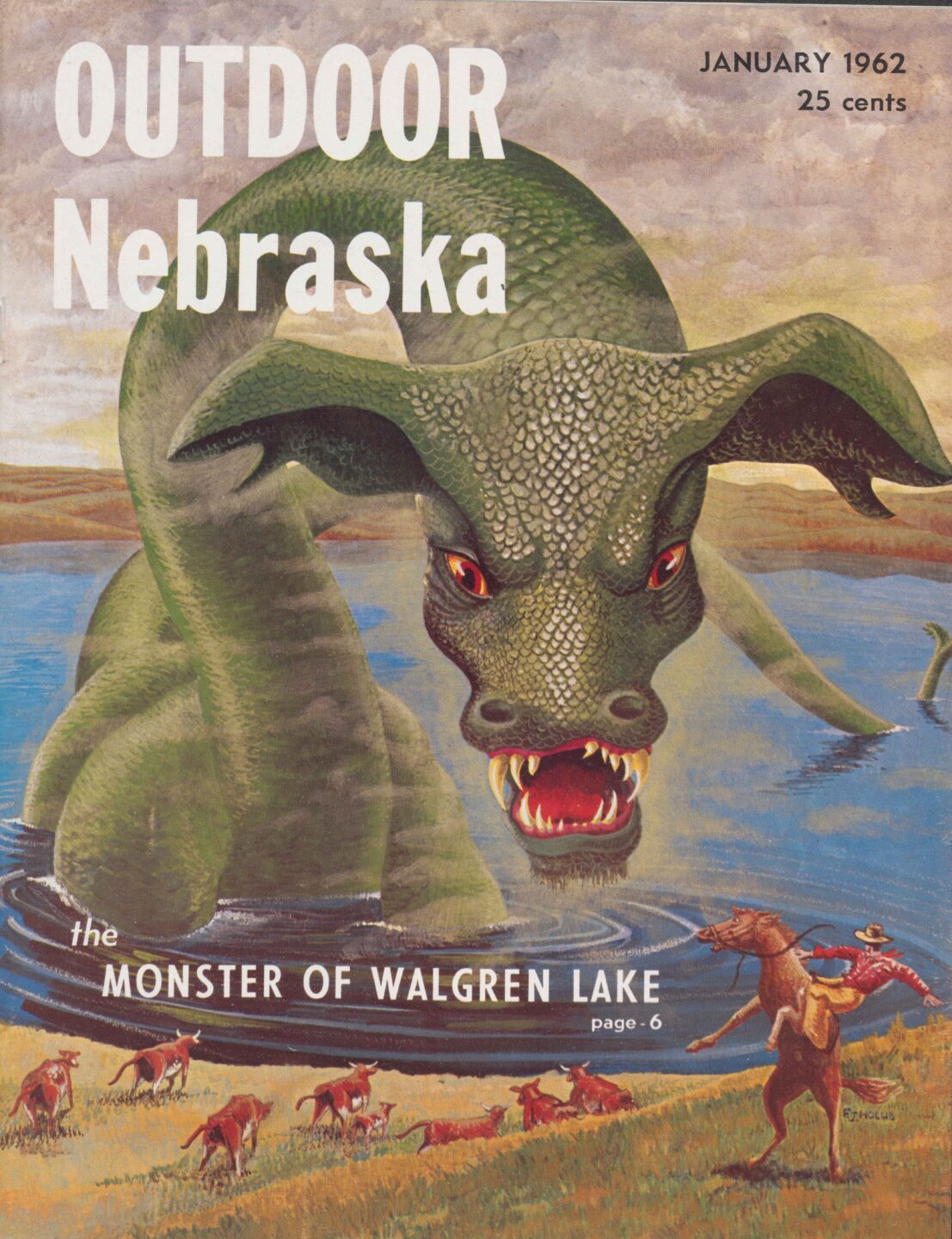
Like the Loch Ness Monster that has attracted droves of curious tourists to the Scottish Highlands, the accompanying tongue-in-cheek feature story cleverly detailed the legend of the Sandhills’ own monster, with official reports dating back to 1921. No doubt, this piece of creative genius captivated readers and succeeded in attracting parkgoers to this state recreation area in northwestern Nebraska — which also offered boating, camping, fishing and picnicking, the story noted.
Humor aside, Holub was also talented in his ability to capture the swashbuckling spirit of the West. For instance, his April 1962 cover is an exciting reimagining of a rare piece of Nebraska history: A flustered Grand Duke Alexis receiving an assist from Buffalo Bill Cody during a bison hunt.
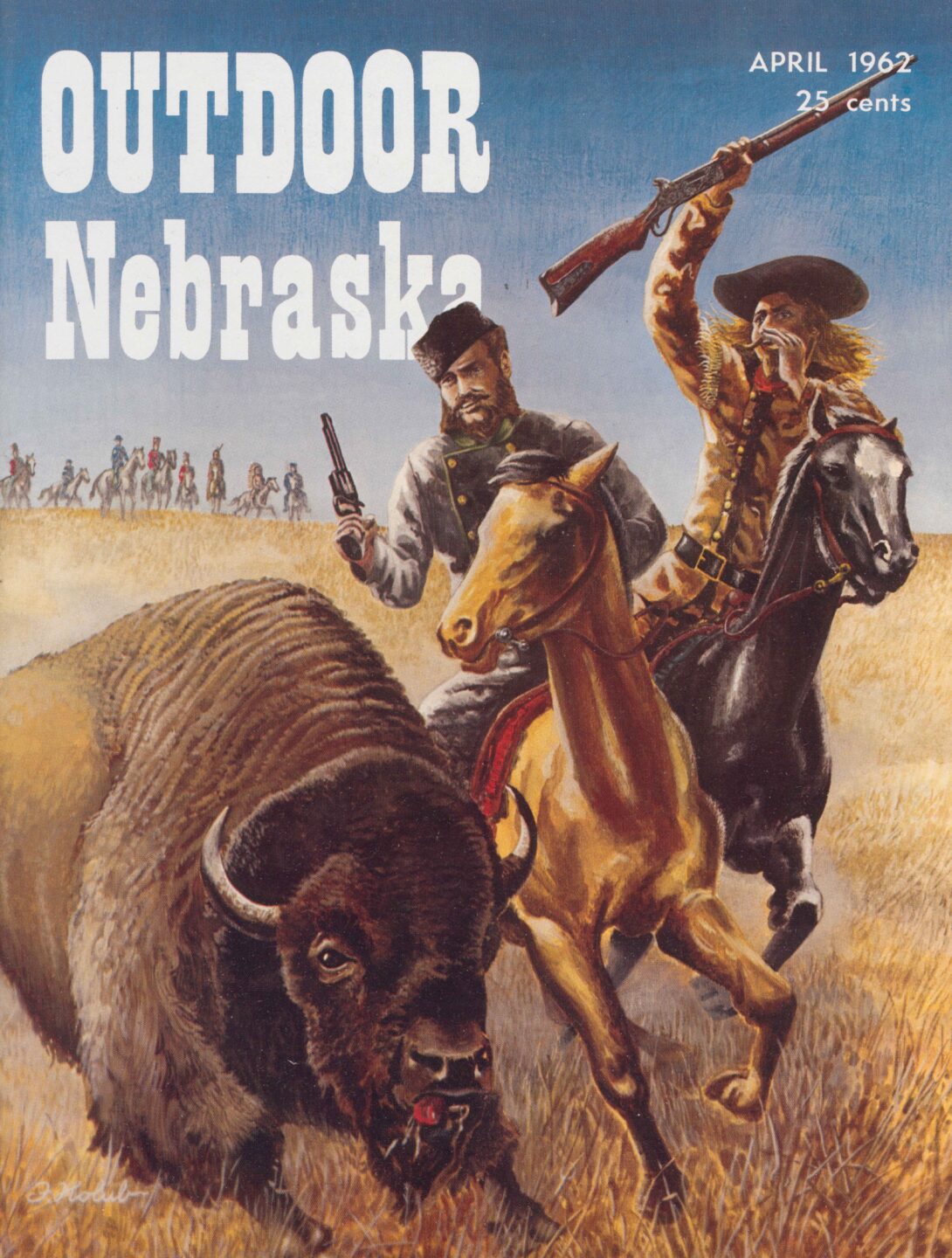
“The homespun, buckskin west had never seen anything like him, an honest-to-goodness Russian prince ready to take on the prairie wilderness for a couple days of buffalo hunting. Big and bewhiskered, as fancy a greenhorn as had ever graced the Plains, the Grand Duke Alexis had come a visiting, the royal emissary of Alexander I, czar of all the Russias,” wrote J. Greg Smith.
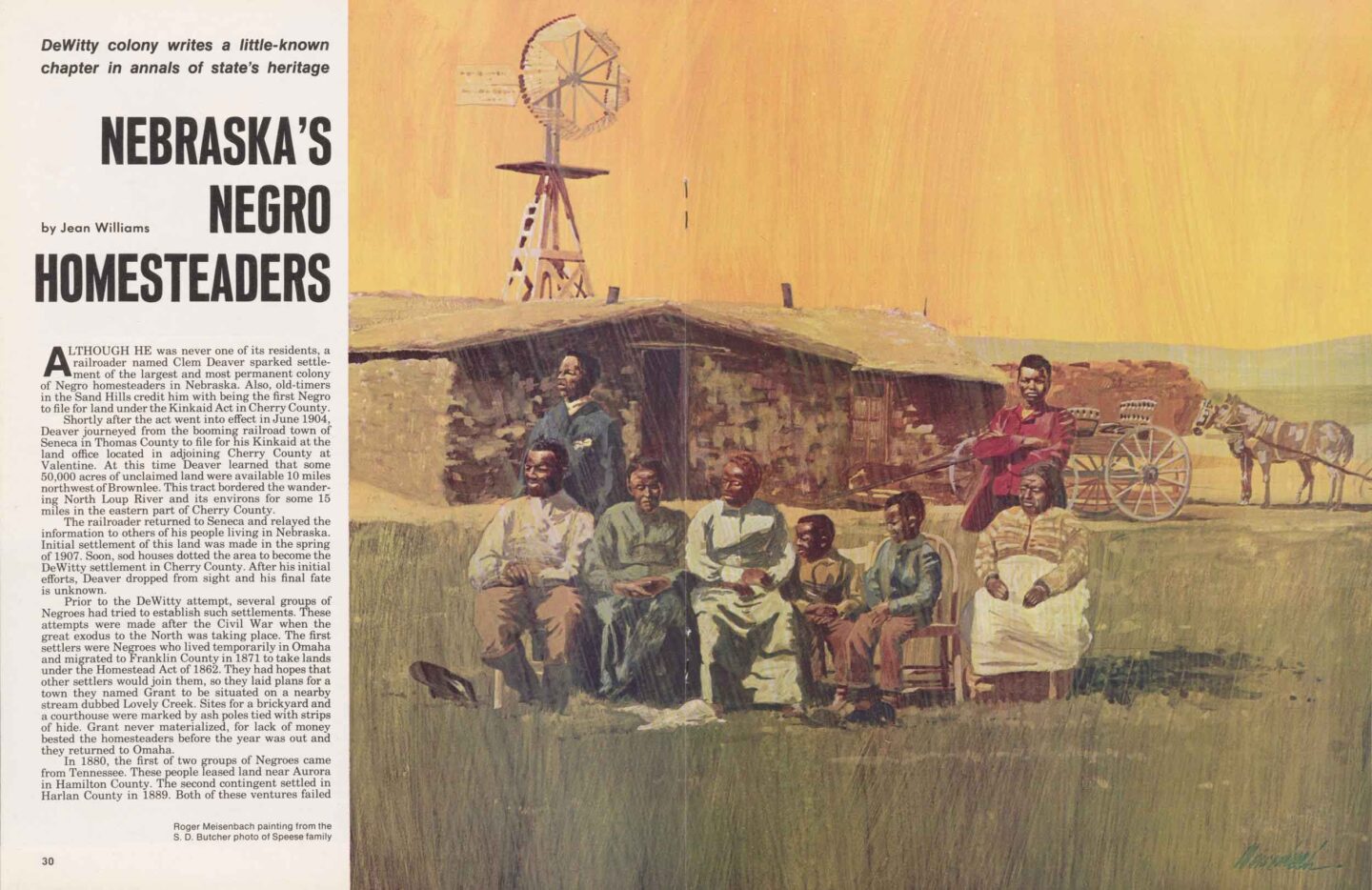
During Holub’s, Meisenbach’s and Curran’s time with the Commission, they produced an astonishing body of work that featured Native Americans, scenes of pioneer life and the Wild West. Their art reinforced Nebraska as a place of history, adventure and “Where the West Begins” — a tagline that appeared on Nebraskaland’s cover from March 1964 through August 1972.
Art for Conservation
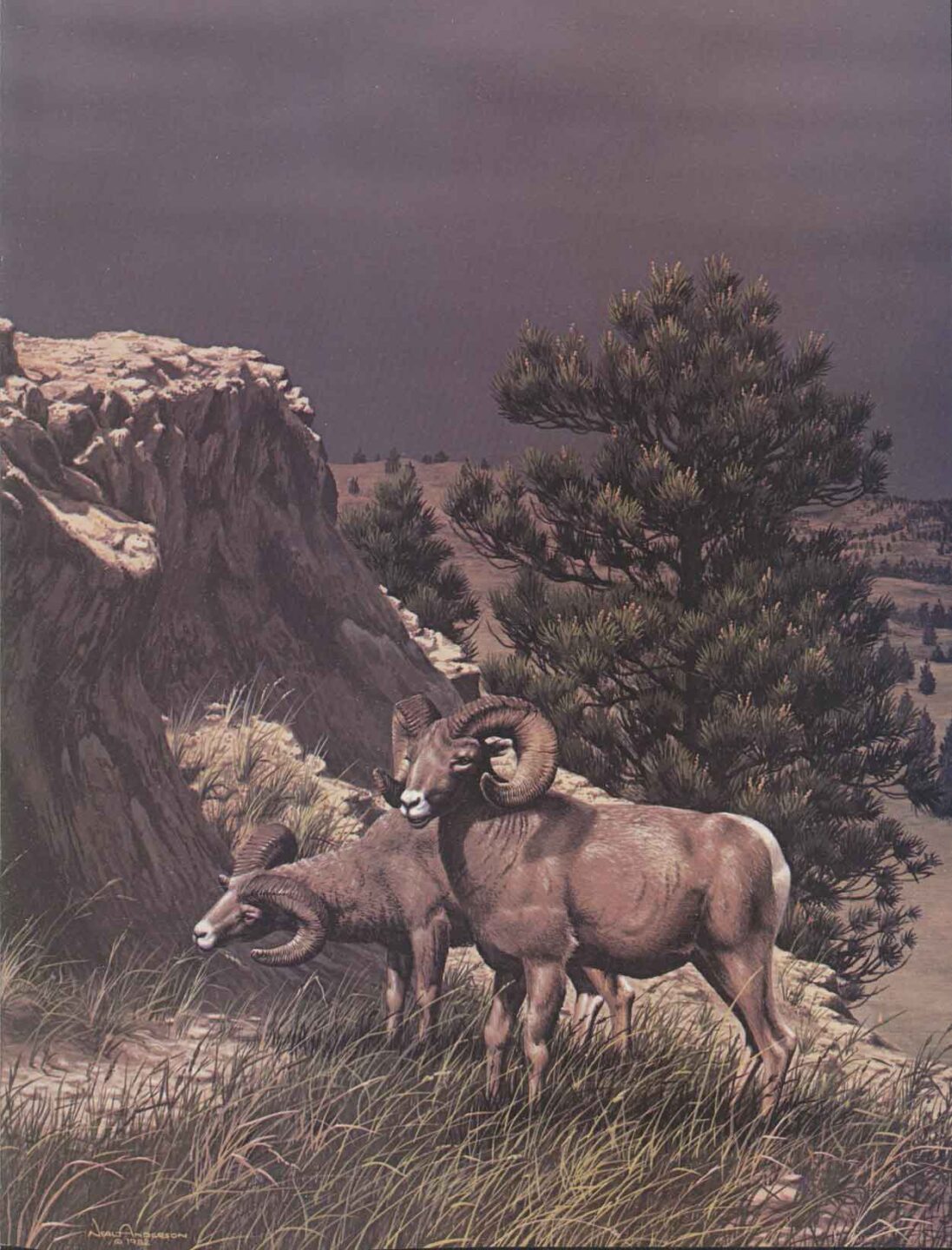
Pieces such as Neal Anderson’s 1982 painting of bighorn sheep or Michele Angle Farrar’s ethereal Pine Ridge landscapes in 1980 captured readers’ imaginations. These artists helped the reading and viewing audience picture remote places or envision elusive or endangered species and, ultimately, encouraged readers to want to conserve those unique environs and the flora and fauna that inhabit them.
Outside of the magazine, artwork from Pritchard, Westerholt and Anderson was also featured on state and federal wildlife stamps to raise revenue for habitat work. For example, Pritchard’s hooded mergansers won first place in a Federal Duck Stamp Art Contest and was featured on the 1968-69 stamp, which raised $5.5 million for wetland acquisition.
As far back as the 1920s, Outdoor Nebraska has used art to spread messages of conservation, many involving humor and sarcasm through cartoons and comics — though, during the early years, the social and political commentary was often heavy-handed.
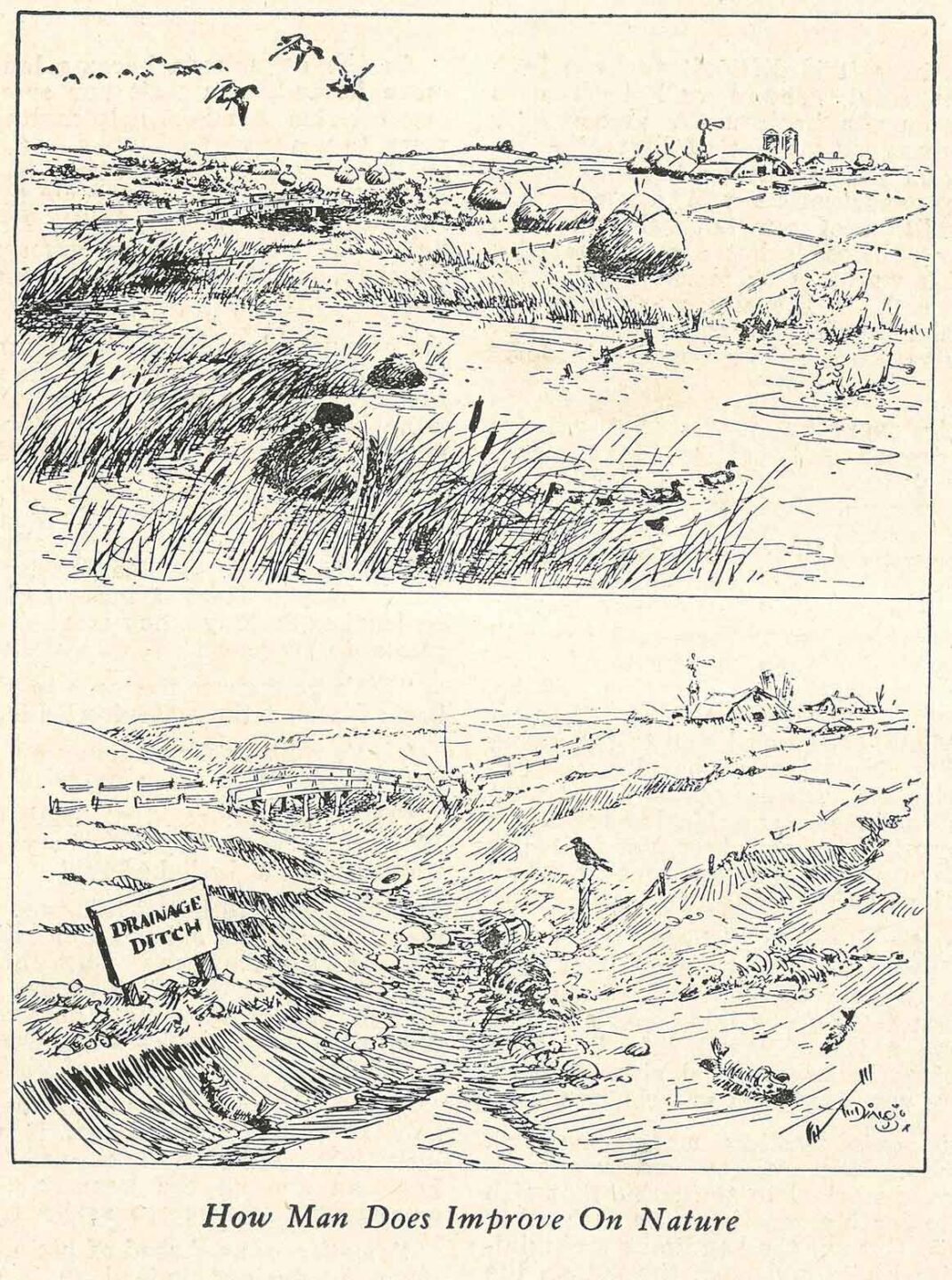
Still, in this regard, art has changed little in its purpose. Even when the magazine began featuring more photography in the mid-1960s, the role of art did not change. Pritchard’s ethos in creating wildlife images continues to resonate today.
“When pressed by acclaim for his work, Pritchard typically replied the real reward of his job was making people aware of the need for habitat where wildlife can prosper,” Jon Farrar wrote in this tribute to the late artist.
Art, whether traditional or modern, should make people feel something. And occasionally, that art can be impactful enough to push people to take action.