
By David L. Bristow, Nebraska State Historical Society
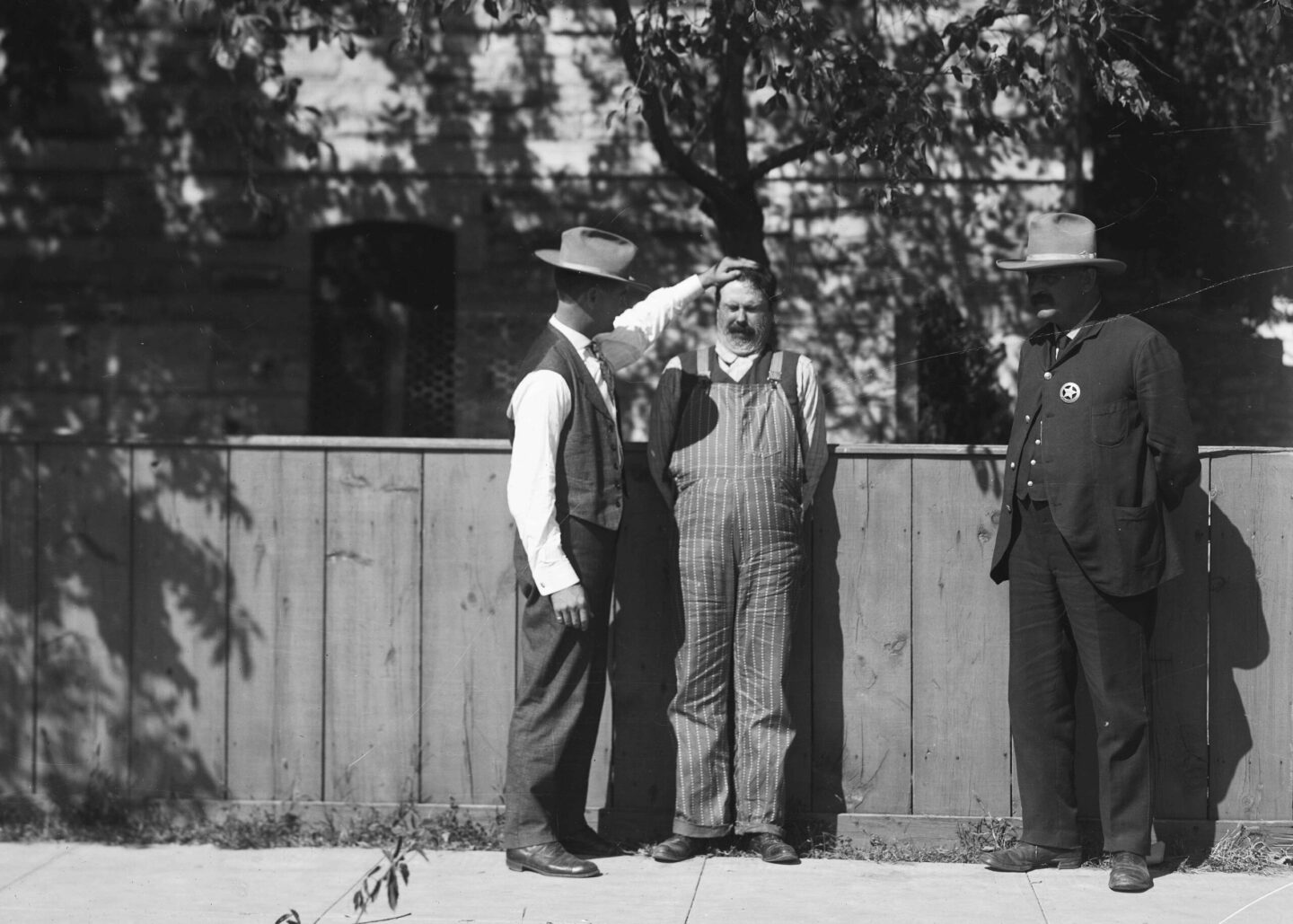
Who is the “bad man” in the two photos? Is it the man in the striped overalls? Or is he just playacting while Buffalo County Sheriff Walter Sammons (in vest) and Kearney Police Chief John Trindle (in dark suit) congratulate themselves for roughing up suspicious characters?
Photographer Solomon Butcher said he made this photo in 1905. Nine years later, one of the men pictured was involved in a sensational trial that shocked the community.
Walter Sammons was elected Buffalo County Sheriff in November 1905. Twenty-seven years old, he was respected as a tough and fearless deputy. He was also a Nebraska National Guard officer and a Spanish-American War veteran.
As a deputy, Sammons chased criminals and harassed suspicious characters. One day, he and Police Chief Trindle “picked up a couple of extremely suspicious young fellows at the Union Pacific depot,” said the Kearney Hub on April 15, 1905. In their pockets, the men had some ads for companies dealing in explosives. Since “neither of them could exhibit as much as a nickel,” a local judge sentenced them to 30 days in jail for vagrancy.
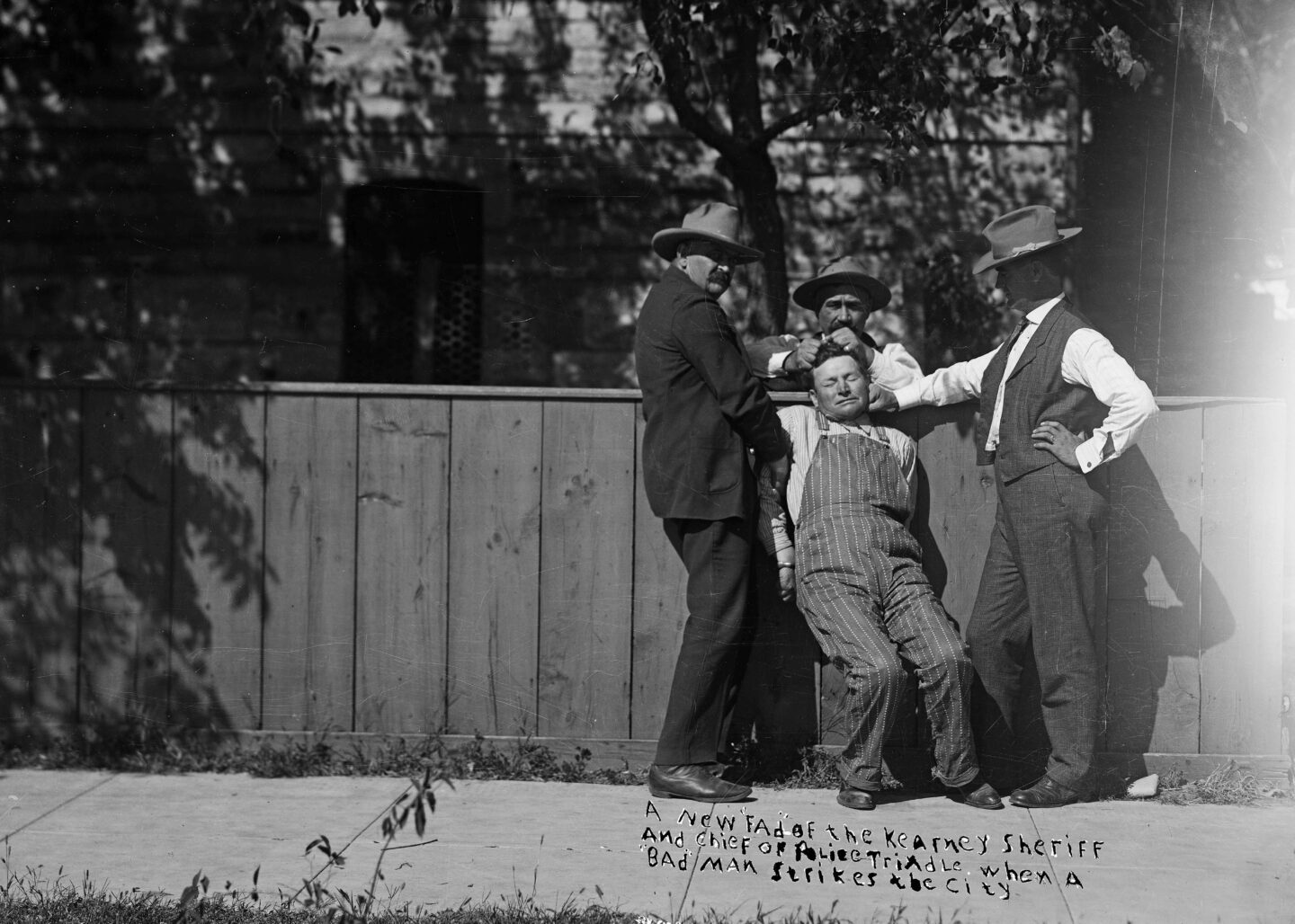
Photo by Solomon D. Butcher, 1905. NSHS RG2608-0-2935.
In those days, suspicion was often enough for an arrest. The photos look more like summertime but are probably based on similar circumstances.
After completing three terms as sheriff, by 1913 Sammons was working as a claim adjustor for the Union Pacific Railroad and had risen to lieutenant colonel in the Guard. He had a wife and 5-year-old daughter at home but spent part of Christmas Day drinking in a local bar with his buddy Delbert Smith.
Smith was a clerk at the local post office. He mentioned that a special package had arrived containing a $5,000 bank transfer. It sat in the post office safe until the banks opened after the holiday.
But when the post office opened, the money was gone, a window was open and there were footprints in the snow. Sammons quickly volunteered to help. He spent six hours a day with postal investigators, advising against the use of bloodhounds, and suggesting a half dozen local residents as suspects.
Postal inspectors thought the footprints and open window were red herrings. It looked like an inside job. Sammons named several post office employees but did not mention Smith.
Smith’s wife noticed that he wasn’t eating or sleeping. On Jan. 4, he confessed but said he had not acted alone. Sammons, he said, had asked him for the office key and safe combination and said they’d split the money.
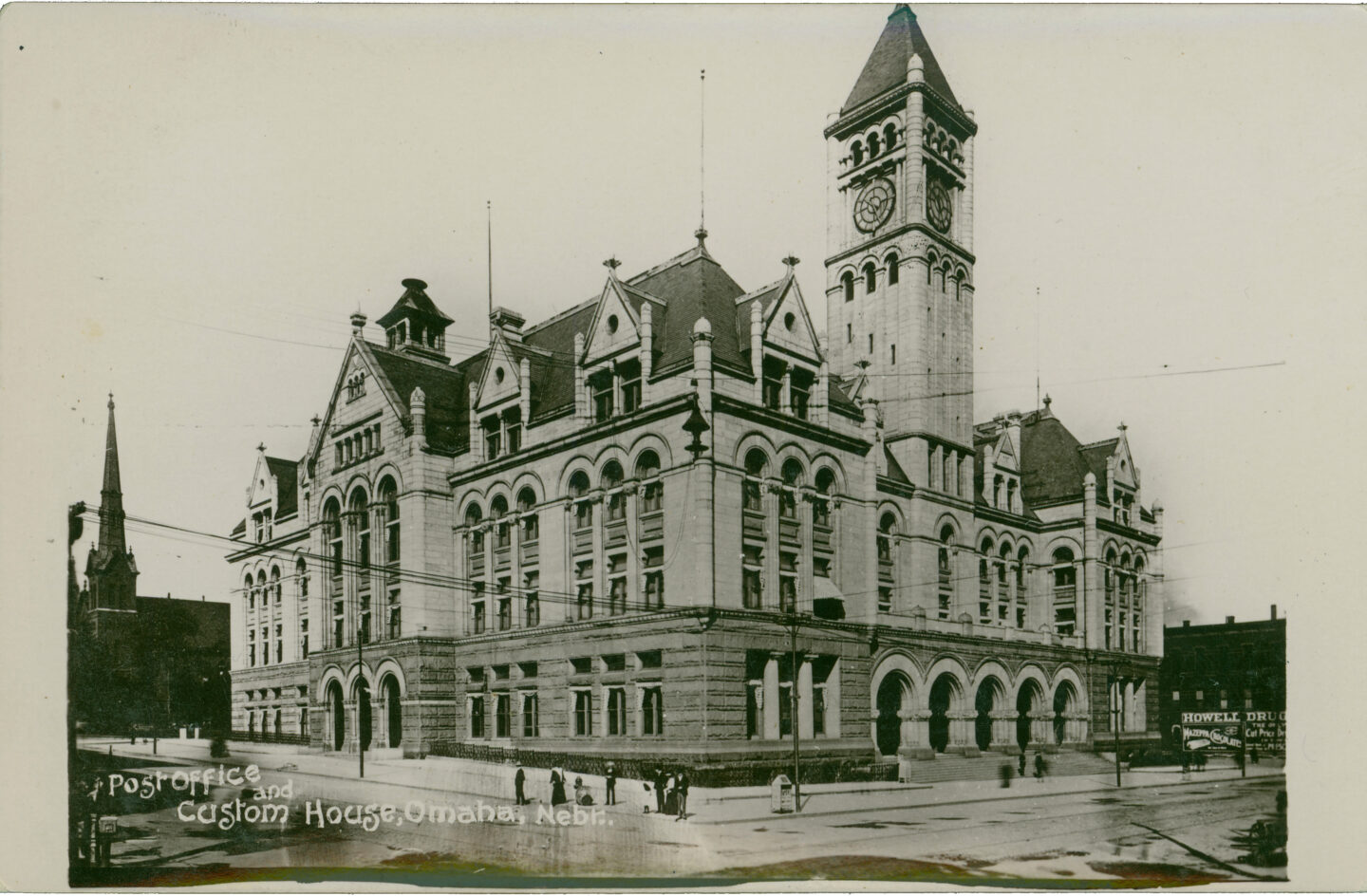
Sammons was arrested later that day, but it was November before his case came to trial in federal court in Omaha. Out on bond, he assembled a powerful legal team led by a former U.S. senator and assisted by two judges.
The trial was a sensation. It seemed that half of Kearney was filling downtown Omaha streets, cafes, theaters and hotels. The defense said Smith stole the money himself, but multiple witnesses vouched for his whereabouts. And the footprints in the snow were too small to have been made by Smith but not by Sammons. Other witnesses cast doubt on Sammons’ alibi.
Sammons remained cool. He testified that he had confronted Smith, appealing “to all that was good and manly in him to exonerate me by telling the truth.” Smith, Sammons claimed, began crying and said,
“They made me tell that story, and I’m afraid to change it now for fear they’ll hang me.”
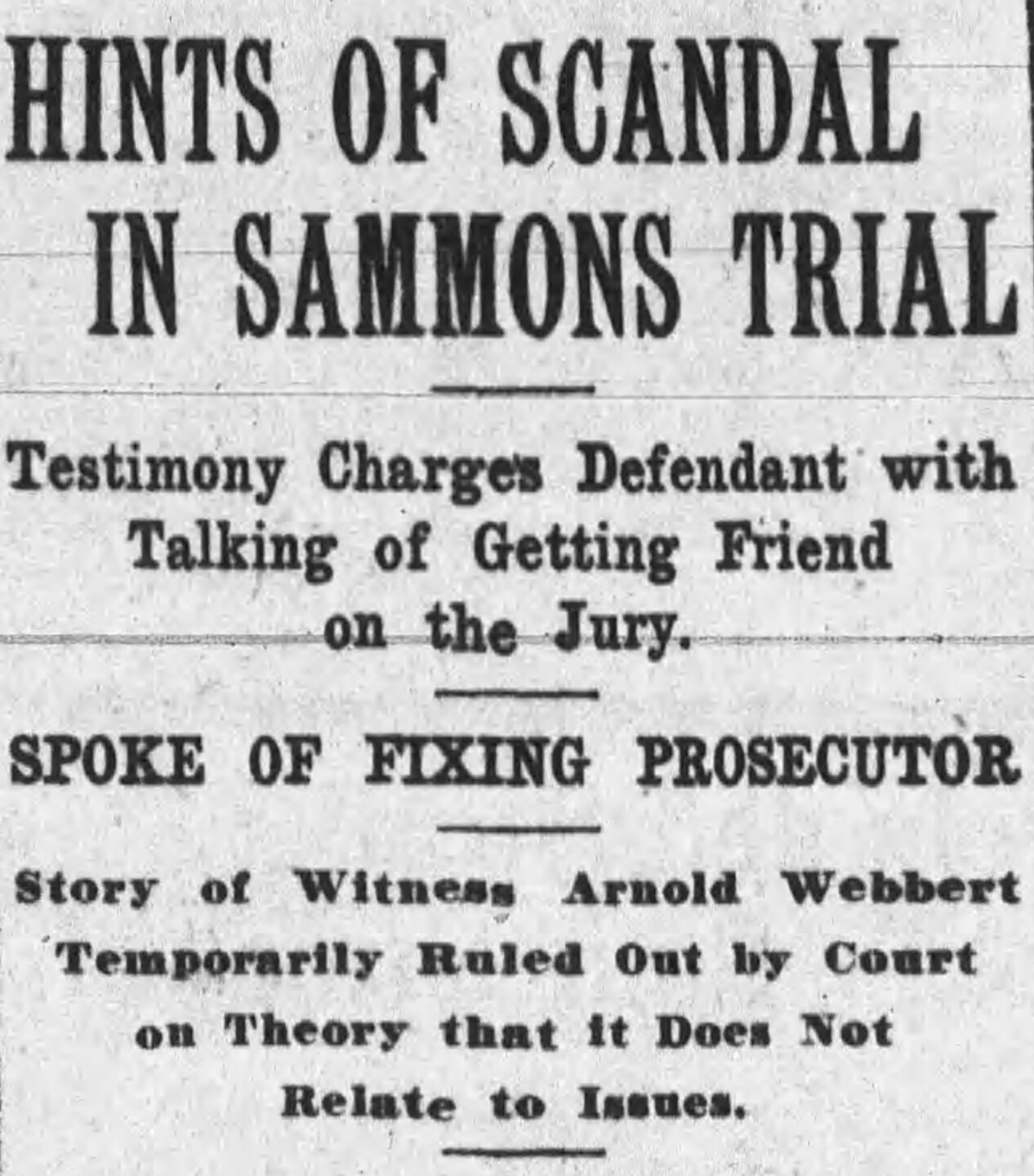
One witness said he’d overheard Sammons saying he didn’t think Smith “would squeal on me.” Then it came out that Sammons’ team had paid at least one witness. Another defense witness was charged with perjury after lying under oath about his criminal record. Sammons was even accused of jury tampering.
The 10-day trial ended on Thanksgiving morning.
“I feel pretty good,” Sammons said. The jury had deliberated only a few hours; that probably meant acquittal. But he turned pale and gripped the edges of a table when the verdict of “guilty” was read.
Smith had already pleaded guilty and said he was anxious to atone for his part. Most Kearneyites believed his story. Smith was sentenced to six months in jail and a $500 fine. Students at the Kearney teachers’ college offered to board with his wife to help her make a living while Smith was in prison. No such offer was made for Sammons.
Sammons’ request for a new trial was denied. Thanks to his status and connections, he had been granted every presumption of innocence, along with the sort of legal representation that ordinary defendants could only dream of. Unlike the poor drifters he used to harass, he didn’t look like a “bad man.”
The former sheriff was sentenced to two-and-a-half years in the federal penitentiary in Leavenworth, Kansas. He died in California in 1942.
Visit the Nebraska State Historical Society’s website at history.nebraska.gov.