

Story and photos by Gerry Steinauer, Botanist
As the first light of day spilled over the high dunes to the east, 9-year-old Harper Wright nestled beside her father, Greg, in the rushes along the Calamus River. The ducks weren’t flying, but that didn’t matter. What mattered was that they were together, with the river flowing past and the valley beginning
to stir.
I’ve known and worked with Greg Wright, a U.S. Forest Service wildlife biologist based at the Nebraska National Forest near Halsey, for more than a decade. As avid outdoorsmen, our conversations often turn to hunting. During one such talk, he shared how he’s trying to pass on his passion for hunting and the outdoors to his daughter. In today’s busy world, this is no easy task.
His approach is to make each hunt with Harper about more than just harvesting game. It’s also about exploring, appreciating nature and spending time together. I wanted to see his strategy in action, so we planned a waterfowl hunt for October 2024 on the Calamus River.
The Family Cabin
Late on a Saturday afternoon, we arrived at the Wright family’s cabin, tucked beneath a riverside grove of tall cottonwoods and elms a stone’s throw from the Calamus River in Brown County. Greg had recently hauled the cabin, a simple prefab, onto a small piece of family land. With one room and no running water or electricity, it reflected his practical, efficient personality yet offered a snug retreat in the vastness of the Sandhills.
We unpacked and, before sunset, walked along the river bluff, scanning the marshes below for ducks and geese. The Calamus winds through a narrow valley flanked by high, sandy bluffs. Its floodplain is a patchwork of prairie, wet meadow and curving oxbow marshes formed in old, cut-off channels. Ragged stands of cattails, rushes and willows border the oxbows.
Back at the cabin as night fell, Greg lit an oil lamp, and by its dim light we sipped dandelion tea and played a few rounds of cribbage, the cabin’s traditional game, until our eyes grew heavy. We crawled into sleeping bags, eager for the morning hunt.

The Hunt
Greg and I rose well before sunrise. His first task was to light the propane heater and boil water on a camp stove for coffee and hot chocolate. Harper soon joined us at the table, and we breakfasted on cinnamon rolls, a favorite of Harper’s, that his wife Angie, also a wildlife biologist, had made especially for the trip. Greg and I talked shop — the status of grouse populations in the Sandhills, which is typical for biologists. Most kids would be bored out of their minds, but Harper quietly listened. It seemed her parents’ passion for nature was already sinking in.
After breakfast, Greg and Harper pulled on their chest waders and camouflage and loaded their .410-gauge shotguns and decoys into the truck. Since we hadn’t seen ducks or geese on the oxbows the previous night, Greg chose a nearby bend in the river where he hoped birds might be enticed to land. Here, the river was about 10 yards wide and 2 feet deep, with a slow current and a gentle sand bank. In the dawn light, Greg and Harper set out a small spread of decoys while I drove the truck back to the cabin. Upon my return, we nestled into a patch of tall, streamside grasses and rushes to await the morning flight.
Greg’s waterfowl hunts are simple affairs, with no heated blinds or spreads of dozens of decoys. For Harper’s sake, he keeps it low-key. She can help set out a few decoys, and what better experience than sitting on the riverbank with her father watching the sun rise and the valley come to life?
Unfortunately, few birds were flying. One small flock of ducks flew high overhead but showed no interest in Greg’s pleading calls or the decoys. He filled the void with his knowledge of local wildlife.
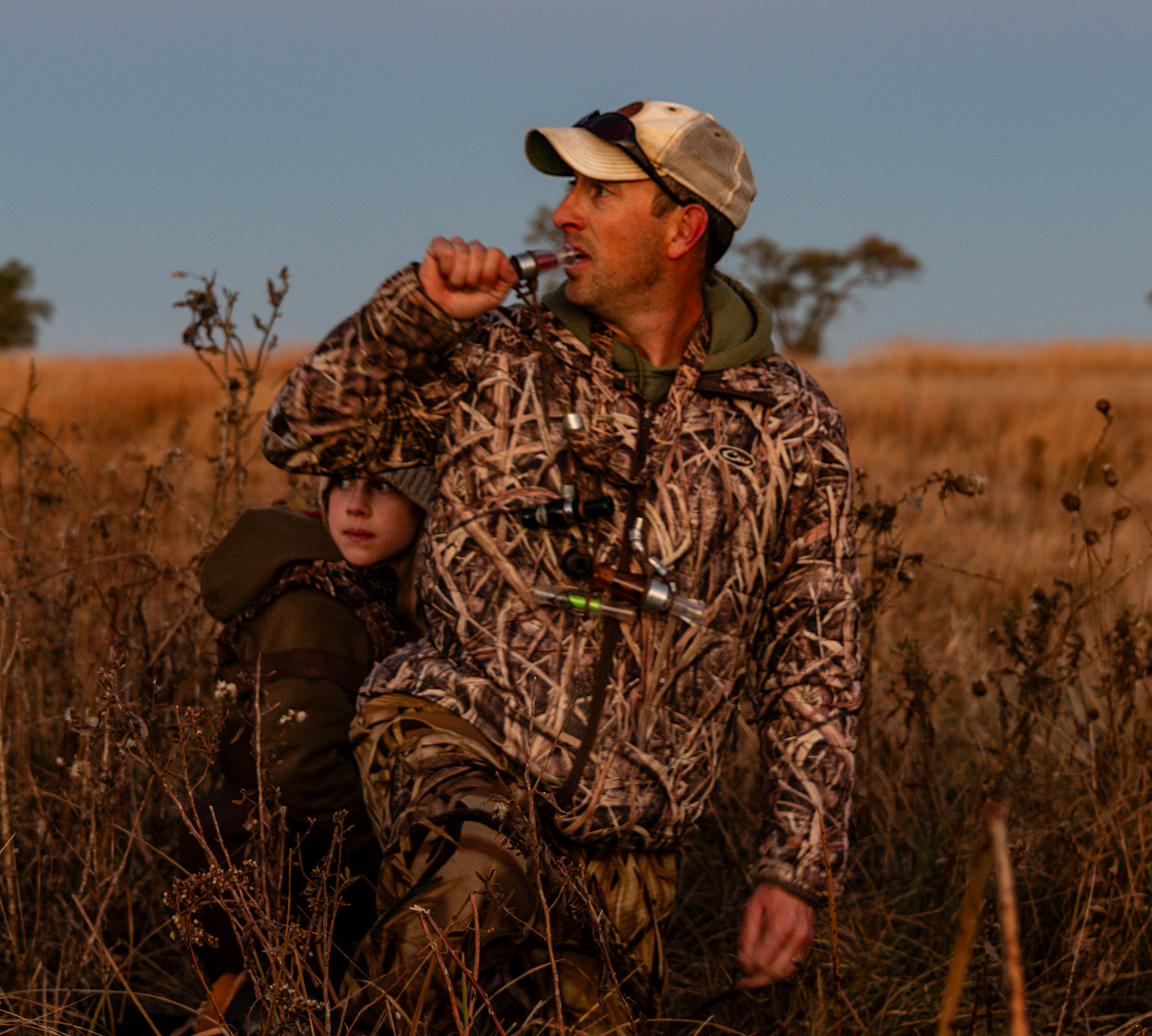
“Harper, did you hear that screech owl?” he said. “There it is again.”
He also drew our attention to the chatter of marsh wrens in the oxbow behind us, the faint cackling of prairie chickens in the high dunes and the splashing of unseen deer crossing the river. These moments were for Harper. He was keeping her engaged and developing her naturalist’s skills.
Our talk was interrupted by a pair of wood ducks zipping downriver, but they, too, ignored us.
“Wood ducks are tough to decoy,” Greg conceded. “They go where they’re going.”
The action stayed slow, and he was puzzled. “Two weeks ago, there were hundreds of ducks here,” he said. On that trip, Greg and Angie downed a mixed bag of mallard, teal, wood duck, gadwall and shoveler, which Harper and her little sister were happy to retrieve. “The Sandhills are dynamic,” he explained. “You get local birds that hatch here and others passing through during migration. Usually, there’s something to hunt.”
The warm weather may have been responsible for the lack of bird movement. Greg prefers hunting when cold fronts are descending and pushing waterfowl south. He takes Harper hunting, however, only in early fall when the weather, and her experience, are more pleasant. When she’s older, tougher and hopefully hooked on hunting, he’ll introduce her to those late-season, finger-numbing hunts.
After an hour tucked along the bank, Greg sensed that Harper was growing restless and uncomfortable in her waders and decided it was time to move.

Exploring
We walked the riverbank downstream for a quarter mile to a new beaver dam and lodge Greg wanted to show Harper. We inspected the rodents’ handiwork until our attention turned to a piece of old farm machinery partially buried in sand. Harper climbed onto it as Greg and I pondered its one-time use. We concluded it was a piece of horse-drawn haying equipment used long ago by local ranchers, when this part of the ever-changing floodplain was meadow, not marsh.
Soon after, our thoughts returned to hunting. As we approached the beaver dam, Greg caught a glimpse of ducks rising and settling again on an oxbow farther downstream. Seeing an opportunity for jump-shooting, he and Harper snuck to the oxbow’s edge, hidden by shoreline rushes. When they arrived, about 40 birds sprang from the still water. A single shot rang out, and a bird fell back into the marsh.
Greg retrieved the green-winged teal.
In the excitement, Harper didn’t get a shot off. Jump-shooting fleeing ducks requires quick reflexes and is tough for a child, especially one bundled in a thick coat and waders. For now, Greg prefers teaching her wing-shooting over decoys, where she can prepare for shots at birds with cupped wings floating in to land.
As we examined the teal, Greg noticed Harper was tiring. She had walked a fair distance in waders since leaving the decoys, and we still had some hiking to do. We called it a day and headed back to pick up the decoys. I was impressed by Harper’s stamina, which Greg credits to the hours she spends in athletics and jumping on her backyard trampoline.

Philosophy
Back at the cabin sipping coffee, Greg said he wasn’t bothered that Harper hadn’t taken a shot or bagged a duck. “She still had fun, and I got to spend some quality time with my daughter,” he said.
He believes that parents often think their kids need to harvest animals to stay interested, but he disagrees. While success is obviously important, he believes that occasional failure to harvest game can build more interest and drive. When hunting with Harper, his focus is never on how many ducks, geese or pheasants they shoot. “My main goal is to teach her to value wildlife and nature. If she has an adventure, she’ll keep hunting.”
When I asked Harper about her favorite part of the hunt, she said, “I liked playing cribbage and just coming to the cabin.” Then after a pause: “And walking around in the water in my waders and helping Dad pick up the decoys.” She had enjoyed her weekend adventure.
Tungsten .410 Reloads
Greg and Harper carried .410-gauge shotguns on our Calamus River hunt, and they use these guns for most of their upland bird hunts. Some readers might question a .410’s ability to bring down a tough rooster pheasant or a big Canada goose, but not Greg. He makes up for the .410’s small bore by using hard-hitting tungsten reloads.
Tungsten pellets are 60% denser than lead and more than twice as dense as steel, allowing the smaller tungsten pellets to deliver the same impact as larger lead or steel shot. For example, a No. 9 tungsten pellet, which Greg uses in his duck hunting reloads, weighs the same as a No. 5 lead pellet or a No. 3 steel pellet. He can also pack more of the smaller tungsten pellets into his .410 reloads than are found in standard 12-gauge lead or steel shells.
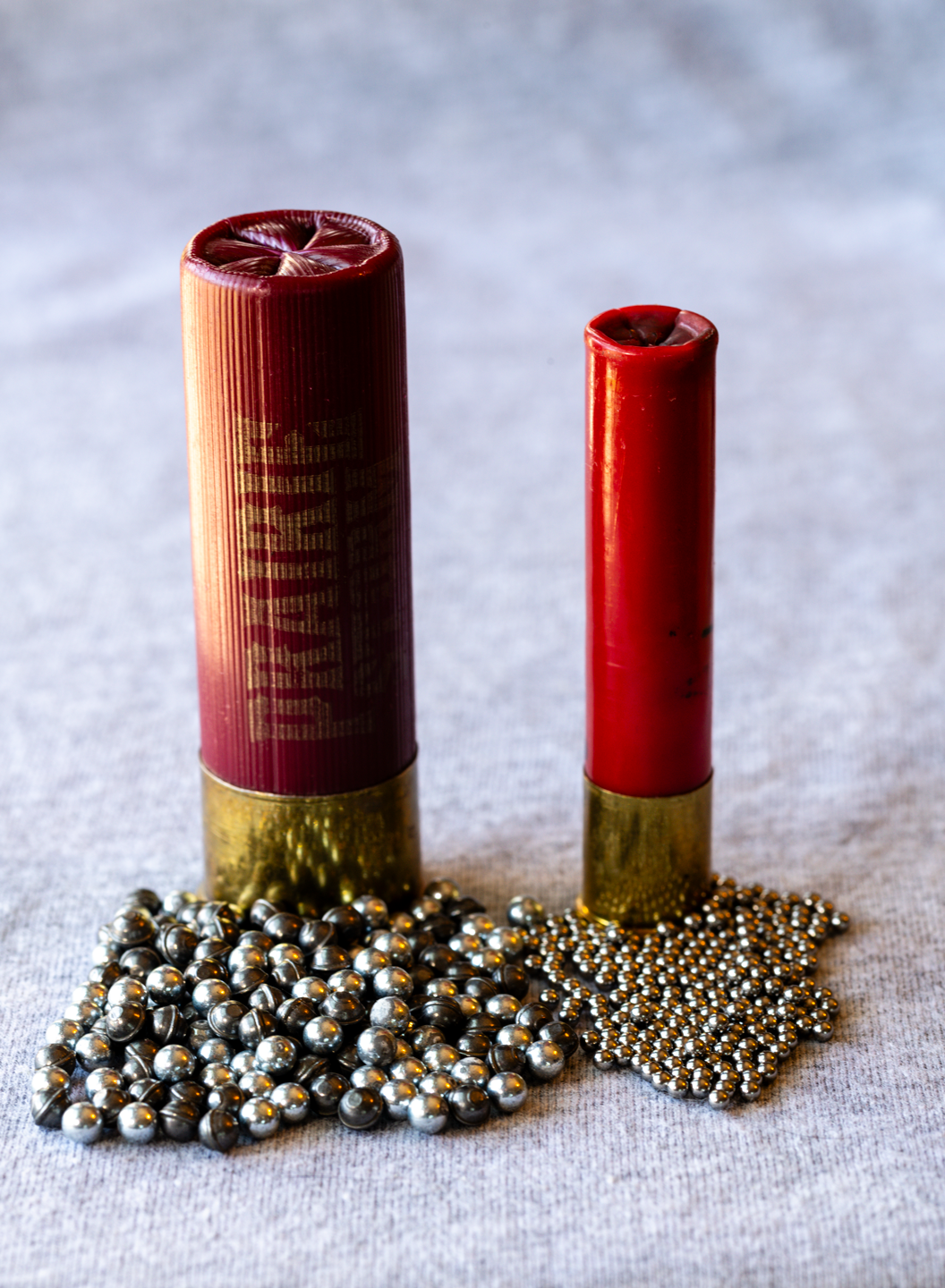
Tungsten shot holds its shape and speed better than other shot types, resulting in tighter patterns and better penetration. Because of the high number of tungsten pellets in his reloads and his desire to expand their pattern, Greg uses an improved cylinder choke for the most effective hunting results. For him, the main benefit of tungsten shot is that it allows Harper to hunt with a .410 when a larger gauge might still be too much for her. “The gun is light, has little kick and isn’t loud,” he said. “It’s the perfect gun to begin her journey into hunting.”
Greg admitted that tungsten shot has some downsides. The pellets’ hardness can be tough on shotgun barrels, so he uses special protective wads in his reloads. Manufactured tungsten shells are expensive, and few companies make .410 tungsten loads. Luckily for Greg, his reloads cost only about a dollar each.