

Story and photos by Jenny Nguyen-Wheatley
Once numbering 60,000 strong, the Pawnee people lived in the Loup, North Platte and Republican river basins in present-day Nebraska and northern Kansas. They were semi-nomadic people, hunters and gatherers for parts of the year and cultivators during the growing season.
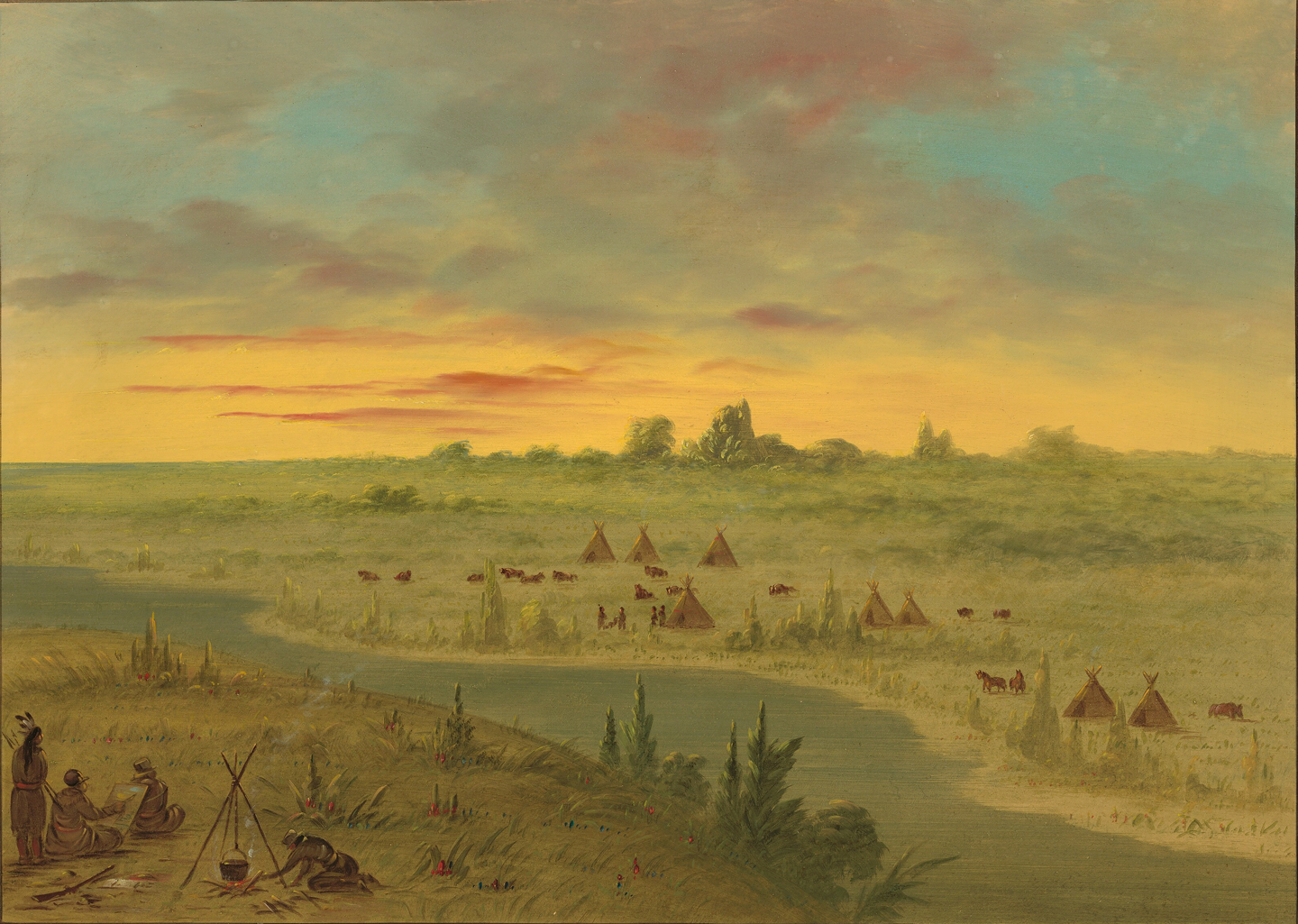
In spring, the Pawnee lived in permanent cities and focused their energies on tending crops such as corn, beans and squash — known as the “three sisters.” In June, hunters traveled west to the High Plains, where they spent the summer in mobile tipis, to follow the bison herds that roamed the prairies by the millions. In late summer, they returned to their respective villages to harvest crops, and in late October or November, the hunters left again for the winter hunt.The Pawnee returned to their dome-shaped earthen lodges in late winter to begin another cycle of their variegated lives on the Plains — according to the Oklahoma Historical Society.
They called themselves Chatiks si Chatiks, meaning “men of men.” Explorer Francisco Vásquez de Coronado was the first European to meet the Pawnee in 1541 and noted the nation’s powerful social and governmental structure. In the early 1700s, the Pawnee began a lucrative and mutually respectful trading partnership with the French, with whom they later allied to fight Spanish expansion into the Great Plains.
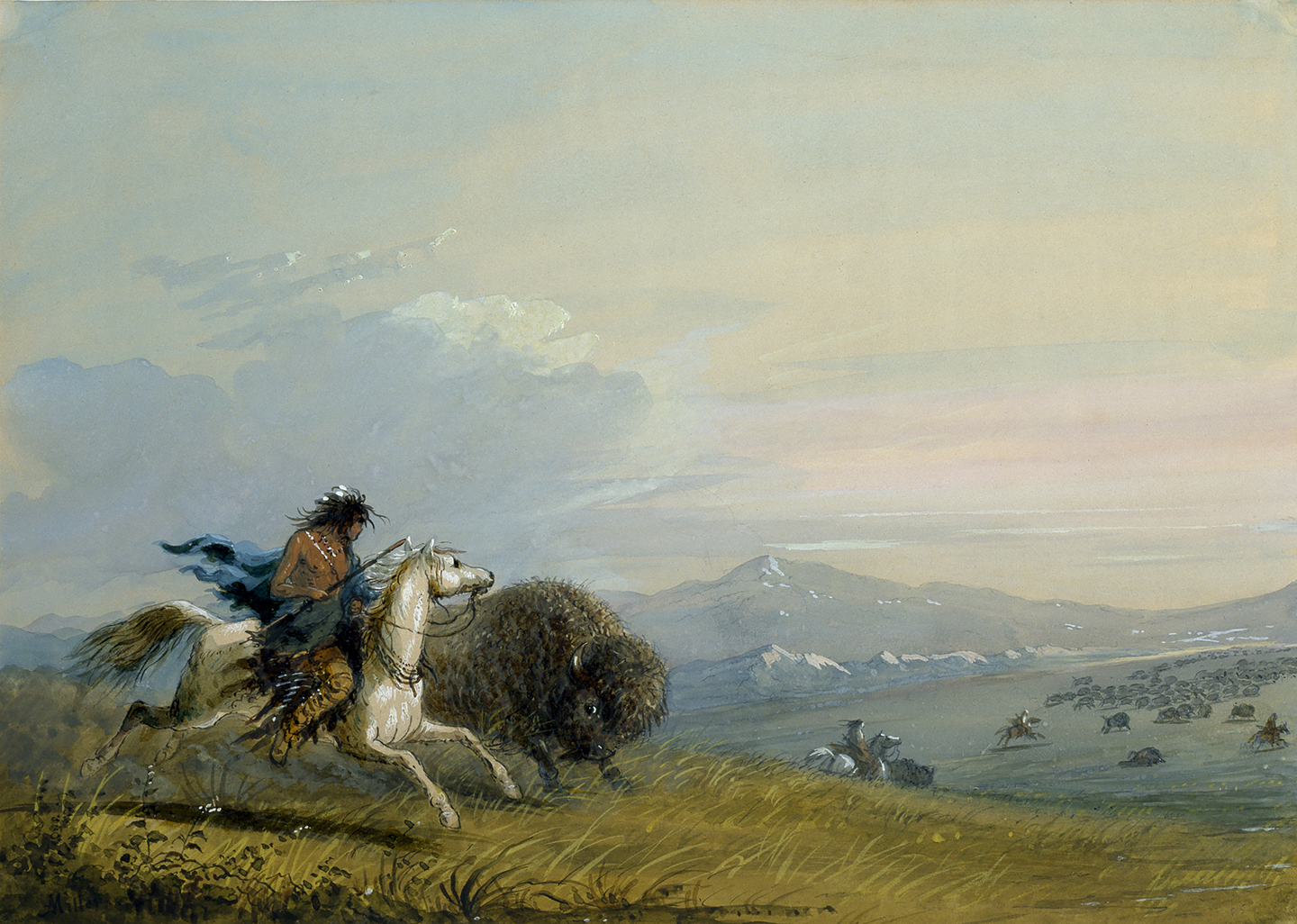
However, following the Treaty of Paris in 1763, which ended the French and Indian War between France and Great Britain over control of North America, the French began withdrawing from the Louisiana Territory. France’s departure resulted in the Pawnee becoming increasingly vulnerable to attacks by their Sioux and Osage enemies, who had allied with the British.
Subsequently, the encroachment of hostile tribes became a major factor impacting the Pawnee way of life, as well as the effects of colonialism and the westward movement of Euro-American settlers that overtook the Plains into the 19th century.
Disrupted Foodways
By 1850, smallpox and cholera had reduced the Pawnee population to about 6,000. When missionaries Gottlieb Frederick Oehler and David Zeisberger Smith visited the Pawnee in eastern Nebraska in 1851, they found a starving people whose traditional foodways were being dismantled.Oehler and Zeisberger’s account of the visit was reprinted in the winter 2006 issue of “Nebraska History.”
Despite allying with the U.S. Government, who had promised resources and assistance in exchange for lands that enabled westward expansion, the missionaries described the Pawnee’s plight as thus:
“The road of the emigrants lies through the country belonging to the Indians; their hunting grounds are traversed by the long lines of white-covered wagons, and the buffaloes, the principal subsistence of the Indians, are thereby chased away to more distant and more secluded pastures … and they have thereby been reduced to poverty and want. For all these privations they have been promised presents, as a compensation, from our Government, but thus far they have received nothing.”
The final blow came in 1874-1875. Increasing pressures and conflicts with Nebraska settlers resulted in the Pawnee’s decision to move to Indian Territory in present-day Oklahoma, where the Pawnee Nation now resides. This displacement was more than geographical. Not only did they lose many traditions and ceremonies, some that were tied to the cycles of the seasons in their homeland, the Pawnee diet also was completely changed to rations and unfamiliar foods.

Chef Anthony Warrior, the Indianpreneurship director at the Nebraska Indian Community College in Santee, explained the predicament: If you take ancestral varieties of pumpkin, corn or beans that thrived in the Great Lakes or the Great Plains regions, and try to grow them in Oklahoma, they would fail because the soil and climate are completely different.
“And that’s how you conquer people,” Warrior said. “When you take people’s food systems away, you destroy them … . When you can sever that tie, you then invite [the body] to disease and depression — and control.”
Warrior pointed to the argument for eating according to one’s genetics, a field of study called nutrigenomics, which explores the complex relationship between our genes and the foods we eat, and how it impacts our health outcomes and risk of diseases.
Even Oehler and Zeisberger recognized this breaking nearly 175 years ago, that want and hunger had “shak[en] that tenacity and attachment so strongly developed in the Indian character, for long cherished customs, and making them more pliable in adopting the arts of civilization.”
The Seed Warriors
For Native Americans living on reservations, displacement and assimilation came at the high costs of poor health and the loss of access and knowledge of their traditional foodways. After generations of eating nutrient-deficient, processed foods such as fry bread, a food created during hardship using meager government rations, diabetes and heart disease have become two of the leading causes of death among Native Americans.
Recognizing the declining physical and mental health of their people, there has been a call from recent generations to restore traditional diets. One of those people is Deb Echo-Hawk (Pawnee), who started the Pawnee Seed Preservation Project in 1998. Over time, ancestral seeds diminished because they did not grow well in Oklahoma, so what was still viable was precious — remnants of vegetables and fruit that were the very last of their kind. The Pawnee cultural committee and chiefs asked families to come forward with ancestral seeds, to be given to Echo-Hawk, the Keeper of the Seeds, for replenishment.
Then in 2003, Echo-Hawk received a call from Nebraska. Ronnie O’Brien of Shelton was working at The Archway in Kearney at the time, and she was reaching out to the Pawnee about creating a historical program on Native gardening.
Echo-Hawk had a better idea. Would O’Brien help the Pawnee bring their ancestral crops back home?
The Seed Keepers
That first year in 2004, O’Brien received 25 seeds of Pawnee eagle corn, Skidi red popcorn and yellow flint, and as the daughter of a corn farmer, she planted the seeds in the way Nebraskans typically do in late April.
“I was all excited — and they all rotted in the ground. It was too early and too cold,” O’Brien said.
The next year, Echo-Hawk sent 25 more seeds to Nebraska, but told O’Brien that it was the last that she could spare. The Pawnee had to keep the few remaining seeds in Oklahoma for posterity if the experiment in Nebraska failed. Thankfully, the second crop survived. O’Brien said that it took about seven years for the corns’ genetics to strengthen and take off.
“Over time, as we built trust with [the Pawnee], they would make more seeds available … another family might come forward with something else out of their sacred bundle that hadn’t been [planted] for a long time,” O’Brien explained.
This special partnership with the Pawnee has lasted over two decades, and during that time, the project has recruited 20-plus volunteer growers across Nebraska. It’s become a network of gardeners exchanging their experiences and ideas on how to grow healthier, more robust crops each year. Together, they grow over 20 varieties of Pawnee corn, in addition to ancestral varieties of beans, squash, sunflower seeds and
watermelon.
In the fall, the crops are harvested and transported to Pawnee, Oklahoma, for use in ceremonial meals. Echo-Hawk hopes that by providing Native people access to foods that their DNA recognizes, the Pawnee could lead healthier lives and feel more connected with their history.
One gardener rolling up his sleeves is Gene Hunt, who has been superintendent at Fort Kearny State Historical Park for 52 years. This is Hunt’s 22nd season growing food for the Pawnee.
Pawnee Gardens
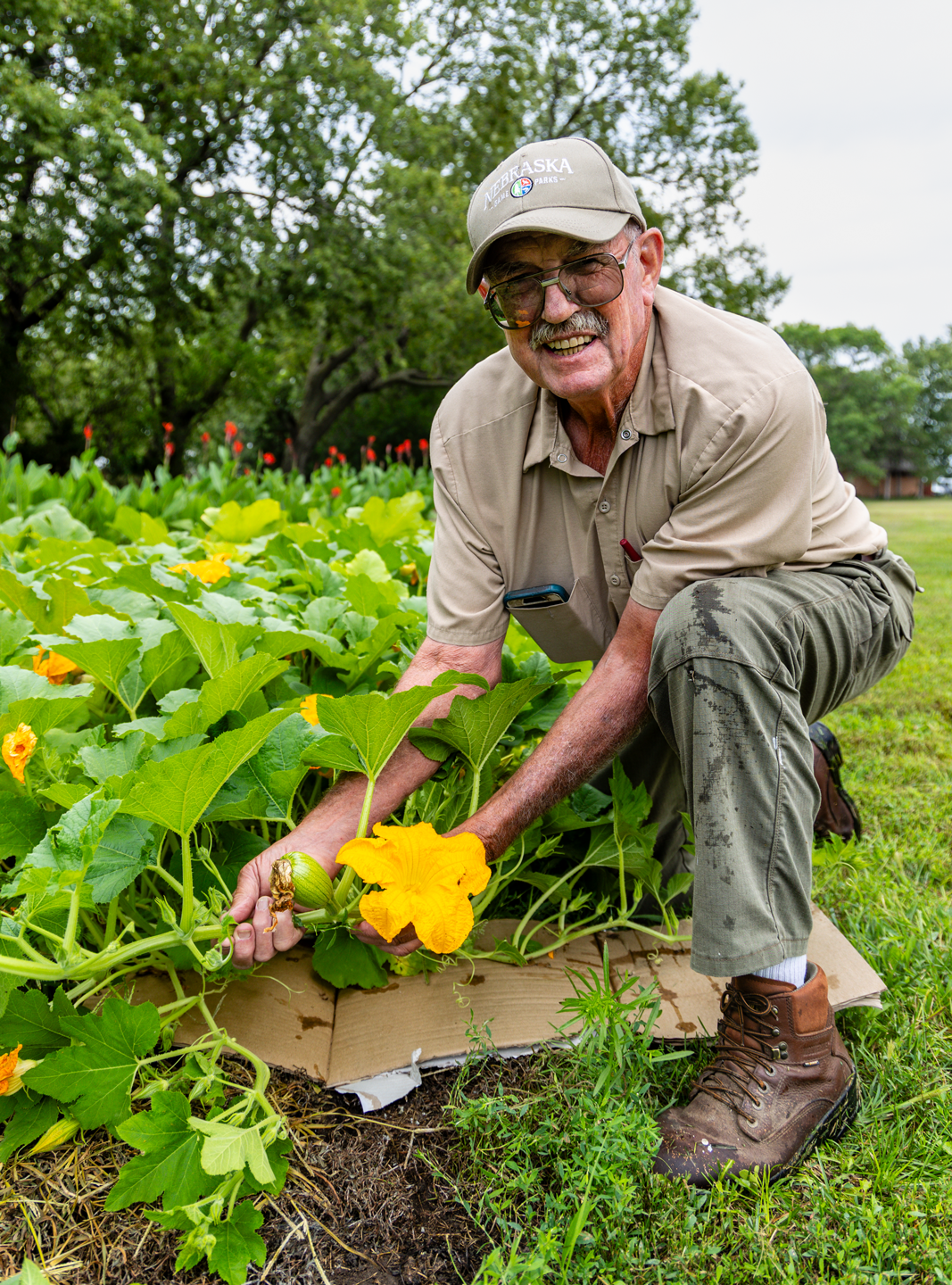
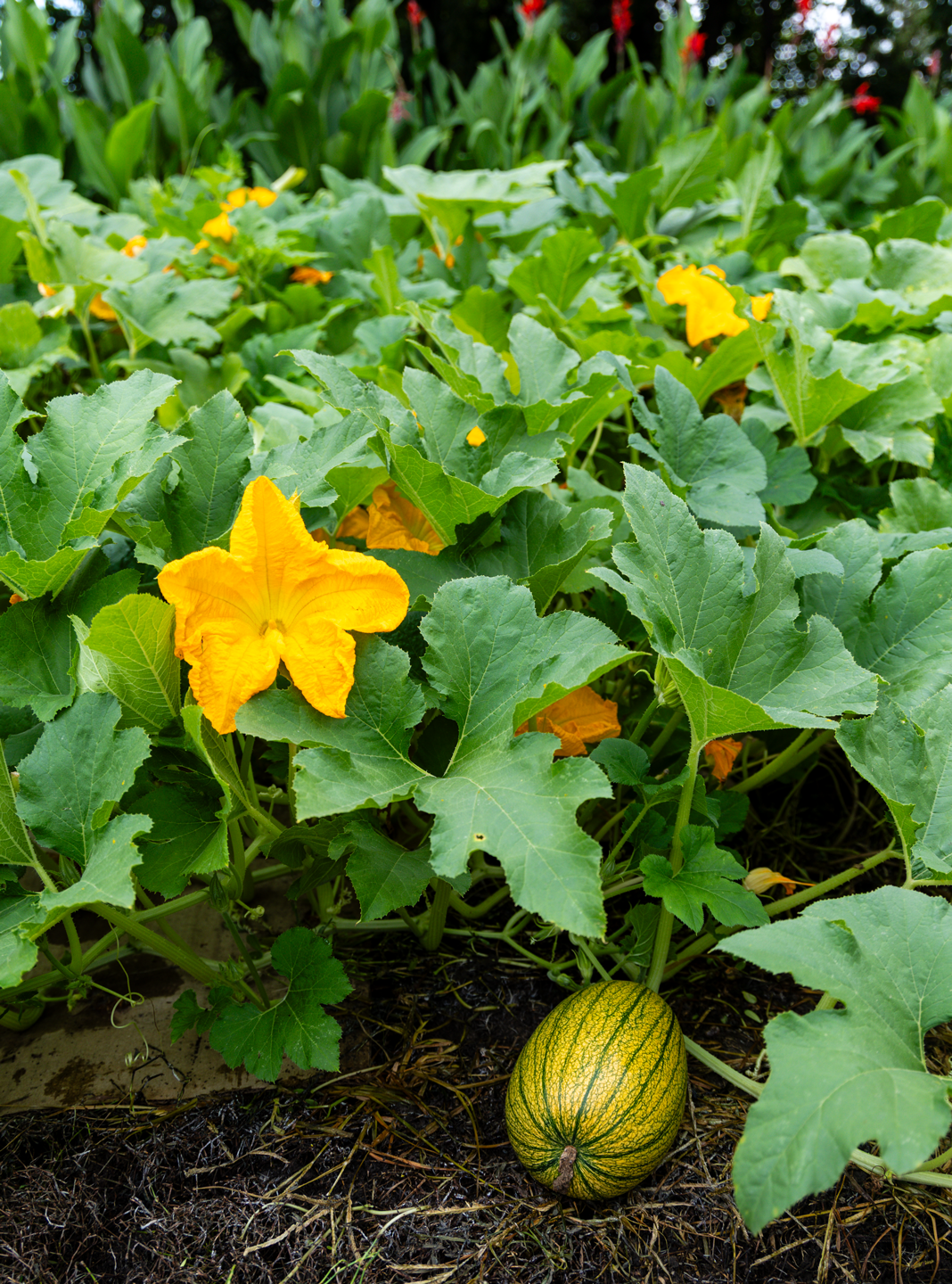
In August 2024, Hunt led the way across the green expanse of lawn at the state historical park. O’Brien, South-Central Regional Park Superintendent Laura Rose and I stopped at a rectangular patch of tendrilled, sprawling vines. Large, ground-covering leaves crowded our view, while yellow-orange, starfish-like flowers floated over the green foliage. The park superintendent sank to his knees and pushed away vines to reveal an elongated yellow-green-striped pumpkin lying in the soil. It was an unripe Omaha pumpkin, one of the squashes that Hunt carefully tends for the Pawnee.
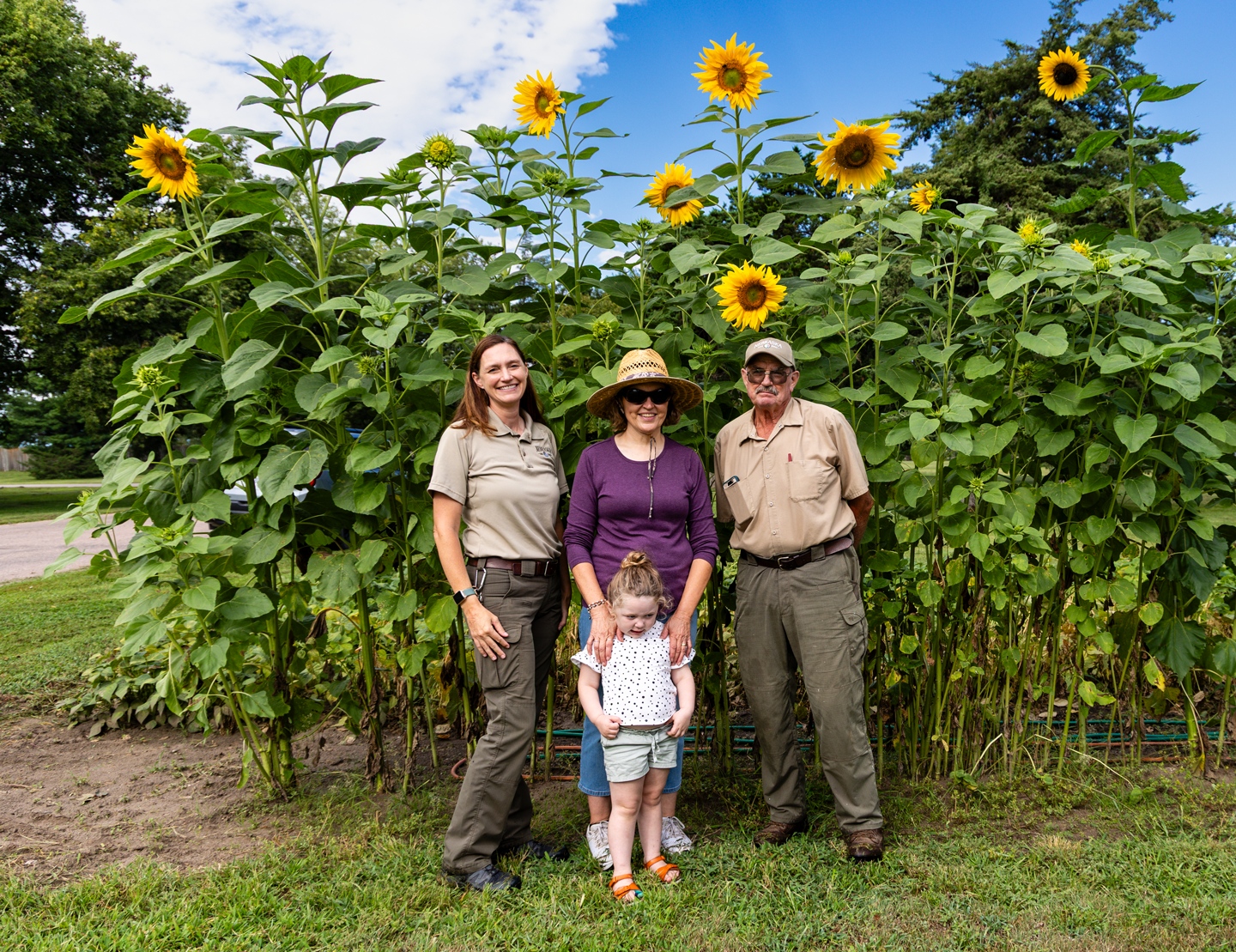
In another garden patch, a stand of Arikara sunflowers stretched toward the sky. The Pawnees refer to the sunflower as their “fourth sister.” Not only did they eat the seeds, the Pawnees also planted sunflowers around their gardens as natural fencing to help keep out rabbits and even bison. At full height, the Arikara sunflower can grow 10 feet tall.
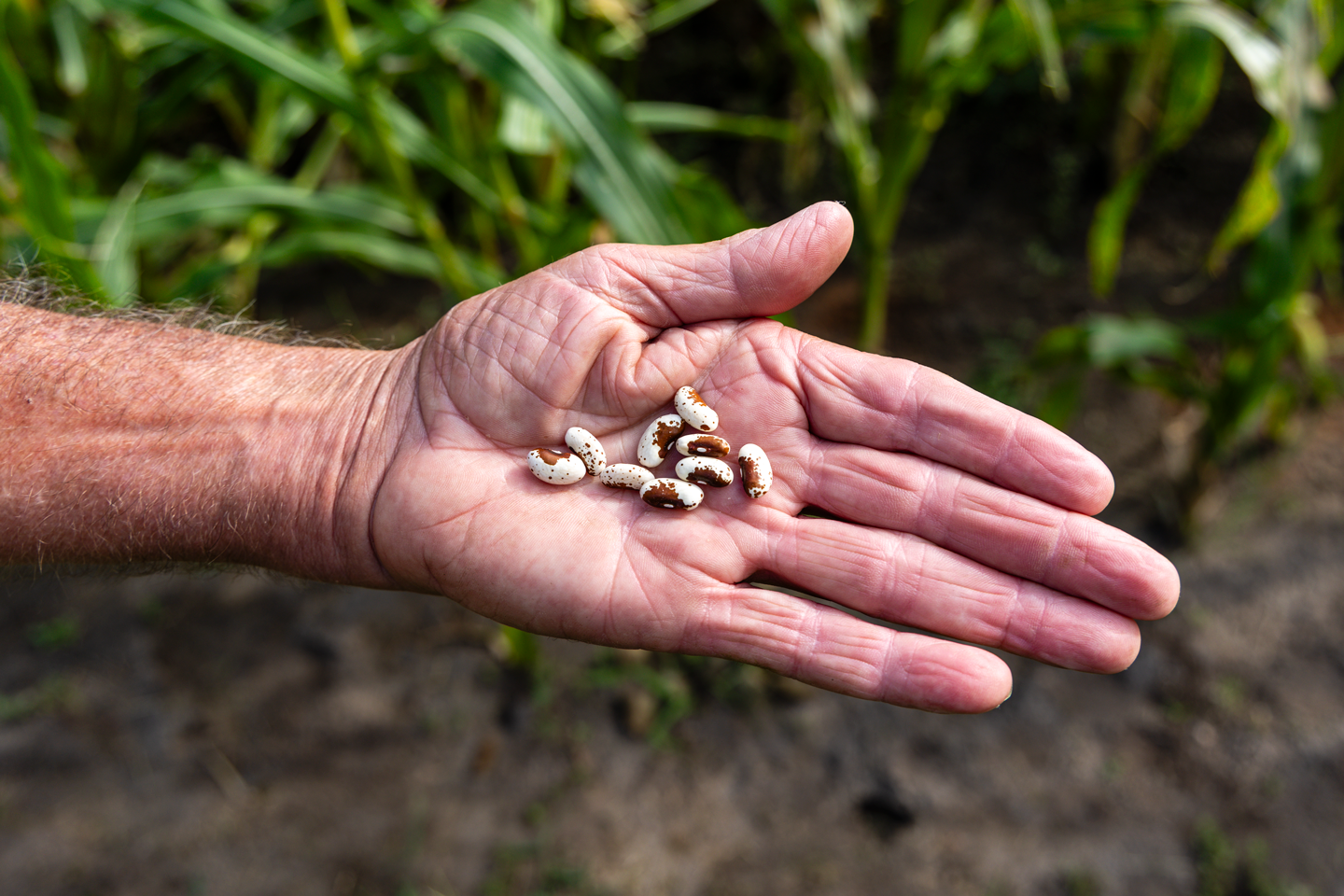
In a different area of the garden, Hunt stripped a bean pod to reveal striking bi-colored seeds of white and brown and/or black. Aptly called painted-like-a-horse beans, they’re delicious and sweet-tasting, according to Hunt.
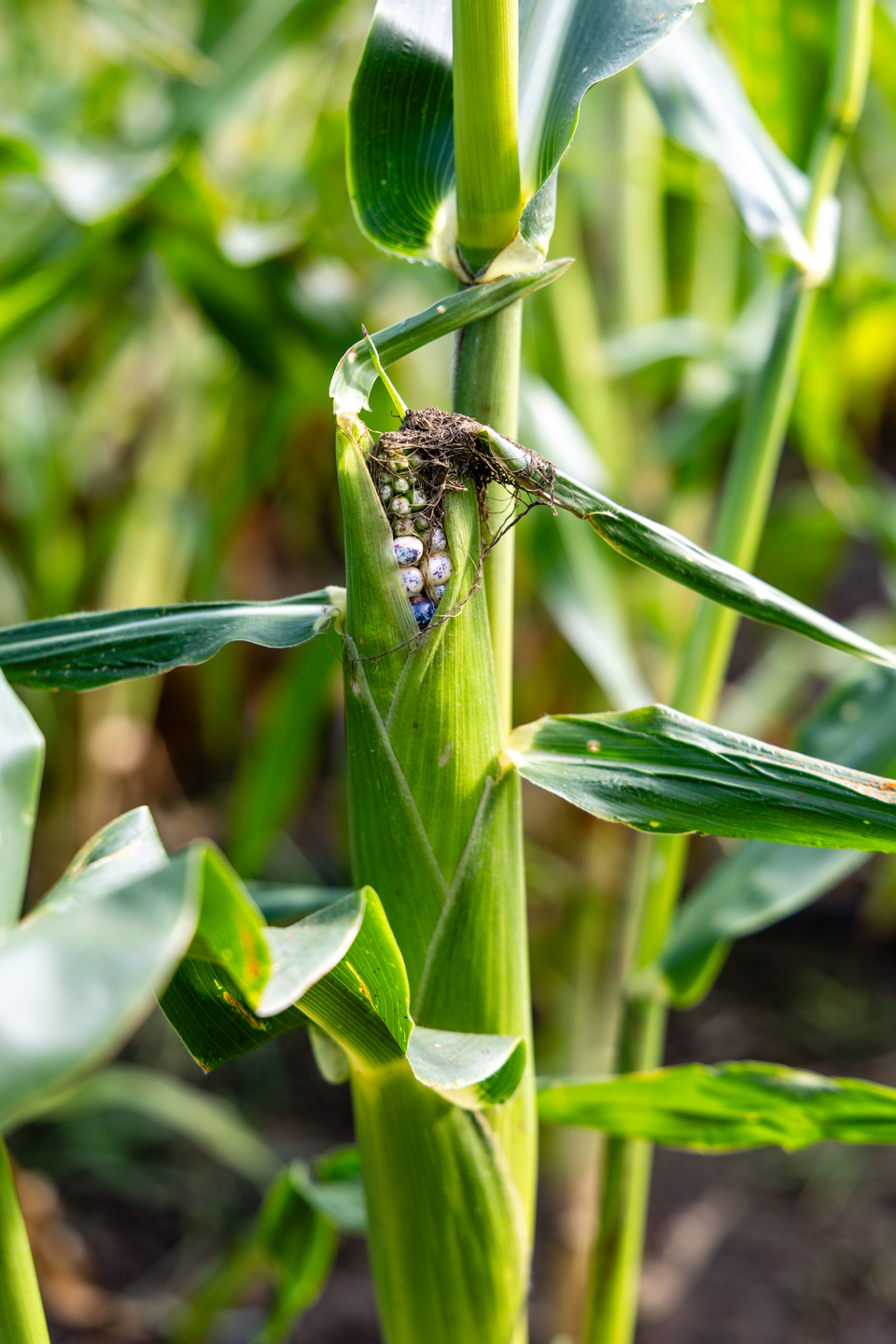
And although he didn’t grow any Mandan squash in 2024, Hunt spied a stray squash growing among his blue speckled corn, where Kahheetah Barnoskie (Pawnee), a University of Nebraska-Lincoln graduate agronomy student, was busy measuring plants and taking notes. Of all the sisters, corn is the most sacred to the Pawnee. It has a spiritual value that’s important to their daily lives, and they believe the crop holds healing powers. Corn is a large piece of the Pawnee story, and having been lost for generations, being able to bring back these ancestral varieties has been encouraging.
Thus, Barnoskie spends her summers in Nebraska traveling from garden to garden to collect data for the Pawnee Seed Preservation Society. This information helps the society identify which corn varieties are doing well and where, and to determine what to plant the following year. Barnoskie’s work is establishing a baseline that would help future gardeners replicate this success.
“When you grow something for one year or two years, you really don’t know [what it’s supposed to look like],” O’Brien explained, especially if it’s a crop that hasn’t been grown or seen in decades. But as the genetics get stronger through selective planting, the crop starts to change.
“So now we have it back in its homeland, and this corn is getting stronger and thriving, and it’s showing us what this variety is supposed to be like. And it’s here in Kearney where [there’s] clay in the soil, which is essential, too. [There are] all kinds of ideal situations going on here for this beautiful crop … . And this one’s going to teach us more this year than we know about this variety,” O’Brien said.
Share the Harvest
Although widely known for his lightheartedness and jovial laugh, Hunt tends his Pawnee garden with seriousness and pride. Of all the crops he’s grown, caring for the corn makes him most anxious.
“There’s so much pressure on the corn, because you feel like you’re given something that has been on the verge of extinction for 150 years … the corn is very sacred,” Hunt said.
But the effort is well worth the toil. Gardeners get to experience the fruits of their labors in October, when the harvest has been successful.
In October 2023, Hunt and O’Brien helped facilitate a dinner to honor the Pawnee Scouts; an estimated 1,000 Pawnees served as military allies to the United States Army between 1864 and 1877. The dinner coincided with the annual Share the Harvest event, and more than 100 Pawnee members attended at Fort Kearny State Recreation Area, as well as the Nebraska Army National Guard and former Sen. John Lowe. Volunteers prepared bison raised at Fort Robinson and cooked the ancestral beans gardeners grew. They also made 20 loaves of pumpkin bread.
In working with the Nebraska gardeners, the Pawnee are able to forge alliances that maintain homeland ties. They consider many of the gardeners like “family,” and Echo-Hawk believes their Pawnee ancestors would be pleased with their work, particularly in replenishing the corn.
“We now safeguard around 24 ancestral corn varieties,” Echo-Hawk said. “As we work toward expanding our gardens, we look forward to tasting each variety and strengthening our spiritual connection to the past — honoring our ancestors by nourishing our people once again.”