

By Justin Haag
It’s Monday night, so the summer air will soon be accented with faint sounds of flying plastic clinking on metal chains over the Pine Ridge terrain of Chadron State Park.
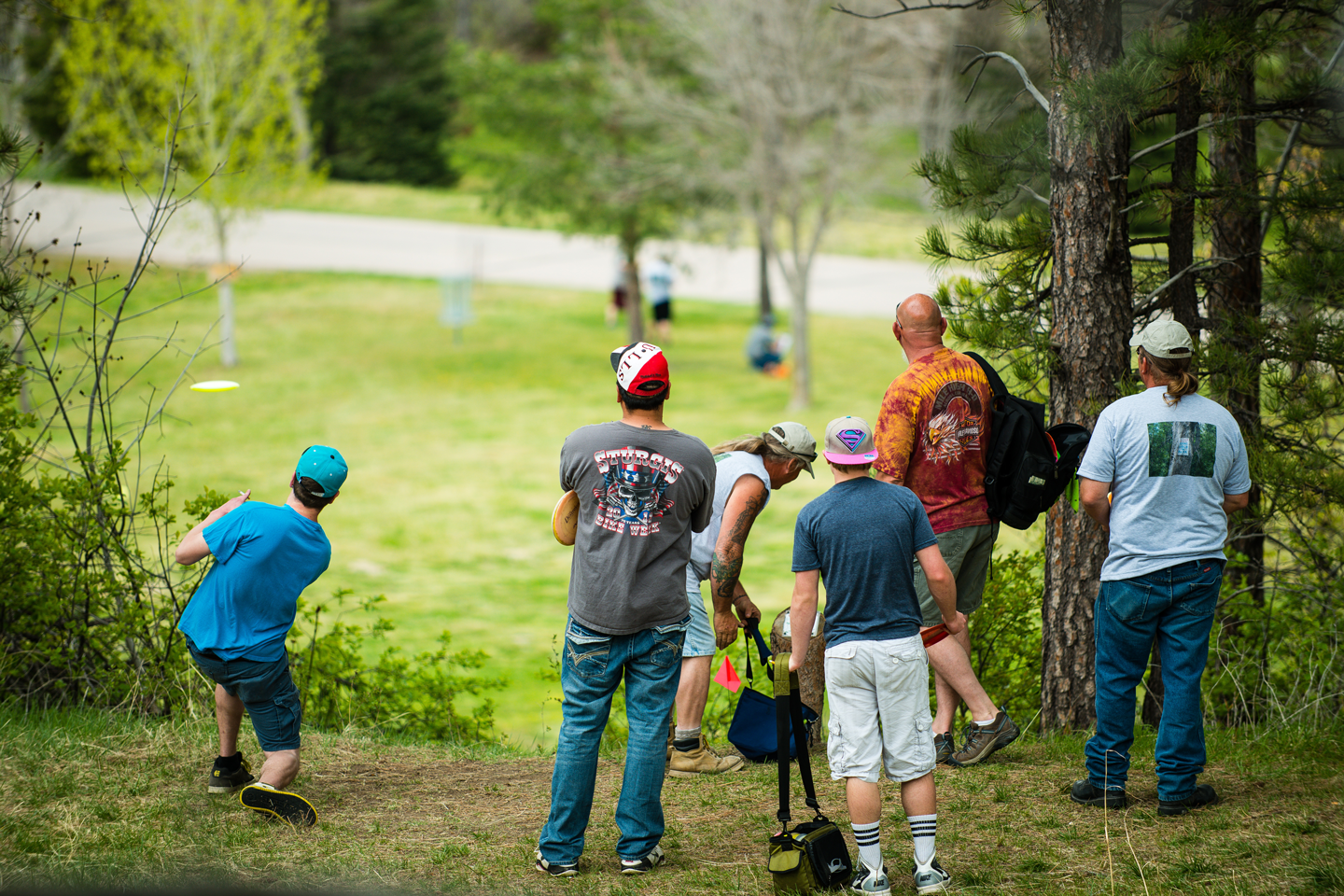
The group arrives one by one, parking vehicles, grabbing bags and congregating at a concrete slab without need for instruction. Soon, they take turns flinging plastic discs across countless greenspaces, then follow the discs from place to place with the familiarity of moving around their homes.
This is the weekly scene at the Chadron State Park disc golf course, which has become special to this group, just as courses throughout the state, nation and world have become to others. It got its start when Jake Rodiek was working as an assistant superintendent at the northwestern Nebraska attraction. He designed the layout before being promoted to the head superintendent position at Mahoney State Park.
Rodiek’s interest in the sport came before he was hired by Chadron State Park when he was a college student.
In high school, the Amherst native participated in disc golf tournaments at the world level and also collaborated with his father, Dusty, to design courses. Their Nebraska work from those days includes courses at Medicine Creek, Lewis and Clark, and Fort Kearny state recreation areas, as well as high-ranking courses at McCook’s Kelley Park and Kearney’s Cottonmill Park.
Now, as an assistant administrator for engineering for Game and Parks, Rodiek carries even more influence on the development of courses throughout Nebraska. “The agency has shown initiative to continue to add courses across the state,” Rodiek said. “It’s a growing sport. In the past 10 years, we’ve probably added 10 courses.”
Disc golf courses are attractive to park managers for many reasons. Rodiek said courses at the state parks cost only about $6,000 to install. Materials consist mostly of baskets, concrete and signage. Beyond the initial investment, there’s not much extra maintenance required and people bring their own equipment to play.
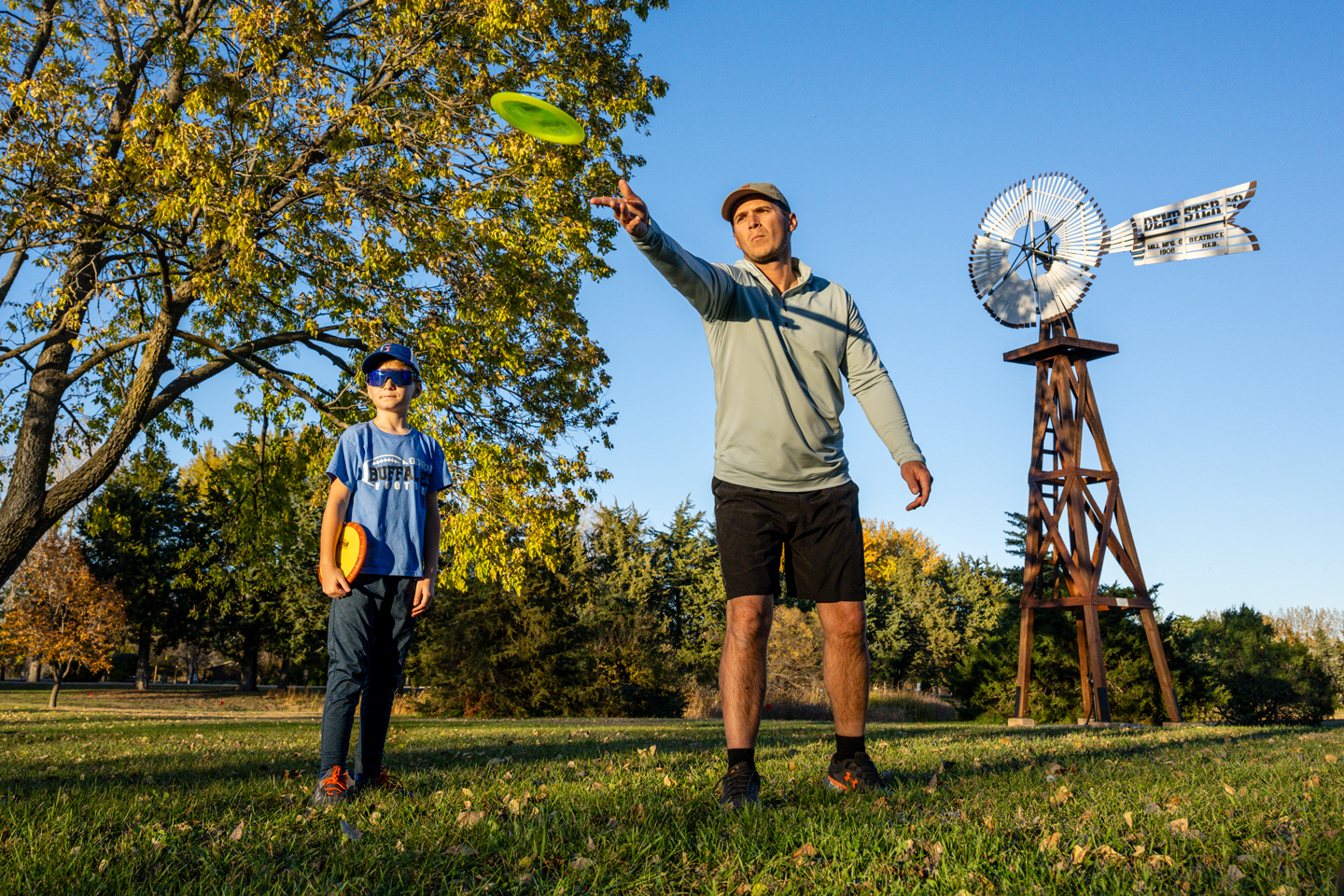
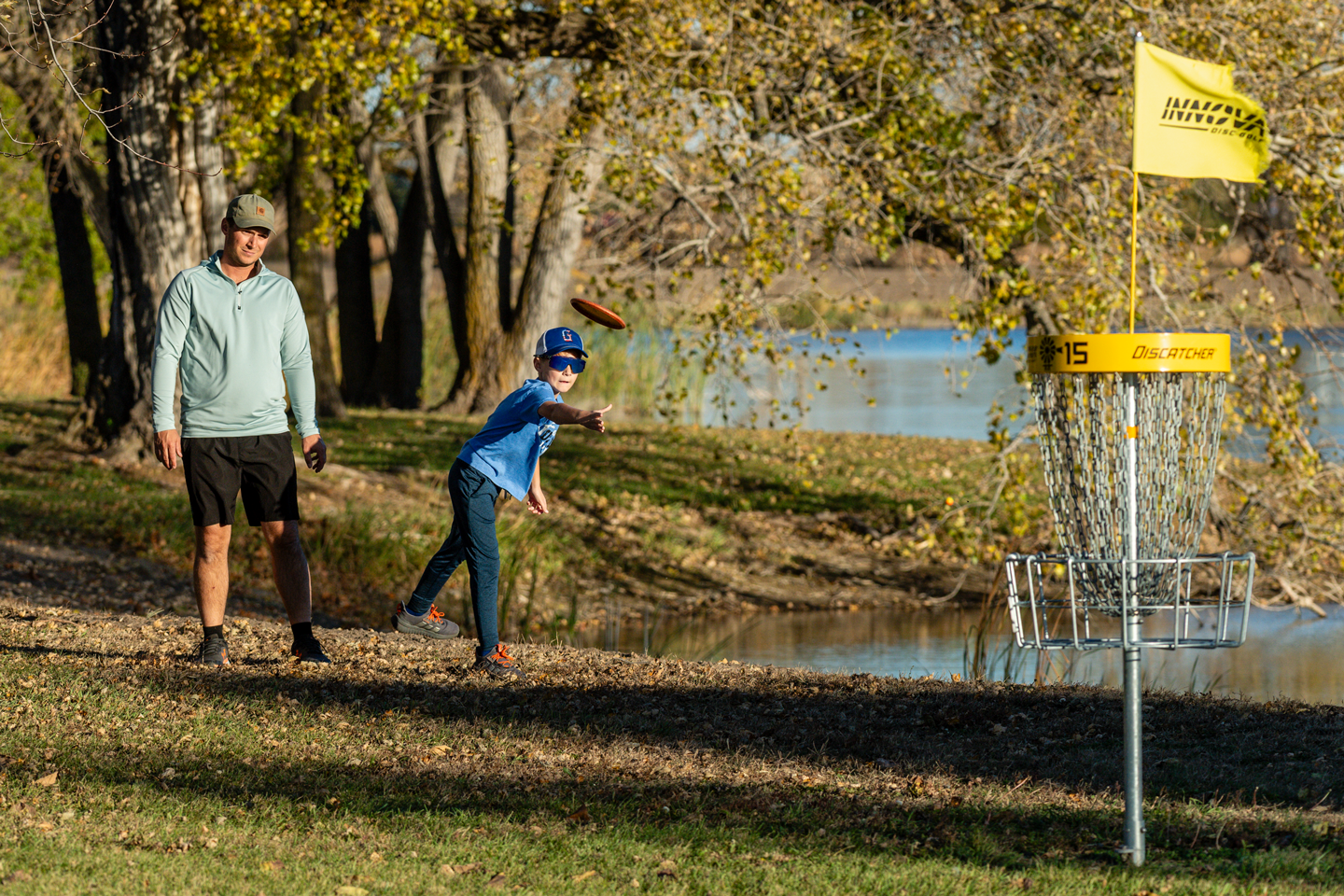
Photo by Eric Fowler, Nebraskaland Magazine.
Rodiek considers the Chadron course and a newer one he helped design at Windmill State Recreation Area near Gibbon jewels in the state park system.
The latter was completed in August 2024 with thoughtful design considerations and regulation tees and baskets among the park’s six lakes and namesake windmills. “The course is well-manicured and everything is built to specs,” he said.
Rodiek said the Pine Ridge scenery makes Chadron, Nebraska’s first state park, a top offering as well — especially hole 12 that features a dramatic drop of elevation with buttes in the background.
“Chadron has a lot of elevation shots,” he said. “There’s a lot of different varieties of golf as you play that course. It’s in a unique location.”
A Sport for All
Much of the sport’s popularity is attributed to its accessibility.
“It’s an easy outdoor activity that anybody can go out and do. It’s a good excuse to go for a walk and meet up with people,” Rodiek said.
Baskets have sprung up in city parks across the world, and the equipment to play is inexpensive. A set of six discs, including driver, putter and mid-range options, can be had for under $25.
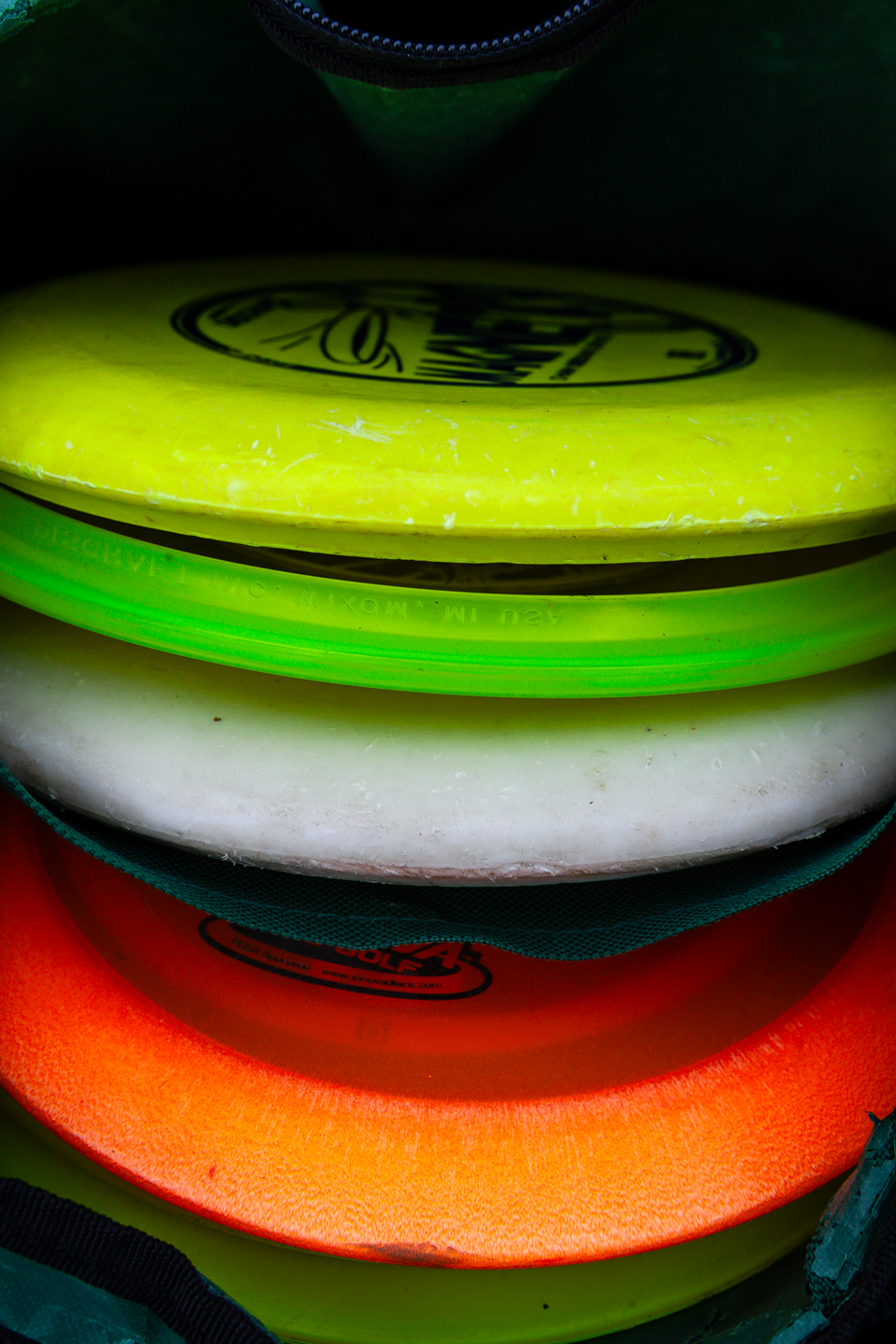
“It can be really affordable, but like any hobby you can make it more costly and buy hundreds of discs,” said Rodiek, who carries 12-15 discs when playing in tournaments. “You don’t have to do that. You can pick up just one and go out and play.”
When finding places to play, disc golfers refer to UDisc.com with its interactive map, detailed descriptions and player reviews about courses throughout the world — including information regarding a top-notch experience in Lincoln.
An Elite Course
For what could be called an elite experience for the sport, players flock to the Beal Slough Disc Golf Course in Lincoln, a rarity with its green fees.
The $5 helps maintain the course, solely dedicated to disc golf capitalizing on the woody, hilly terrain of the 47-acre Beal Slough Greenway, an important part of the city’s drainage system.
Development of the course was spearheaded by James Fleege and fellow members of the Lincoln Flying Disc Club, a non-profit organization that helps manage all of the courses in the capital city.
UDisc rankings have put it at the top of the state’s offerings, and as high as 70th in the world. Fleege said about 50,000 rounds are played at the course each year with people from almost every state.
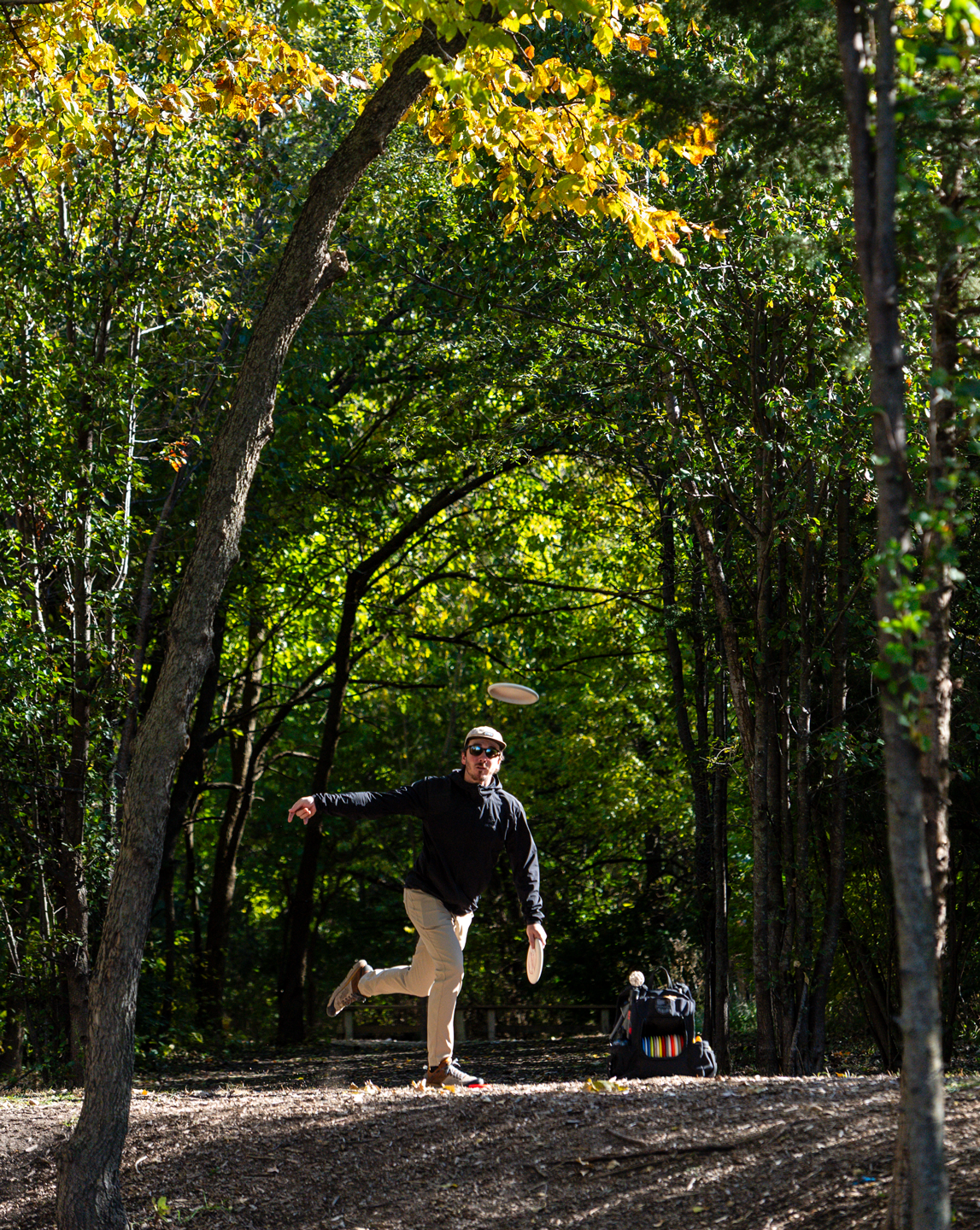
“We regularly get visitors traveling in for the weekend,” he said. “Trips from Kansas City, Des Moines, Colorado, stuff like that, just specifically to play this course, which is very cool.”
High praise from those who play the game is appreciated, but a lofty ranking on UDisc isn’t the primary goal when constructing disc golf courses in places such as state park and recreation areas, Rodiek said.
“When putting them in state parks, you have to avoid the fishermen, campers, cabins, trail rides, and all sorts of things,” he said. “We’re installing them for a family-friendly park activity that people can do when they’re staying at the park.”
Disc Golf Primer
There’s a lingo to it, and, of course, special discs tailored to different shots. Drivers are aerodynamic for distance while others are built more for control.
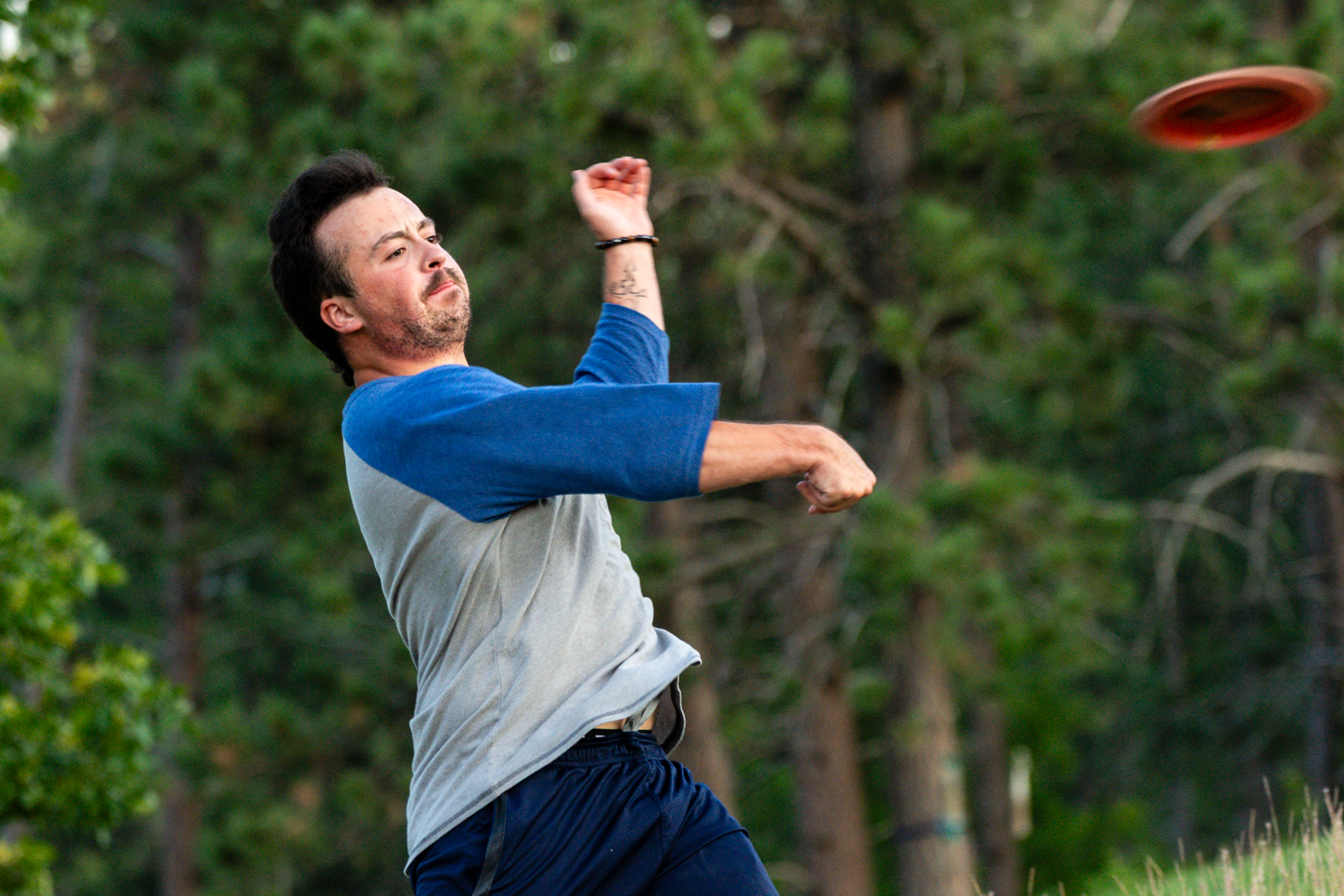
Sidearms, forehands and backhands get the disc down the fairway. Butterflies and flappers are for putting.
“Each type of disc is designed to do something a little bit different. It depends on how you throw it for which direction it’s going to go,” Rodiek said. “If you throw a disc backhand, it will go left; forehand makes it go right.”
Sometimes, improvisation is necessary.
“There are a lot of get-outta-trouble shots like thumbers and tomahawks,” Rodiek said. “Sometimes you feel like you’re doing yoga when playing disc golf.”
The average tee-to-basket is about 270 feet with a par 3. Championship level courses have fairways of 400-500 feet — a distance that proficient players can accomplish with a good drive.
Big Dreams and Humble Beginnings
Had disc golf been born earlier than the sport with clubs and the dimpled ball, would it just be called “golf’ and the other “ball golf”? The popularity of the disc game has picked up steam since emanating from the West Coast. The number of disc courses is nearing the number of “regular” golf courses throughout the United States, even though ball golf got a big head start.
It’s impossible to know who first made a game of throwing a flying disc, or perhaps a pie pan, at stationary targets. However, the late “Steady” Ed Headrick is given credit for being the “Father of Disc Golf,” a title he earned dating back to his work as a key figure at Wham-O. It’s the company that invented the Frisbee. His obsession with the disc golf concept began in the early 1970s as he and others informally walked around challenging each other to hit objects such as trees and trash cans with their flying discs.
Wham-O didn’t share Headrick’s dream of building the sport of disc golf. When Headrick walked away from his lucrative job at the company in 1975, he put his passion to work developing and promoting disc golf and established Oak Grove, the nation’s first public course for the sport at Pasadena, California. It first featured poles as targets but then installed the “disc pole hole” that Headrick and his son patented. It’s the same basic design of today’s baskets with chains that are found across the nation.
It would be a while before the craze reached Nebraska. Roper East at Interstate Park in Lincoln, which was built in 1992, has the distinction of being Nebraska’s first course.
That summer, a newspaper story about the new attraction boasted that courses were being built “everywhere,” with more than 300 across the United States. Now, the number of courses in Nebraska alone is approaching that figure and there are about 16,000 courses in the world — two-thirds of which are in the U.S.
“There are pros making six figures playing disc golf now,” Rodiek said.
Spinning Ahead
The public’s interest in disc golf remains strong, and, similar to many outdoor activities, it saw a big boost of participants during the COVID pandemic. In 2024, 1.26 million players used UDisc.
Clubs and groups can be found in most places the sport is played, the flagship organization being the Professional Disc Golf Association.
While Rodiek has had a lot of great memories playing the game and developing places to play the sport, a highlight was watching his father, the course designer, be inducted to the Nebraska Disc Golf Hall of Fame during a ceremony at Eugene T. Mahoney State Park.
For a growing segment of the population, the development of courses is a legacy that will long be noticed for park visitors far and wide.