

Story and photos by Jeff Kurrus
The Central Flyway Decoy Collectors and Carvers Club is an eclectic group. There are world-class decoy carvers and first-time folks with the worry of “I’m not sure if I can do this.” There are those who carve for medical and mental health benefits; there are others who just want their carving to resemble the species they have chosen. Folks who are terrified to paint and others who carve so they can paint.
The one thing they all have in common is the step during this process that possesses them during the most tedious parts of this fascinating passion: the carving.
Thursdays with Norm
“Thursdays with Norm” is an often-repeated phrase among this group of carvers.
This describes the days away from the monthly club meetings to get together in La Vista at Norm Wise’s house for carving, critiquing and camaraderie.
“I just enjoy doing it,” said Norm, who began carving in 1980. “A lot of people who come to my place are just good friends. We enjoy each other’s work.”
Much like with other artistic disciplines like photography, carvers develop their own style — so much so that Norm can pick out a carver’s work without seeing their name attached.
“Bill Browne [a club member] … the thing he does best is make a bird come to life. To not be stiff.”
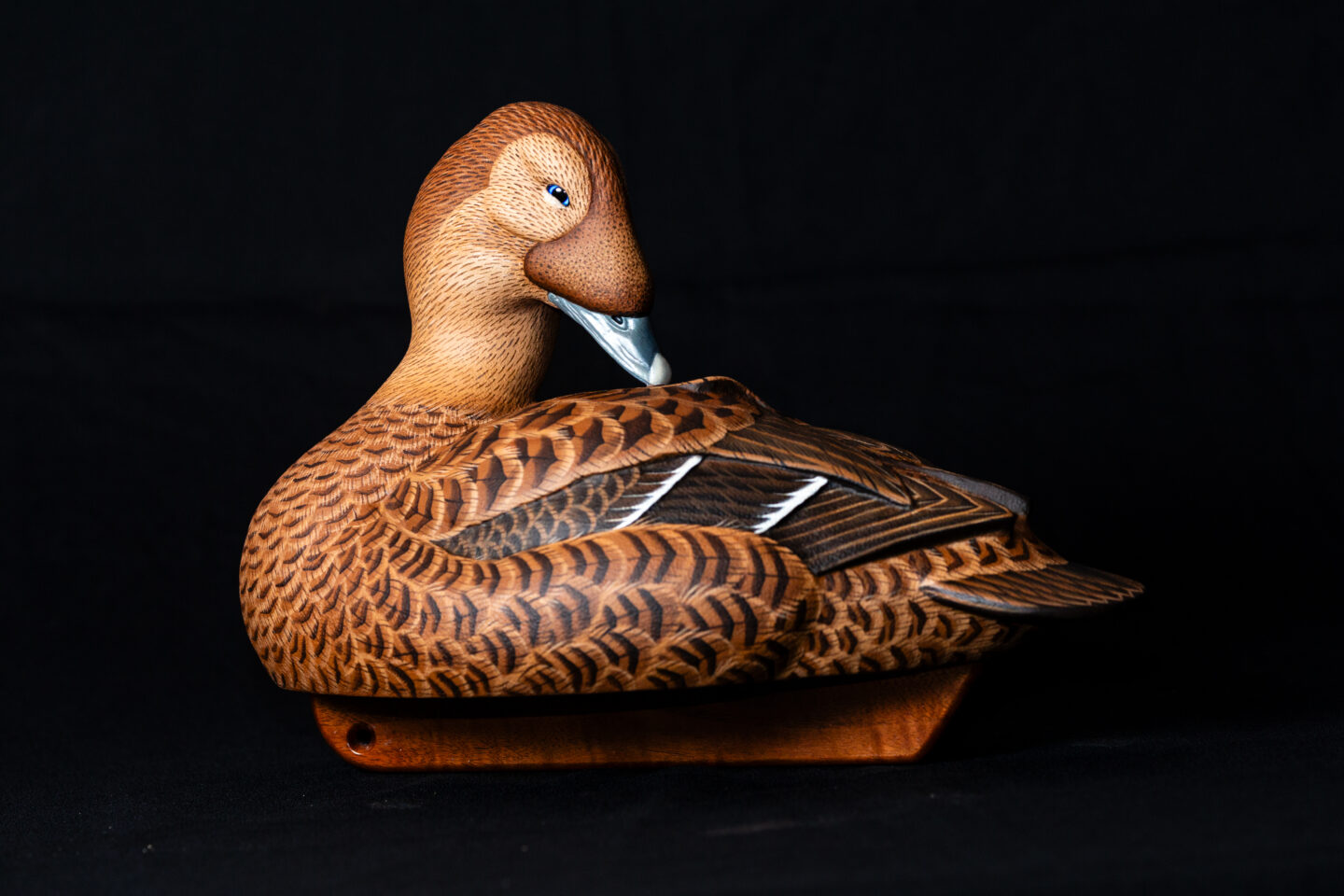
During conversations with the group, the term “stiff” resurfaces often. “A stiff bird has no negative space with shaping,” Norm said. “It looks more like an inanimate object. It’s the shadows, layers and depth that keep it less stiff.”
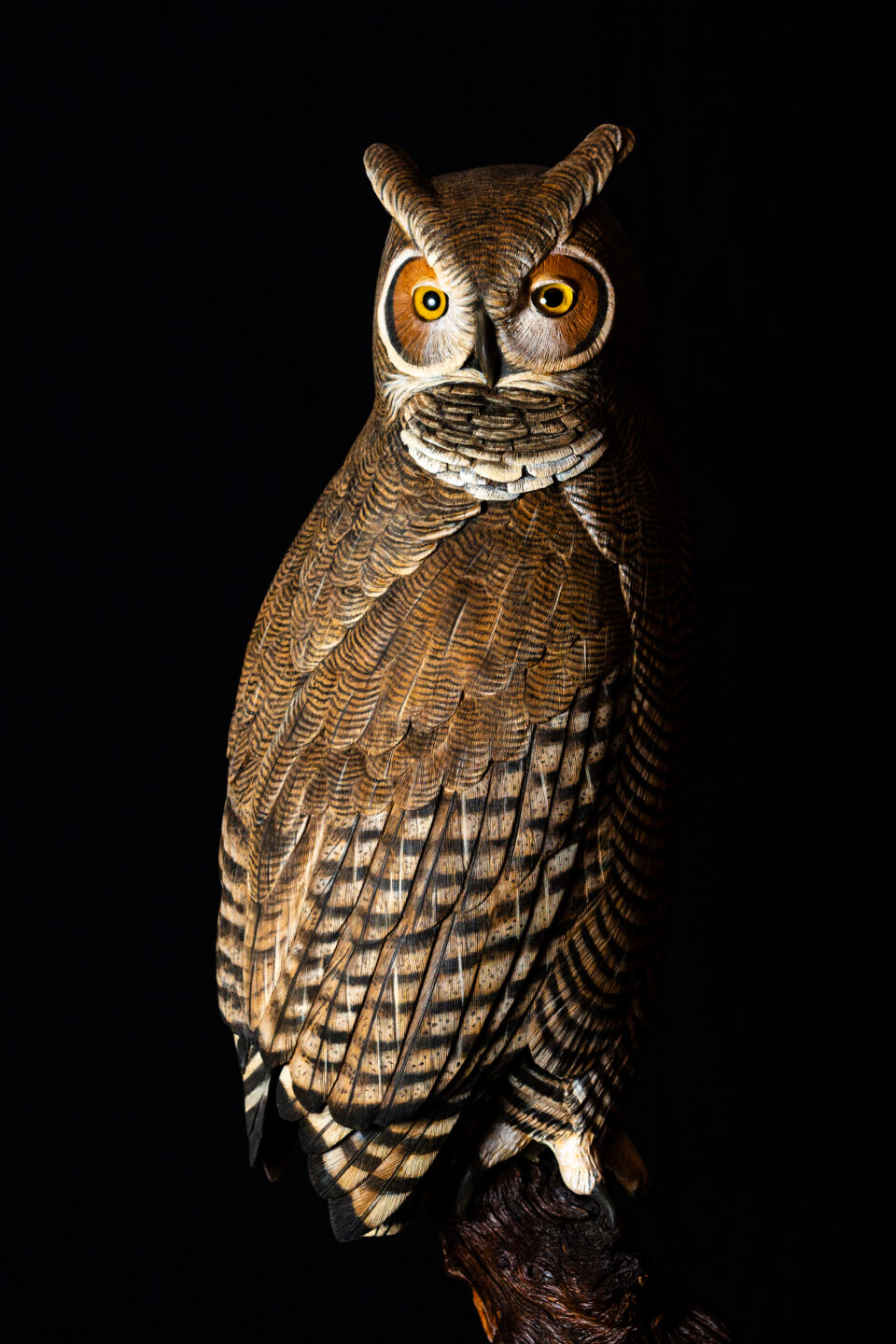
Besides learning from and helping other carvers, Norm admits his greatest reason for carving. “The only reason I carve is because I like to paint.”
Many carvings ago, he took five years of instruction from a local artist. On the first night of class, he brought a tackle box of paints and brushes.
“What’s that?” the teacher asked. Once he explained, she followed. “Well, you can take that home because you won’t need it for two years.”
“For the next two years,” Norm said, “we worked on composition and mediums. It was often boring, but it was rewarding to make my carvings more animated and more comfortable when I got the paint out.”
In Norm’s mind, decoy carving has a few simple steps. In the beginning you survive. Then you model great work around you. Finally, the process starts to become your own.
What Color to Put Where
After Bill Arneson from Lincoln took a carving class at Southeast Community College a couple of years ago, he was off and running. He spent his early carving days making decorative plates but has since moved on to the task of carving decoys.
The club’s first instruction was to start small, giving Bill the assignment of a miniature decoy, which has many advantages.
“You start to learn the anatomy of the bird and what color to put where,” said Bill. “There’s a difference between the back of the bird and its wing pockets. Painting is intense. It has been the difficult part for me.”
Like many of the club’s carvers, they lean on each other for instruction. “I have an appointment with Norm soon so he can help me get the details of the feathers. He knows the anatomy of the bird so well.”
Bill’s next step is a full-size decoy. “Starting with the miniature is great because I learned that the tail feathers have to go this way, and the head has to be shaped like this. And the bill has to be cut just right.
I can look at the miniature to go by, and that’s a big plus.”
Carving by Necessity
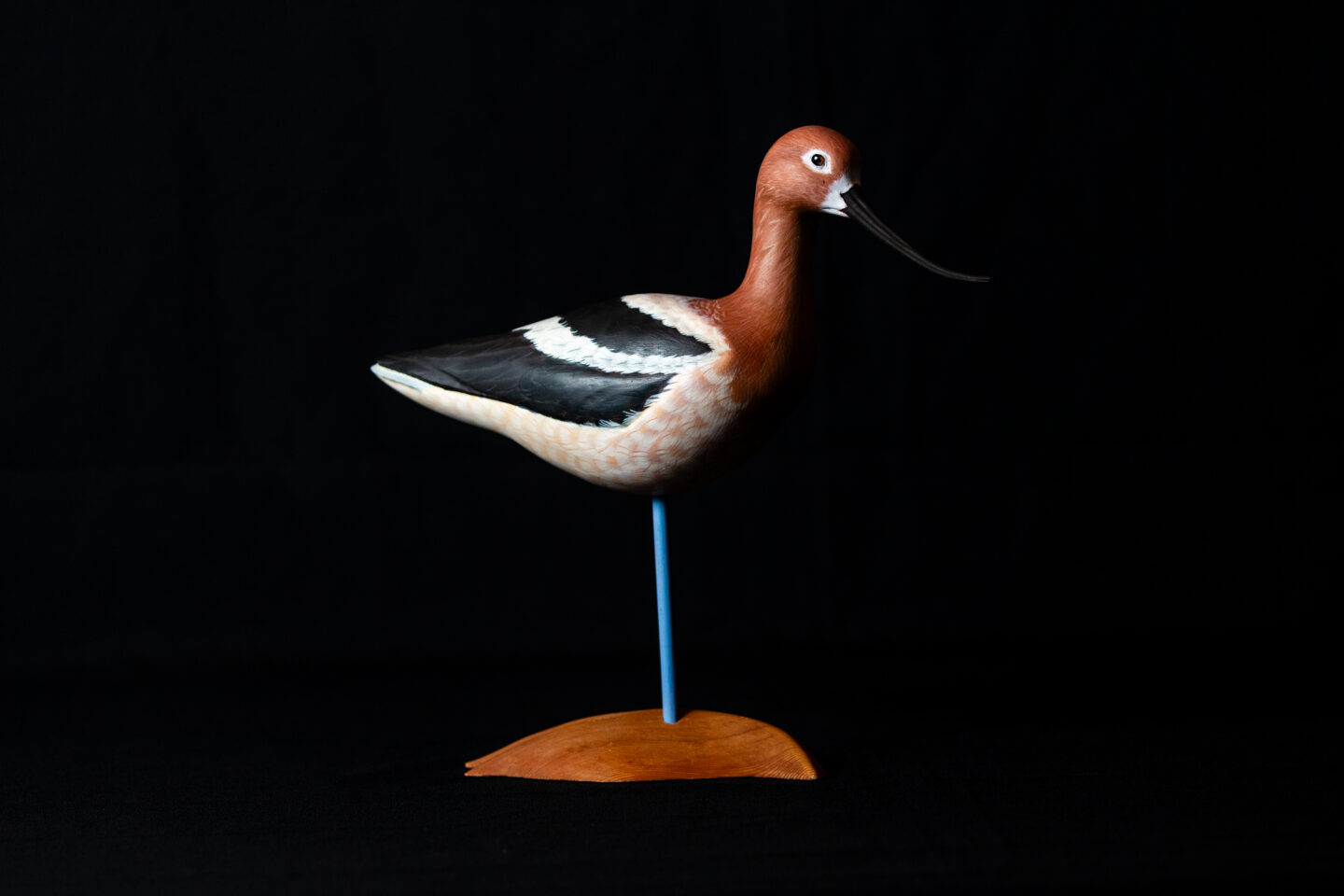
Originally, Tom Christie from Ashland began carving decoys out of necessity. “While I was duck hunting, I couldn’t get goldeneyes to come to my river rig when I was using other decoys.”
Once he started carving his own, “the goldeneyes came right in.”
In 1986, Tom began submitting his carvings to competitions. There are 12 categories, he said. These include mantel, what he deemed “fancy” birds, miniatures, functional and even a “no holds barred” category where carvers can go all out on any number of methods. In some of the categories, like the hunting ones, the decoys have to be placed in a water tank to ensure they float upright.
Regardless of the category Tom competes in, he is constantly challenged by his lifelong pastime. “The difficult part for me is sculpting a bird in the preening position where it looks comfortable.”
The painting can also be a challenge, even though he enjoys this process the most. “Adding a third dimension with the painting is a challenge for me.”
But the draw for the entire process is simple. “I love seeing something to fruition. It comes to life.”
Either on the competition table or in the duck blind.
Simply Love the Work
Chances are you have seen Cliff Hollestelle’s work. This carver from Lincoln has been featured in this magazine before, and his bronze sculptures have been on display across the country.
Yet he, too, is a member of the Central Flyway Decoy Collectors and Carvers Club, having started carving
in the 1960s while getting an art degree in college.
His work is meticulously detailed, but he also knows where his limitations are. “I don’t make a lot of folksy birds,” he said, describing birds that resemble simple portrayals versus real-life interpretations. “But I really like them. People have an eye for that stuff that I don’t have.”
He has also made birds for utilitarian purposes, using his finished carvings while hunting near Cedar Bluffs, and his house is filled with any manner of carvings, from intricately detailed duck decoys and owl recreations to life-sized songbirds yet to be painted.
“I simply love the work,” he said.
Look Like a Duck
Jade Chapman from Papillion was looking to expand her skills in art, including 3D art. She was always interested in wood carving but was unsure how to get involved. She then saw an ad for a wildfowl carver course in a Game and Parks e-mail newsletter and signed up.
“I didn’t know if there were going to be any other girls there,” she said. “Then, when I showed up, there were four.”
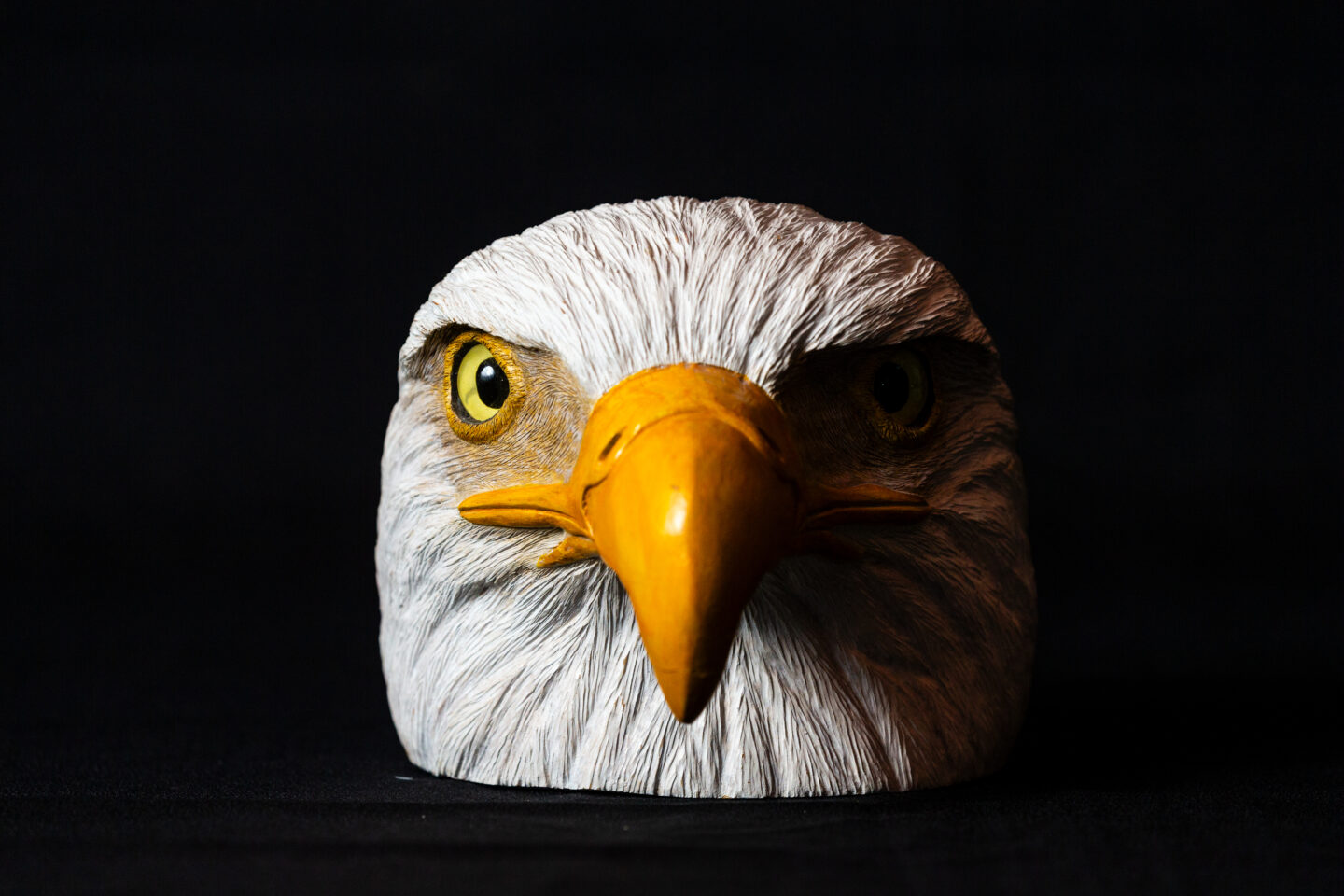
For her first carving, Jade’s primary goal was that her duck “looked like a duck.” It went well, and since that day in February, Jade continues to attend club meetings, learning the art form and receiving instruction from other members, who have encouraged her to enter competitions.
“They build my confidence,” she said. “They’ll definitely push you and find a way to get [your work] to look the best.”
“The fun part is the challenge.”
Learn the Bird
“You have to study the birds,” said William Browne from Lincoln. “You can’t just make stuff up.”
When Bill started competing, he jumped right into the professional track because he had been carving for six years for money. In many ways, this transition became a shock to him.
“I got thrown in with the best carvers,” he said. “And judges are crazy picky at the big shows.”
Photographs, other carvers and even ornithologists are used to judge. But there remains an additional element that many viewers don’t realize.
“You can be really intricate, but that doesn’t mean it’s good. The bird has to have a flow to it. You have to know where the feathers come from on the wing so you know how the feathers lay. This is the hardest thing to do for carvers.”
Another hard part is being critiqued at big shows. “The first three years of the show, you think someone has won because it’s their last name and they’ve won before. But then you realize and start seeing that a certain person’s birds have more presence and feel than the one next to them.”
In one such moment, he had a realization. “I’m not putting in the time,” he thought. “I’m not learning the bird.”
Before School, After School
Lon Bernth from Papillion was a school principal for more than 30 years, and the role of a principal is enormous. Early morning meetings and after-school athletic events. It’s a 24/7 job. Which is why Lon always had a carving nearby, just in case he got a few minutes to work on it.
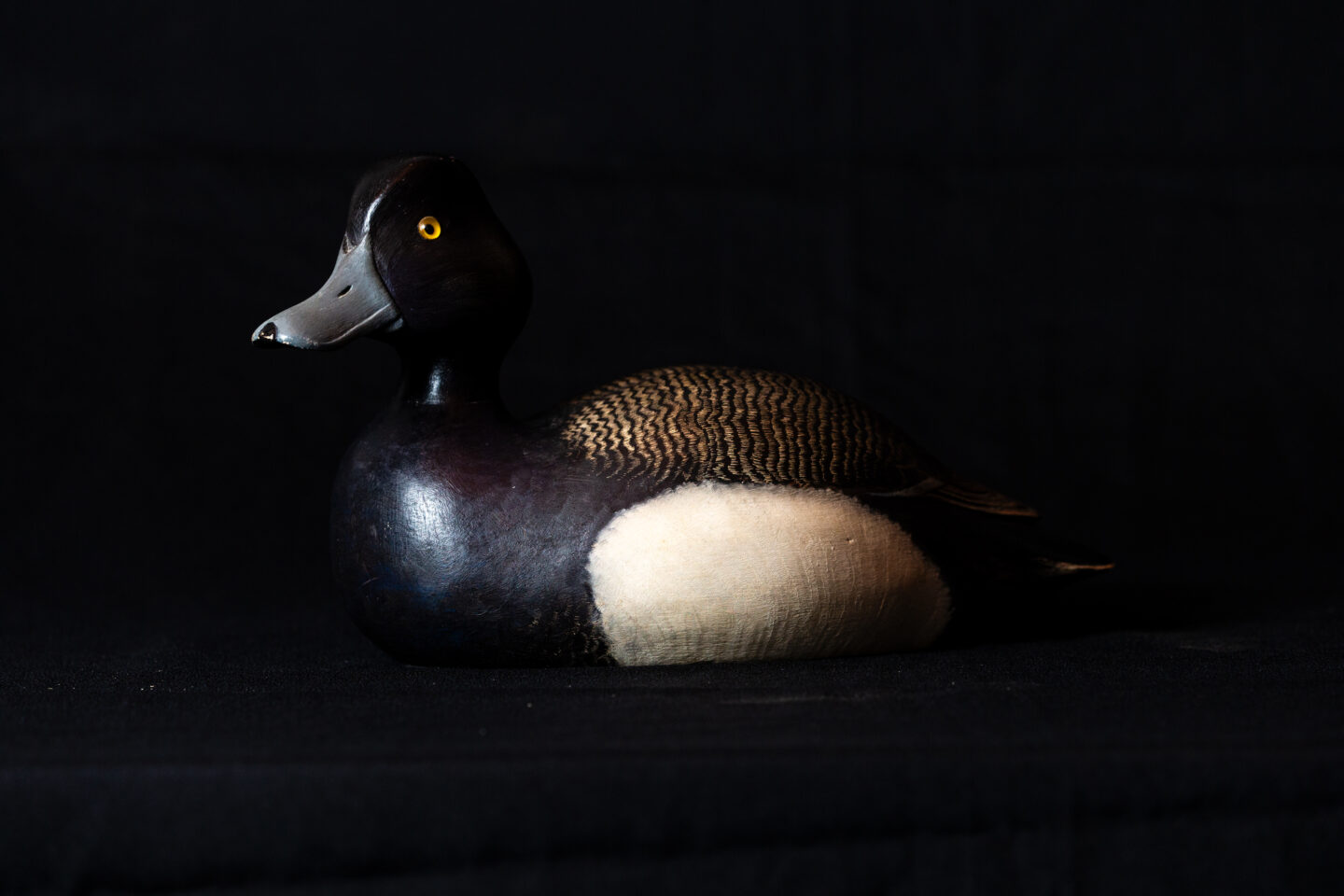
“I always loved art,” he said. “I was always painting and coloring as a kid.” Then, when he started carving, he fell in love with the step-by-step process. “Watching it come from a block of wood to look like a bird or animal. Then you woodburn it, and it added more. Then you painted it, and it added even more. I was hooked.”
Now, he’s nearly 50 years into carving. “A lot of people, when they retire, don’t have something to do,” he said. “You just want something you like and that you can spend time to do.” Carving is it for Lon.
Make a Smaller Bird
Kirk Pfeffer from Council Bluffs remembers the day 27 years ago that he was walking through an airport and saw a man detailing a carving as he waited on his plane. “This guy was an old member of the club, and he turned me on to Norm, and I eventually started taking lessons from Norm and have been doing that for a long time now.”
To carve, Kirk said, you have to find a mentor. “You get so much help from everyone here,” he said. “Finding a mentor, an instructor, that was huge.”
This support remains so important because the act of wood carving is not a simple one, he said. “Anyone can do this, but it takes perseverance, and the learning curve is steep.”
An engineer by trade, painting is toughest for Kirk. “I’m never good enough in my own mind doing it,” he said. “It’s a struggle.”
But he does have one tip that can help any carver, new or experienced. “If you start out carving a larger bird and it looks like garbage, then make a smaller bird out of it.”
A Light Clicked On
“I was carving in a vacuum,” said long-time carver Al Thomas from Omaha. “Then I went to a show and saw what the other guys were doing. It turned the light on.”
That light has stayed on for five decades as Al has continued to work, competing nationally and contributing any number of projects to Pheasants Forever and Ducks Unlimited banquets. “When I started in 1979,” he said, “I was an art teacher. I started to do woodworking, and I had grown up hunting. I put these three things together.”
Now, long since retired, Al — for the most part — continues to have fun with it, except for one aspect.
“Sawdust is not fun,” he admitted. “Instead, I use a lot of knives.”
I’m Not Going Back
“When I first went to the club,” said Dick Zechmann of Lincoln. “I told my wife I wasn’t going back. They were so good.”
His wife encouraged him to return, which he did, producing his first carving soon after. “I was so proud of it,” he said. “I was super happy.”
Since that first bird, the carvings have become much more elaborate, yet he continues to find value in that first bird. “I show students and younger people where I started,” he said. “Then I show them the real thing. This encourages them.”
Like other members, he has consumed videos and books, was critiqued by club members and spent many sessions with Norm. And the challenges have continued.
“The colors,” he said with a shake of his head. “I just couldn’t get the colors right when I started. I didn’t know what mixed with what. I needed a color wheel to show me.”
He would do this over and over again, slowly improving through the years. “The guys in the club kept telling me to keep trying. Keep going.”

I Needed to De-stress
Claire Meerian of Gretna started carving decoys because her dad, Randy, asked her to come along. From his perspective, it was one more way to spend some time with his daughter who had finished college and had now entered the workforce. But for her, an accountant, it was a welcome relief from tax season.
“I was working 60 hours a week and needed some creativity to deal with that,” she said. “I needed to de-stress.”
So she started going to meetings and working on her miniature duck decoy. “I’m technical to a tee,” she said. “And the members of the club let me know that my duck was boxy. It looked good, they said, but they showed me I had to have some creativity when I was carving.”
This is exactly what she has needed. Plus, all of her friends want decoys for Christmas and can’t wait to see what she comes up with.
It Becomes Real
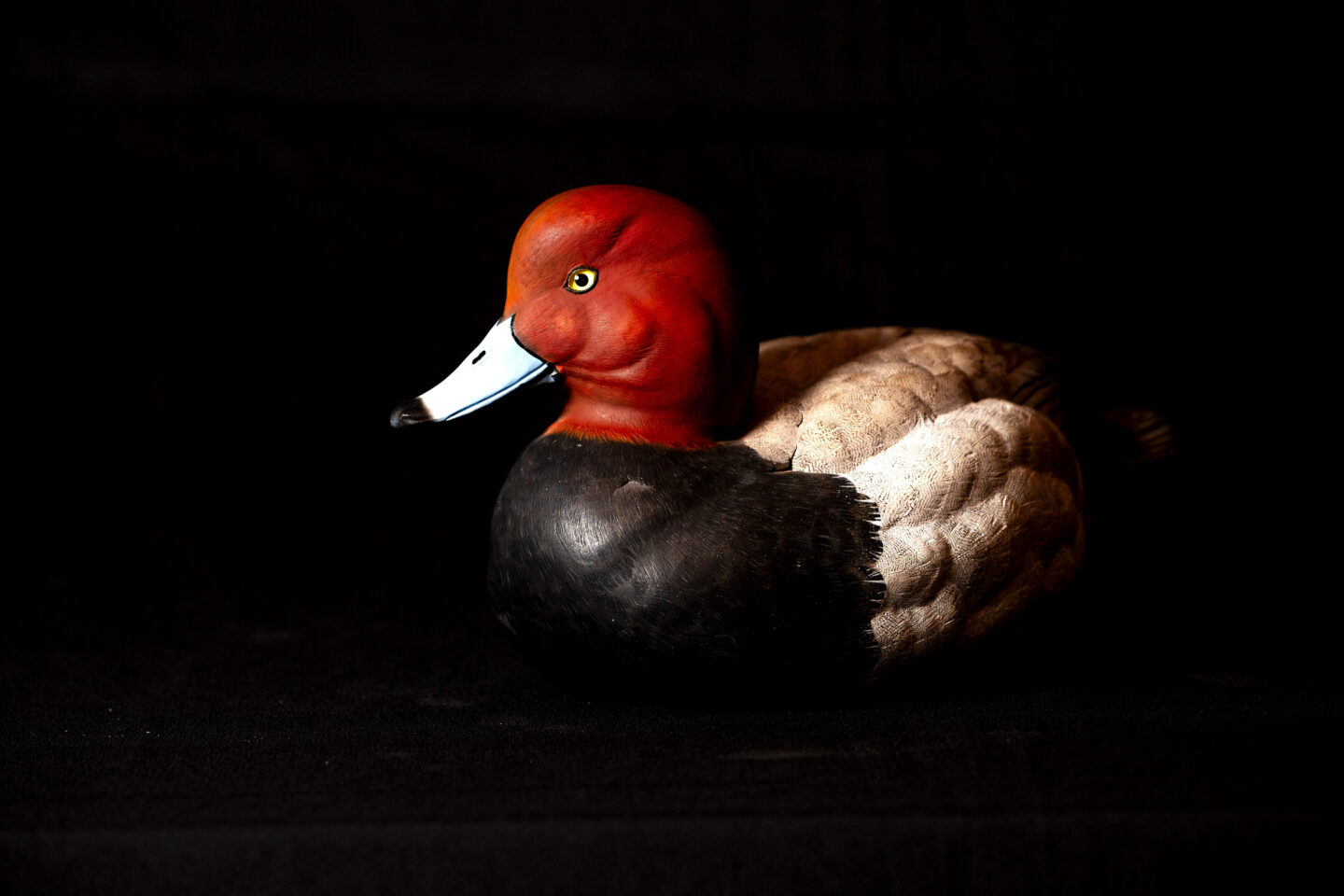
“It comes to life,” said Ed Svoboda, looking at his carvings before him. “The painting is the most enjoyable. It becomes real when it’s painted.”
Ed has carved since 1980, spending Thursday mornings through the years with Norm and many of the other members working on projects to display during competitions.
“I’m in an intermediate category,” he said. “There are novice, intermediate, advanced and master’s levels. If you start to win the novice and intermediate, you move up. I’ve gotten as high as second place in those.”
Regardless of his finishes, it’s therapy for Ed. He’s currently working on a wigeon and has no plans to quit anytime soon despite its challenges.
“Finding the pattern and getting it cut from the block of wood is the tough part for me,” he said. “The painting — the painting is my satisfaction.”
I’d Go Crazy
Don Gabelhouse of Lincoln carved his first decoy in 1970. More than 55 years later, he continues to carve for one main reason. “If I didn’t have carving, I’d go crazy.”
Don, meticulous by nature, began entering carving contests soon after he started, eventually winning an amateur category just a few years later, only to receive some much needed, albeit critical, comments by his former University of Nebraska-Lincoln instructor, Paul Johnsgard.
“Johnsgard pointed out my errors on the bird and said another one should have won instead of mine.”
While he laughs at the memory, it also set Don on a path of gathering as much information as he could to become as detailed as possible. He has continued to receive critiques of his work, even if he never leaves the house.
“I’m red-green colorblind,” Don said. “But my wife was an art teacher, and my daughter is an art teacher. ‘You’re not supposed to have green here,’ is something they would say to me, commenting about a particular bird I’m carving. Plus, there are so many other resources.”
He uses books, magazines and Tom Christie’s YouTube videos for tasks like determining feather size, shape and position and paint color mixing. “You have to totally understand the anatomy of the bird you’re doing,” he said, a constant reminder for a veteran or novice carver.