

Story and Photos by Doug Steinke
In the late 1970s when I was 8-12 years old, my dad was working for Central Public Power and Irrigation District as a civil engineer. During the summer, he would take me to his office on the top of the dam at Lake McConaughy. As soon as I got out of the car, I’d scurry down to the face of the dam and the rocks next to the spillway and boat dock. I would spend the entire day fishing and combing the shores for lost lures.
I once found a fluorescent orange Rapala wedged underneath a pizza box-sized flat rock. As I flipped it over, three crawdads took off. One of them went directly toward the deeper water of the lake. Instantly, a huge smallmouth snatched it as it fell to the depths. The light bulb went off.
I then spent my days flipping rocks and trying to catch those 2- to 3-inch crawdads. I found a method of putting them on a single hook with no weight and casting them into the dark shadows that were in between the boulders on the shore. As a kid, I imagined the crawdads yelling, “Help me, help me” as they disappeared into the darkness below.
Within seconds, my line would thunk, and I would try to wrestle in one of these spectacular fish. More times than not, they would snap my line before I could get them onto shore.
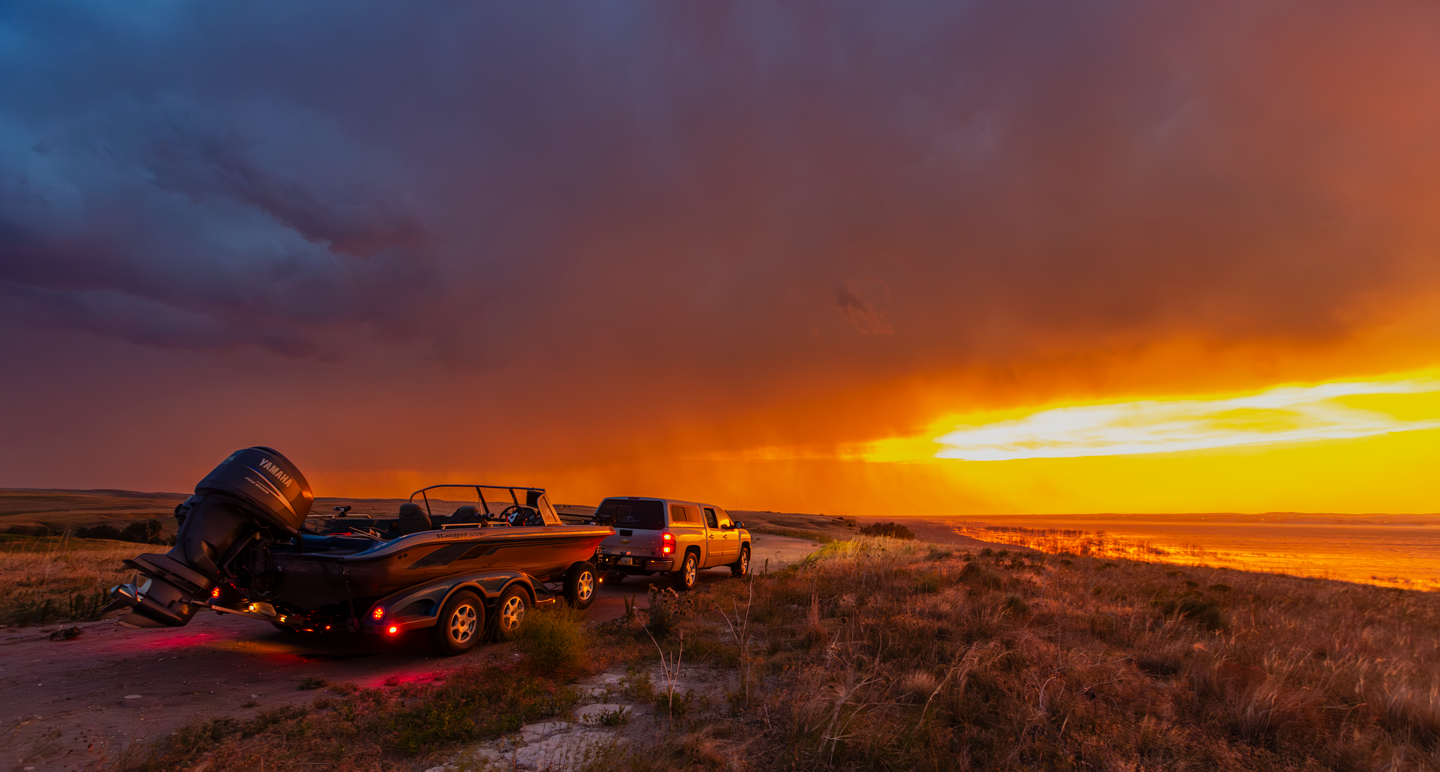
This was how my Lake McConaughy fishing education began, and it hasn’t stopped since.
Dad and I were diehard walleye tournament anglers in the 1990s and 2000s, even placing in the top 10 several times. He also guided on the lake for 10 years. For me, I was a walleye-all-the-time type of fisherman. But as my boys grew up they wanted to catch other fish, and we found ways to do just that.
Some days we’d try to catch a bass slam — wiper, white bass, smallmouth and a largemouth. On other days we’d target channel catfish on the dam throwing Rat-L-Traps or pull out the fly rods and cast for smallmouths with poppers, wipers on scroungers or carp on white rabbit fur – also known as “puke” — flies. Variety became the name of the game.
Despite having more than 50 years of experience fishing Lake Mac, I’m well aware that many of you may have limited knowledge at this lake or might be fishing it for the first time. These words are for you.
Getting Started
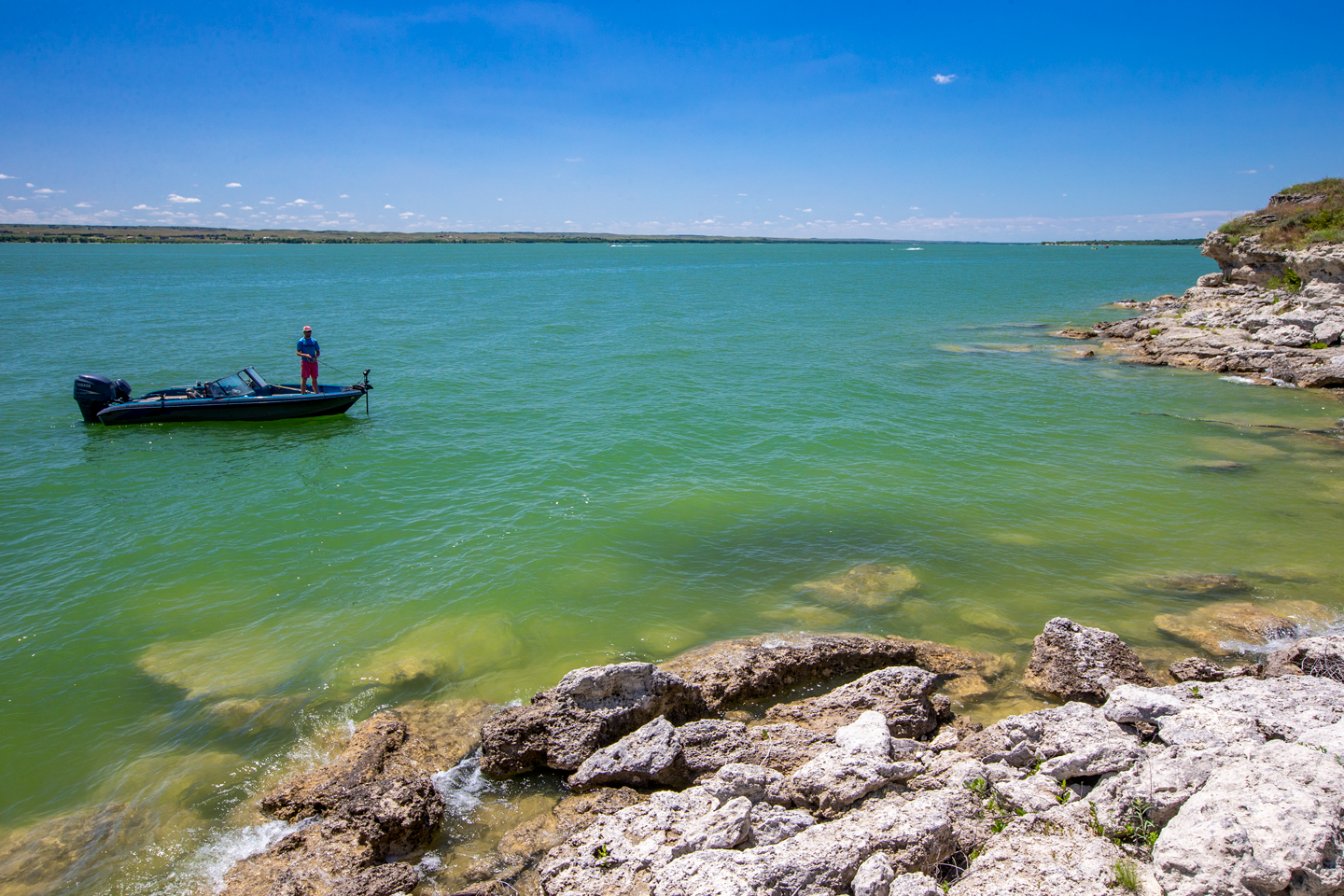
To begin, I follow a few rules of thumb I have figured out over the years. One, Mac is a wind-driven fishing lake. Most times, when the wind is blowing, the fishing is good. When it is not, it can be quite difficult.
Two, every day, five separate fish species eat a bug, a leech, a shad, an alewife or a crawdad at five different places on the lake. Rare is the day when nothing is biting somewhere on the lake.
Three, often whatever’s working on the north side of the lake is also working on the south side of the lake. So, say there is a live bait dragging bite going on at Admiral’s Cove in 5 to 15 feet of water. Chances are you can go directly across the lake to Vans Lakeview and drag bait in 5 to 15 feet of water and duplicate it
And four, probably my “golden rule” is fish your own fish. If there are a hundred boats dragging bait in 5 to 15 feet of water, chances are you can go find your own spot and fish all by yourself doing the exact same thing on the lake.
My Setup
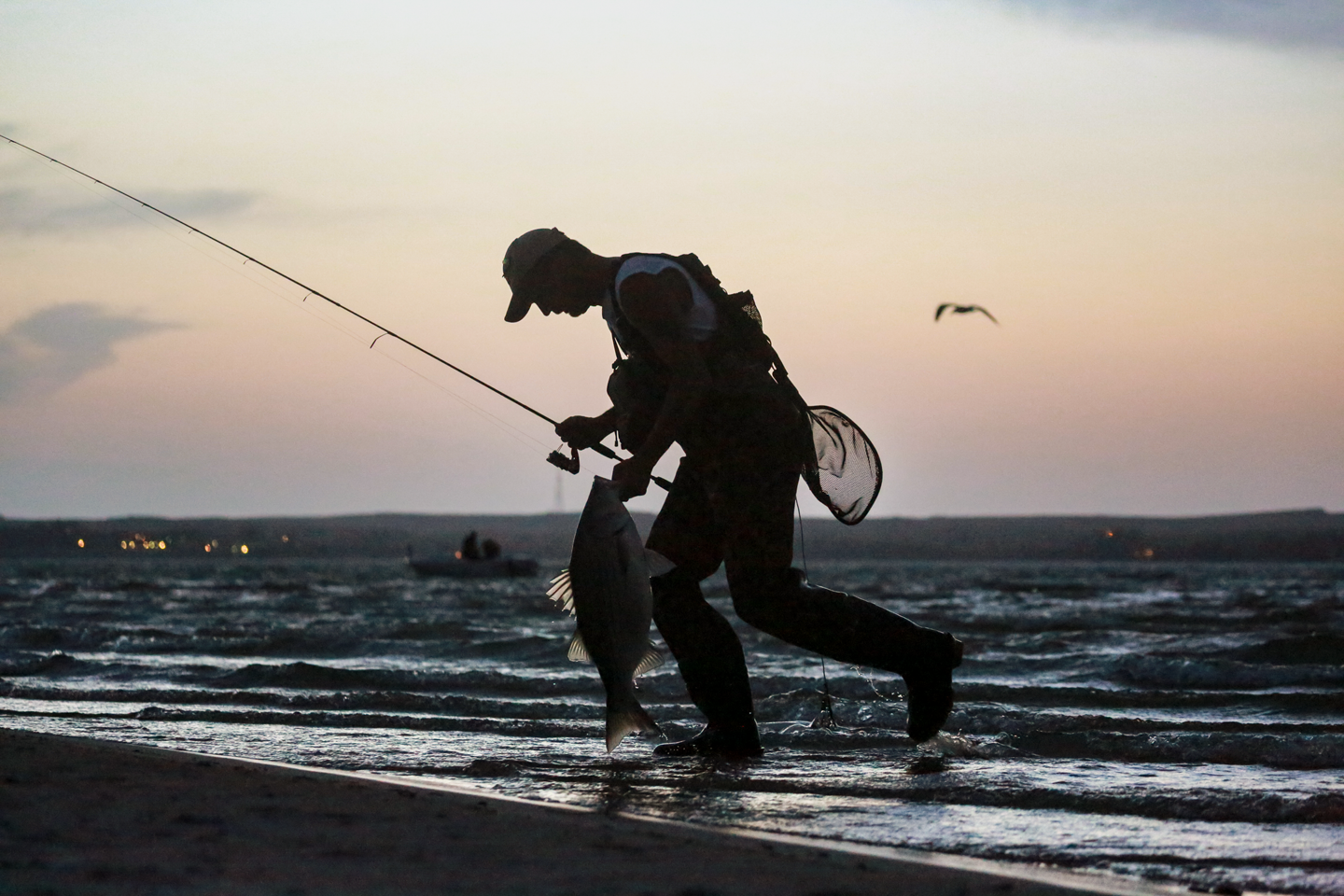
When I am fishing McConaughy, I have six rods rigged up and ready to go at all times. These rods include:
- A 10-foot, 7-weight fly rod with an alewife imitation clouser.
- A medium-weight 7-foot spinning
rod with a quarter-ounce lipped jig. - A heavy-weight casting rod with
a 1-ounce white-and-chartreuse spinnerbait with a gold blade. - A 7-foot medium-weight spinning rod with a quarter-ounce jig rigged with a 4-inch chartreuse flash Keitech or 3-inch silver grub.
- An 8-foot, 6-inch medium-heavy rod with a low ratio bait casting reel
and a bone-colored Whopper Plopper. - An 8-foot, 6-inch medium-heavy rod with a low ratio bait casting reel and a 5-inch silver flutter spoon.
Shallow Water
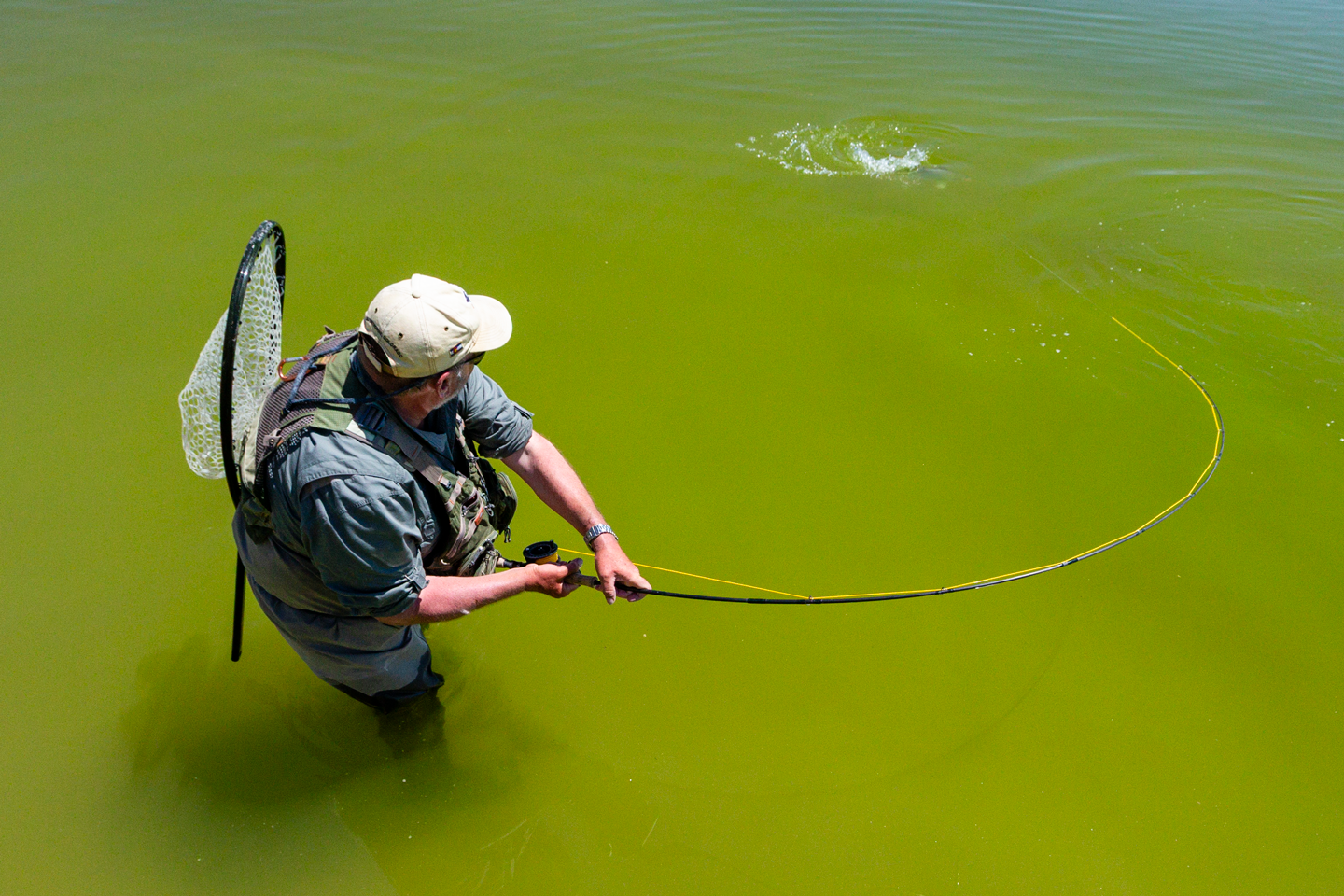
One of the most overlooked fishing opportunities at McConaughy is the ultra-shallow bite that occurs May through as long as July some years. Over the past 10 years, I almost exclusively fish with a fly rod from March through most of June. One of the indirect results of fly-fishing is that I am always on
the shorelines seeking out shallow active fish.
This method has allowed me to understand why fish hold on certain shorelines and not on others. Often at McConaughy, the wave action has created a trough or drop directly off the shore that enables predator fish to push and ambush bait fish feet off the bank. Many times, I have walked the shores and casted my fly rod 5 feet off the bank and watched a 28-inch wiper tail walk like a tarpon after I’ve hooked it in the ultra-shallow water.
In May and June, I never enter the water without throwing a long cast or land the fly right along the shore’s edge. If there are fish in that area the strike will be near instantaneous. After probing the area without any fish, I will then wade into deeper water, gradually working the shallows until I’m waist deep.
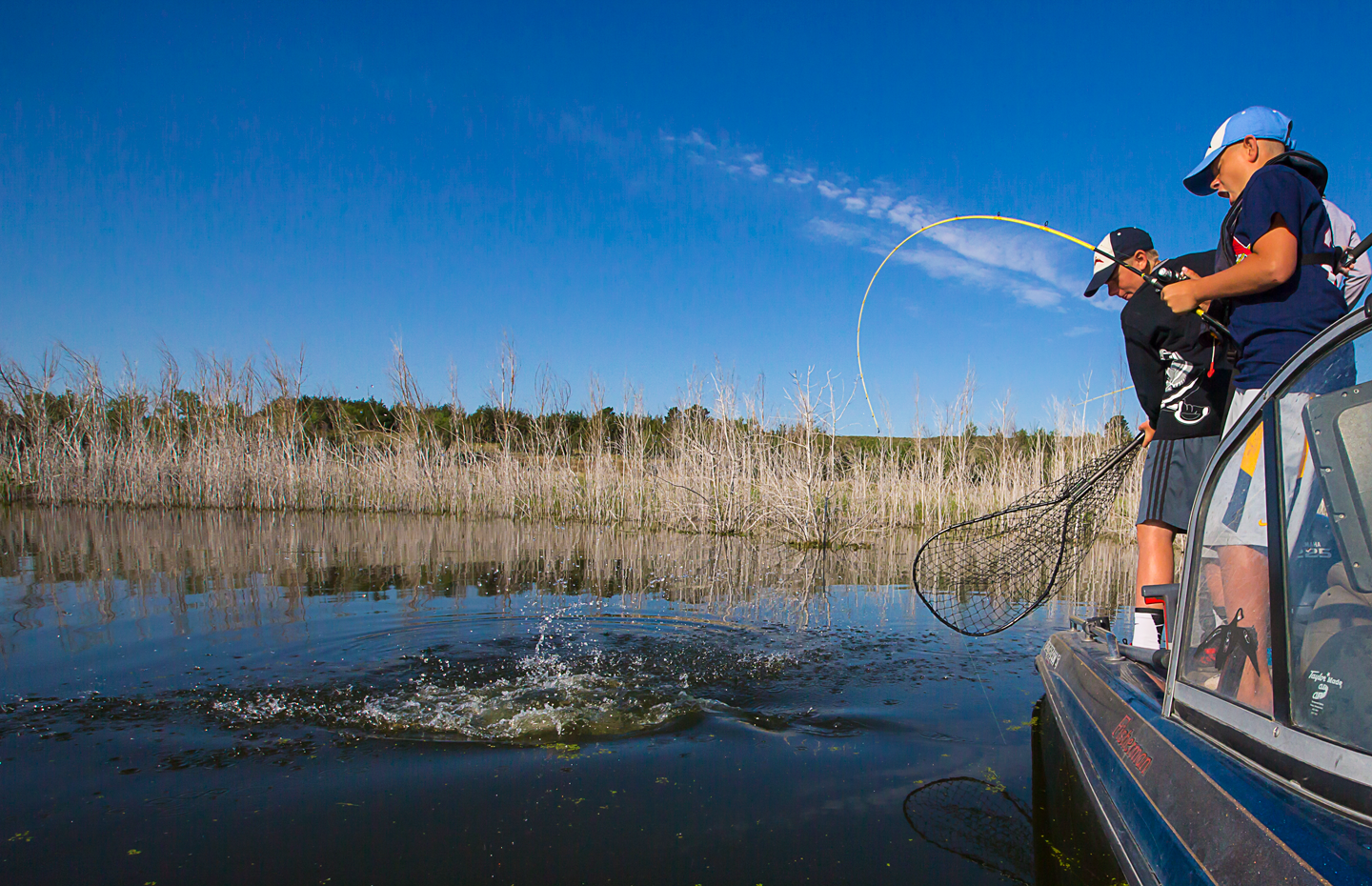
While working these shores, especially in a windy environment, you will get a mudline that creates an ambush point as well. Often when people say they are fishing the mudline they are out deeper on a more expansive mudline blowing off of a shore.
I am most interested in the 10- to 30-foot-wide mudlines with jagged shapes or a variation within the mudline. Wherever one of these mudlines intersects the shore directly, that is the ambush point I’m looking for. Knowing other structures on the shore, like a small cup or a steep 1- to 3-foot drop to deeper water, is the magic point where you will find almost any species of fish in May and June.
For a Species-by-Species Look
Walleye
Walleye is by far the most chased species on the lake. And people are targeting them immediately after ice out from Admirals Cove all the way to the dam on the north side of the lake throwing jigs or slab spoons. These fish will be located in this area in a pre-spawn condition.
One of the biggest fishing spectacles of the year is the actual walleye spawn. Spawning usually takes place on the face of the dam, but do not overlook the southern rocky points and also the rocky area from Admirals to North shore.
The end of walleye spawning coincides with alewife spawning in the lake. At this point, a majority of the walleyes are in the shallows, where a lot of wind-driven bites occur. Throwing jigs, crankbaits and spinnerbaits, and trolling or dragging live bait can be done all over the lake in 1 to 15 feet of water. It is not uncommon to have strikes in 1 to 2 feet of water right off of the banks. Often I see people wade out waist deep from the bank to throw jigs out deeper to catch walleyes. On many occasions, they are probably behind you if the water is murky.

Once the alewife spawn wanes, the bait moves deeper and, from late June through October, most of the walleyes are in 10 to 40 feet of water. This is when trolling spinnerbaits, worm spinner rigs and crankbaits shines.
If you do get a super windy day, fish you caught in 20 feet of water the previous day will move into a churned-up bank in 5 feet of water. They also turn back up on the dam at nights during the summer.
When the fall sets in August to ice up, the primary method is slabbing spoons off of points and humps all around the lake.
Smallmouth
When you arrive at Lake McConaughy and seek smallmouth, you will obviously see the dam and southern rock features of the lake. These are the primary areas for smallmouth fishing. Almost everything you use with smallmouth in other lakes will work here as well, including Ned rigs, creature baits, topwaters and black jigs.
But in May and June, do not overlook the sand points on the north side of the lake extending all the way out to Sandpoint. With the alewife spawning, you can often find nice smallmouth in these areas chasing bait as well.
For fly-fishing, top waters, brown woolly bugger and the ever trusty micro black leech are my go-tos when I’m fly-fishing.

Northern Pike
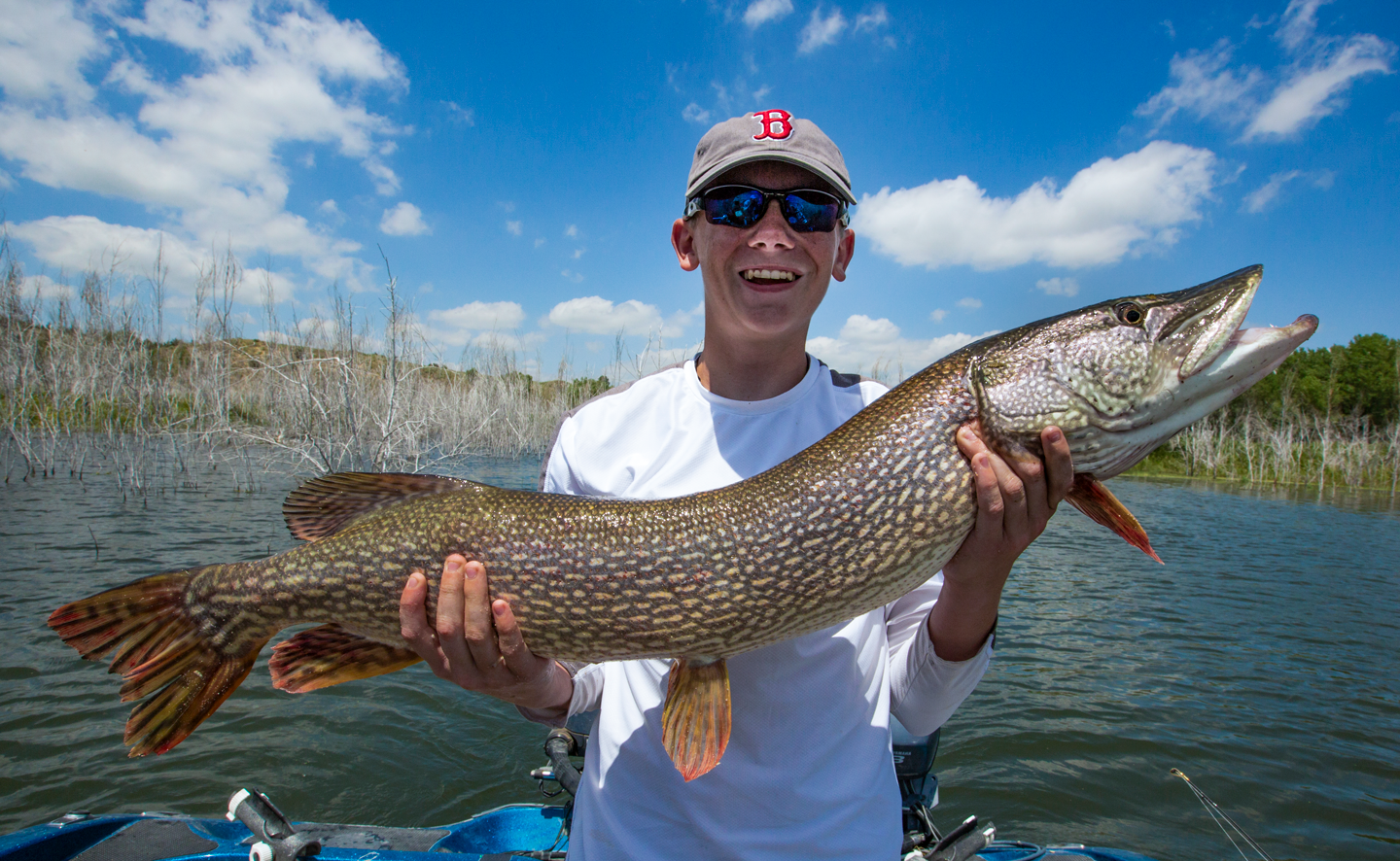
There can be at times a good population of northern pike in the lake. Solid population numbers usually coincide with a large jump of inflow from the river — for example a 6- to 20-foot rise May through July. When such an influx occurs, pretty much every bay and vegetative bank on the north side of the lake will have these toothy critters.
The primary baits to attract northern pike are spinnerbaits, topwaters and creature jigs. northern pike also can be excellent fodder with the fly rod when you have found them. But that’s not to say they cannot be found all the way around the lake. It just can be hard to target and catch them while you are shaking off wipers and walleyes.
Channel Catfish
One of the most overlooked species that roam Lake McConaughy is the channel catfish. It is one of the more dependable fish that can be caught on a daily basis, from ice out all the way to ice up.
In the spring, they can be caught on cut-up baits, chicken livers or other bottom-dwelling recipes with fairly common regularity.
Once June arrives, and their spawning occurs, a lot of these male catfish will be protecting beds in shallow water from 1 to 8 feet. Any type of vegetative structure could hold eggs and the males watching those eggs. Anything from spinnerbaits, crankbaits and jigs will catch fish, and slip bobbers with leeches and crawlers is a preferred method.
As the summer goes on, catfish will suspend with alewife schools right along with the walleyes and wipers. Trolling crankbaits 10 to 20 feet below the surface in 40 to 100 feet of water is the preferred method here. Watching a planer board being taken down by a 5-pound catfish is like watching a bobber go down in the shallows.

Once you find a pod of feeding catfish, they pretty much bite the entire day. This is a great time to take a kid out on the boat and tire them in an hour reeling in catfish with 200 feet of line out. Occasionally, they will stack up on the face of the dam during the late summer and throwing
Rat-L-Traps or any other types of crankbaits or spinnerbaits is an excellent way to catch them.
As fall settles in, channel cats follow the wipers and walleyes, and slabbing spoons are the preferred method.
White Bass
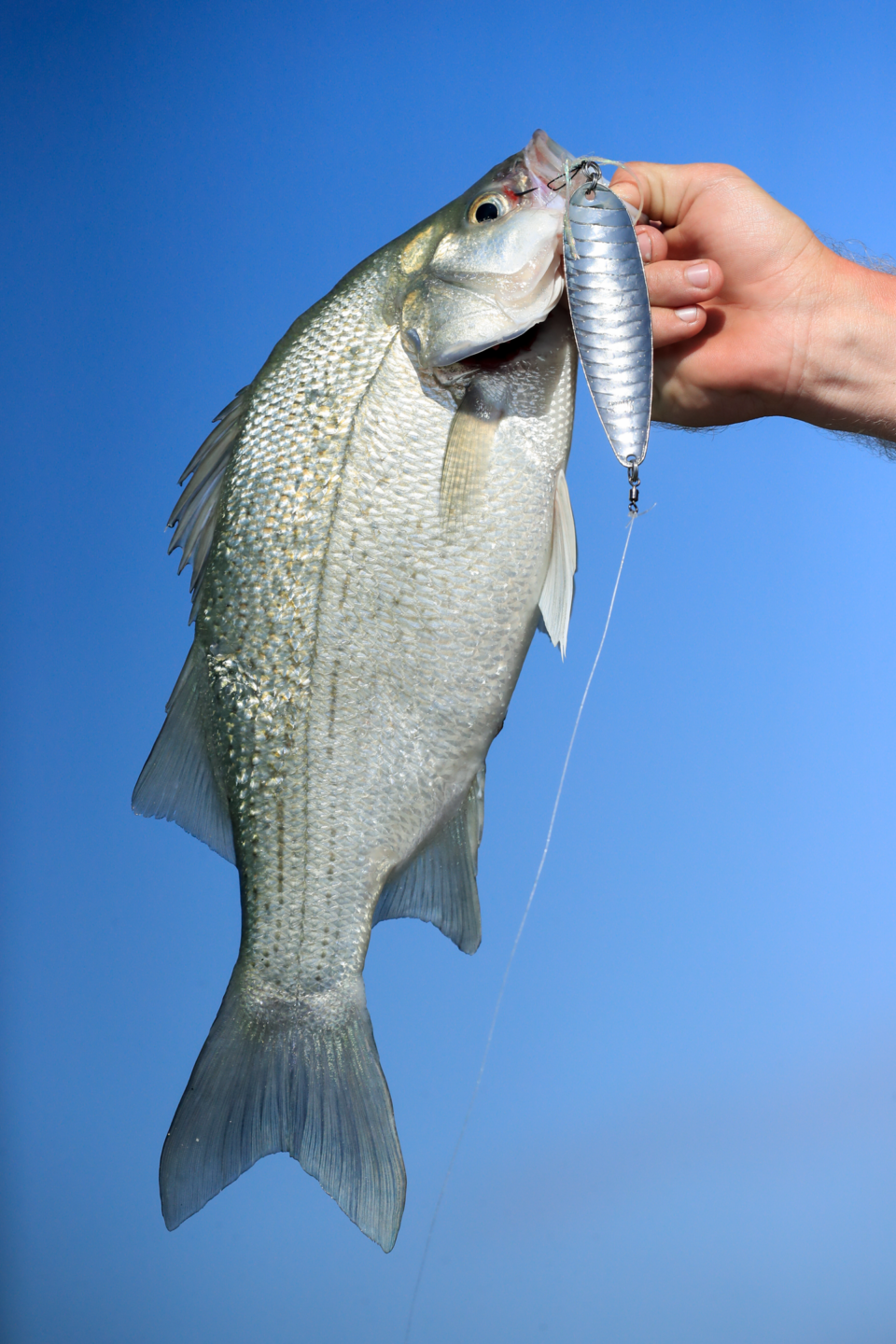
White bass are making a strong comeback in the lake after a die-off a couple years ago. Again, like with most predator species, they can be caught in the shallows on windy days.
With the onset of June, white bass tend to suspend out in 10 to 30 feet of water off the sand banks and points. You can fish for them at night over lanterns, but this technique doesn’t seem to be quite as effective at Mac like it is at other lakes.
In the summer, fish will get deeper following the baitfish. Trolling crankbaits is the preferred method to go after white bass. This is also the time that I like to throw flutter spoons over the top of them in deeper water.
Wipers
I have broken down wipers in their own category outside of white bass. White bass and wipers tend to run with one another up until about the 15- to 18-inch length in their lifespan. Once wipers exceed this length, they operate on their own program.
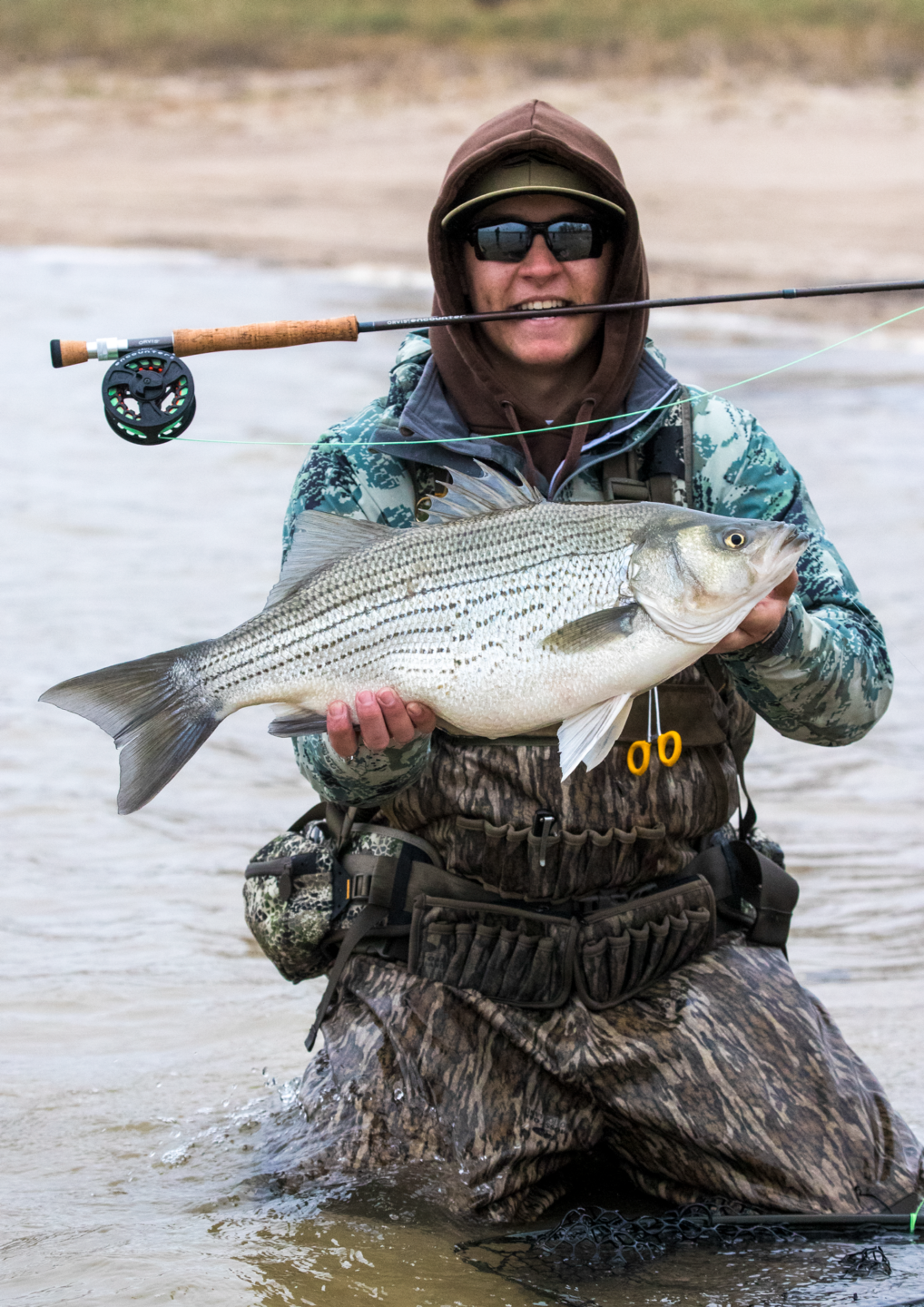
Similar to most predator species in the lake, they are well-tuned to alewife locations at all times. In the spring, they can be found searching the shallows in schools I call wolf packs. You will often see these packs of 24- to 30-inch fish as they search the shallows for food. They will even push water like redfish in the coastal shallows.
In March and April, my favorite way to target wipers is with a fly rod. They seem to favor a very light streamer that acts almost like a jerkbait. Common colors are white, white and purple, and white and chartreuse. These flies are anywhere from 3 to 7 inches in length. On a warm and windy spring day in the shallows, there can be quite a good bite.
When the alewife start to spawn, I switch over to more bass-like techniques of casting spinnerbaits, jerkbaits and topwaters. I like to chase them during the midday throwing flutter spoons off rocky points and deeper sand points as they retreat to deeper depth with the bait fish.
Another great technique in targeting wipers is to fish for them at night. During May, June and July, the alewife will seek the shallows and the wipers will be right with them. There are times you can camp on the beach and throw for wipers feet from your camper.
As late summer and fall appear, the wipers really start to disperse throughout the lake and can be found trolling or throwing slabs spoons over fish that you mark in 20 to 60 feet of water.
Common Carp
Another species that seems to be getting more and more attention each year at McConaughy is the common carp. You will see several people targeting them with fly rods in the spring and summer months. I like to fish for them in the shallows throwing small crayfish and micro leech patterns as June and July roll around. I like to throw imitation cotton seeds or puke flies (white rabbit fur) on top of flat glass water. It is a sight-fishing exercise that is a lot harder than it sounds, but at times carp have chased these surface cotton imitations 20 feet, the takes are just like watching trout sip a hopper.

As you can see, McConaughy gives you many options to get a bite on your trip. Even after fishing this lake for 50 years, almost on every trip, something new surprises me. It could be a new spot, a new technique or even seeing something new for the first time. Ultimately, I’m still chasing my boyhood feeling of “the thunk” and what is on the other side of the line. It’s the catalyst that invokes the same emotions I had when I was 10 years old and the pure joy of just fishing.