Story and photos by Eric Fowler
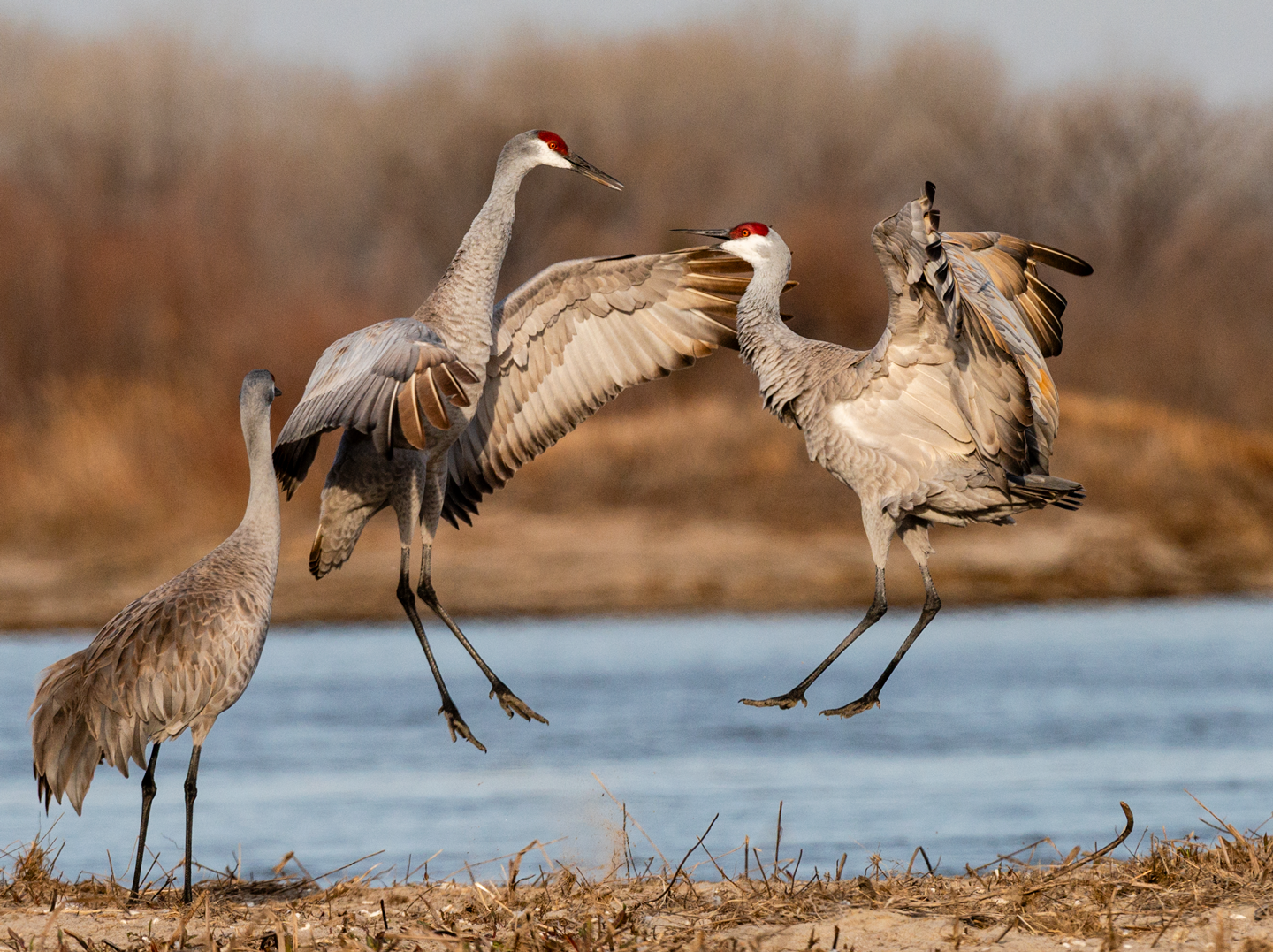
A sandhill crane banded and outfitted with a GPS unit in Nebraska ended up nesting south of the Bering Strait on the eastern tip of Russia, wintered in New Mexico and Texas, and is likely back in the Cornhusker State by now. The bird logged at least 11,000 miles.
It was one of five fitted with GPS tracking bands last spring as part of a donor-funded study exploring what the cranes do during their annual stopover in the Platte River Valley. The study is led by the Crane Trust in partnership with the U.S. Geological Survey and the International Crane Foundation.
Abe Kanz, director of science with the Crane Trust, said they want to know how far the cranes are traveling from the Platte River to feed. The long-running answer to that question, based on surveys done in the early 2000s, has been less than 5 miles. Aerial surveys by the Trust and others in recent years, however, have shown cranes going farther: One of the tracked cranes fed 10 miles from the Platte, Kanz said.
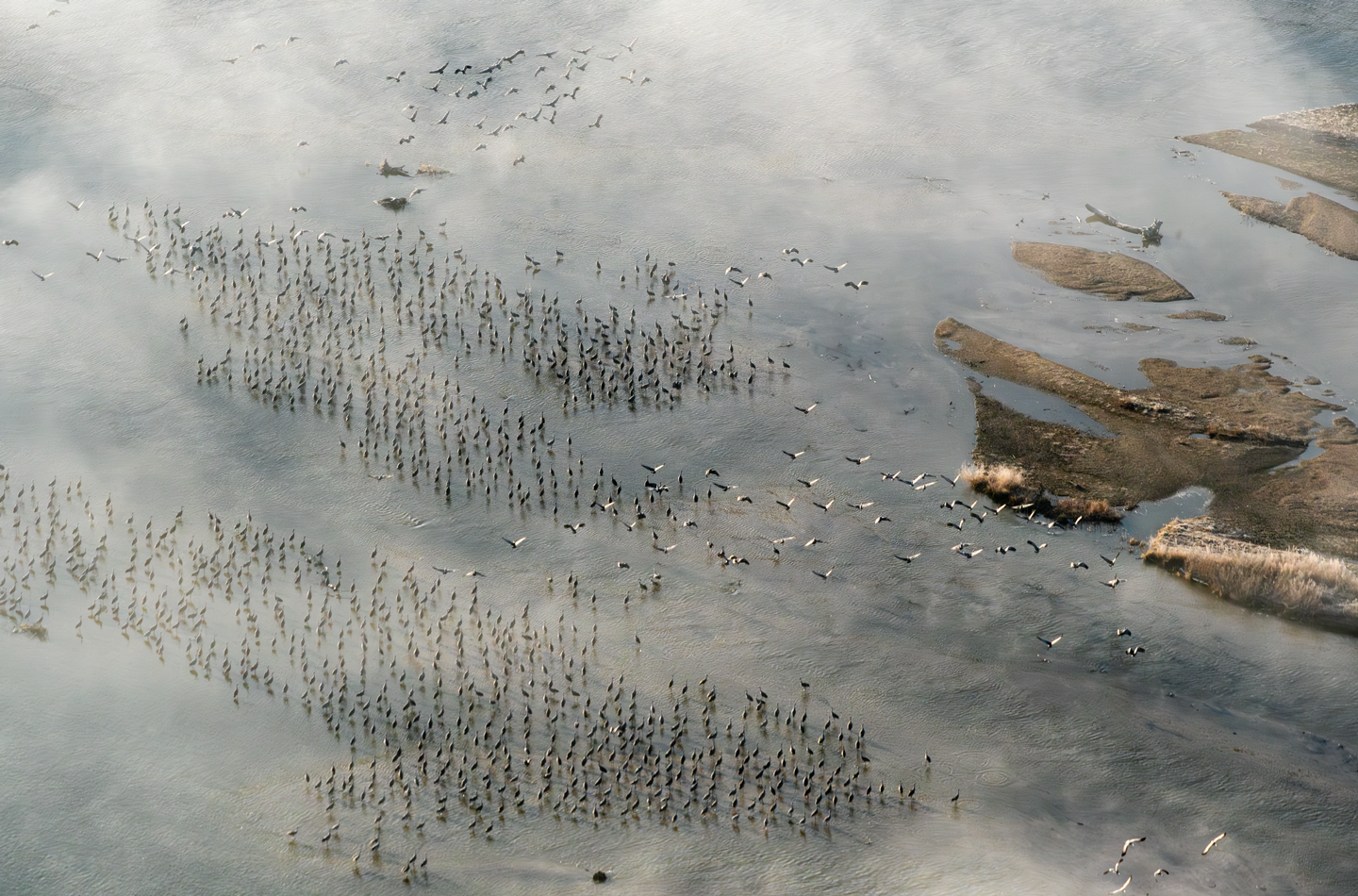
Data collected during the study also should show how cranes’ foraging patterns shift during the season. Cranes aren’t the only birds eating leftover grain — primarily corn — in fields in the valley. Canada geese also feed on corn, as do snow geese, which arrive before the cranes and have become more abundant on the Platte as their migration patterns have shifted to the west. While most cranes only stop in Nebraska in the spring, more have been spending the fall and all or part of the winter on the river in recent years: The Trust counted an estimated 31,000 cranes in mid-December.
“Is that something that’s happening — depleting resources near the river? That could also contribute to needing to travel farther,” Kanz said.
Prior Crane Trust surveys have also shown the area used by cranes in the spring has shifted east, with more birds roosting on the Platte between U.S. Highway 34 and Chapman, including a record number last year.
While the five birds were banded between Wood River and Grand Island last spring, two roosted and fed east Highway 34 during the last weeks of their stay, and one spent time on both sides of the highway.
Kanz and others will also be looking at fall migration patterns and whether the dates are shifting and, if so, why; if sandhill cranes are staging a second time in the Prairie Pothole region of South Dakota after staging on the Platte; and, of course, where they are breeding and wintering.
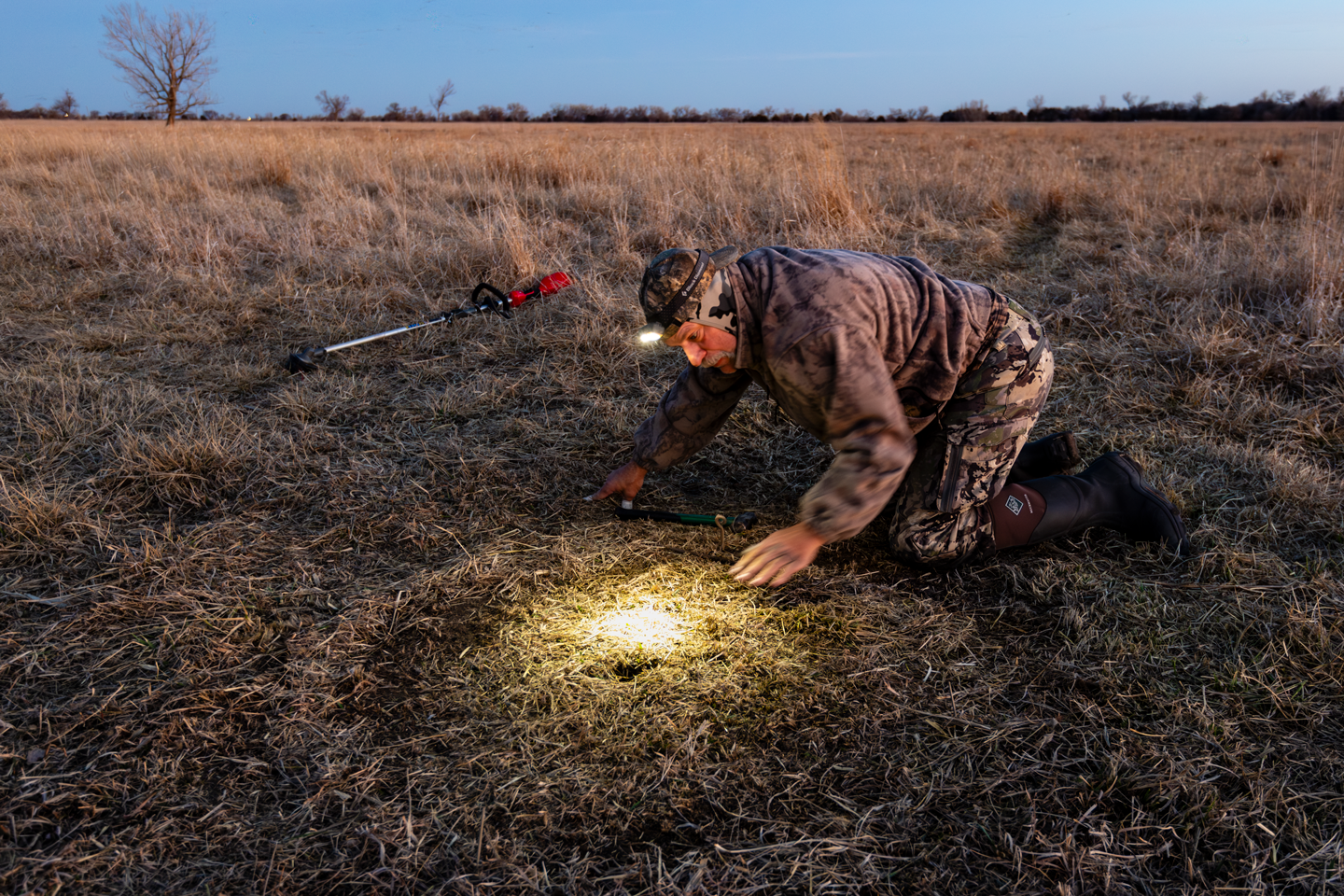
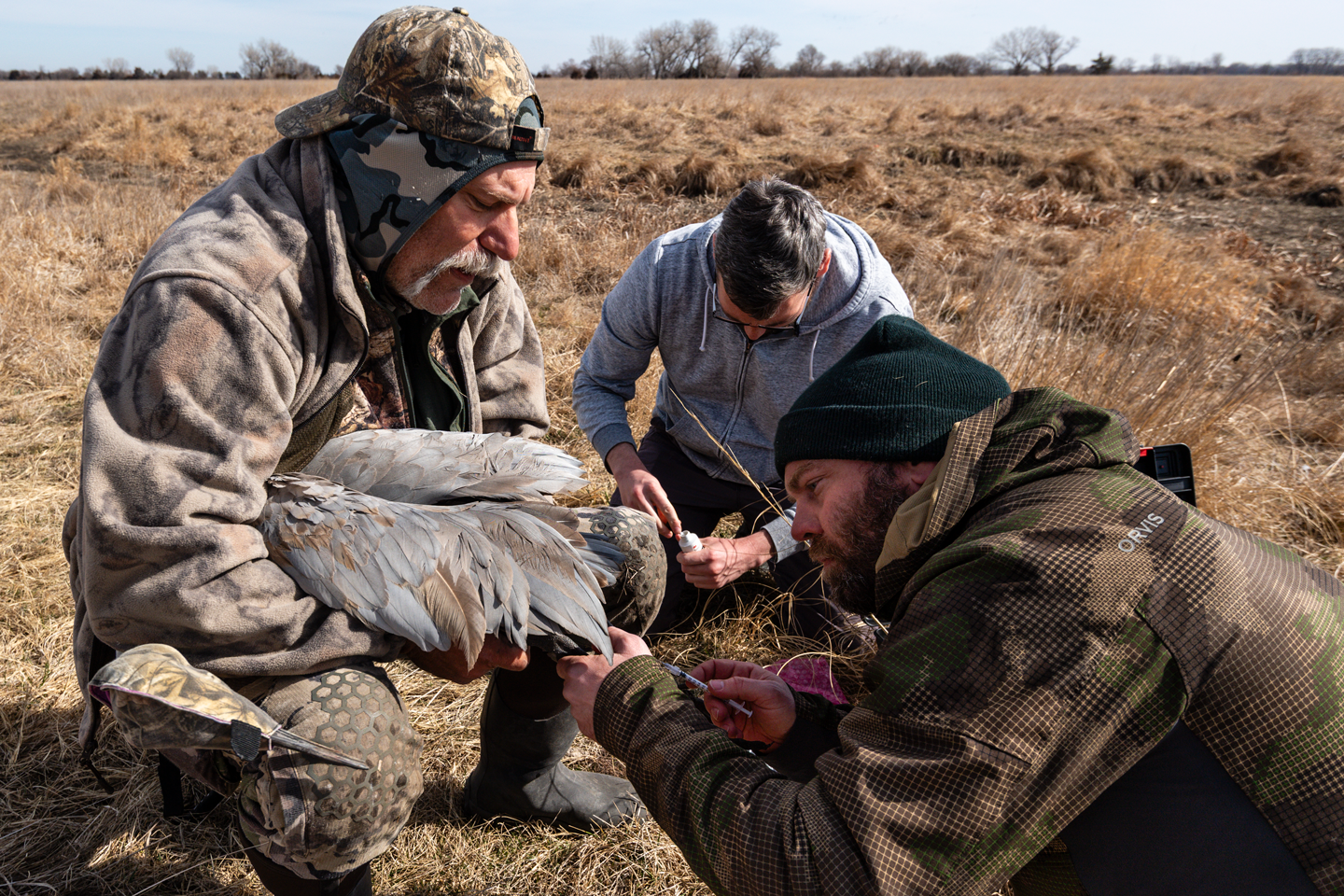
Dave Brandt, a retired USGS biologist from North Dakota, led the trapping effort in late-February and early-March. In pre-scouted locations in pastures between Wood River and Grand Island, the trapping team set up to four 10-meter snare lines made of heavy monofilament line and spray painted to match the color of the prairie grass. They also set up the “ring of fire,” a spring-powered, radio-triggered snare Brandt designed and built. With traps set before dawn, they watched and waited in nearby blinds.
Brandt has helped band around 3,000 sandhill cranes and put GPS trackers on another 700 sandhills as well as 170 whooping cranes during his career. One might think that with more than 1 million cranes stopping on the Platte during the migration, trapping enough to deploy 20 transmitters for the study would be easy. But that was not the case.
“They live 30-plus years in the wild, and they have incredible eyesight and incredible hearing,” Brandt said. “So it’s hard to outsmart them, sometimes, even though there’s a lot of them. You’ve got to be in the right place at the right time and not get busted by them.”
Cranes are much easier to trap in their wintering grounds, where Brandt says food can be a limiting factor, making it possible to get them “addicted to bait.”
“That’s one of the difficulties here is these birds do not really respond to corn or bait, because they have corn ad libitum,” he said. “Everywhere they go is a cornfield, right?”
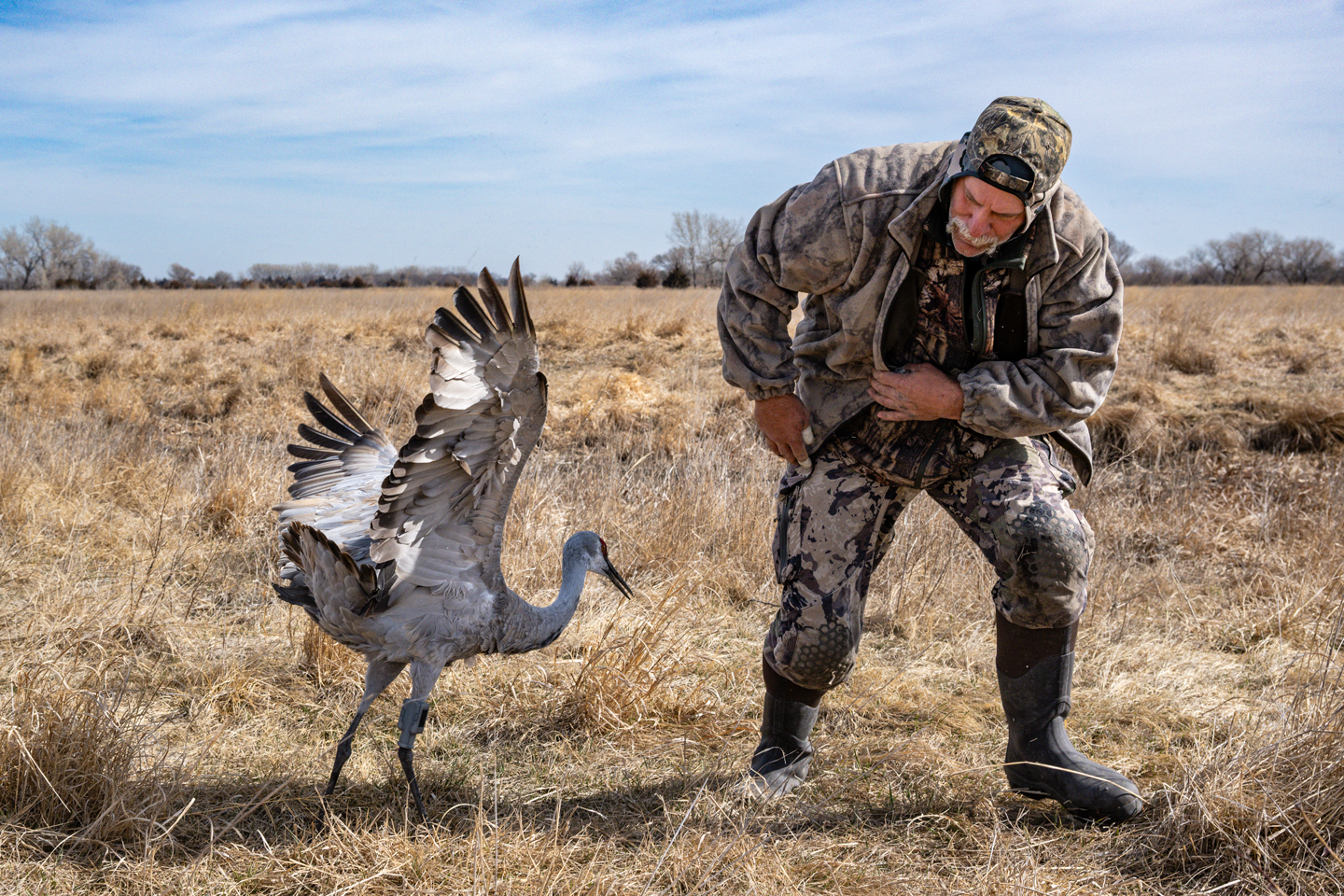
The team was able to capture three lesser sandhill cranes and two juveniles that are likely greaters. Each was fitted with a solar-powered tracker built in a leg band weighing just 2.3 ounces. The trackers are programmed to record a data point every five minutes within the Platte River Valley and every 15 minutes elsewhere. They also contain an accelerometer, which measures speed and direction, and collect more points when the birds are in flight. This allows them to record behaviors, such as kettling, which leaves a spiral trail of dots as the birds circle to their cruising altitude.
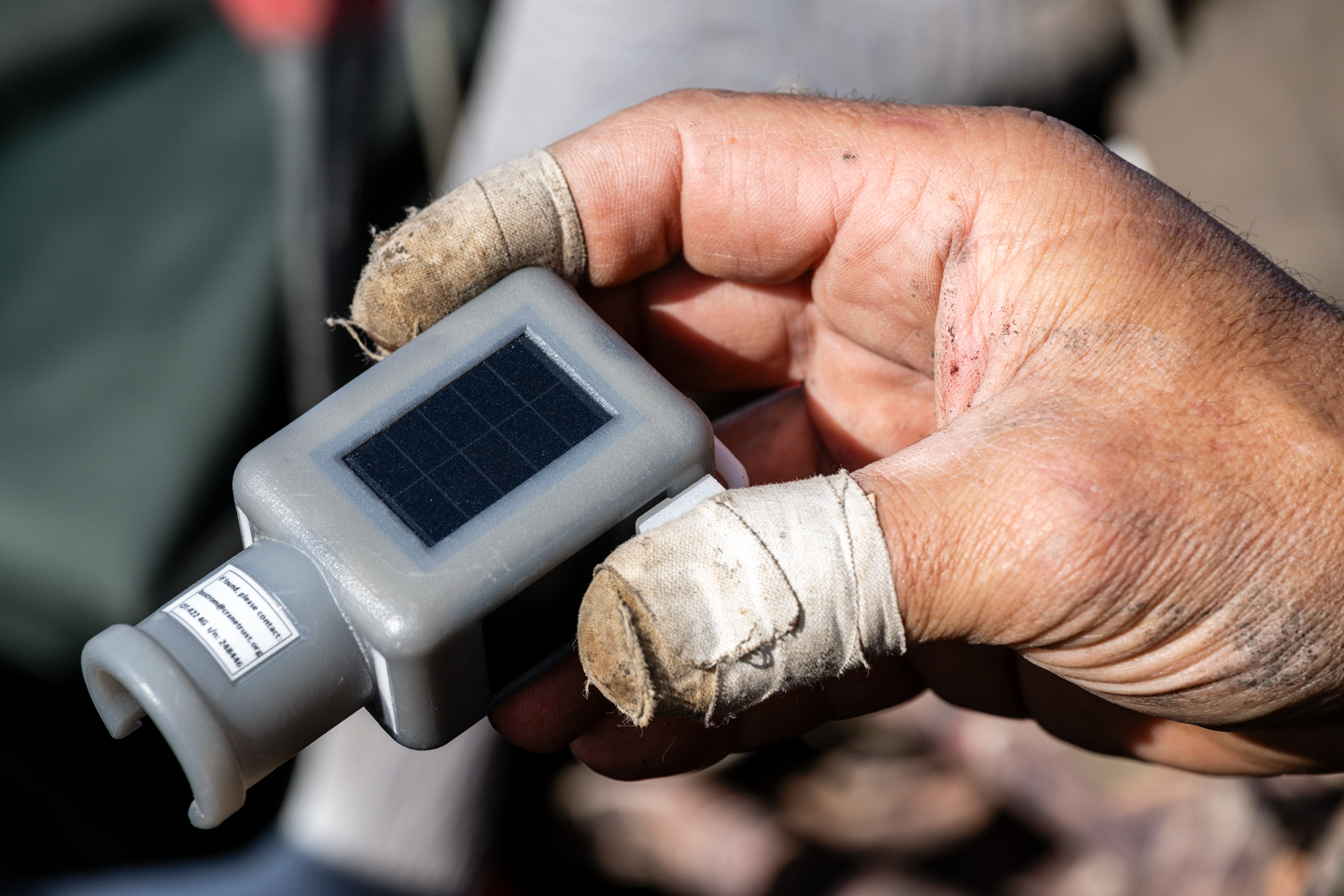
The trackers also record fewer points when battery life is low. During extended cloudy periods, they also quit recording. That was the case with the crane that nested in Siberia: It flew through Alaska when wildfires filled the air with smoke. Through Nov. 12, that crane’s tracker had recorded 201,000 points, compared to 485,000 for a crane that nested in Ontario.
The five banded cranes left the Platte between March 27 and April 6, each stopping in for a time in the Dakotas and south-central Canada before forging ahead to their nesting grounds in early May.
The trackers upload data every four hours whenever they are within range of a cellular tower and only collect and store data when they are not. Each of the birds left areas with cell service before reaching their nesting grounds. “Once they got to some of these more remote areas, we just didn’t hear from them for a while,” Kanz said.
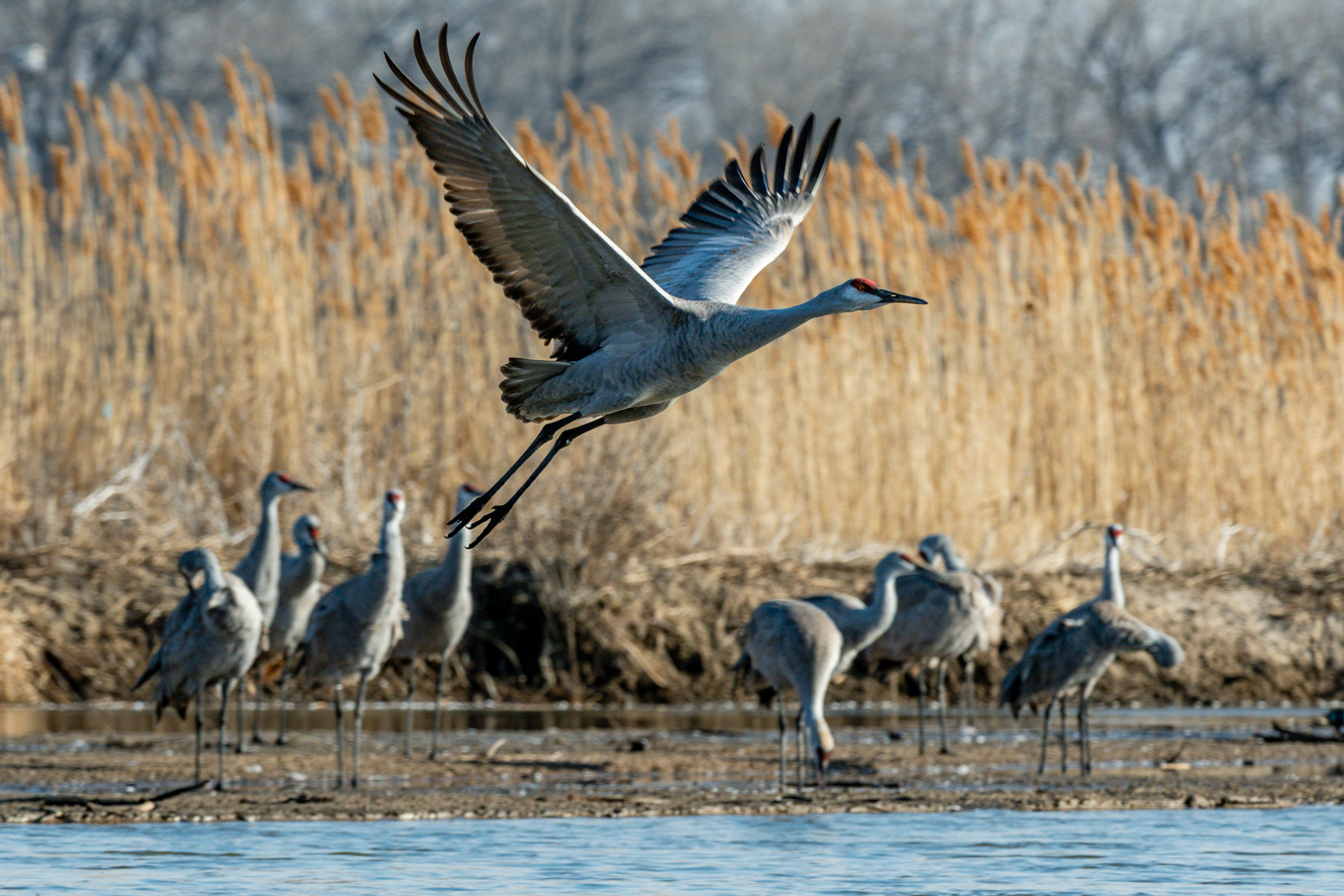
Kanz and others working on the study were relieved when, in August and September, location data started pouring back in and they knew all five birds were still alive and well.
It was only then they could see that one of the cranes had nested in Russia, something that was known to occur but not expected for this study. “How cool and lucky is it that we managed to snag one of those birds, right?” Kanz said.
Researchers were pleasantly surprised to see that the four other birds each nested in a different part of Canada: Manitoba, Ontario and the Northwest and Nunavut territories. “I couldn’t have planned it better,” Kanz said. “And we didn’t plan it, right? It’s random cranes. But it does a really good job of showing just how dispersed these populations of sandhill cranes can be.”
The birds migrated south in late-August or early-September. They stopped in locations in southern Saskatchewan or North Dakota for a few weeks before continuing south in mid- to late-October. All five birds flew through Nebraska, but none of them stopped, something that didn’t surprise Kanz as each passed on a day with strong northerly winds.
The crane that nested in Russia followed the most westerly route south and, on the day it made it from southeastern Montana to New Mexico, flew through the Nebraska Panhandle. It later shifted to wintering grounds in Texas. Kanz is interested to see whether it will return to the central Platte or follow other cranes to spring staging areas along the North Platte River in western Nebraska or elsewhere. “If it doesn’t come back through central Nebraska, there would be a lot of questions around well, why were you here last year and what are you doing now?”
The other four birds wintered in Oklahoma, Texas and southern Kansas. The one that nested in Ontario flew all the way to the Gulf Coast before flying back north to an area near Wichita Falls, Texas, where it spent the remainder of the winter.
If they haven’t returned to Nebraska by now, the tagged cranes should be here soon. And Kanz, Brandt and others are already working to trap another 15 cranes to fit with the transmitters they didn’t use last year, possibly trying some new techniques to improve efficiency.
“I’m hoping we have some more luck this spring,” Kanz said.
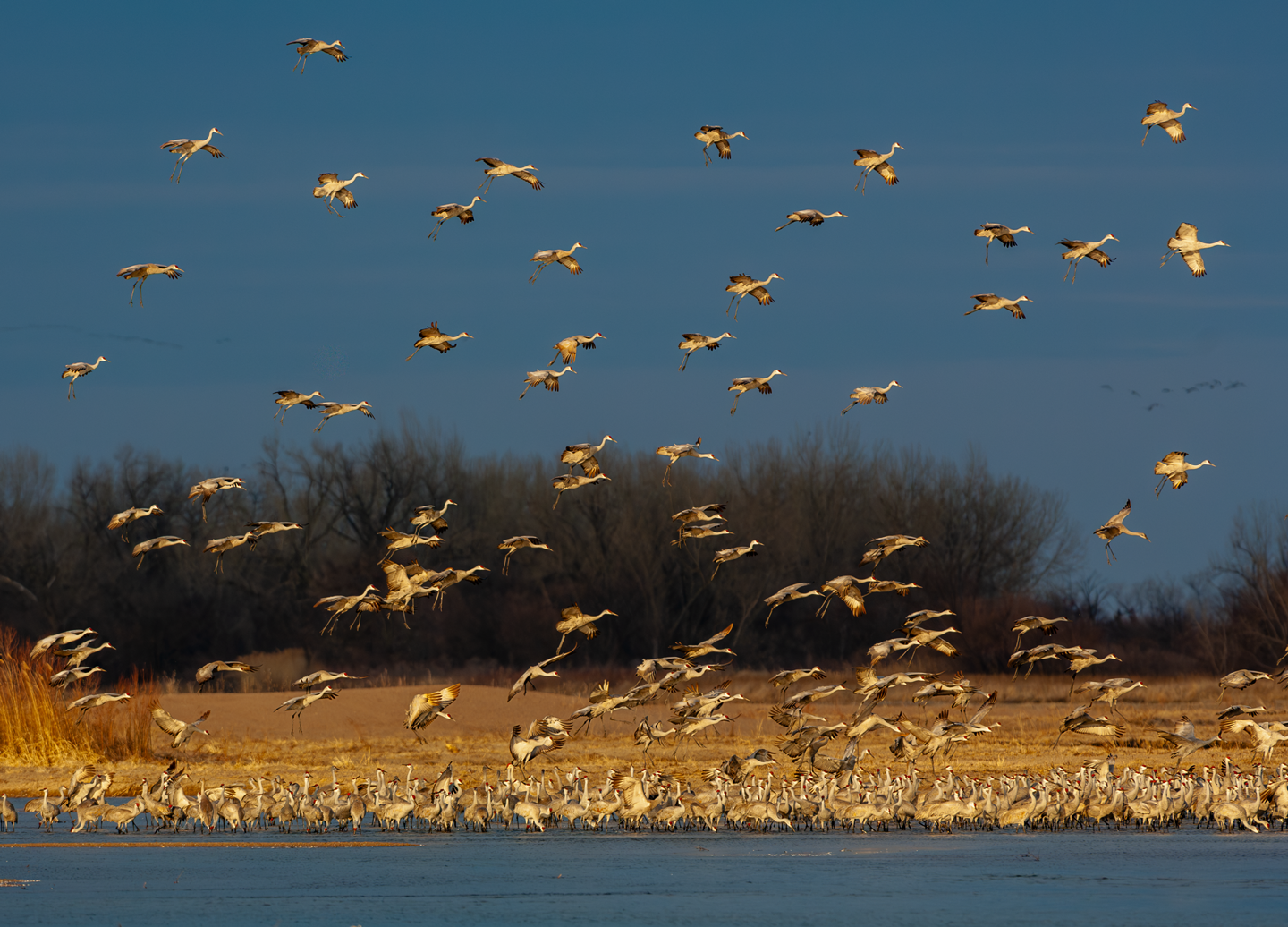
The Crane Trust
Behind-the-scenes access to the Crane Trust’s sandhill crane tracking project is one of several benefits that come with membership to the organization.
Basic membership also includes access to the guided virtual crane viewing tours during spring migration, year-round access to the Trust’s livestream camera on the Platte River and other exclusive online content, as well as advanced priority booking for riverfront viewing blinds and day tours.
Membership proceeds help support educational programs, research and land management.
For more information, visit cranetrust.org.