
By Monica Macoubrie, Wildlife Education Specialist
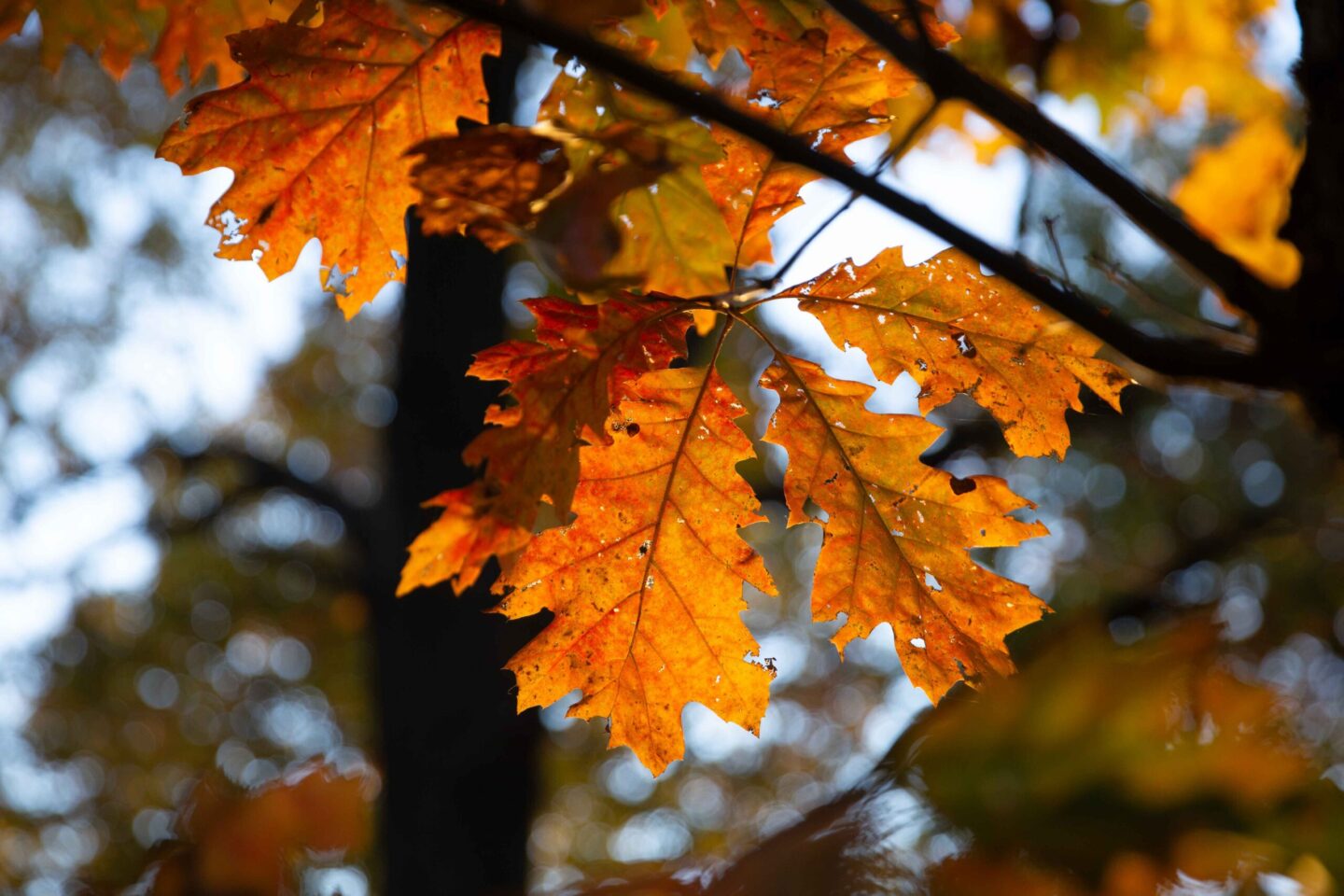
I love watching Nebraska transform in the fall. Leaves turn brilliant shades of gold, orange and red, temperatures begin to drop and the days grow shorter. But while we’re busy enjoying the changing landscape, something fascinating is happening inside the trees as well.
As summer turns to winter, trees are making major changes to prepare for the months ahead. Water movement slows, sap pressure changes, wood responds to temperature swings and leaves begin shutting down for the season.
Trees may look quiet from the outside, but there is a lot happening beneath the bark.
A Tree’s Water Highway
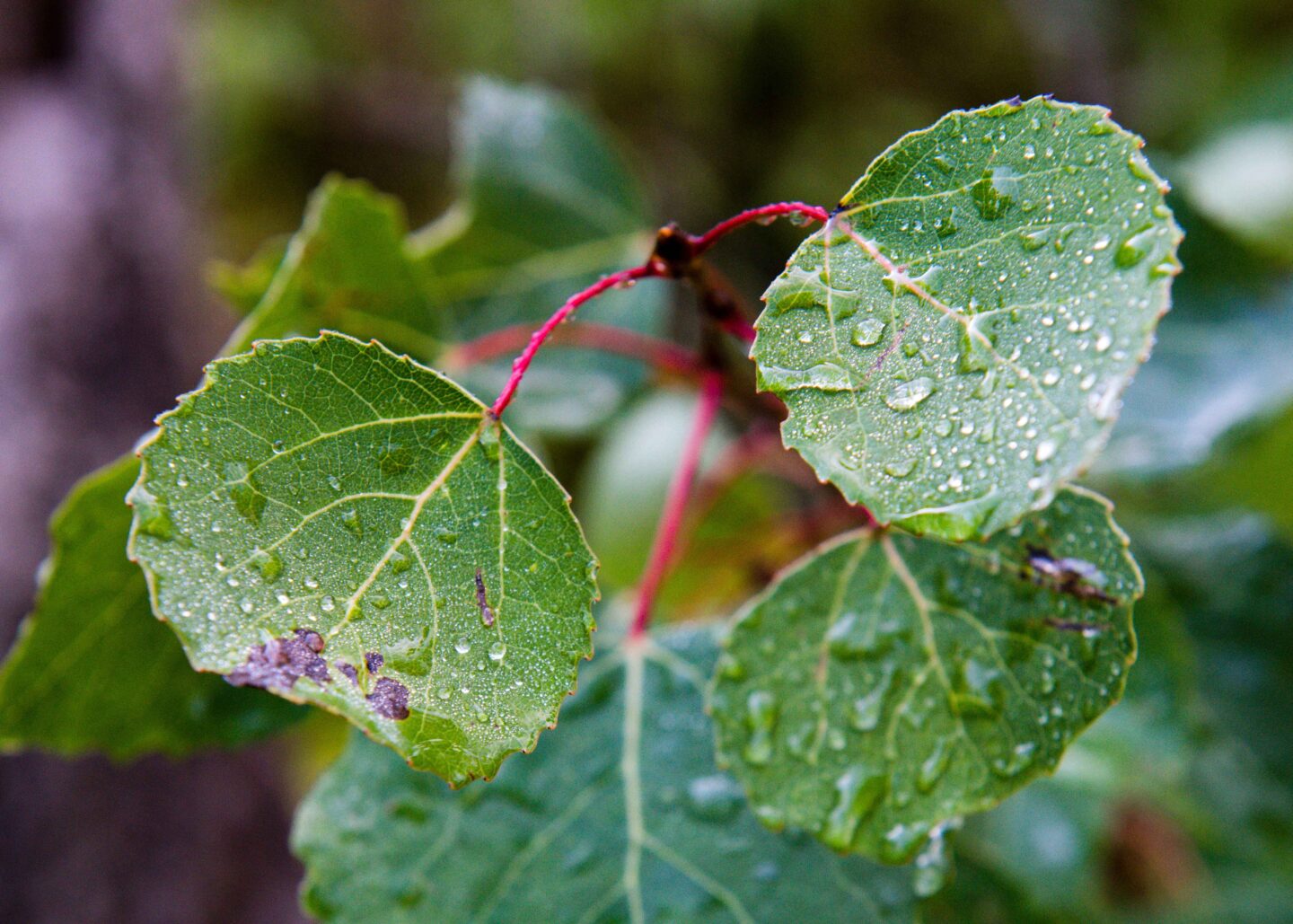
Those little droplets you sometimes see on a leaf in the early morning aren’t necessarily dew. They can be coming from inside the plant. Trees are constantly moving water from the soil into their roots and then upward through specialized tissue called xylem. That water travels throughout the tree and eventually leaves through tiny pores in the leaves by transpiration. Transpiration happens when water leaves the tree as water vapor, so humans can’t see it happening.
Trees can also lose water through a process called guttation — when water is pushed out through tiny structures along the edges or tips of leaves as a liquid. Guttation is most common when the soil is wet and the air is humid, usually overnight or early in the morning. The droplets can even contain small amounts of minerals and sugars from inside the plant.
So, transpiration is water leaving as a gas, while guttation is liquid water being pushed out. Same tree, two different ways of moving water.
During the growing season, a lot of water can move through a tree in a single day. But as fall arrives, shorter days and cooler temperatures slow things down. The tree isn’t photosynthesizing as much, so it doesn’t need to move as much water.
Once deciduous trees drop their leaves, water loss through transpiration decreases dramatically. But trees don’t completely stop losing moisture once winter arrives. They can still lose some water through their bark, twigs and buds.
Evergreens face a similar challenge through their needles and foliage, which is one reason winter can be especially difficult for them. They must be careful about holding on to the water they have.
Maple Sap
If you’ve ever spotted liquid dripping from a tree, you might assume it’s sap. Sometimes it is, but not every drop coming from a tree is necessarily sap. Sap is the fluid that moves through a tree’s vascular system. It carries water, sugars, minerals and other substances throughout the tree. People typically associate sap with maple trees, but the timing of that sap flow might surprise you. The big sap flow actually happens in late winter and early spring, not in the fall as many believe.
The maple-sap cycle occurs when temperatures bounce between freezing and thawing. When temperatures rise above freezing during the day and drop below freezing at night, those changes create pressure inside the tree that helps move sap through it.
So, if you spot a Nebraska maple with liquid dripping in the fall, you probably aren’t seeing the same process that fills maple syrup buckets in March. Instead, the liquid could be from an injury, broken twig or another opening in the tree. Sap can leak from damaged areas, especially when changes in pressure inside the tree give it a little push.
How Trees Prepare for the Cold
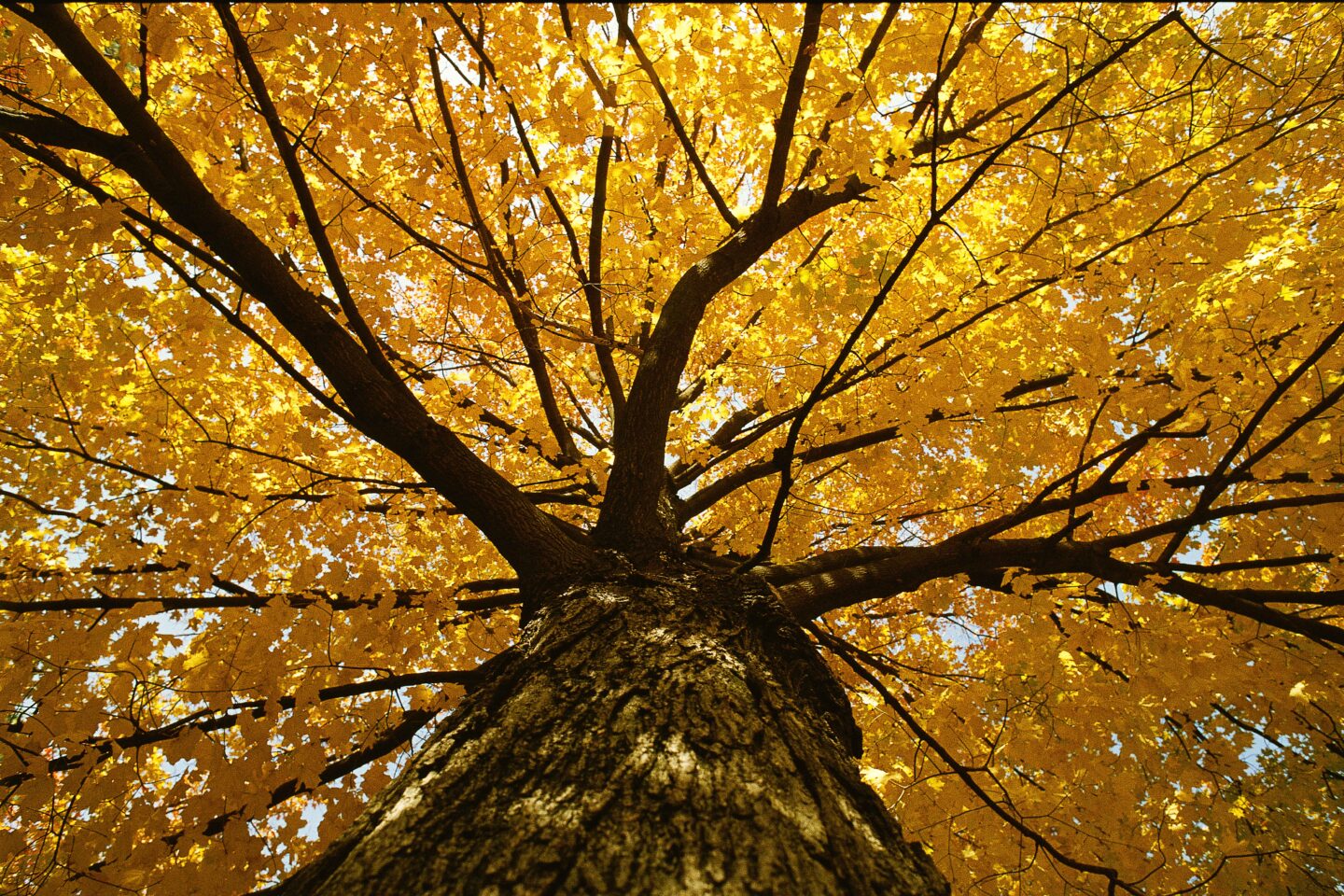
As temperatures begin bouncing between warm afternoons and chilly nights, trees must respond to some dramatic changes.
Trees contain a lot of water, and freezing water inside living cells can cause serious damage. To prepare for winter, trees make physiological changes that help them survive freezing temperatures.
First, they begin moving water away from vulnerable cells, concentrating sugars and other compounds that help protect their living tissues from the cold. Second, their wood also expands and contracts as temperatures change.
One Nebraska tree makes these movements especially easy to see.
Quaking aspens get their name from the way their leaves tremble and flutter with even the slightest breeze. They can be found in parts of Nebraska, particularly in the Pine Ridge, Niobrara Valley and Sandhills, where they grow in cooler, wooded areas. Their secret is in their leafstalks, or petioles. Instead of being round, the petioles are flattened, allowing the leaves to easily move back and forth.
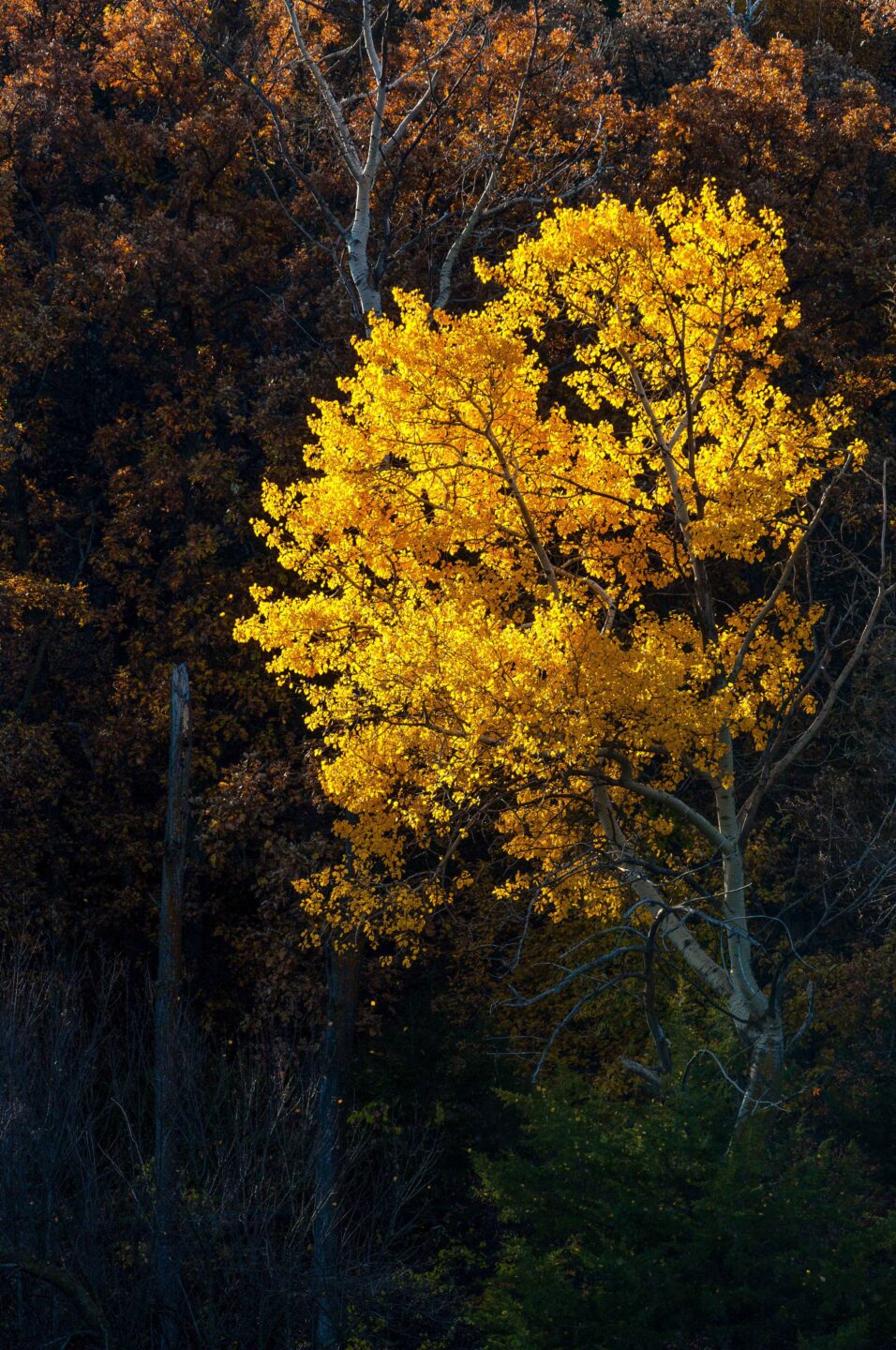
In the fall, that movement becomes even more noticeable as the leaves turn bright shades of yellow and gold. On a breezy autumn day, an entire stand of aspens can appear to shimmer with thousands of golden leaves.
Nebraska’s cottonwoods, oaks and maples may have their own impressive fall displays, but there’s something special about watching an aspen grove move in the breeze.
Why Trees Lose Their Leaves
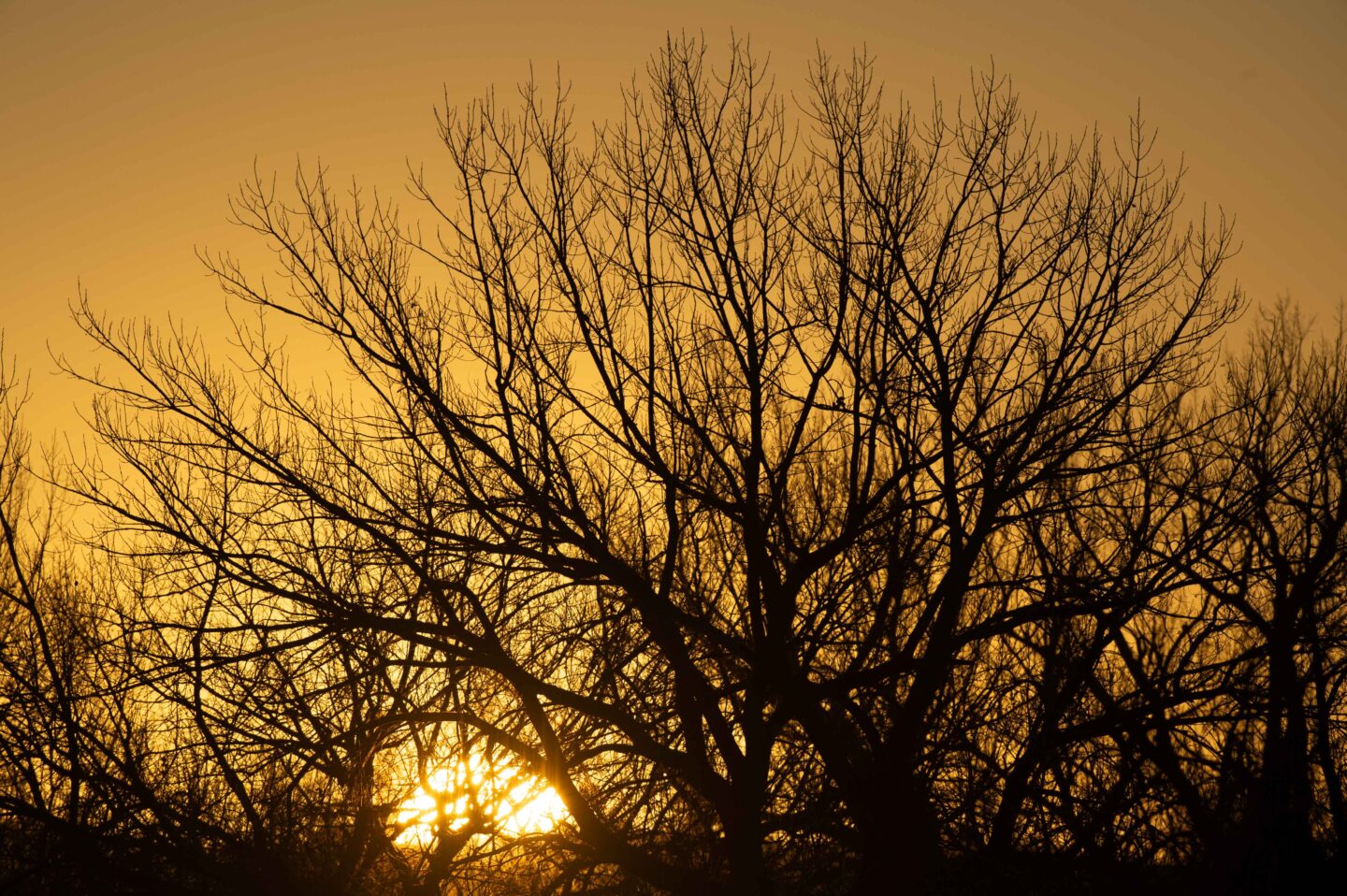
One of the biggest changes happening inside a deciduous tree this time of year is called dormancy — essentially a tree’s way of preparing for winter.
As days get shorter and temperatures drop, trees begin slowing down many of the processes they normally use for growth. They aren’t dead, and they aren’t simply “turning off.” Instead, they are carefully putting certain processes on hold to conserve energy and protect themselves from the cold months ahead.
As leaves become less efficient at making food through photosynthesis, the tree begins pulling vital nutrients and sugars back into its branches, trunk and roots. These resources can be stored and used later. Eventually, the tree forms a layer of cells where the leaf connects to the branch, which gradually seals off the leaf from the rest of the tree.
And then — down it falls!
The Science Behind Fall Color
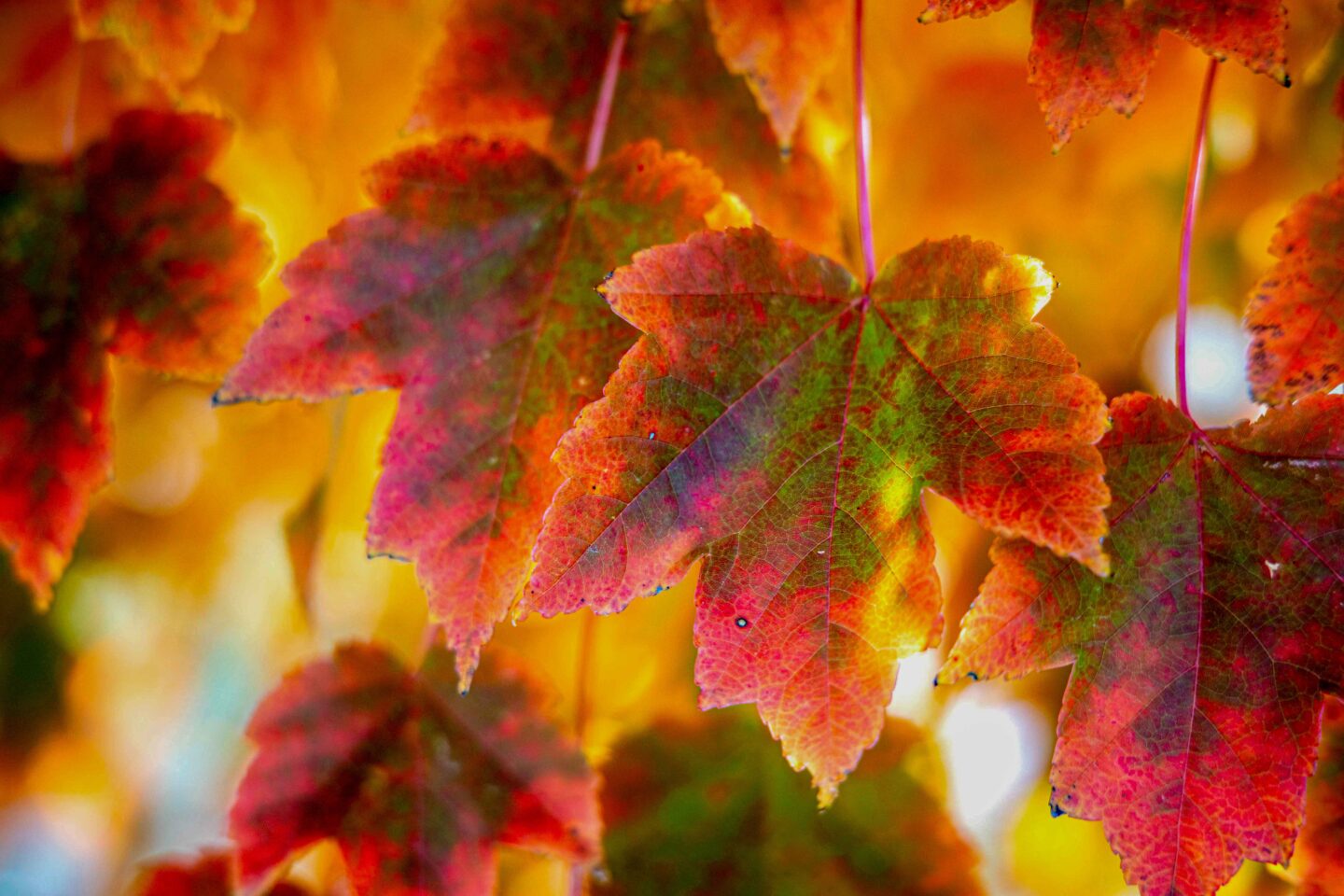
This is when one of Nebraska’s most spectacular seasonal changes takes place. Those brilliant reds, yellows and oranges aren’t necessarily brand-new colors appearing in the leaves. As the green pigment called chlorophyll breaks down, it reveals other pigments that were already present in the leaf.
Yellow and orange pigments, called carotenoids, become easier to see once the green chlorophyll fades. Some trees also produce additional pigments during the fall, including red and purple pigments called anthocyanins.
While we’re admiring the colors, the tree is already preparing for winter. Buds are being protected, food reserves are being stored and living tissues are making changes that help the tree survive freezing temperatures.
Built for Nebraska Winters
The fall season might suggest that Nebraska’s forests and woodlands are slowing down, but trees are actually working hard to prepare for what’s coming.
They’re adjusting how they move and store water. They’re responding to changing temperatures. They’re pulling nutrients back into their branches and roots. They’re protecting their living tissues from freezing temperatures. And they’re carefully shutting down their leaves for the season. All of these changes help Nebraska’s trees survive everything our winters can throw at them — from freezing temperatures and icy winds to snow and dramatic swings in weather.
So, the next time you’re walking past a tree in the fall, take a longer moment to admire it. Those changing leaves are more than just a beautiful sign of the season. They’re evidence of an incredible survival strategy.