
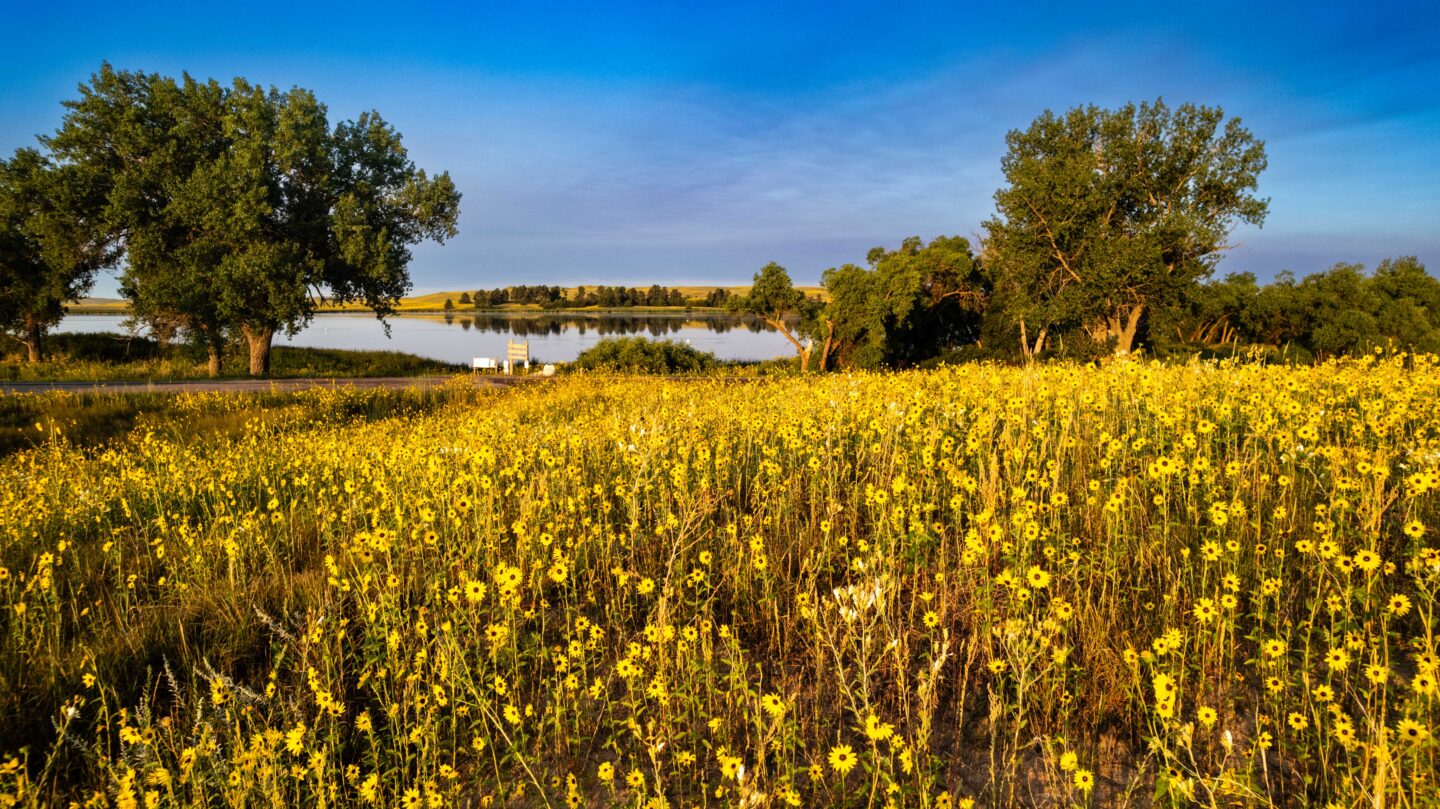
By Andrea Faas
Spring and early summer flowers are wonderful sights after months of mostly brown and gray winter landscapes. Whatever habitat I end up exploring, I’m often amazed by the unique features of our flowers that add interesting and important diversity to our Nebraska habitats.
As you celebrate Nebraska Wildflower Week June 1-7, look for the following blooms in your favorite outdoor spaces.
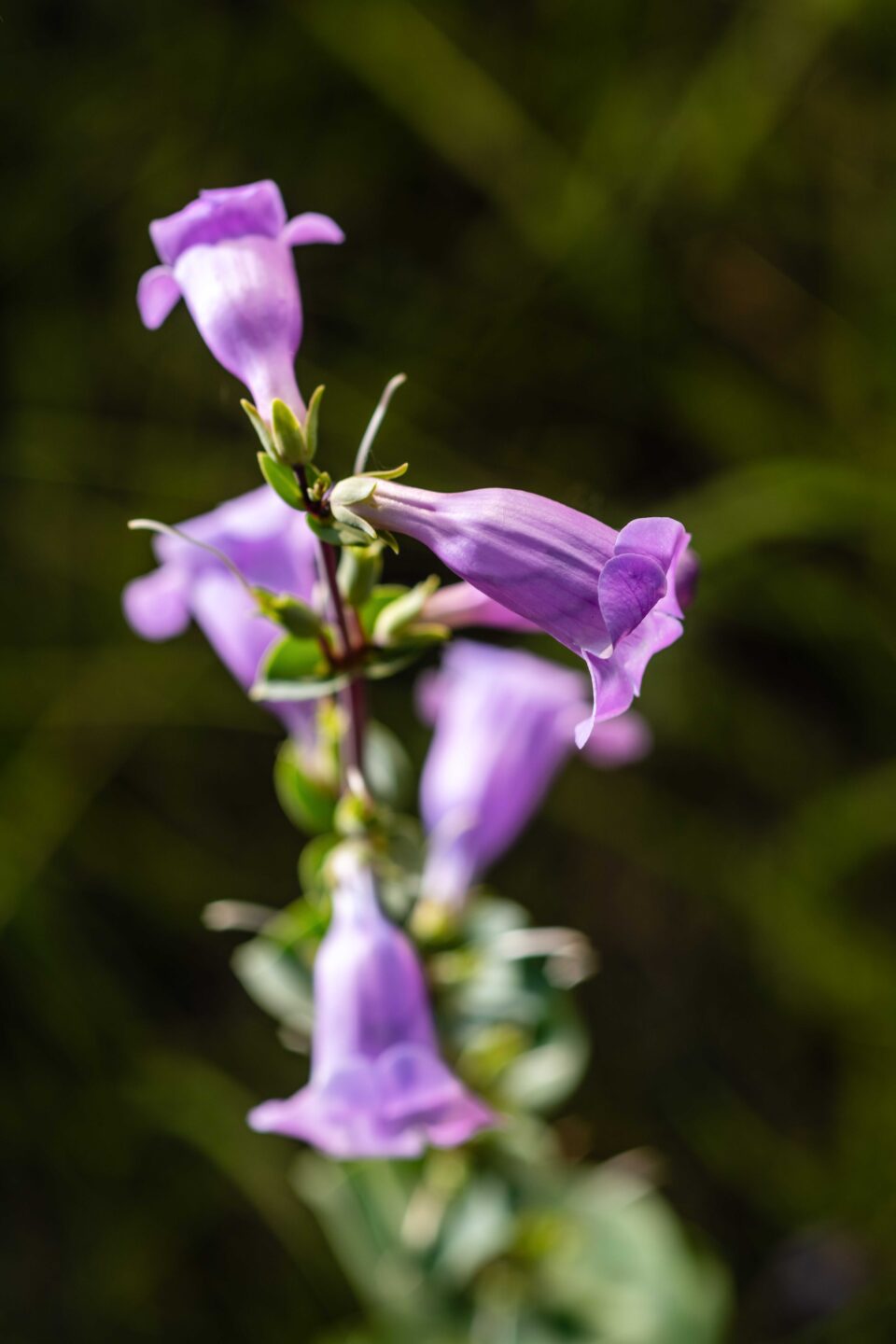
Penstemons
Early summer flowers such as shell-leaved penstemon (penstemon grandiflorus) have tough waxy leaves that hold in moisture to survive drought conditions. Blooming for only a few weeks, the deep flowers are ideal for bees, hummingbirds and other long-tongued nectar feeders. After the fruits fade, the seeds scatter and grow into future stands of penstemon.
Leadplant
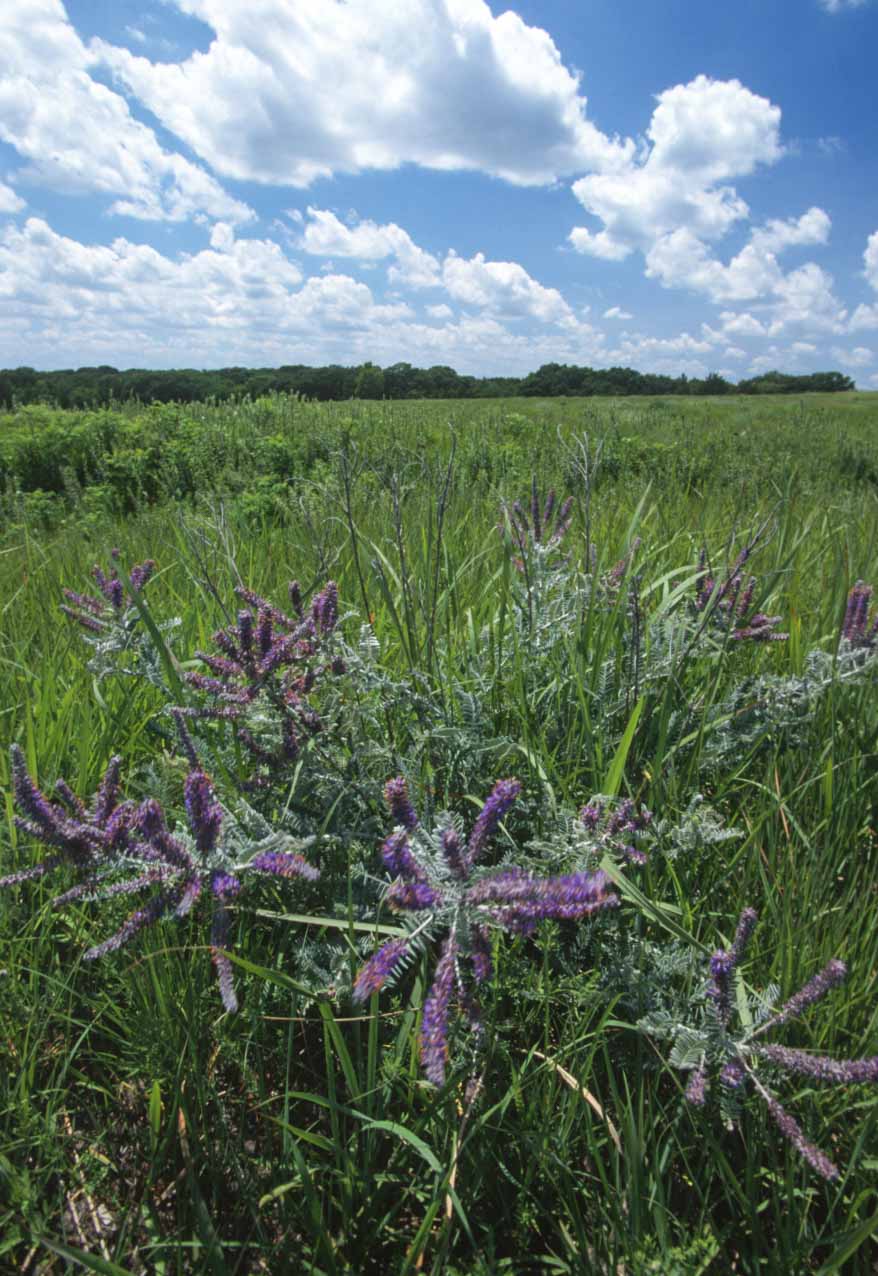
A slow growing but long-lived and hardy flowering plant is leadplant (Amorpha canescens). It is well adapted to life on the prairie. Grazing, burning and harsh winters can damage the plant aboveground. However, with roots growing up to 15 feet deep, the plant bounces back.
The dainty pale green leaves contrast nicely with the dark purple blossoms and their vibrant orange stamens. Leadplant looks especially stunning in healthy grasslands among a variety of milkweed and coneflowers.
Opportunists
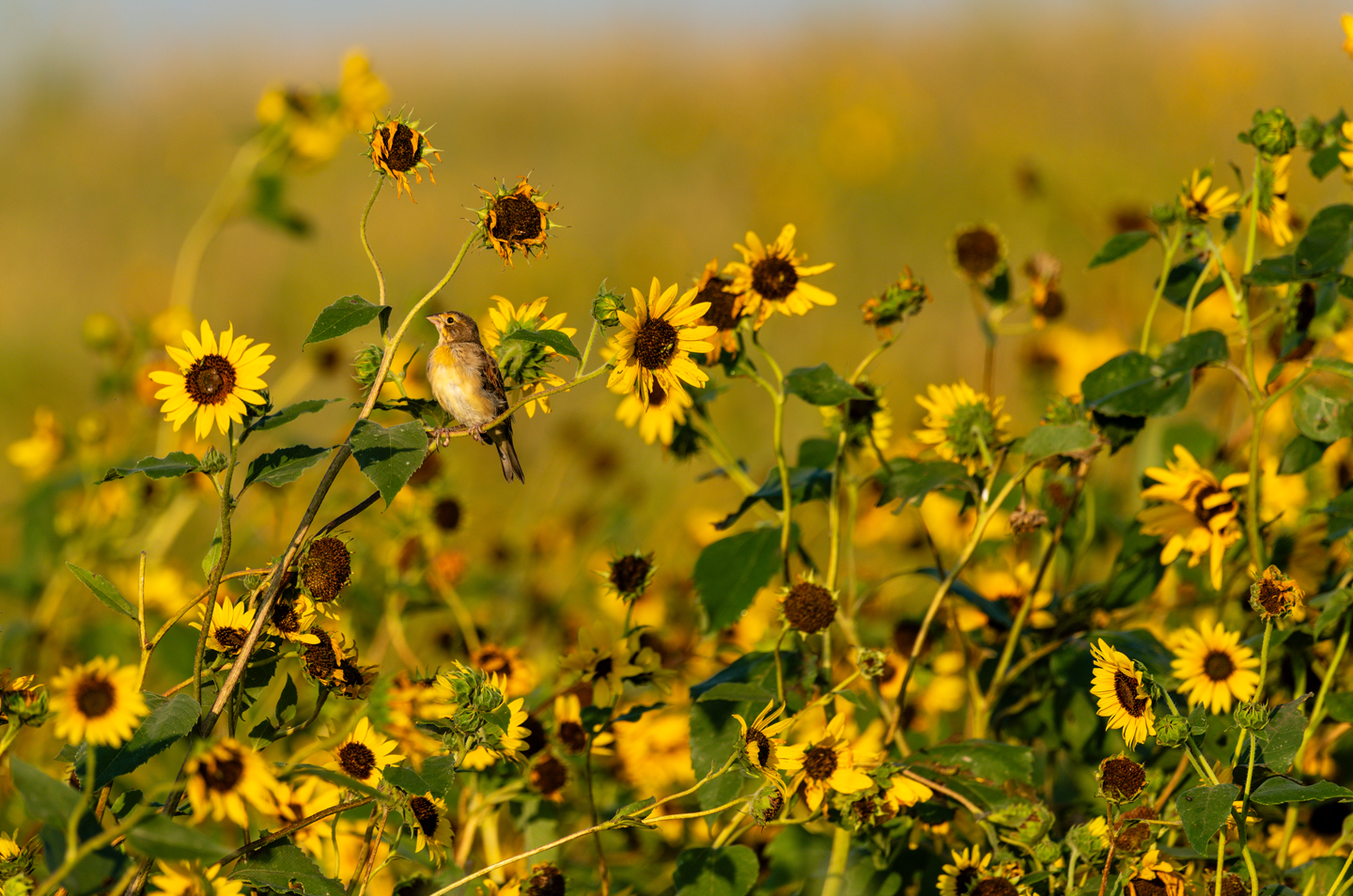
Beautiful wildflowers aren’t only found in diverse grasslands. They also can move into areas where soils have been disturbed by the building of trails, roads or tilling. These opportunist plants move into areas where other perennial plants aren’t growing yet or can’t grow. For example:
Sunflowers are annual plants with seeds that birds love to eat and scatter to other areas. They provide a great nectar source for pollinators, and their nutritious seeds are important for grassland birds, especially during drought conditions when other plants may struggle to flower. In years when soil conditions and rainfall improve, perennials fill in and outcompete sunflowers.
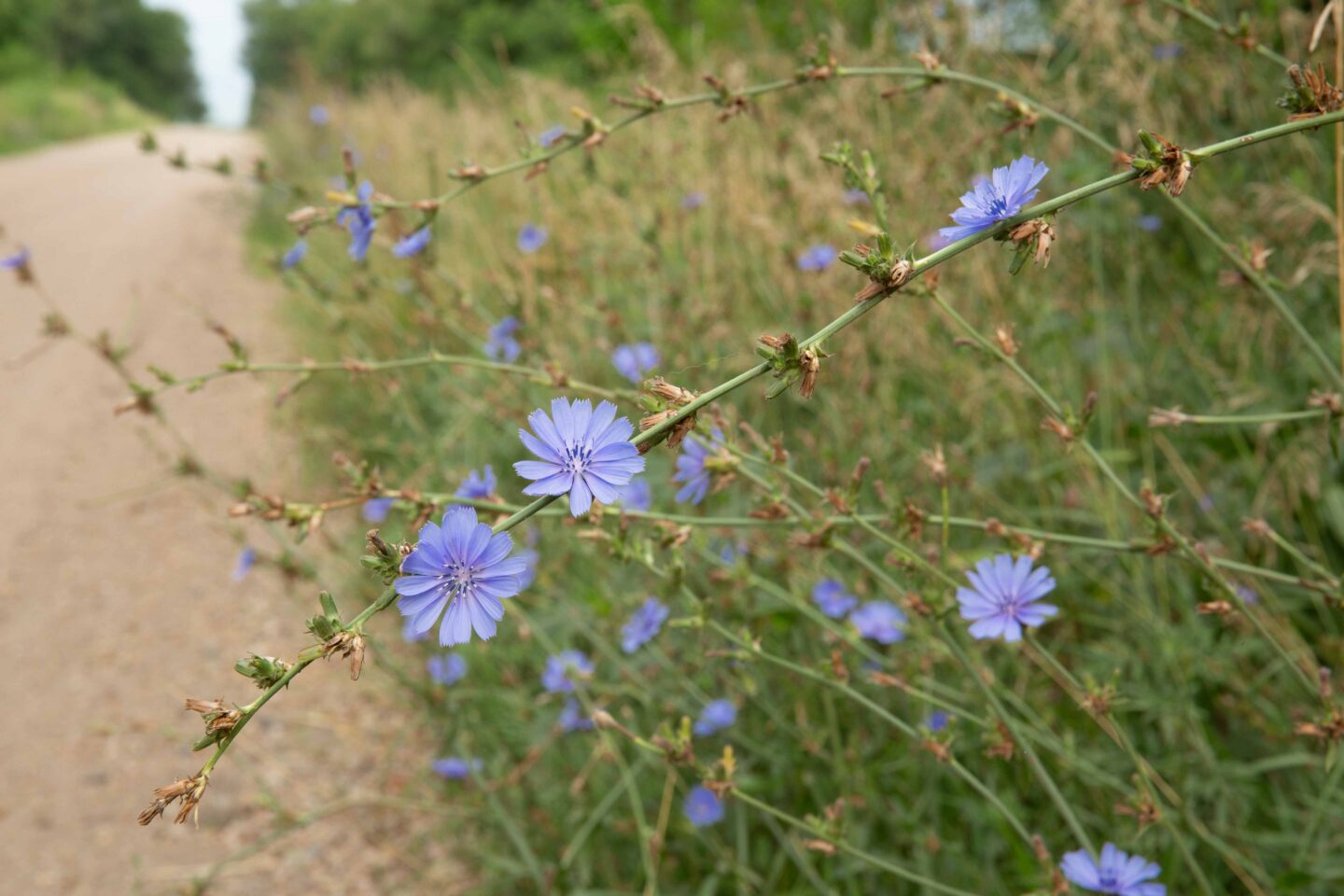
Chicory is a woody plant with vibrant blue flowers that often grow along roads and heavily-used trails. When roasted, chicory root has a nutty flavor that is sometimes added to coffee to compliment the flavor. Historically, it was also added to stretch coffee when beans were expensive. Another benefit of chicory root is inulin, a prebiotic fiber, which supports gut health.
These are just a few of the wonderful and hearty wildflowers you are likely to see in our parks and wildlife areas over the next few weeks. Keep in mind that in drought conditions, the plants will have a shorter flowering period, so go out early in the morning and often for the best viewing.