
By Monica Macoubrie, Wildlife Education Specialist
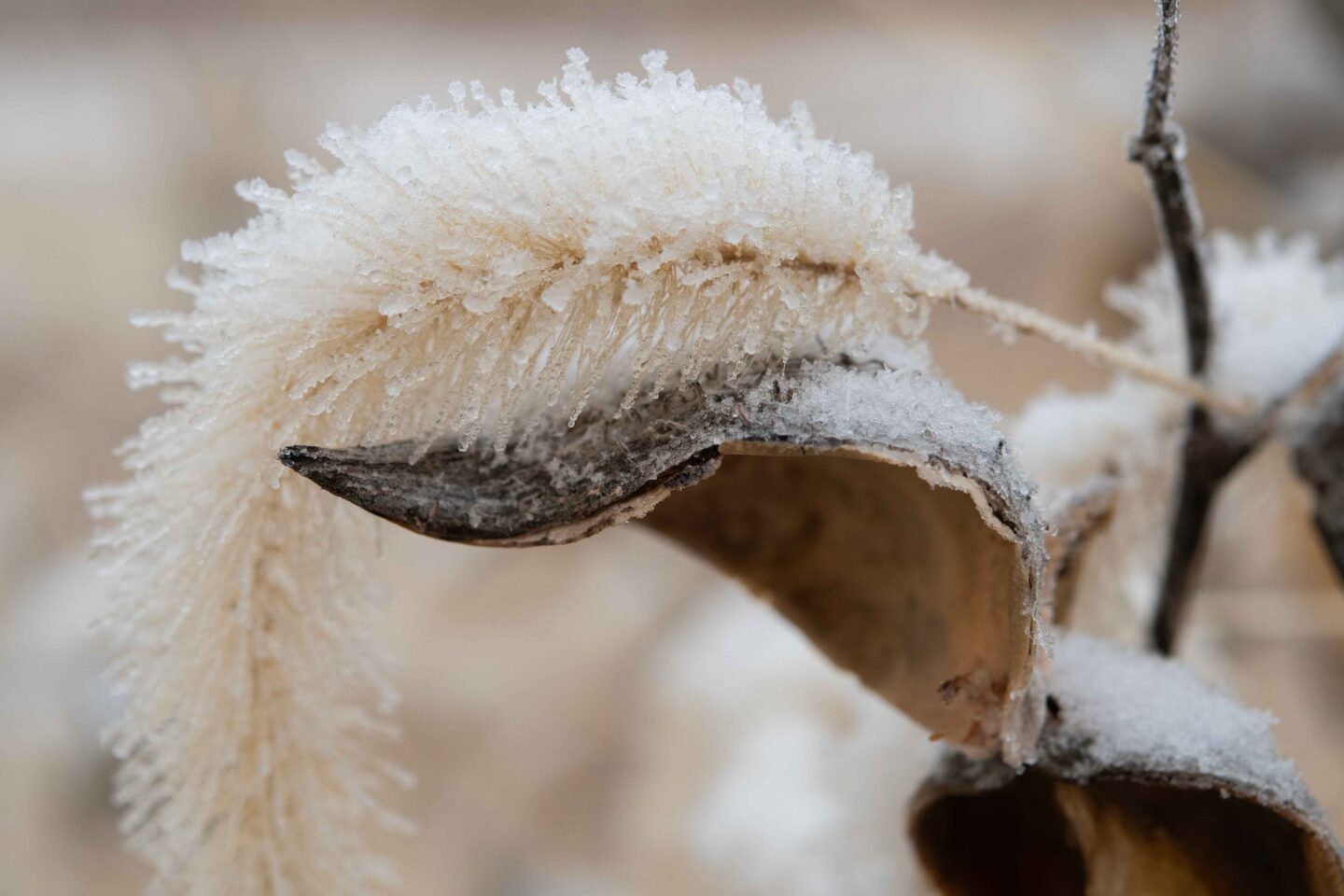
Frost coats grasses and wildflowers, making the landscape look delicate and sparkly, almost fragile. But don’t be fooled. Prairie plants are some of the toughest living things on Earth, and that glittering frost is just the beginning of their winter story.
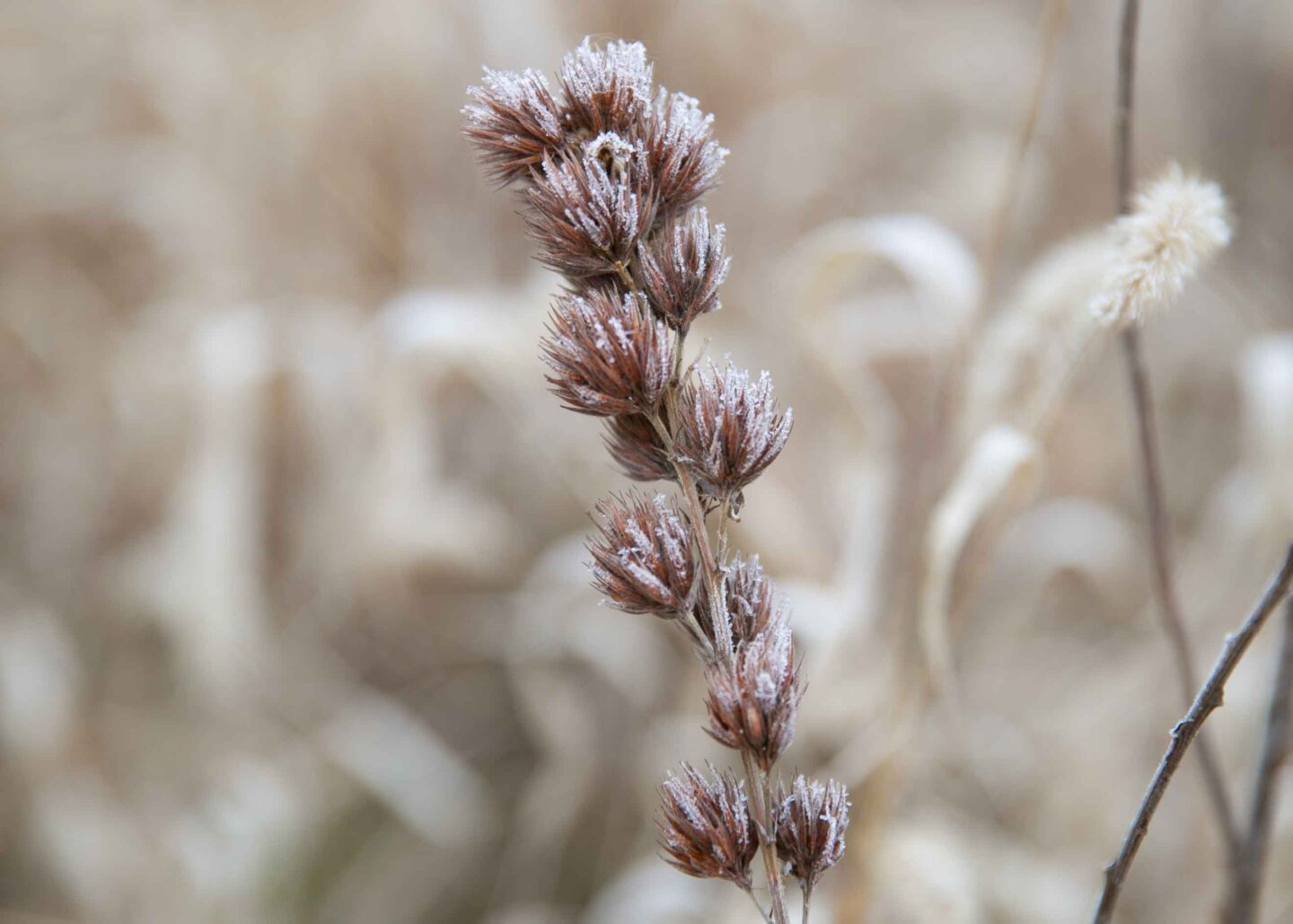
Frost forms when the surface of a plant cools faster than the air around it. On the prairie, where the land is wide open and the wind blows freely, heat escapes quickly on clear nights. Moisture lands on those cold plant surfaces and instantly crystallizes. Even when the air temperature is slightly above freezing, you can still wake up to frost on big bluestem or the seed heads of coneflowers.
Ice – The Beautiful, Dangerous Part of Winter
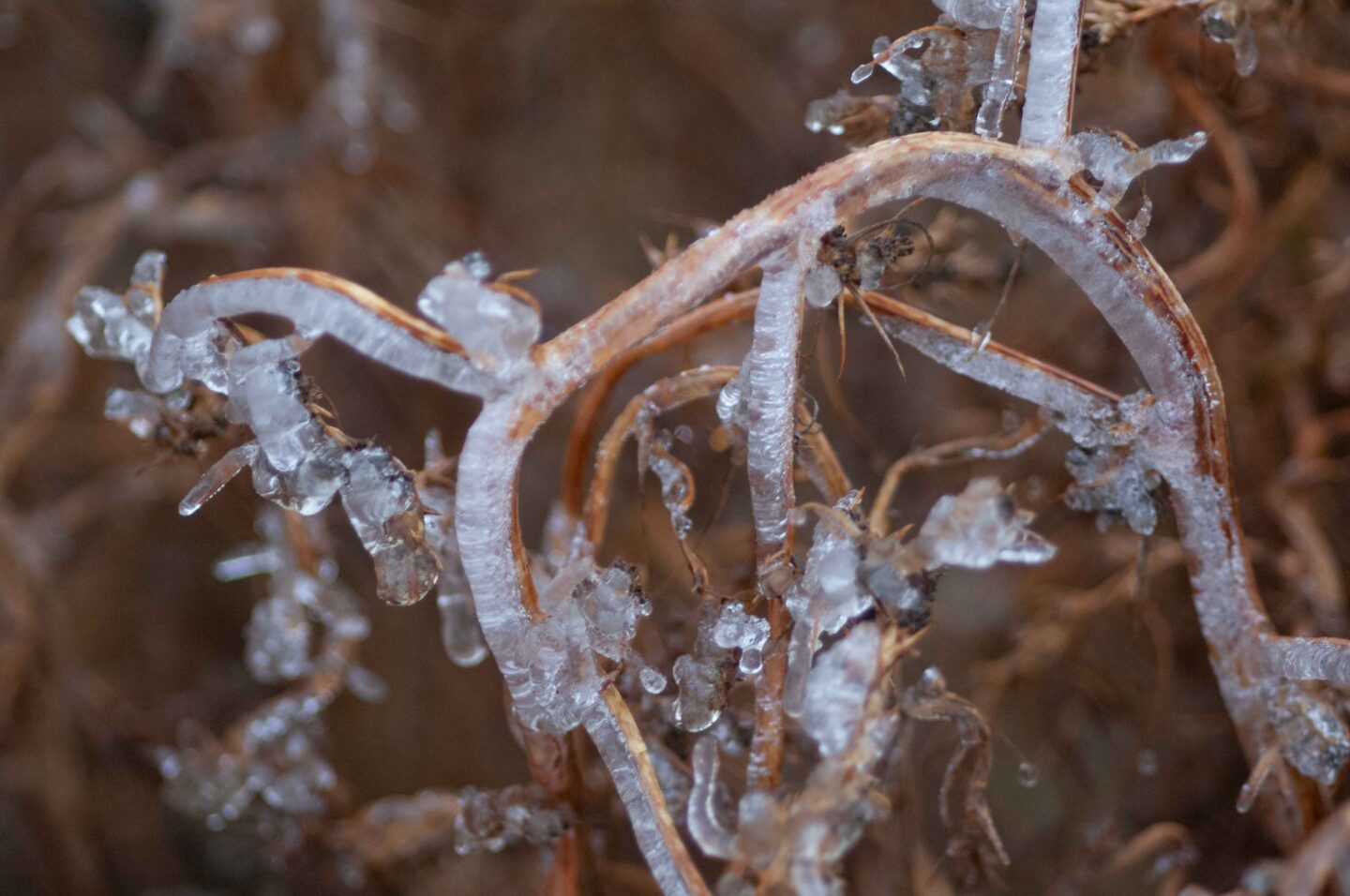
Ice looks magical from a distance but can be downright ruthless up close. Ice forces plants to outsmart and survive winter.
When water freezes around a plant, it releases a small burst of heat — just enough to slow the temperature drop and offer a tiny bit of protection. The released heat creates a slight buffer against colder temperatures.
Ice that forms inside plant cells, however, is where trouble begins. Intracellular ice expands like a microscopic wrecking ball, damaging cell walls and tissues. To avoid this, prairie plants push water out of their cells and load up on protective sugars and salts. These natural “antifreeze” compounds lower the freezing point inside the cell, making ice formation much less likely.
Zones, Snow and Sudden Swings
Nebraska’s prairies experience just about everything: deep cold, warm surprises, fierce winds, dry spells and blizzards that show up uninvited. Prairie plants didn’t just adapt to this chaos — they evolved with it, shaped by generations of unpredictable winters.
Snow plays a surprisingly important role in their survival. Even a few inches can act like a warm blanket, trapping heat in the soil and protecting sensitive plant crowns where new growth begins. This insulation helps keep soil temperatures more stable, even when the air above plunges well below freezing.
In snow-poor winters, though, prairie plants face much more stress. Without the protective layer of snow, the ground freezes deeper and thaws more often. This repeated cycle of freezing and thawing can cause frost heaving — a process where expanding and contracting soil pushes roots upward, sometimes exposing them to cold and dry air.
Dormancy – Nature’s Strategic Pause Button
One of the most remarkable things about prairie plants is that most of their biomass is underground. While we tend to focus on the brown, brittle stems sticking up above the snow, what really matters is hidden beneath our boots.
Dormancy is a winter superpower. Aboveground stems die back, but below the surface, roots remain alive, storing energy and waiting. Big bluestem, switchgrass, and little bluestem all rely on deep and extensive root systems — some reaching 8 to 10 feet into the soil. These roots protect the plant from extreme cold, desiccation and even wildfires, making the prairie one of the most resilient ecosystems in the world.
Annual prairie plants take a different approach. They leave seeds that rest through winter, but are tough enough to survive the freeze. When conditions improve, these seeds sprout at the right opportunity.
How People Can Help Prairie Plants in Winter
Whether you’re tending a prairie garden, a restoration area or simply appreciating native plants in your backyard, there are ways humans can support these winter survivors. Leaving stems standing through winter is one of the simplest and most effective steps. While it can be tempting to cut everything back in fall, standing grasses and seed heads help protect plant crowns, trap insulating snow, and provide important habitat for insects and birds.
It’s also important to avoid winter disturbance. Repeated walking or driving across prairie areas can compact soil and damage dormant plant crowns that are quietly waiting for spring. Letting snow stay in place helps, too. Snow acts as insulation, so allowing it to drift naturally around prairie plants offers added protection. In garden settings, where roots may be shallower or soil more exposed, a thin layer of mulch can help prevent frost heaving and reduce soil dryness during winter months.
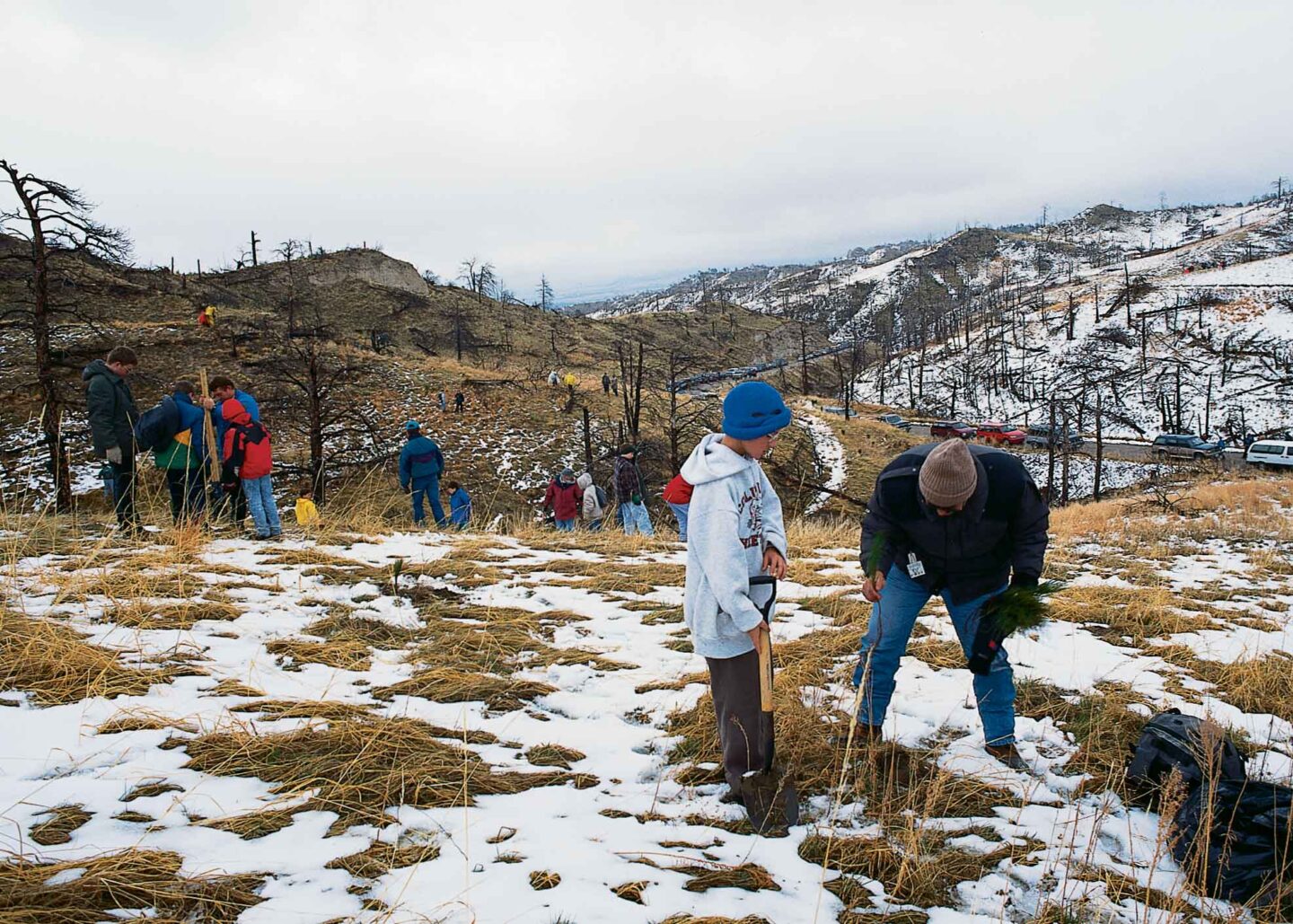
From the outside, winter can make the prairie look bleak and lifeless. But beneath the frozen soil and under the shimmer of frost, an entire community is quietly working, surviving and preparing for spring. Prairie plants, with their deep roots, flexible stems and clever biochemical tricks, have weathered thousands of Nebraska winters.
They don’t just endure winter — they’ve mastered it.