
By Greg Wagner
With the deer hunting seasons done, my “woodland thoughts” now are turning toward another one of my favorite outdoor pastimes — spring wild turkey hunting. It is a sure sign of the upcoming, electrifying season, characterized by the awakening of the woods, the thrill of hearing a gobbler’s roar, and the challenge of calling in a very wary tom.
Let it be known that I am helpless in my irresistibility to spring wild turkey hunting.
Consider what noted turkey hunter and outdoor writer Tom Kelly once wrote, “I do not hunt turkeys because I want to. I hunt them because I have to. I would, really, rather not. But I am helpless in the grip of my compulsion.”
I completely agree! Fast forward — the grip of my compulsion begins on March 25 with the opening of the spring archery wild turkey hunting season here in Nebraska.
You know, some hunters describe spring wild turkey hunting as a cross between hunting deer from a stand and hunting waterfowl over decoys. However, it is really much more than that!
Anyone who has ever spent a stunning Nebraska spring morning with their back leaning against the base of a mature hardwood tree or sitting in a camouflaged blind, using a call and decoys to lure a wild strutting, gobbling tom turkey to within shooting range, can attest to the addiction, obsession and passion of this outdoor lifestyle.
Reasons to Hunt Wild Turkey in Nebraska
The Awakening of the Spring Woods
One of the greatest things about spring wild turkey hunting is the opportunity to watch nature come alive and awaken in the springtime. This is a sensory experience. The hunter gets a front-row seat to see the greening of vegetation, color changes of leaves, opening of buds and blossoms, cacophony of many different songbirds and the direct, close observation of other wildlife like furbearers, raptors and deer.
The Gobble at Spring Turkey Hunting’s Core
There is no experience as thrilling as hearing multiple gobbles echo through the woods in the gray-blue color of dawn during a spring wild turkey hunt. What is unforgettable is a male wild turkey vociferously belting out a loud, boisterous gobble near your hunting blind or location. The exhilaration felt by that noise fills the body of the turkey hunter with adrenaline! Let me tell you the first time a tom turkey gobbles back at your hen yelps and clucks, the hair on the back of your neck will stand up, your heart will start pounding, and all your senses will go into maximum overdrive! As an avid spring wild turkey hunter and wildlife viewer in Nebraska, the gobble is the sound I never tire of hearing in the woods. It is the sound of spring. The gobble is one of the last sounds I would like to hear on this earth before I pass. I truly treasure it.
The Antics of the Bird Imprints on the Hunter’s Psyche
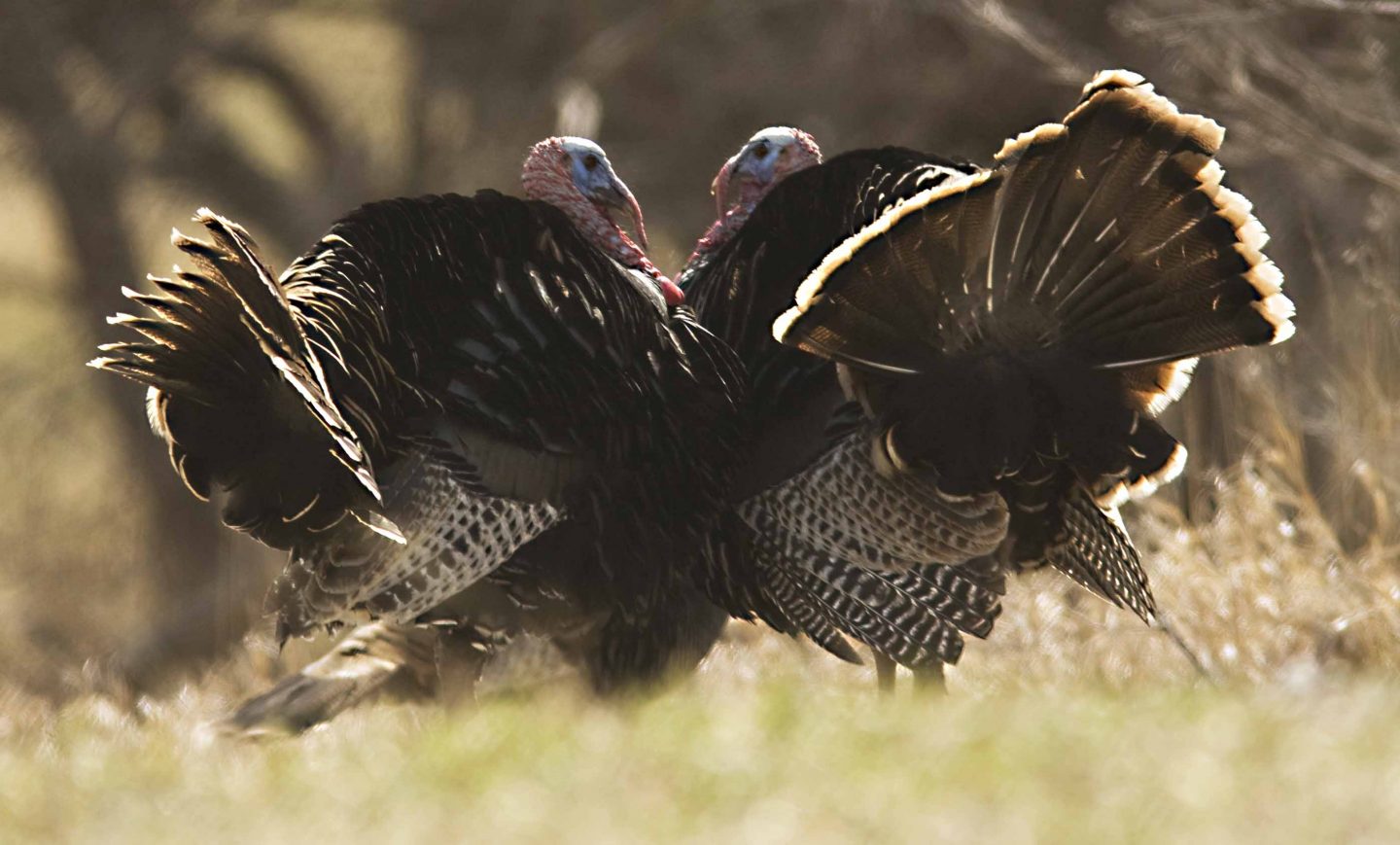
I don’t know of many other game species that get as wound up as jealous male wild turkeys do during their mating season. The entire courtship display they put on from gobbling activity to wing flapping, tail fanning, puffing of feathers, strutting, stamping, drumming, chest bumping, head bobbing and fighting is truly something to see. Add to that the normal behaviors of these birds, which include things like roosting, dusting, sunning and preening. Even when some turkeys hunker down to hide sensing danger, it is still something to see.
The Entertainment Provided by Those Crazy Jakes
Jakes or young male wild turkeys find safety grouped up in numbers, whether two or twelve. Mobs of them may aggressively attack any other male wild turkey in the area including each other, but particularly the big adult toms. If you’re using strutter or jake decoys on your turkey hunt, it is almost guaranteed a pair or mob of jakes will run right into your setup, go after that decoy and offer an action-packed scenario.
The Calling of Wild Turkeys, Like a Chess Match
They make a move then you make a move. A tom gobbles. Should I call or not call? The tom gobbles again. Do I continue calling, stop calling or use a different call? The challenge of the hunt is fooling this cautious, alert and elusive bird. From the moment you first call in a gobbler, you will almost assuredly be a turkey hunter for life.
The Variation of Every Turkey and Every Hunt
Every turkey and every hunt is different. Successful wild turkey hunters know that you have to be willing to change strategies quickly. The U.S. Marine Corps slogan applies here: “Improvise, adapt and overcome.” That’s because no hunt is ever the same. No two toms are the same. No two toms respond to the same call the same way. They all react differently to certain situations and conditions. Birds can come from almost any direction, either silent or communicating. When it comes right down to it though, whatever the situation, spring wild turkey hunting is an intimate adventure happening at close range.
The Beautiful Colors on This Unique Bird
I so admire the variety of gorgeous colors on the large, black, adult male wild turkey. Iridescent feather colors from bronze to green are very apparent. Breast feathers of the tom appear to be jet black. The neck and shoulders of the bird look metallic bronze in the sunlight. Wing primaries show distinct white bars with a light gray background. The back is covered with velvety black feathers. The tail coverts or rump feathers are edged with white or rust colors. Farther back on the bird toward the tail the feathers are a rich chestnut brown with darker markings. The tail feathers are almost black with chestnut markings and a dusty or buff-colored tip. Adult males (gobblers) have a featherless, pronounced red head (sometimes with blue and white coloring, too) with prominent wattle and fleshy, red growths (called caruncles) on their neck. They also have a “beard”—a feather tuft of black, hair-like strands— protruding from their chest.
The Surprises of the Hunt
A friend of mine once said, “Any given adult male wild turkey is prone to do whatever the hunter thinks he couldn’t, wouldn’t, and shouldn’t do.” I have had tom turkeys come in from behind me, to the side of me and catty-corner to me. They have circled me. I once had a hen turkey go on top of my blind! I have had them hang up just out of shooting range. I have had hens intercept male birds on their way to me. I have had coyotes and bobcats chase turkeys off. I have big toms gobble their heads off while walking directly away from me. I have had them attack a downed bird I shot. I have even had them standing next to my truck, ridiculously checking out their reflections, as I returned from my blind in the field. The unexpected elements of the hunt make it special, a bit frustrating albeit, but memorable.
You can get all the details on this year’s spring wild turkey hunting seasons here in the Cornhusker State at OutdoorNebraska.gov.
Good hunting to you and remember: It is about the involvement in the overall experience — that raw feeling of being owned by a vocal, free-ranging wild animal on its own turf — is what makes spring wild turkey hunting so darned cool!
GIL-OBBLE-OBBLE-OBBLE! … GIL-OBBLE-OBBLE-OBBLE! … GIL-OBBLE-OBBLE-OBBLE!