
By Greg Wagner
If you’re a deer hunter in Nebraska, you have wrapped up your seasons. Now, the fun begins. It is time to postseason scout for deer. Maybe you’ll take advantage of balmy weather conditions?
There are definitive reasons to scout for deer after the last season closes besides making you a better hunter.
Deer sign is vivid and concentrated from now through late March. Deer typically group together and are centered on high-energy food to eat, dense thermal cover to bed and ice-free water to drink. Additionally, postseason scouting makes you better understand the habits of deer.
Let’s dig into this a bit deeper.
Take advantage of transparency.
Main trails, feeding areas, bedding sites and open-water sources are defined and easy to see this time of year. There is no leafy understory cover or heavy vegetative ground clutter to obscure or block views of fresh deer sign.
Look for deer activity/sign.
Active deer trails, beds, buck scrapes, rub lines and new tree rubs are evident. Deer tracks and droppings in snow cover or mud, disturbed forest litter or harvested crop fields easily can be spotted. The primary signs of deer in an area are hoof prints and scat (feces), which can indicate the sex, age and size of deer. Look for a broader trail that’s being well-used by several deer coming and going from food resources to bedding areas. Note the direction or pattern of the tracks, if possible. A sole trail that has larger tracks should not be overlooked. When it comes to droppings, look for a variety of them, but remember that adult deer tend to have bigger droppings or piles of clumped droppings over an inch and a half in diameter. Utilize a GPS to record deer sign.
Focus on beds.
Hunters scouting in the postseason should focus on locating deer beds. You can tell a bedding area for does and fawns versus bucks. Does and fawns bed in groups, while bucks normally bed singly and have larger-sized depressions. Bucks prefer to bed up against something on a hillside or higher spot where they can use the sharp senses they possess to their advantage. Begin your search for deer beds in high-stem-count areas, thickets, and south-facing slopes (for warmth). Remember to look for white hair and deep depressions in the ground.
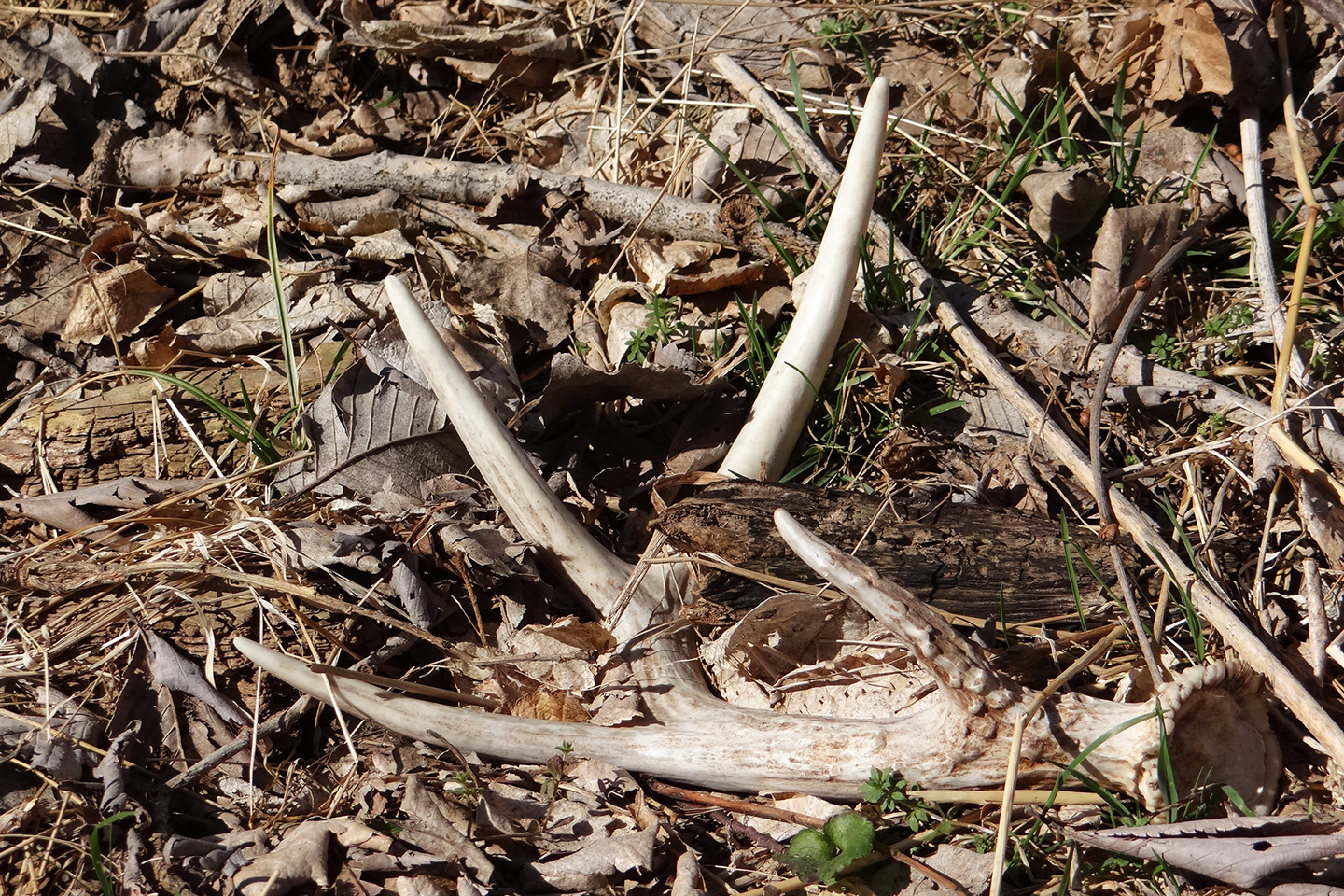
Find sheds.
Shed or cast antlers found in postseason deer scouting ventures can disclose what bucks most likely made it through the hunting seasons and how big they might be. Locations to keep an eye out for shed deer antlers include feeding, traveling, bedding and staging areas. I like to specifically look in any areas where bucks have to jump and knock loose antlers off. These areas would include places where deer trails cross fences, creeks and ditch banks, and go down and up ravines. Keep in mind the bonus of postseason scouting for deer is acquiring a few shed antlers for your collection.
Scout near critical food sources.
Food is the powerful, intrinsic force that drives most all deer activity, but especially so during winter. Good food sources to cover for postseason scouting are harvested, no-till/zero-till crop fields (waste grain), standing crops (soybeans and corn), cover crops that have been planted in fields (cereal rye, winter wheat), brassica food plots (turnips), remaining mast, woody browse (buds, stems, and leaves), and more.
Use glass for better optics.
Use your binoculars and survey how active deer trails interconnect, relate to the terrain and form deer corridors. Natural funnels and pinch points can be more clearly observed with good optics.
Set up game cameras.
Strategically placed game cameras can sure come in handy in the winter to assess the size and health of deer remaining in a given location. You even can come to identify individual deer.
Be stealthy.
When scouting, treat it as you would a still hunt for deer. Wear camouflaged clothing and a little blaze orange for safety, practice scent control, play the wind, slow down, be as quiet as possible and minimize contact with deer.
Do some digital e-scouting.
Popular GPS mapping applications like onXHunt are valuable for post-season scouting. The 3D maps and light detection and ranging systems are very useful tools to identify thick cover, hidden bedding areas, terrain funnels, pinch points and habitat edges/transitions. You can mark key findings like sheds, rubs, scrapes and trails using custom waypoints to map deer movements.
If you are willing to put in the time, hard work and analysis throughout the year, including during the postseason, the odds of harvesting deer in the fall, especially high-quality bucks, dramatically increase. In addition, postseason scouting for deer presents a wonderful opportunity to get outside!