
By Greg Wagner
Nebraska’s early hunting seasons are coming into view. The opening weeks offer a chance to get back outdoors and enjoy the sights, sounds and traditions of a new hunting season and bring delicious, healthy wild game to the dinner table.
But wait, the cook of the house may be scratching their head wondering, “How do I prepare THIS for the dinner table?” Hmmm…
With so many options for cooking harvested wild game, it can sure be perplexing for the new or inexperienced wild game cook to know where to start, right?
Well, no matter what the scenario is, any professional chef or wild game processor will tell you there is nothing magical or mystical about preparing a delicious wild game dinner. It is a simple but fun and adventurous thing to do — if, that is, you follow some guidelines. More on those in a moment.
Really, anyone who can cook at all will enjoy preparing and serving a savory supper using wild game birds and animals that are often far superior to domestic, store-bought offerings. Wild game is a tasty treat and healthy alternative to faux meats (“meatless meats”) as well as mass-produced real meats that are often treated with steroids, antibiotics and other chemicals.
According to a study by Purdue University, wild game such as deer, elk, pheasant and goose has an ideal ratio of Omega-3 to Omega-6 fatty acids, making game one of the healthiest sources of good fat on earth.
All that stated, here are some of the most important tips to remember so you can get the most out of your wild game meat at the dinner table.
Fundamentals of Wild Game Cooking
Here is the rub (no pun intended): Before you embark on any recipe for free-ranging wild game, you need to understand the basics. If you are new to cooking wild game meat or have not done it for a while, here are the fundamentals to follow.
Retain moisture
Game is leaner than domestic meat because wild animals walk, run, fly and roam freely all the time. Wild game meat is high in protein and low in calories and fat, but higher specifically in Omega-3 fats. With cooking, due to the leanness of wild game, it runs drier than most domestic meats. So, recipes that keep meat moist are necessary! Additionally, avoid treating game meat as a substitute for other more common proteins in recipes. Instead, choose preparations designed to bring out its unique qualities.
Cook hot on high or slow on low
Your game meat will be succulent if you cook it for a short time on high heat or a long time on low heat. Game meat needs to be cooked thoroughly and is best done medium-rare or until it pulls apart! The exceptions to the medium-rare recommendation are ground wild game burger patties. Cook ground deer, elk, and pronghorn antelope patties closer to medium.
Grilling VS smoking
The split between grilling and smoking game meats is likened to traditional domesticated meats. Steaks, chops and boneless wild turkey breasts are best when cooked quickly on a hot grill. Cuts with a lot of connective muscle tissue (e.g. shoulders and ribs) that must be broken down are best suited for the “low and slow” heat of a smoker. If you do not have a smoker, consider adding some liquid smoke to your wild game meat. It offsets any gaminess to the taste. Incorporate liquid smoke in your marinade or just sprinkle some of it on the meat and let it set a few minutes before cooking.
Here are a couple tidbits of information for smokers of game meats that they may not know: Oak adds an Old-World flavor to any wild game, while mulberry gives a nice, mellow taste to it. Using a water-soaked cedar plank on a grill imparts a subtle wood flavor to game and fish, along with fruits and vegetables, adding warmth and color to any dish.
Younger game VS older game
Younger game birds and animals generally taste better and are tenderer than older ones. Use young game in most recipes. A quick, hot char works great on cuts of wild game that are young and tender because it gives them kind of a smoky crust while keeping the interior of the meat very moist and warm red to pink in the center. You can also add some dry mustard as a flavor enhancer. Reserve older game for stews and braising. Canning is also a good way to go with tougher cuts of meat.
Small game animals
With cottontail rabbits, brown the seasoned pieces of meat and then let them simmer in a water broth with onions, carrots and potatoes until the meat falls off the bone. Squirrel meat is excellent with a quick pressure cook and then dredged and fried.
Freezer-burned game
What do you do with wild game meat that has been in the freezer for too long? Except for the extreme cases, you can still save a cut of wild game meat that has been freezer burned. Simply take a sharp knife and cut or trim off any areas that look discolored and discard them. Then you can proceed with preparing and cooking as you wish.
Give it a rest
By allowing game meat to rest for several minutes immediately after cooking, you will give the juices a chance to redistribute. During the cooking process, the juices tend to concentrate in the coldest part of the meat, which is in the center.
Age, tenderize & add flavor
Aging game will help tenderize it and add flavor. Essentially, aging is a change in the activity of muscle enzymes. The deterioration and breakdown of cell molecules create intense flavor, which improves further upon cooking. As an example, you should dry age an old wild turkey gobbler for about a week in the refrigerator or walk-in cooler. That cold confined climate should have good air circulation and a temperature range from 34 to 37 degrees Fahrenheit.
Less is better
Simpler recipes are not only easier; they respect the nuances of game meat. Use sauces, spices, stocks and seasonings sparingly to enhance, not overpower your game. Sometimes we do too much to a wild game dish, like smothering it in cream of mushroom soup, fruit cocktail, salad dressing or barbecue sauce! Serve game meat with flavors that accentuate its flavor, but not ones that cover it up.
Use fresh herbs
When a game recipe calls for herbs, fresh herbs are best. You can purchase from the grocery store or acquire them from someone who has a small herb garden. Old herbs have little taste. Preferred herbs to use with wild game are rosemary, sage, thyme, garlic, onion, bay leaves and juniper berries!
Wines & wild game
To keep things simple, use white and rose wines for upland game birds such as pheasants. Use red wines for everything else. The texture and flavor of waterfowl is greatly enhanced by wine-based marinades. Cherry-flavored wines and fruity sangrias are highly recommended.
Let it soak
Let wild game meat soak in marinades or brines overnight, or at least for several hours to enhance its juiciness. This will help add moisture and flavor to your meat as well as tenderize it. When it comes to brining in a saltwater solution, the proper ratio is two tablespoons of salt to four cups of water. Also, consider using a precision water bath which lets you cook thick wild game roasts or steaks evenly to an exact temperature before giving them a fast, hot crust in a cast-iron pan or skillet.
Add some fat
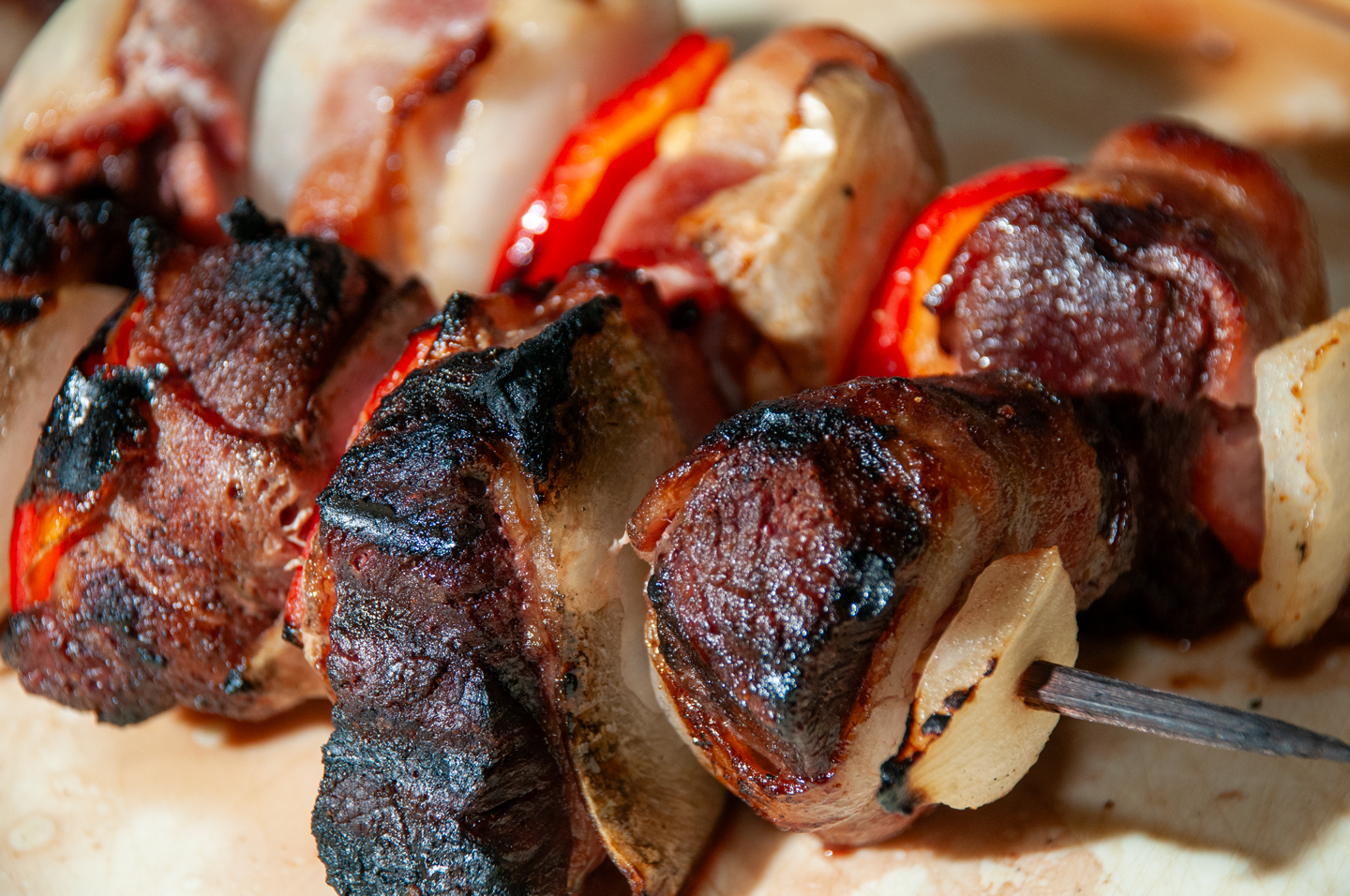
Another classic method for cooking game meat is to add some fat to the entrée. One way to do this is to mix the wild game meat with a fattier meat. Some examples include stew or brats made with half venison and half pork sausage. You could also go for the time-honored “wrap it in bacon” trick! Bacon flavor especially compliments the meats of deer, dove and quail.
Rub it in
Sprinkle herbs and rub seasonings with your fingers on the wild game, then let it sit a while before cooking. A general rule of thumb is one tablespoon of spice mix per pound of game meat. Brush a light coat of olive oil on meat that has been dry rubbed to help seal in flavors and moisture.
Use a meat thermometer
When cooking more tender cuts of wild game meat (e.g. chops, steaks and roasts), use a meat thermometer. The difference between 140-degree exquisiteness and rip-your-teeth-out shoe leather really is only a matter of minutes. Keep in mind wild game does cook faster than domestic meats.
Cooking cuts of older deer meat
For deer meat, cook tender cuts like backstraps and tenderloins hot and fast on a grill or in a cast iron skillet with a little oil. Cook ground deer the way you would cook ground beef, as long as some pork or beef fat has been added. For steaks, chops and roasts, give them the low temp and slow time treatment in a slow cooker or on a smoker. The meat turns tender after a few hours.
Turning wild things into delectable meals is not such a difficult task after all, is it?
Most of the time, the so-called “gamey” taste of wild game meat that folks cuss and discuss is a direct result of poor field care. Remind yourself that good-tasting wild game begins in the field with clean, sharp knives, and immediate field dressing and cooling of the game animal or bird. This includes keeping your quarry free of insects (flies, yellowjackets, etc.) and debris (dirt, mud, grass, leaves, etc.) as well.
The key is to keep wild game out of the sun and in the shade to prevent meat spoilage. If it is warm outside, put wild game on ice with a barrier between them in a cooler, and place sealed bags of ice or containers of block of ice in the body cavities of larger game such as deer or pronghorn antelope, for added cooling effects. Use breathable game bags for a covering, if necessary.
The premier part of serving wild game is that it is in concert with the trends modern-day foodies embrace. It is natural, locally produced, lean, free-ranging and a renewable, sustainable resource when legally harvested.
Be sure to check all legalities for harvesting and possessing wild game animals and birds at OutdoorNebraska.gov.
Bon Appétit! -GW