
By Greg Wagner and Jerry Kane
Those of us who fish know that summer can be a challenge to catch fish. Increased water temperatures, lots of aquatic vegetation, more aquatic prey in the water and storms all add up to make things tougher for the summer angler.
However, by understanding fish behavior and adjusting techniques, anglers can still have successful outings.
Keep in mind when water temperatures increase in the summer, fish tend to seek cooler, deeper water or areas with shade and cover. To improve your chances of catching fish during warmer months, focus your efforts on fishing during cooler parts of the day, like early morning or late evening, and target areas with cooler water temperatures.
Daryl Bauer, fisheries outreach program manager for the Nebraska Game and Parks Commission, said that with the warm water of summer, fish are feeding as much or more than any other time of the year. “They don’t spend as much time looking for food, so the feeding periods are shorter,” he said.
Because of that, he said, the “prime times” to fish, when they most likely will be feeding, are early and late in the day or after dark.
When the summer heat gets brutal, many big fish, especially bass, walleye, and catfish, are nocturnal, pointed out Bauer. So, he said, grab a headlamp and try throwing dark-colored top water lures on a moonlit night.
Once fishing, Bauer says anglers should “find your best spots.” That can include underwater drop-offs, mouths of creeks, places where an abundance of natural bait occurs, below shade and places that concentrate bait and fish.
Bauer said to concentrate efforts along the deeper edges of weed beds and in pockets of weed beds that provide shade and where small fish and aquatic critters are hanging out.
“Anglers want to be on those spots during the best times,” Bauer said.
On reservoirs, don’t forget to fish points, and on smaller waters, fish “ambush” spots such as under docks, piers, overhanging trees, and in aquatic vegetation.
Fish, particularly in irrigation reservoirs, tend to start moving deeper in the summer because the water starts to drop with irrigation releases. “On an evening when fish are feeding, they still might be back toward shallow water but, for the most part, we should start fishing deeper as the summer progresses,” Bauer said.
For fishing rivers or streams, the summer strategy is simple: Find the main current or channel. That swiftly flowing water mixes oxygen into it and cools it down. The advice, according to Bauer, is to target the “current breaks” — the slack water right behind big rocks, logs or bridge pilings. Fish will sit in these eddies, waiting for the current to wash an easy meal right to them.
In general, Bauer recommends that anglers should fish presentations at a faster pace in the warm water of summer. Almost all freshwater fish are ectothermic or cold-blooded creatures. This means their internal body temperature matches the temperature of the surrounding water. So, consequently, fish tend to be more active and feed more aggressively in warmer summer waters due to increased metabolism and hunger.
“You can fish fast to cover the water to find some fish that are feeding rather than hunkering down and fishing slow to tease them into biting.”
Anglers who fish reservoirs for white bass or wipers should be watching the birds. Look for gulls feeding on baitfish. Baitfish will attract white bass and wipers but also walleyes and channel catfish.
Thunderstorms may not happen very often in summer, but anglers who are in the right place at the right time can take advantage before they occur. The best barometric pressure for fishing happens right before a thunderstorm when it is rapidly falling. This drop triggers a feeding frenzy. Fish sense the approaching storm and gorge themselves. They eat heavily to stock up on energy before retreating to deeper, safer water. “If you can be right in front of a thunderstorm, it can be a great bite,” Bauer said. “You want to fish prior to a thunderstorm but not compromise your safety.”
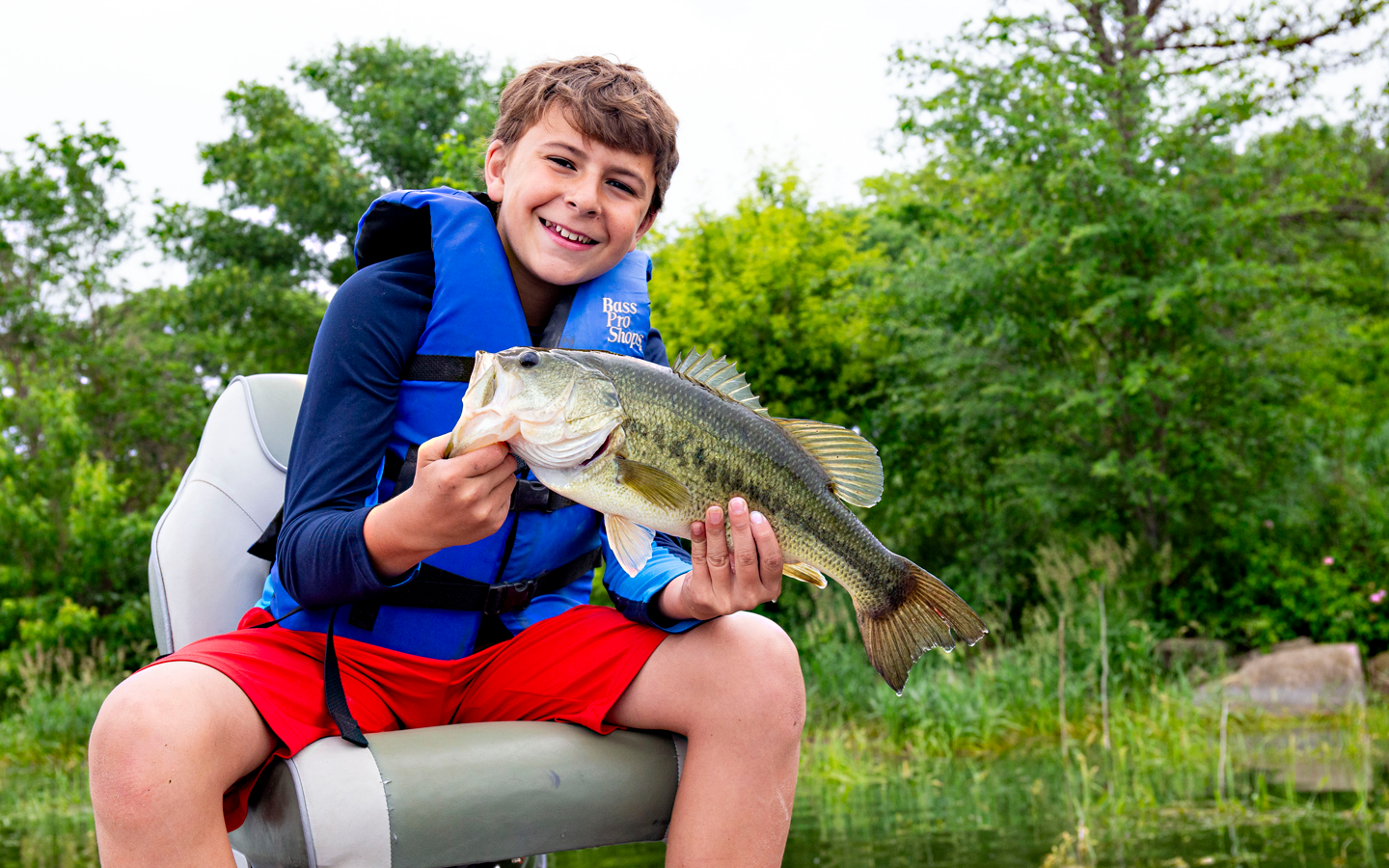
Bauer said summer is a great time to fish surface lures like scum frogs on sandpits and ponds for largemouth bass and grasshoppers for channel catfish and grasshopper patterns for panfish and trout.
There is no doubt that fishing during summer can be tough, but there are a number of things that anglers can do to catch fish during this season.
Get more information on fishing in Nebraska, by visiting OutdoorNebraska.gov/fish.