Daryl Bauer, Fisheries Outreach Program Manager
Spring is upon us. We will have many deranged “ups” and “downs” in temperatures yet. We do every spring, but there is no doubt that it is here. It is the time of year that many anglers get “spring fever” and hurry to get on the water. On a warm afternoon, who can resist?
You will hear a lot of talk about spawning activities of a variety of fish throughout the spring. Some of that talk will be right. There are a lot of misconceptions too. Let me attempt to cast some pointy-headed light on the spawning activities of some of our Nebraska fish. . . .
First of all, understand that fish invest a lot of energy into the production of “gametes”–a pointy-headed term that means sex products, eggs and milt in fish. The development of eggs and milt in our fish takes weeks, months. As a matter of fact, gametes begin developing in many fish species in late summer through fall of the year before.
Some folks clean a fish they caught in the fall, see eggs and assume those fish are going to spawn in the fall. NO, they do not. Those are eggs developing for the spawn the following spring. During the winter, eggs and milt do not develop much. A lot of energy goes into producing those gametes in the fall. They are then “on hold” over winter until spring. When spring finally arrives, depending on the species of fish and timing of their spawn, eggs will rapidly mature and be deposited.
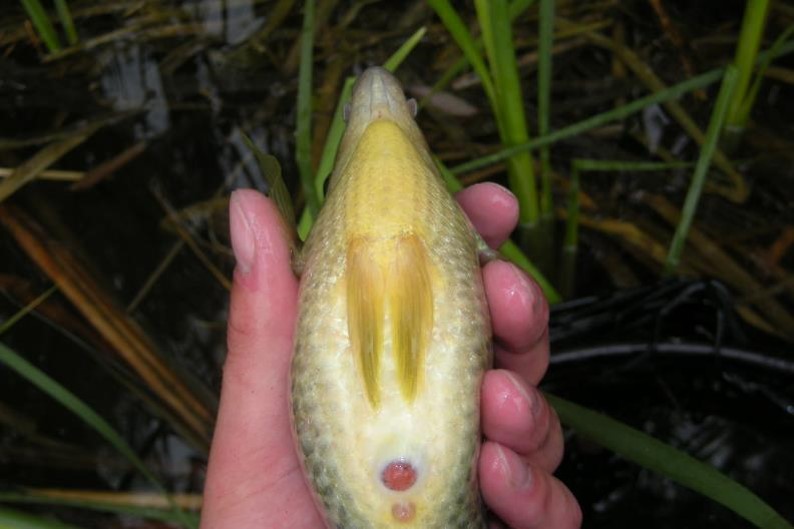
Nebraska is blessed with a variety of aquatic habitats and fish species. We have cold-water species, cool-water species and warm-water species. The spawning periods for those various fish progress through the year, every year. To give you an idea of the relative timing of spawning, here is a list from the earliest spawners to the latest. . . .
Rainbow trout are a cold-water species, no doubt about it. There are many different strains of rainbow trout that have been cultured in fish hatcheries for years and years. Some of the differences in those strains is in the timing of their spawning. Different cultured strains may spawn at different times throughout the year. However, most rainbows are winter/late winter/early spring spawners. We do not depend on natural reproduction of rainbow trout in any Nebraska fisheries. That does not mean that you will not see some rainbows in spawning colors and exhibiting spawning behavior in the winter and early spring.
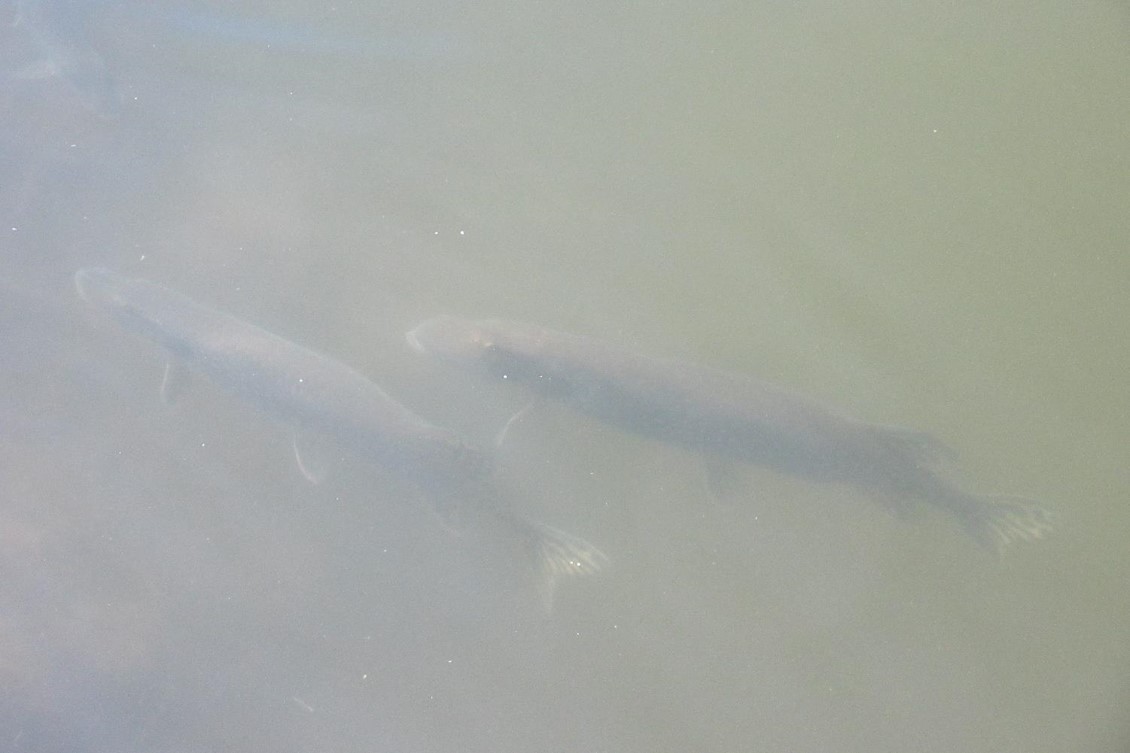
Northern pike spawn right after ice-out. In years when we have a late ice-out, spawning will start under the ice.
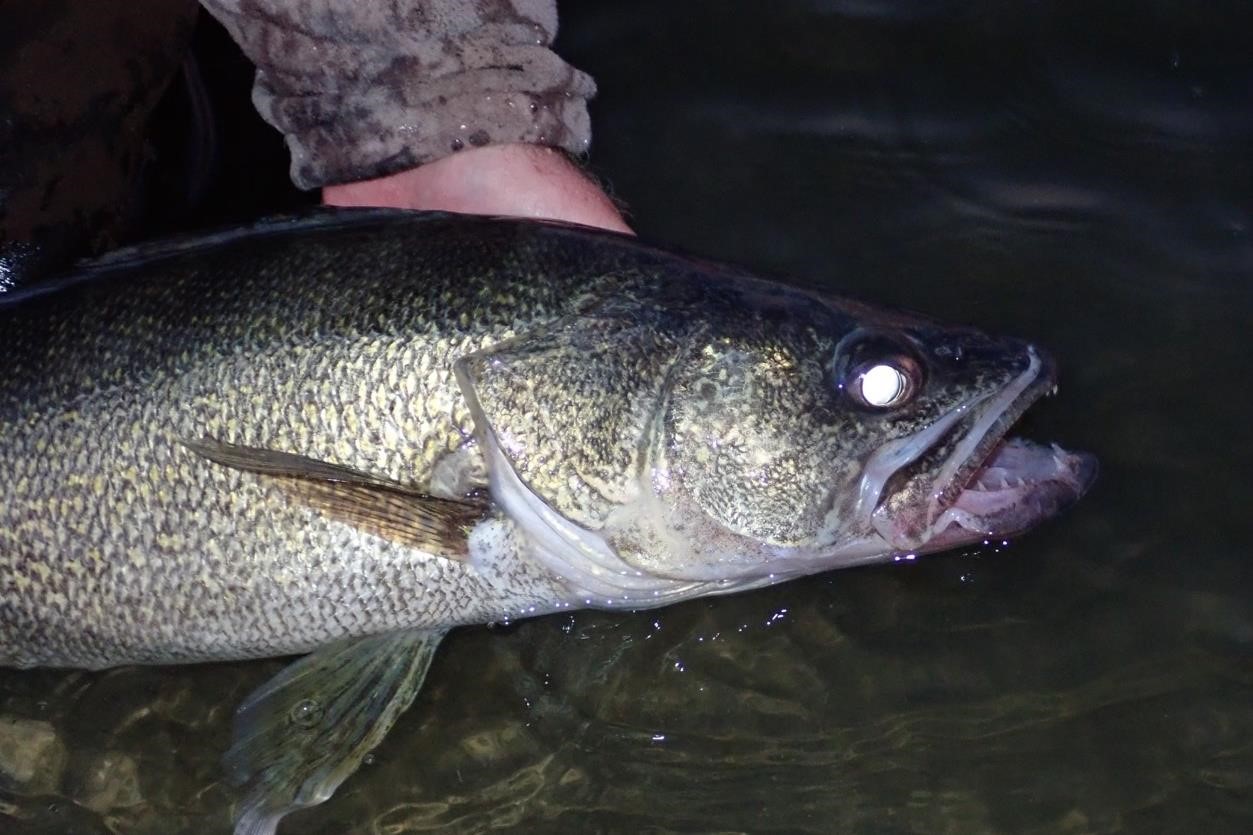
Walleye and sauger spawn next.
Yellow perch right after that,
and then muskies.
White bass, followed shortly by crappies.
Then smallmouth bass before largemouth bass.
Common carp do their thing right about the same time,
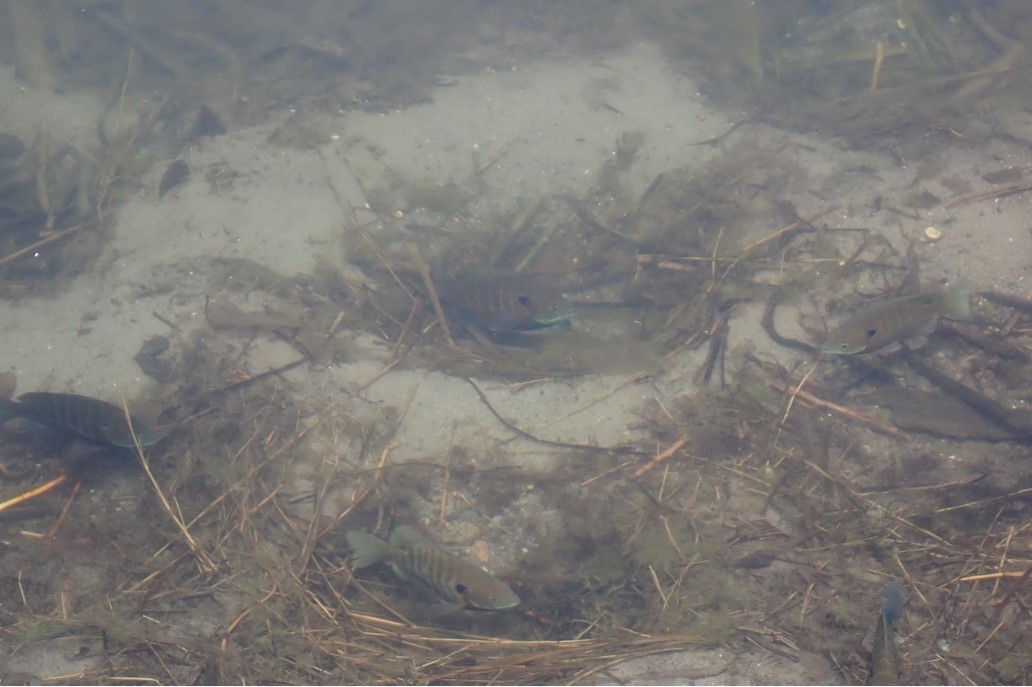
Then a variety of sunfish species, bluegill, rock bass, green sunfish, redear sunfish, etc. bed up.
Our catfish species are the last to spawn each year. It is summer, into July, before blues, channels and then flatheads occupy their spawning habitats.
Finally, we actually do have two species of fall spawners in Nebraska waters, brown trout and brook trout.
I purposely did NOT mention specific dates, water temperatures or any other supposedly “magic” triggers of spawning. Let me explain why. . . .
In freshwater fish there can be several variables that influence the timing of spawning. Those “cues” can vary from one habitat to another even for the same species of fish. For example, fish living in moving waters, large rivers, can be triggered to spawn by rising water in the spring. At the same time, spawning of the same species of fish living in standing water, a reservoir, may not be influenced by water levels at all.
Water temperature and weather patterns can influence the timing of spawning, no doubt about that. However, those “magic” temperatures that are often quoted, for example “largemouth bass spawn when the water is 62 degrees F”, are pretty much baloney. If absolute water temperatures were THE cue to spawning, there would be a lot of confused fish out there. Frequently, spawning would be ruined by spring warming trends followed by strong cold fronts and dropping temperatures. That weather patterns happens in Nebraska every spring.
As a matter of fact, research has shown that for cool-water species like yellow perch and walleyes, a certain amount of time with cold water temperatures are necessary for gametes to properly develop. Walleyes will spawn at about the same time every year. Unseasonably warm weather early in the spring may not accelerate the spawn as much as it may reduce its success.
What about “climate change”? Everyone has an opinion on that. I know this, I have lived in Nebraska all my life, and the climate has always been changing. We go through wet cycles, dry cycles, warm cycles, cool cycles.
Fish and other wild creatures are resilient and adaptable to those changes. You are not going to get a prediction out of me one way or another. The answer I will give you is that we will just have to wait and see. There is some research indicating that some fish are spawning earlier due to climate change. However, at the same time, research has found that the timing of the spawn for another species of fish in the same body of water had not changed at all.
Photoperiod or the amount of daylight is another cue that triggers reproductive behavior in a lot of wild creatures. I believe photoperiod is the most important cue for the timing of spawning for most Nebraska fish. Therefore, spawning will tend to occur at about the same time every year.
Many of you have heard me say that the walleyes spawn in Nebraska April 1. That is a good rule of thumb. I have seen walleyes spawning April 1 literally the day after the ice went out. I also have seen walleyes spawning April 1 when we have had very warm weather for most of the month of March. Although weather patterns may influence spawning activity, it only “modifies” that activity, makes it vary a bit from year to year. Weather patterns do not change spawning times by weeks.
Also keep in mind that Nebraska is a large state with a great deal of variability in habitat, weather, and climate from one corner to the other. Some of our species of fish tend to spawn earlier in some parts of the state. For example, you may see largemouth bass spawning behavior as early as late April in southeast Nebraska ponds. That same species will still be spawning into June in north and west parts of Nebraska.
That brings up another point–the spawn period for any species of fish lasts over a period of days, weeks. Not all fish spawn at the same time. In any population there will be individual fish that tend to spawn early, and there will be fish that tend to spawn late. Again, that is a survival strategy that will overcome swings in weather conditions. If all the fish in a population spawned at the same time, one ill-timed cold snap could eliminate an entire year’s reproduction.
I like to wink and say that the males arrive early at the “dance” and stay late. It is typical to see males on spawning habitats and exhibiting spawning behavior sometimes weeks before any of the females “join the party”. Typically, males come early and stay late while females show up when they are ready to deposit eggs. Then, the girls do their thing, and get outta there.
Another point to be made is that spawning activity may concentrate fish and make them relatively easy to locate, but during spawning the bite slows. Actual feeding activity may occur right up until the fish are ready to spawn, but then it declines and even stops.
The pre-spawn period is often an excellent time to fish for a variety of species. Once spawning begins, those fish have other things on their mind. Fishing actually slows. Sure, I know, you can present baits on bluegill beds or tempt male bass that are guarding a nest to pick up a bait. Yes, I know that almost all the adult walleyes in a Nebraska reservoir are concentrated on the rocky dam face during the spawn. Even though those fish are NOT interested in feeding you can still tempt a few, mostly smaller males but occasionally a big female, into hitting a bait.
I also know that actual feeding behavior is much better when the fish are not spawning. They are a lot easier to catch then.
If you target pre-spawn and post-spawn fish, you will have better success. In fact, if you fish for a variety of species, and fish different waters, you can ride waves of good pre-spawn and post-spawn fishing for several different species of fish. For instance, when the walleye spawn is in full bloom on your local reservoir, switch to some big pre-spawn bass on a nearby pit or pond.
We have no closed seasons for fishing any Nebraska waters for any species of fish (yes, paddlefish are an exception, for many reasons). Those closures are traditional in some other states and in some specific locations they may be needed to protect spawning fish.
Season closures generate a lot of “opening day” excitement when the seasons open. That is in fact why some of those traditional closures remain. We have had no biological reason to have closed seasons for any species of fish in Nebraska. Fish are incredibly productive. They produce thousands of eggs per female. Complete protection during the spawn is not needed because successful reproduction by a few individuals will maintain populations. Even though fishing is actually better during times other than during the spawn, if folks want to fish, we like them to have the opportunity to fish!
Having said that, I do believe it is important to protect big fish of any species. Those fish often are some of the best brood stock in a population. The fact that a fish reached exceptional size suggests it has been one of the most successful at surviving. It likely is one of the fastest-growing, and has genetics that would be desirable in a population. Even if that population is maintained by stocking, big fish are still rare and the best candidates for catch & release. In addition, if those fish are important to a population, it makes no difference if they were harvested 5 minutes before they spawned or months before. If they were harvested they were removed from the population. If at all possible, turn the big ones loose, regardless of species, and regardless of when they are caught!