
By Greg Wagner and Justin Evertson
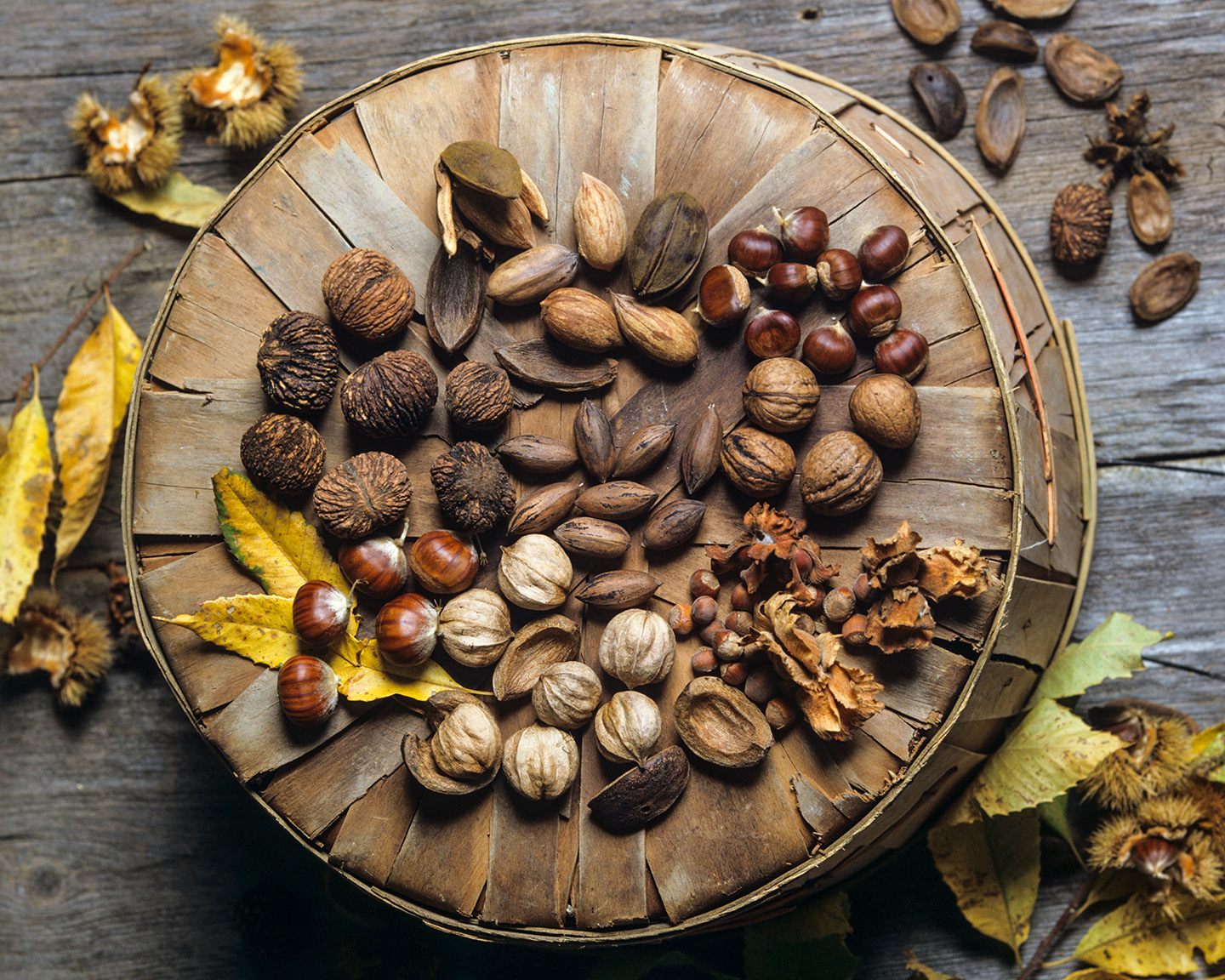
One of the reasons to take a long walk in the woods during autumn is to gather some delicious, nutritious, wild or homegrown nuts, especially, black walnuts, pecans and hickories. The time for that is nearing — or perhaps, upon us!
Being an accomplished hunter-gatherer, I am honestly “nuts for nuts” here in Nebraska!
So, what actually is a nut? It is a fruit consisting of a hard or tough shell around an edible kernel.
Nuts grow wild around us, untreated and untamed, almost right in front of us, if we stop to look for them. They’re in the woods behind our houses, on the farms where we hunt, and along the rivers and creeks we like to fish and float.
We have an array of edible nut-producing trees here in the Husker State beyond the three types already mentioned. But take note — plan on competing with fox squirrels, raccoons, wild turkeys, bobwhite quail, white-tailed deer and a myriad of other wildlife including important insects as these wild nuts fall to the ground.
Ecologically, native nut-producing trees also provide crucial habitat to a large number of important fungi and microorganisms. These trees help improve the health of our biodiversity.
Historical Uses
From a historical perspective, Native Americans and pioneers took full advantage of wild nut crops.
A favorite of Native Americans was the pecan, from which they pressed oil for cooking and ground flour for making bread. Another preferred nut of Native Americans was the hickory, which they ate raw, and stored in great number as a food source in the winter. Black walnuts were also used by Native Americans. The walnuts were pounded and boiled in water, and the oil skimmed off to make butter and hair oil.
Wild nuts were a welcome addition to the pioneer larder, too, most notably in the lean years when grain crops were not bountiful. Searching, collecting and cracking outer shells for wild nuts was even a form of recreation for settlers. “Nutting parties” were a popular fall pastime.
An Autumn Hobby
Gathering edible nuts is a fun way to add wild-grown foods to your food pantry or enhance any wild game or fish entree. Today though, most of us collect palatable wild nuts for pleasure as a hobby.
Foraging for tree nuts is also a great excuse to spend some time outdoors enjoying the nice, cooler weather of autumn with family or friends.
Most nuts are ready for harvesting and eating about this time of year, in the early to mid-fall period. Although there is variability according to geographic area, local climate and recent weather conditions. Drought and hail can cause a low nut production year for many species.
Black walnut, butternut, chestnut, pecan, American hazelnut or filbert, hickory nut and oak are among Nebraska’s wild nut trees. Persian or English walnut and heartnut are also grown in Nebraska. Keep in mind most nut trees require well-drained soil and full sun, although hazelnuts (also called filberts) can tolerate shade. Species such as black walnut, pecan, hickory, Chinese chestnut and hazelnut are extremely tough, hardy trees.
Nebraska’s Nut-Producing Trees & Shrubs
Fortunately, Nebraska is well-suited to growing several types of edible nut-producing trees and shrubs. Among them:
Pecan — The pecan is nearly native to Nebraska, occurring in pockets of northwest Missouri and northeast Kansas and it’s become one of the most reliable trees across eastern Nebraska. Wild grown trees have such a small nut that they’re mostly consumed by birds and squirrels before ever reaching the ground. Thankfully, the Nebraska Nut Growers Association has identified cultivars with larger nuts that are better for nut harvesting.
Shagbark hickory — This southeastern Nebraska native along the Missouri River system rarely produces a heavy nut crop, but it is an important wildlife tree and provides good shade. Its bark, “shaggy” with vertically peeling straps, is an added bonus. The raw, fresh nut of the shagbark is scrumptious and tastes somewhere between a pecan and walnut, which are in the same family. Toasting even intensifies the flavor.
Shellbark hickory — A close cousin of the shagbark hickory is the shellbark hickory which occurs just across the border from Nebraska in northwest Missouri. It has a much larger nut which is why it’s sometimes called King Nut. The nut is very tasty making the tree a great choice for orchard planting.
Butternut — One of the rarest trees in Nebraska is the butternut, with just a few scattered trees known to occur along the Steamboat Trace Trail south of Nebraska City. Thankfully, they drop nuts right on the trail most years to make for easy harvesting. Foraging for butternuts on the Steamboat Trace Trail is strictly for personal use. Please note the trail may be closed for construction purposes. If you are curious, the nuts taste a bit like ranch salad dressing.
Black walnut — Native to Nebraska, this tree has proven adaptable to a wide range of soil and site conditions across the state. The rich, strong flavor of this walnut’s meat is an acquired taste. It’s good to gather walnuts while the nut husks are still green. If they stay on the ground too long, they turn black and the nuts can become fairly bitter.
American hazelnut (filbert) — A multi-stemmed shrub native to eastern Nebraska, it is 7-12 feet in height and width. This easy-to-grow plant, with a nice apricot fall color, produces small, tasty nuts in shaggy husks that are a favorite of turkeys and other wildlife. The kernel of the hazelnut is edible and can be eaten raw or toasted.
Chinese chestnut — A small, wide-spreading tree that produces buttery nuts most suitable for “roasting on an open fire” and other culinary uses. It’s resistant to chestnut blight, which has devastated the once grand American chestnut.
Oak — More than 30 species of oak trees are found and can be grown in Nebraska. Though few produce nuts (acorns) suitable for human consumption, they are all-important to wildlife; and they’re among the longest-lived trees we can grow.
The white oak, which is a rare native tree in southeast Nebraska, is considered to have the easiest to use “nut” of the oaks. Its acorns are low in tannins so they can be eaten raw. However, Native Americans mostly ground their acorns into a flower or a paste. Native Americans were good at leaching the tannins out of oaks by placing them in a basket and letting water flow through them in a river or stream, which made them more palatable. This was done with our bur oaks.
Bur oak acorns were actually a staple food of the Omaha-Ponca Native American Tribe. The tribe named this acorn-producing tree tashka-hi. The acorns were roasted or boiled or otherwise treated before eating.
Hackberry — Although it’s not technically a nut, hackberry seeds are ripening this time of the year and they can be eaten directly off the tree. They darken up when ripe and are the size of peppercorns, looking and tasting a little bit like Sixlets candies as they do have some sweetness to them. They can be chewed and eaten. Native Americans used them for winter food and pounded them into cakes and pemmican.
Buckeye — A fairly common native nut that should NOT be eaten is the buckeye — or Ohio buckeye. Its shiny nuts that resemble a buck’s eye are poisonous to humans and other animals, but squirrels are able to consume them. An old settler’s tale is that the nuts would ward off rheumatism, so people often carried them in their pockets. They are fun to gather and play with.
Flavor & Nutrition
Each species of nut kernel has its own distinct flavor. Pecan, for example, is mild and sweet while black walnut is rich and robust. Hickory is buttery and sweet. Hazelnut has a delicate nutty flavor and possesses mildly bitter skin. Many of the foods we enjoy are augmented by fresh wild nuts. Bread, muffins, fudge, brownies, pies, cakes, salads, meats, soups, coffee and ice cream are all bolstered by the inclusion of nuts!

Americans today have definitely discovered the benefits of tree nuts.
USDA studies show that consumption of nuts has increased by more than 45 percent over the past 20 years.
Nuts, in general are very healthy foods. They are rich sources of protein, dietary fiber, heart-healthy fats, vitamins, minerals and plant sterols. Nuts also have antioxidant and anti-inflammatory properties.
Why Foraging?
So, why collect any of these wild nuts to eat? Why not just go to the local supermarket and buy some?
Efficiency aside, there are plenty of other reasons to gather the wild versions.
Nuts growing in the wild are natural, local foods that are compact and easy to store. They contain no additives or preservatives. If you’ve ever tried a fresh raw nut from the wild (like a hickory nut), it is a unique experience. It is a distant scenario from the dried, treated, warehoused nuts on most grocery store shelves.
Harvesting & Processing Tips
There are some critical notes of caution with wild nuts, however. If you’re not completely certain that a nut is edible, do not eat it! If you have allergies to nuts, or you’re using medication, consult with your allergist, physician or pharmacist before foraging. Some nut compounds have been known to interfere with certain medications.
While foraging for nuts, avoid stinging plants (e.g. nettles, poison ivy) and realize Beggar’s Lice or sticktights may be growing rampantly in your woods and the seeds of the plant will cling to your clothes. Please know that various hunting seasons are open so wear some blaze orange clothing to be seen and do not disrupt hunters.
Even though wild nuts are generally quite abundant, you should take only what you will use. Do not over harvest and prevent wildlife species in the area from stocking up reserves for the winter.
Now, to collect eatable wild nuts, you must first be able to correctly identify and learn about the nut trees that have the potential to thrive in your area. Be able to recognize the outer husks or shells with the nuts inside them.
Then, you’ll need to get permission from the private landowner who owns an expanse of mature woodlands with the potential to have nut trees (public grounds are typically off-limits, by the way). Next, with permission granted and boundary fences acknowledged, head into that wooded area, see what’s available and collect the fallen hulls or shells of the edible nuts off the ground in a sturdy container.
Hull or shell the nuts as soon as you can after harvest. Discard any with holes in them; these are insect-infested. It is strongly recommended that you wear either rubber or plastic waterproof gloves when handling black walnuts or butternuts to prevent these nuts from staining your hands. Walnut and butternut stains are difficult to remove and linger. If you are planning to gather chestnuts, wear heavy leather gloves to protect your hands from the sharp spines on the burrs.
After hulling nuts, spread them out and wash them off with water from a garden hose or kitchen spray nozzle. A tub of water may also be used. You can separate the nuts with no kernels from the good nuts by putting them in the water and removing the ones that float.
Dry the cleaned nuts quickly and thoroughly. Store them in a cool, dark spot with good air circulation for later use. You will need to guard against mold as well as insects and rodents. Shelled nuts can be stored in airtight containers for a short time in your kitchen pantry or for longer periods in your freezer.
HOMEMADE ENERGY MIX RECIPE
If you are looking for something fun to do with your processed nuts, here is a tasty trail mix recipe which you can make at home and eat on your next outdoor adventure. This comes to us from Gladys J. Richter of the Missouri Department of Conservation. Gladys says it is easy and rewarding to make your very own trail mix. Using native nuts, she adds, makes it extra tasty! This recipe provides 6 cups of mix. Just combine all ingredients and enjoy! I eat this energy mix when I am on-stand deer hunting.
INGREDIENTS
- 1½ cups black walnuts
- 1 cup pecans
- 1 cup hazelnuts
- ½ cup hickory nuts
- 1 cup raisins or dried blueberries
- 1 cup dried banana chips
Justin Evertson is the Green Infrastructure Coordinator for the Nebraska Forest Service & PlantNebraska at the University of Nebraska-Lincoln.
For more information about nut trees in Nebraska, contact the Nebraska Nut Growers Association, Heartland Nuts or the Nebraska Statewide Arboretum.