
By Kyle Koch, Department of Entomology, University of Nebraska-Lincoln
If you’re outside in the fall, you’ve probably experienced it. The painful, relentless bites by some tiny black bug that seems much too small to deliver a bite so terrible. The offenders responsible for so much aggravation in the fall are known as minute pirate bugs. And after a day of dealing with their bites, one can understand why these little bugs have a name that sounds rather villainous.
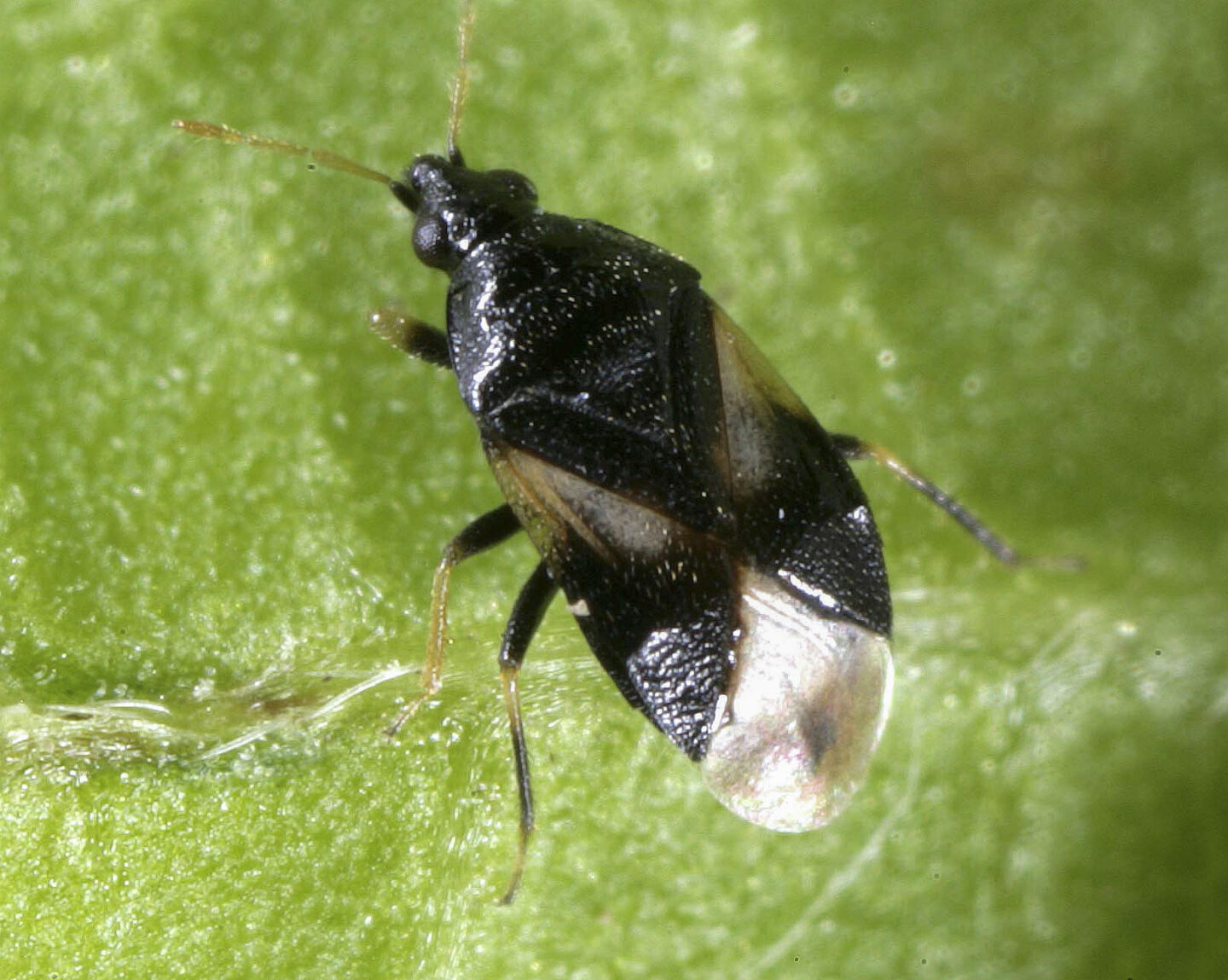
Minute pirate bugs are only about 5 millimeters long as adults and can be recognized by their oval-shaped, black-and-white body. The bugs have three life stages: egg, nymph and adult. From eggs the bugs will hatch into wingless nymphs, which develop through five instars, each increasingly larger, before maturing into adults. The whole process from egg to adult takes three weeks. Although mostly noticed in the fall, minute pirate bugs are present throughout the growing season, producing multiple generations each year.
Minute pirate bugs are beneficial as generalist predators in both the nymph and adult stages, feeding on a variety of soft-bodied insects such as thrips, caterpillars, mites and aphids. In fact, some species are even reared and used commercially in some settings as a biological control agent for some common pests. As predators, they are quite aggressive, grabbing and holding prey with their front legs before using their syringe-like beak to puncture and suck out the juices from the prey’s body.
However, as fall sets in and prey starts to become scarcer, minute pirate bugs start to wander in search of a meal. Unfortunately, this sometimes leads to these bugs jabbing their beak into the skin of a person. When this probing happens, nothing is injected or ingested, but the physical puncture is what causes the pain.
Because these bites are the result of incidental encounters rather than a specific attraction to humans, insect repellents like DEET do not provide any deterrence for minute pirate bugs. Light colors do seem to be more attractive to minute pirate bugs, so wearing dark-colored clothing with long sleeves may help reduce bites. Luckily, the problem is usually relatively short-lived, and the bugs eventually go away with cooling temperatures.