
Story and photos by Justin Haag
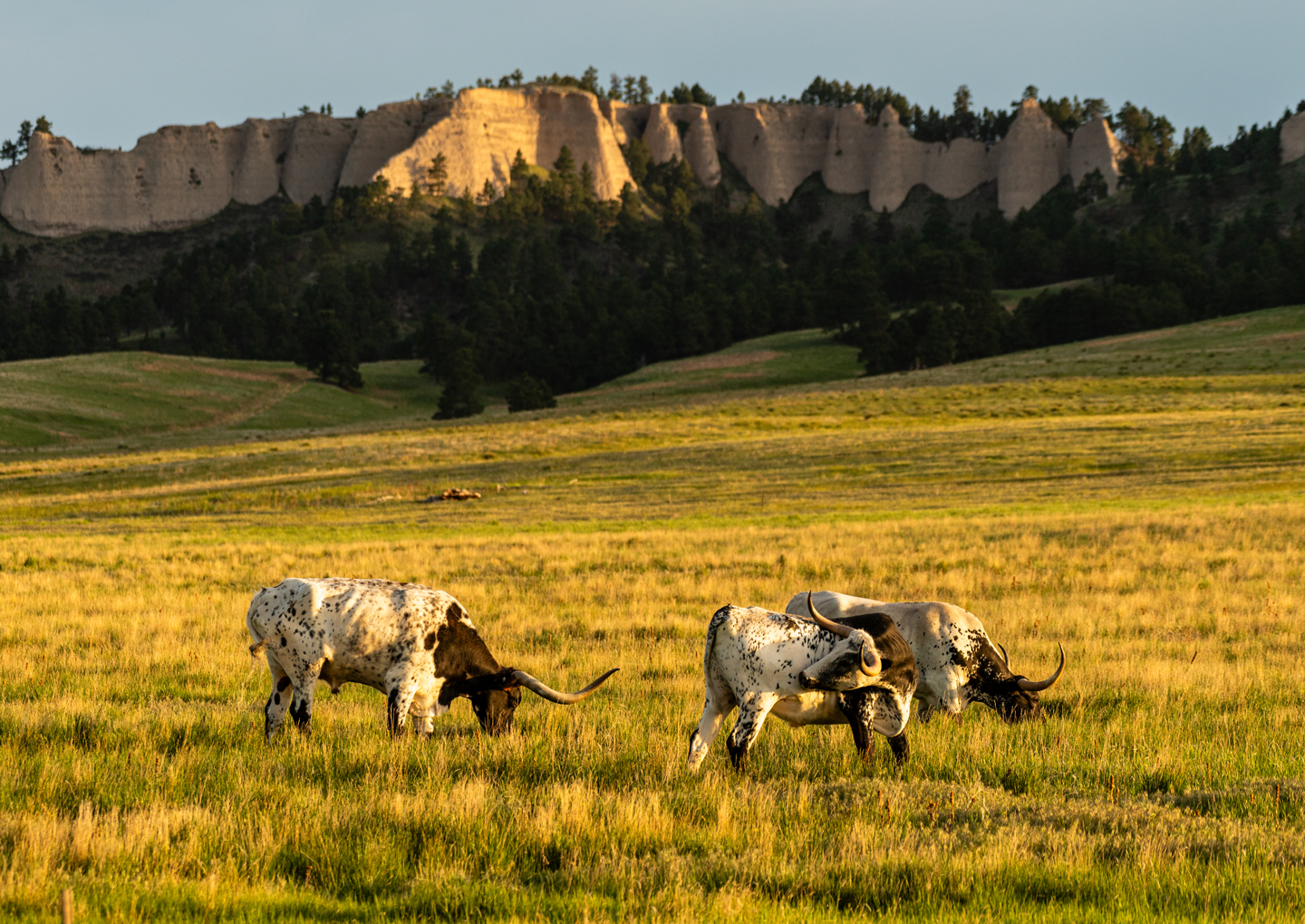
The sight of Texas longhorns on the High Plains isn’t all that uncommon, but this herd is special. Not only do the cattle — with their signature horns that can span 8 feet or more — look at home grazing among the scenic Pine Ridge at Fort Robinson State Park, they also have special ties to the American cowboys’ long cattle drives of the late 1800s.
Rob Lemmon, Fort Robinson’s superintendent, said the cattle grazing at Nebraska’s largest state park represent one of just two registered longhorn herds in the world with careful documentation on the Cattleman’s Texas Longhorn Registry.
“We DNA test all of our bulls to make sure we’re keeping the bloodlines correct,” Lemmon said. “They are purebred Texas longhorns just like the cattlemen drove back in the day.”
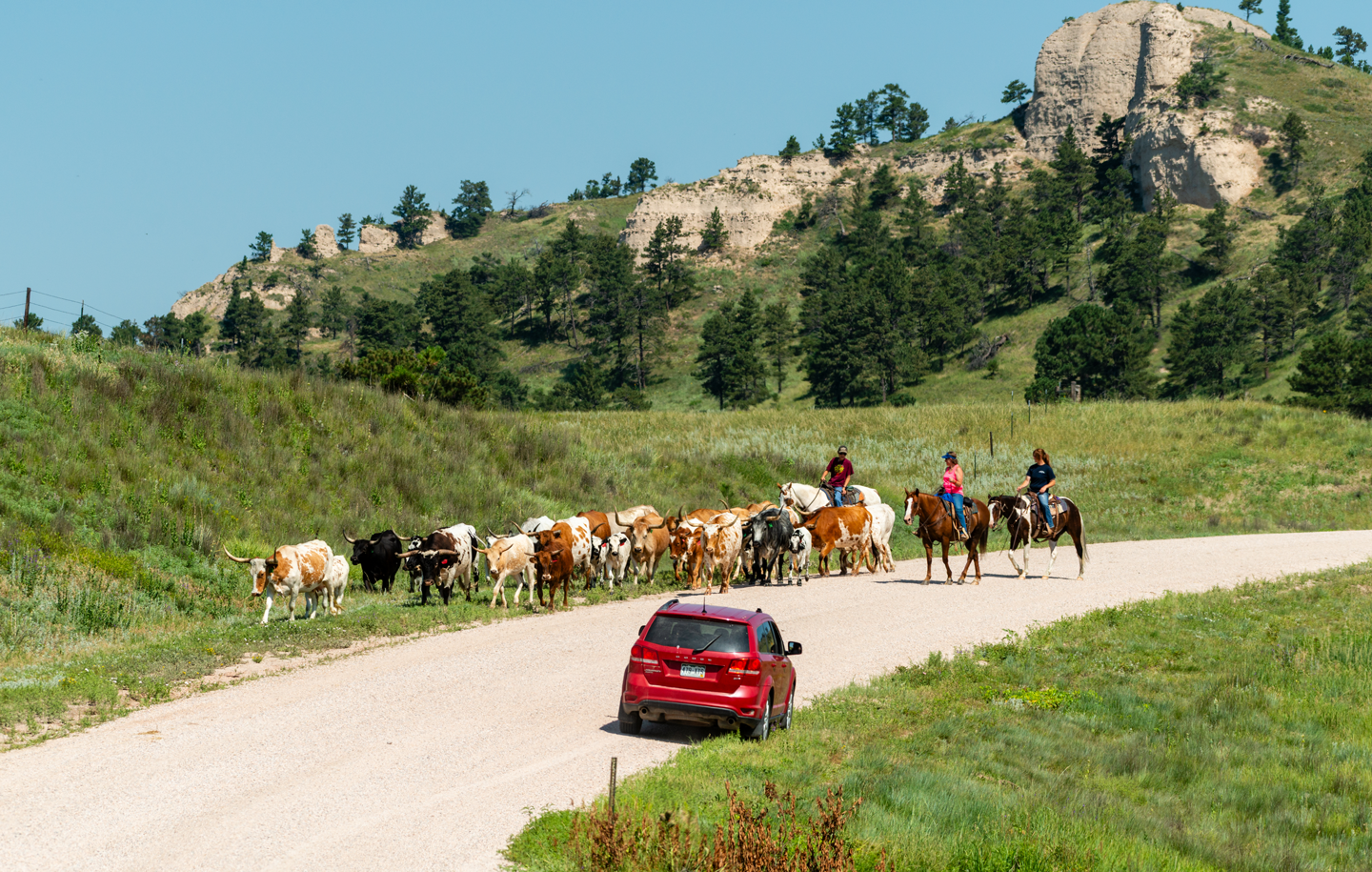
Longhorns serve as an iconic symbol of the Wild West, even if they are not native to the continent and their heyday in the United States was short-lived. The hardy species that was introduced to the Americas from Spain more than 500 years ago and roamed mostly feral in Mexico for ensuing generations, proved ideal for cowboys’ long, arduous drives north to railheads and pastures in the late 1800s and helped feed the masses on the East Coast. Ogallala served as an important railhead, receiving about 100,000 cattle annually between 1876 and 1885.
When the railroad came to Texas, less mobile but faster growing breeds featuring more meat gained favor with cattlemen.
Even if the breeding wasn’t watched as closely as it is today, records exist of longhorns grazing at Fort Robinson even before it was a state park. Perhaps exemplifying how loose things were in the past, a Hereford-bison cross named Levi made the news in 1980 as it grazed with Fort Robinson’s longhorns.
How the pure-bred herd came to Fort Robinson can be traced back to efforts to preserve the species as it was facing extinction in the early 20th century.
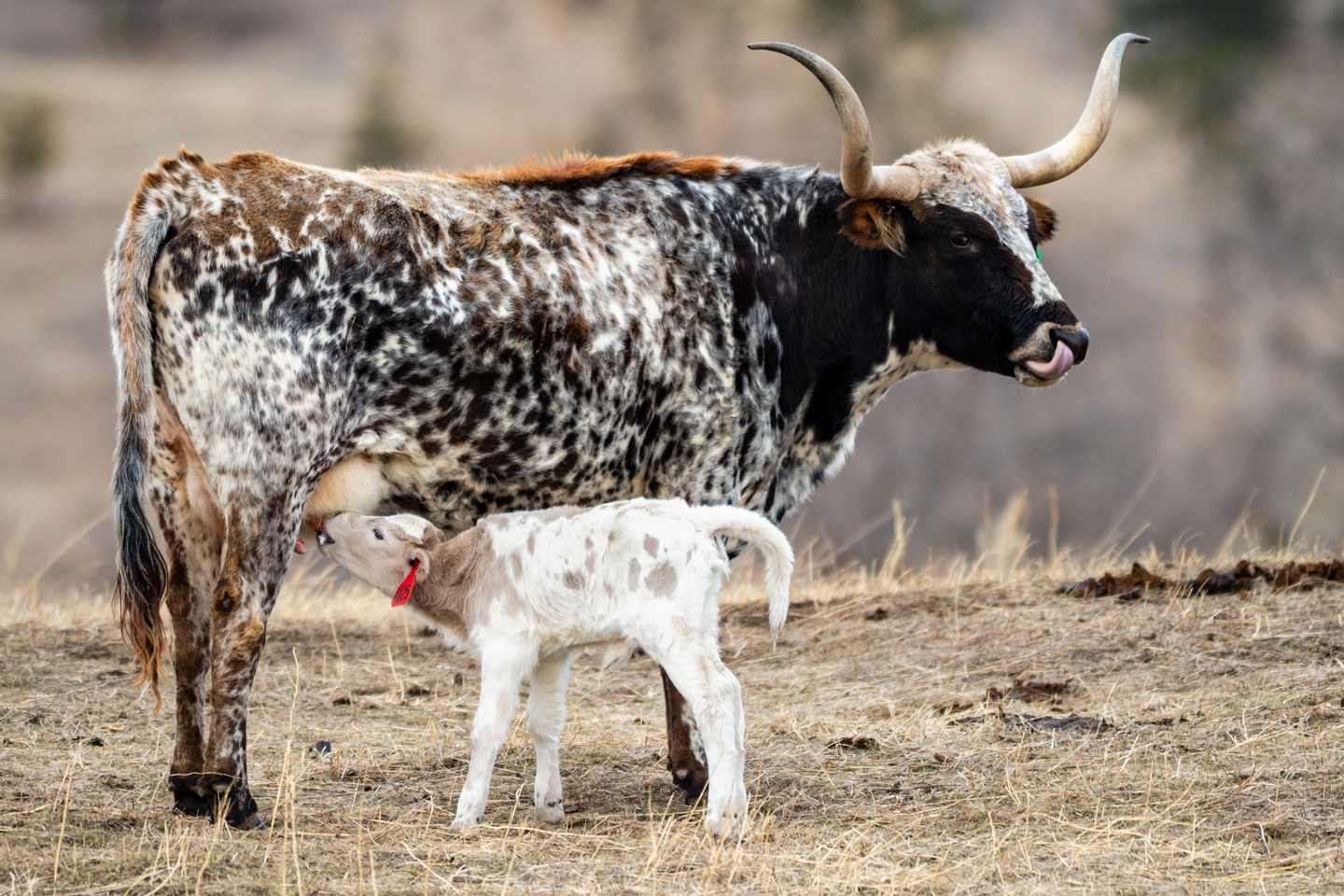
In the 1920s, the federal government identified 30 purebred longhorns and set them aside at Wichita Mountains National Wildlife Refuge in Oklahoma. In 1936, a portion of that herd was taken to Fort Niobrara National Wildlife Refuge near Valentine where the attractive bovines were managed for purity. They grazed there for the remainder of the century.
In 2000, the refuge determined the non-native longhorns were not in line with its mission, unlike the native bison that roam there today, and were evicted. After some uncertainty about the herd’s future, Fort Robinson arranged to take in the Fort Niobrara cattle to add to the park’s attractions and serve as a fitting tribute to its Western heritage. To make way for the purebreds, the park’s existing 100 cattle were sold and moved off the property.
How the 160 of the original longhorns arrived to Fort Robinson from Fort Niobrara was fitting for a park that prides itself on its rich history of horsemanship as a cavalry post.
Lemmon was 12 and remembers accompanying Fort Robinson’s superintendent at the time, who was his father Jim, and others on a 180-mile cattle drive from Valentine to Fort Robinson during a spell of bitterly cold weather.
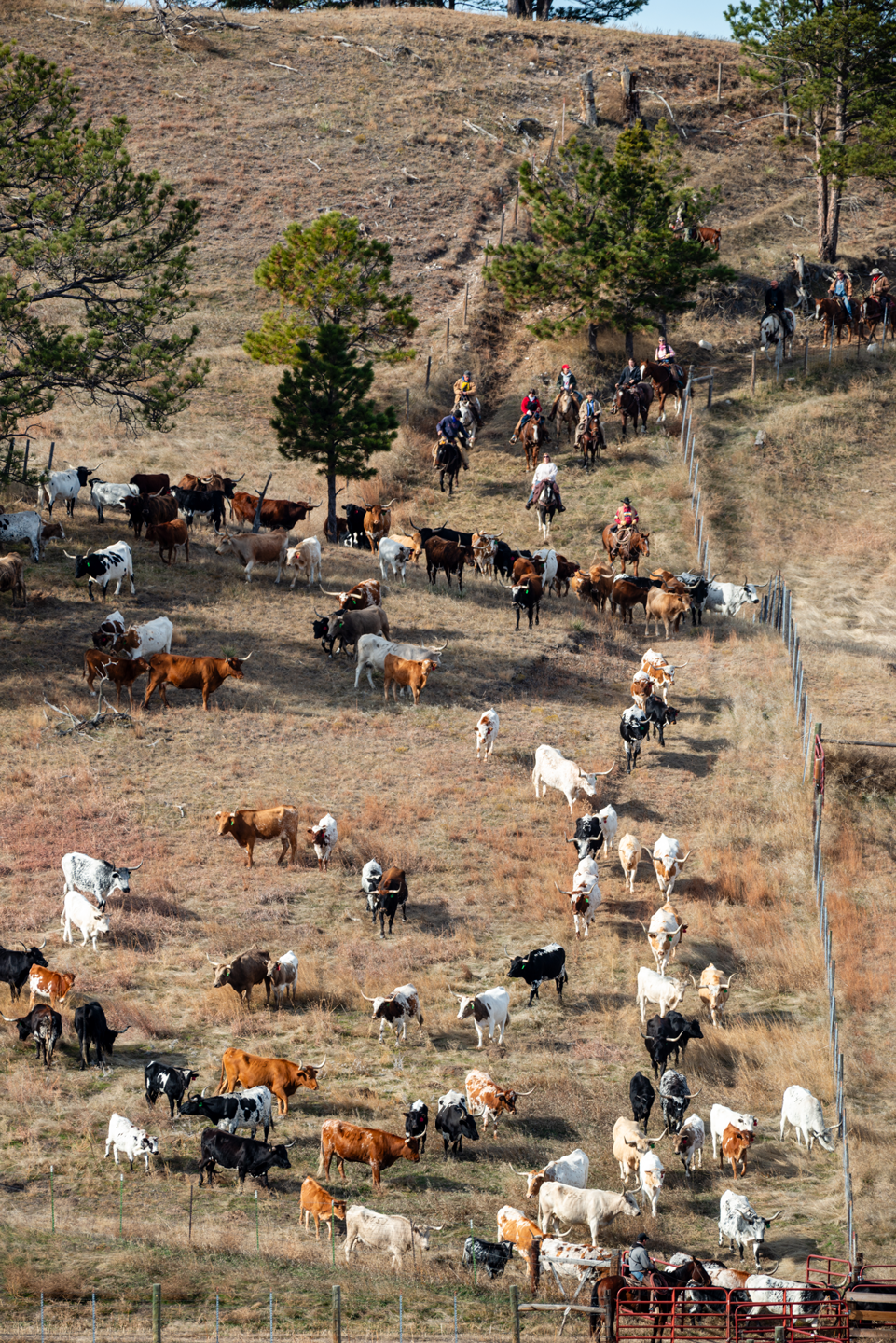
“The people of Valentine were pretty nice. They rounded up a bunch of trailers and stuff to haul them here for us,” Rob Lemmon said. “My dad decided that wasn’t the way Texas longhorns should be moved. So, in November, we drove them. I think it took us nine days to get from Valentine to here.”
The drovers on horseback, which at first numbered about 60 but dropped to about a dozen with the cold temps, provided a spectacle to observers as they moved the cattle through Valentine and other towns along U.S. Highway 20. About 60 other cattle, bulls and calves, were moved to the park by trailer.
Today, the 22,000-acre park runs about 125 cows with the herd totaling about 200. They’re complemented by the resident bison and wild pronghorn, muleys, whitetails and other fauna at the
park.

“From the end of May through July, we have them in seven different pastures so we can put one bull with them,” Lemmon said. “Once the breeding season is over, we put them down by the golf course near Crawford. But, at all times, we have the show steers near the water towers, which have grown big horns and look good in pictures.”
A true taste of the Wild West, and just one more picturesque feature for a park that is full of them.